
Europa Universalis V Review
PC
Europa Universalis V, The ultimate grand strategy sandbox for ambitious nation-builders.
Reviewed by Mezbah Turzo on Nov 02, 2025
The grand-strategy genre has always been about managing power long before blow-up explosions and flashy set-pieces took over gaming. From conquering cities in Civilization to ruling empires in Victoria III, the thrill lies in turning something small into something mighty.
But the true titans of the field? They're usually less about pan-and-zoom and more about endless spreadsheets. Enter Europa Universalis V, the latest entry from Paradox Interactive that promises to push the genre harder than ever before.
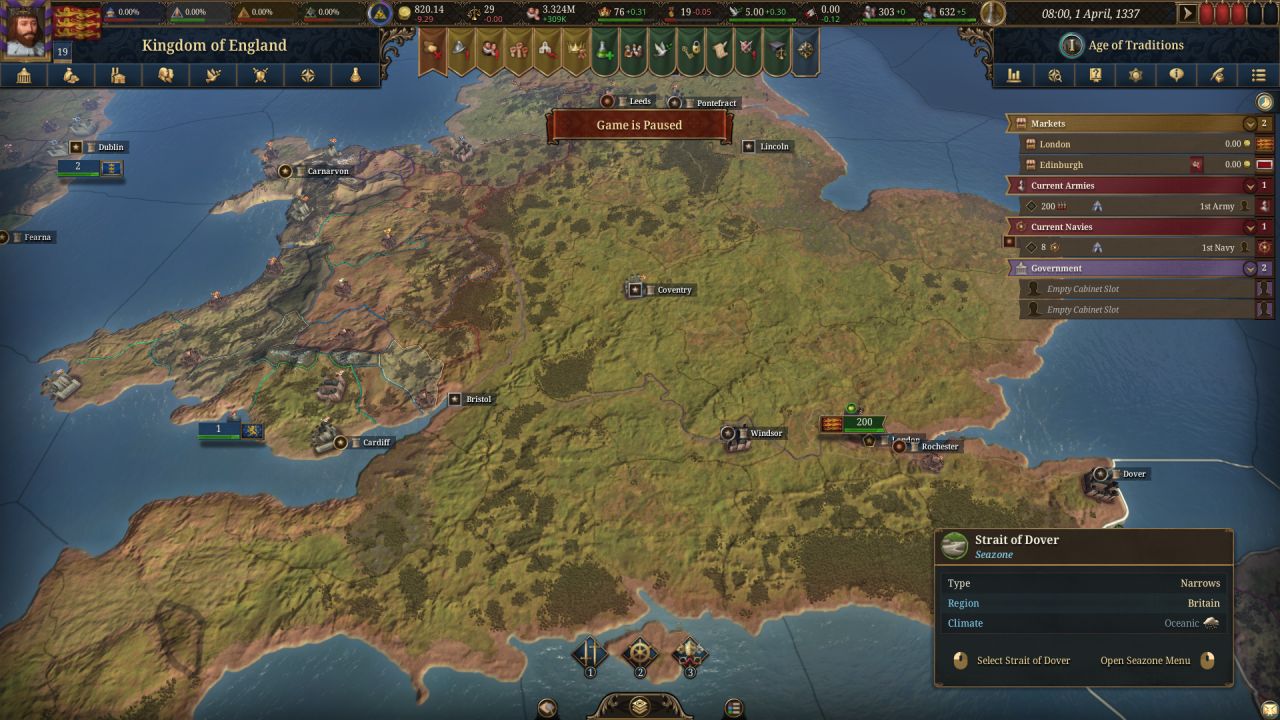
The series' pedigree is long and storied: from its humble beginnings through the widely-played 2013 classic Europa Universalis IV, fans have grown used to Paradox's sprawling maps, complex systems, and equally sprawling DLC catalogues.
Paradox Development Studio's message for Europa Universalis V was clear. It's meant to be bigger in scale, deeper in mechanics, and there won't be anything to hold back the gameplay. Announced in May 2025 and arriving on November 4, the game features a starting year of 1337, a map revamped for modern standards, and systems that lean heavily into population, economy, and military realism.
But of course, the real question isn't "what’s new?", it's "does it deliver?" Because we've seen ambitious Paradox launches before that needed years of patches to shine.
As with the previous game, you begin in an era of very different mechanics and magnitude from the one you end up in. Encompassing the time period between 1337 and 1836, you have almost 500 years to shape whatever polity you end up ruling over.
At its heart, Europa Universalis V still follows the series' signature rhythm: pause the clock, survey your nation, tweak the levers of power, press play, and then watch decades and centuries of history unravel.
You'll build armies, negotiate alliances, set trade routes, adopt technologies, and when things are going well, you'll feel the slow swell of your nation becoming something formidable. When things go badly, you'll watch rebellions, bankruptcies, or foreign powers pick you apart and ask yourself how "just one bad decision" spiraled into disaster. That ebb and flow, growth, crisis, and recovery is the engine of Europa Universalis V.
Like any other Paradox game, once you start the game and decide on what nation you'll blob with today, you get bombarded by the sheer information stream that comes up all around you. Luckily, the game does a wonderful job at keeping all that organized and presenting a dossier to guide you through things.
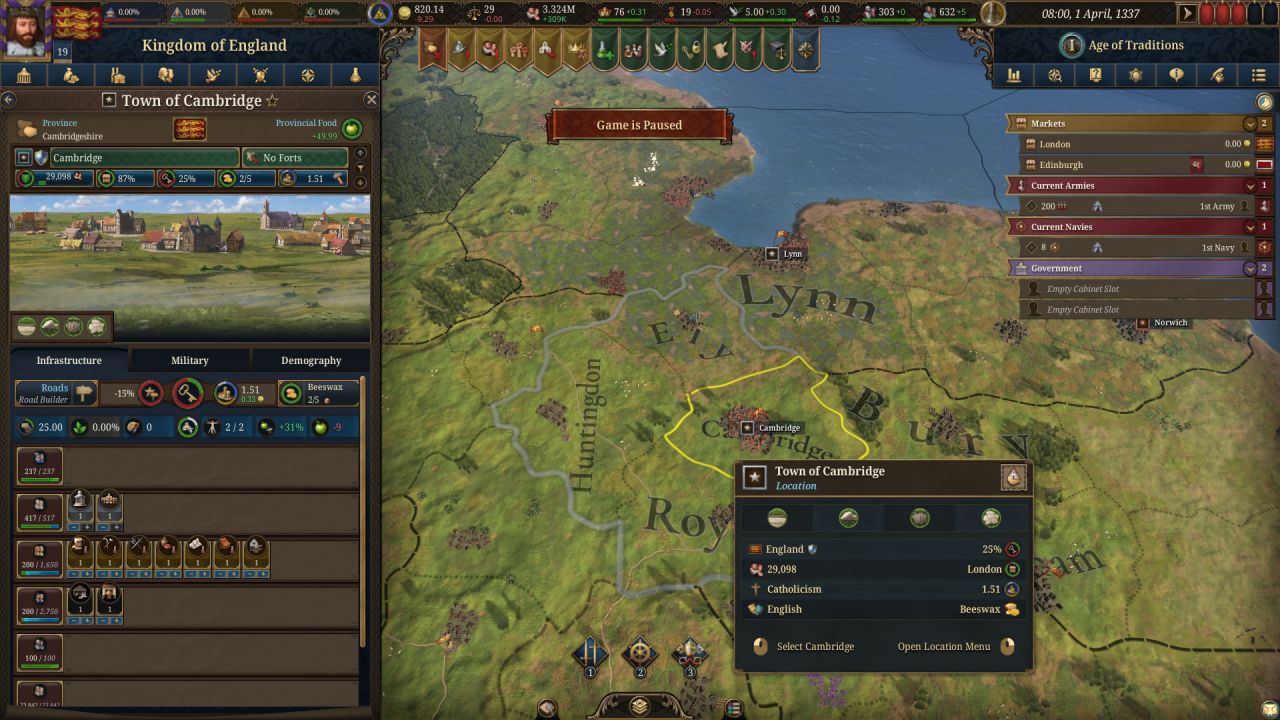
What feels different this time is the depth of that engine. Provinces aren't just outlines on a map; they're split into different parts, anywhere between 3 and 8. Now, everything from manpower and economy to unrest is affected by how the provinces host populations with culture, religion, and priorities.
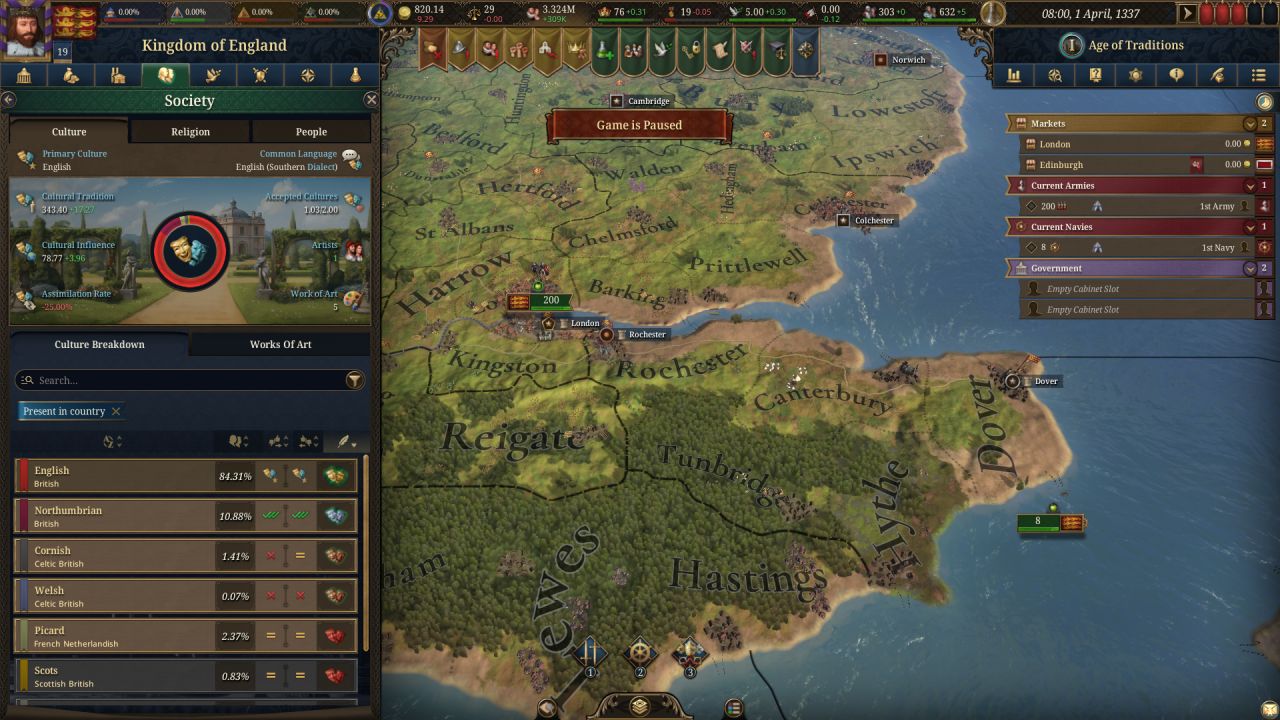
Each tile has its own topography, vegetation, and climate, which all affect population capacity, growth, and warfare. Hide your army in the mountains if you want, but good luck feeding them there.
The developers of Europa Universalis V really went all out with their simulation. Every peasant, noble, and merchant is accounted for, and all of them help power the massive machinery of trade, culture, and war. And everything then stems from these 'Pops'.
The 'Pops' are actual people who eat and live, and the biggest place it affects is in production. Your Pops produce goods and build buildings; they also consume those goods. You could even say it borrows a lot from Victoria 3.
The map alone is a technicolor spreadsheet from hell, in a good way, of course. Every province has its own people, resources, religion, and trade routes, and every one of those systems feeds into another. In regard to culture, religion, and even languages, there's a distinction between the dominant ones and casual ones, and so on.
There are dozens of map modes to show everything from where the grain goes to who's currently mad at your diplomats. You will click a lot of buttons without knowing what they do. It's fine. That's part of the experience.
Markets are fully dynamic, based on a myriad of factors, like infrastructure and such, and change over time. Nodes are local, and over centuries, some markets will grow to be ever-consuming, others will fade into irrelevance and disappear.
One very big change that most would know about: Mana is dead. Long live… well, actual people.
Every character now has administrative, diplomatic, and military skills. These stats evolve over time through education, traits, and experience, making your government feel like a collection of flawed humans rather than a spreadsheet with a crown.
Going back to Pops, because again, Pops are really linked to everything. Nobles hoard power, clergy preach, merchants build, and peasants… well, mostly complain and die of plague. So, estates now have actual agency: they own land, earn money, build structures, and even lend you cash, which is very convenient right up until they decide they'd rather own you.
The economy has had a complete overhaul. There are no arbitrary "building slots" anymore; you can build freely within soft caps, expanding production lines from raw Resource Gathering Operations to complex industries.
Diplomacy is less aggression-oriented now. Again, underpinned by culture and demographics, it's a bit more reactionary. However, it is noticeably the system that's the closest to its counterpart in EU4, but that's still sort of underselling it.
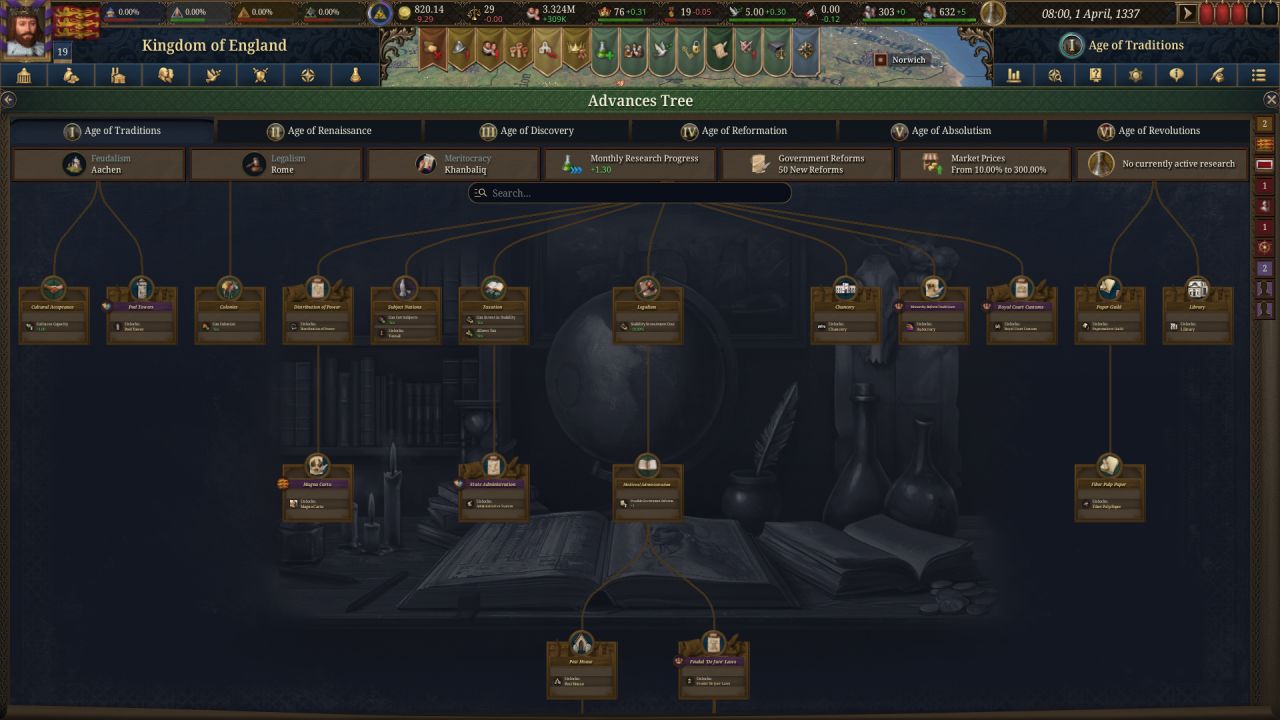
Meanwhile, technology and progress come through Advances, a sprawling tech tree with hundreds of unlocks per age. Your population's literacy directly affects your research speed, which makes investing in education suddenly feel very practical. There are also laws, dozens of them, covering everything from press freedom to property rights, and changing them can reshape your entire society, if you can survive the political fallout.
Supply lines matter now.
Armies and warfare have been overhauled, too. Gone are the simple infantry-cavalry-artillery trios. Now you build regiments with defined equipment and manpower sources, from levies drawn directly from your population to fully professional soldiers.
Each consumes food and gear, supplied by logistics trains that can be raided and destroyed. Fights play out with flanks, reserves, and real attrition, making the old carpet-sieging of EU4 look almost quaint.
Even exploration and colonization have been reimagined. Exploration now works area by area. Colonization isn't just a number ticking up. Your settlers physically move from wherever they were previously to the new world, and unless enough of them share your culture or religion, that new colony might not stay yours for long.
This also means that colonization is really slow, and you can't feasibly do it unless you either depopulate entire urban centers, or have vast swathes of people to throw into the New World… or the Old one.
And underpinning it all are countless subtle systems, control, proximity, stability, prosperity, and even hegemony, all working together to make your nation feel alive. Stability is no longer something you buy with mana but a value that slides naturally between chaos and calm. Prosperity rises and falls with your wars and weather. Even mercenaries now form organically from the wreckage of war-torn regions.
Thankfully, Paradox has built in automation for most of the busywork, so if you'd rather focus on being a scheming monarch than a micromanaging accountant, you can. But make no mistake: even veterans will have to slow down and relearn how this series works. I certainly did, and I've got the thousand-yard stare and the empty coffee mugs to prove it.
Early on, it's all about centralization. You assign your court, build up infrastructure, and sometimes conquer new lands or deal with revolts. As time passes, new institutions and technologies appear, and you have to either adapt or fade into obscurity.
Most of the day-to-day management comes down to your estates, each with their own demands and bonuses from keeping up those demands. Keeping them all happy is like juggling flaming torches while someone yells about tariffs. Give too much to one, and another will start plotting your downfall. Give too little to everyone, and your tax base collapses.
Everything in Europa Universalis comes back to people. When the Black Death rolls through, production halts, workshops go empty, and suddenly your grand economic plan is just a pile of empty buildings and bad smells. It's a great reminder that, for all the stats and systems, you're still managing actual populations, not just numbers on a map.
And then there are the events. Instead of rigid mission trees, EU5 uses evolving "situations", historical or semi-random crises like the Wars of the Roses or the collapse of Delhi. These play out differently depending on what's happening in your world, which makes every campaign feel a little more personal and unpredictable.
What's most impressive about Europa Universalis V isn't just the sheer number of new systems; it's how smoothly they fit together.
For a game this complex, it's remarkable how fluid everything feels once you settle in. Every mechanic, population, trade, estate, warfare, and government feeds into the others in a way that feels organic rather than overwhelming. There's no sense of tacked-on features; everything has a reason to exist, and it all interacts beautifully.
It really does feel like the developers took every EU4 mechanic that people loved and every one that made people quietly sigh, and gave them a full rework. The old abstractions are gone. Instead of juggling mana points or waiting for passive modifiers to tick up, you're now dealing with real systems with real consequences.
When your economy collapses, it's not because a bar ran out; it's because your peasants starved, your nobles refused a tax, and your market lost access to iron. And that makes it fun.
Everything just… works together. Trade feeds your economy, which feeds your people, who fuel your armies, who expand your borders, which opens new trade routes, and suddenly you realize you've been playing for six hours straight and your "one more turn" became "one more century."
The sandbox freedom is where Europa Universalis really shines. It doesn't feel like you're following a pre-written script or mission tree anymore. The map is yours to experiment with, a stage for your stories, not Paradox's.
Great Powers aren't just the top ten guys with the biggest sticks; they're actual world players whose strength depends on population, production, and influence. Rivalries and alliances form naturally out of geography, trade interests, and politics, not because you clicked a button saying "We’re enemies now."
This subtle shift makes all the difference. It's fluid, reactive, and endlessly replayable. The systems don't just coexist; they cooperate. You can lose a war, pivot your economy, reinvent your government, and still come out ahead, not because the game forgave you, but because it gave you the tools to adapt.
Even for veterans, it's shockingly refreshing. There's a sense that Paradox finally stepped back and asked: What makes these games satisfying in the first place? Then they built Europa Universalis 5 around that answer, not around mana or modifiers, but around stories that emerge naturally from the systems.
Of course, it wouldn't be a Paradox release if the game didn't come with a few gremlins tucked neatly under the hood. Europa Universalis V might be the most stable launch they've had in years, but it's not spotless.
Performance is the first thing you'll notice. Europa Universalis runs most of the time. But the keyword here is most. The early centuries are effortless. Things only start to slow a bit in the late game, when the world fills up with bustling empires, trade networks, and half of Europe trying to outsmart each other at once.
It's not a meltdown, more like the game politely asking for a breather. Late turns take a touch longer, the map might hitch during a massive war, and trade recalculations can make your CPU sigh audibly. But overall, it's a clear step up from EU4's late-game crawl or Victoria 3's performance hiccups and into the clear fields where CK3 resides. Paradox's new engine deserves credit; it mostly holds up even when juggling thousands of simulated lives.
Recent patches have ironed things out even further, smoothing over much of the launch-day stutter. Unless you're on a very low-end setup, performance stays consistently solid well into the 1700s. It's not perfect, but for a Paradox grand strategy at release? It's almost suspiciously good.
Then there are the bugs. None are game-breaking, but a few are annoying enough to make you sigh dramatically at your monitor. Pathfinding can still go rogue, armies occasionally decide "attrition is a social construct," and the diplomacy AI sometimes gets a little too creative, like breaking alliances just to immediately ask for another one. You'll see some missing tooltips, a couple of events firing at odd times, and one or two trade nodes that seem cursed by the gods of arithmetic.
But the good news? There's no major catastrophe here. No save corruption, no disappearing armies, no mystery wars that declare themselves. It's a Paradox launch that actually feels finished, which is a sentence I didn't think I'd ever write. The rough edges are just that, edges. Annoying, but not sharp enough to cut the experience short. And again, something that's actively being fixed and worked on.
Still, the game could use some optimization. Watching your frame rate dip during massive wars or late-game trade recalculations reminds you that even with a shiny new engine, Paradox's ambition still occasionally outruns its hardware.
The AI, however, is still hit-or-miss. It can handle basic warfare and diplomacy, but it often makes baffling mistakes. It rarely feels like a serious threat on its own, which means the challenge mostly comes from managing your own country rather than outsmarting the computer.
In short, it's solid and nearly perfect. The foundations are stable, the scaffolding's good, but a few beams still creak when the empire gets too big.
The UI in Europa Universalis V is a real step up, clean, compact, and modern. Everything is well-organized, so even with dozens of stats, menus, and buttons on screen, it never feels overwhelming. Tooltips are informative, icons make sense, and optional automation helps keep the experience smooth without hiding complexity.
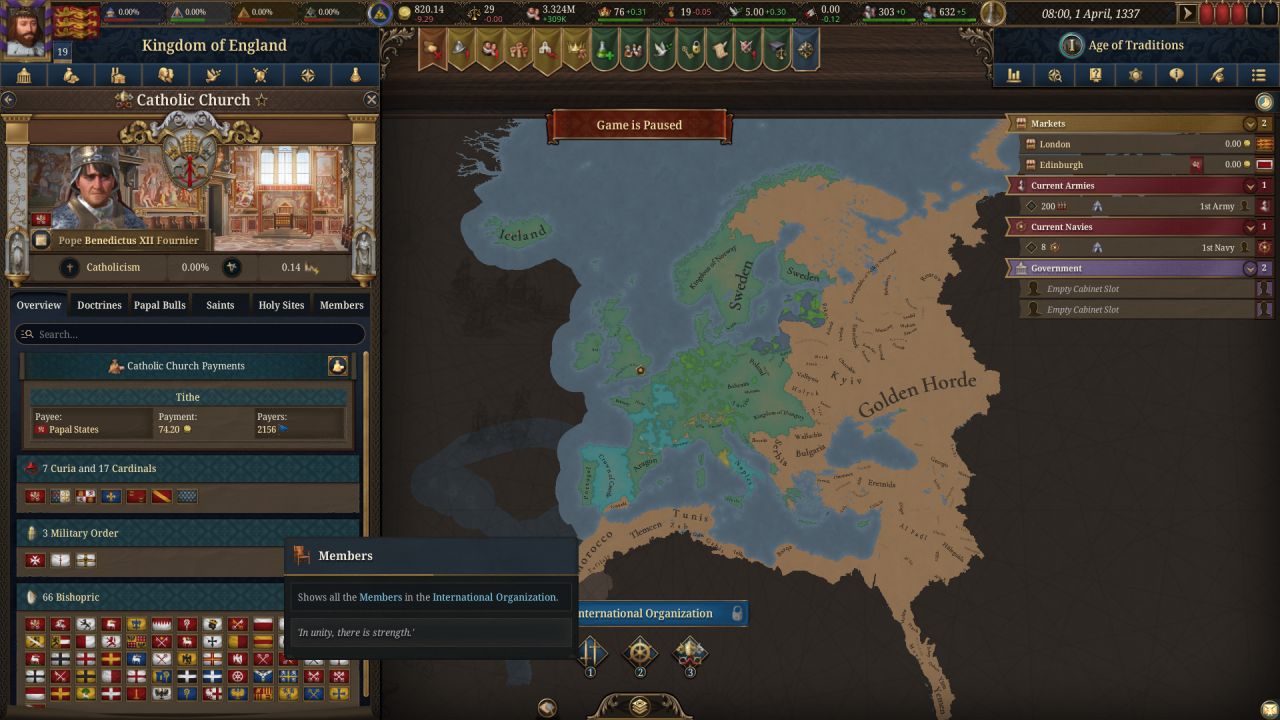
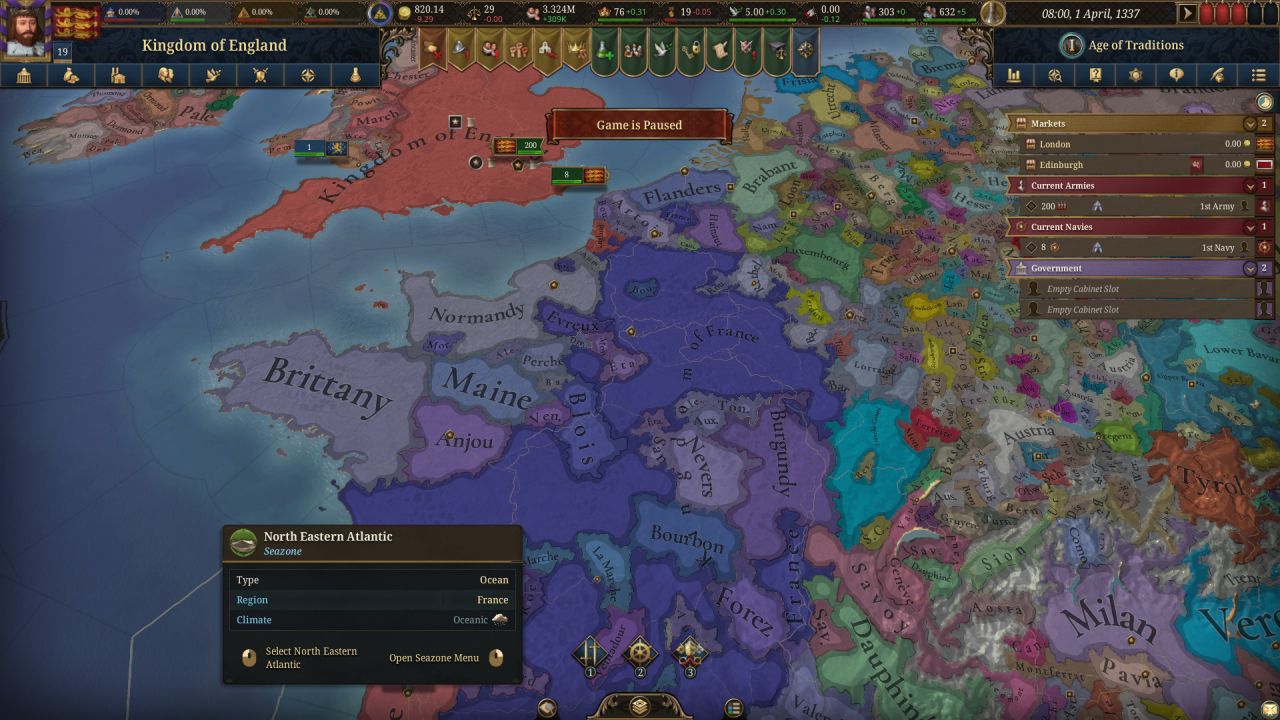
Visually, the game is striking. The map has never looked better, with clear terrain, distinct climates, and beautiful terra incognita areas waiting to be explored. Different map modes, political, cultural, religious, population, and trade, are all readable and visually appealing, helping you see the layers of your simulation at a glance. The art direction keeps a nice balance between clarity and style, giving the world both character and usability.
Everything here feels like it was designed to make managing your empire enjoyable. Honestly, in this department, Paradox has struck gold.
The audio follows suit. It leans into sweeping orchestral themes, brass, strings, and woodwinds, with just enough classical flavor to make your empire feel important. Some passages even reference historical motifs, and many more cater to the specific regions you are playing in.
The music builds atmosphere without screaming "strategy game!" every five seconds. There's a moment when you zoom out to see your colonial network stretching across the sea, the track swells, and you realize the weight of what you've built.
The audio gives you a sense of movement and consequence rather than background wallpaper. There could be some more variation to things, especially for those hardcore players who go on 6-hour runs and hear the same soundtrack after the start of yet another war.
Now, while it may not be the most revolutionary score in strategy gaming, it won't make you mute the sound after ten hours.
All in all, Europa Universalis V feels like the next big step for Paradox's grand strategy line. It keeps the sandboxy, everything-is-connected depth of EU4 but polishes nearly every system that needs it: population simulation, estates, trade, armies, and the map itself.
The game feels fluid, satisfying, and smartly designed, even if the AI isn't going to outwit a human player anytime soon. Performance feels jittery sometimes and will often face issues, but it seems to have been getting better, and even though the late-game can still get a little heavy on low-end systems, it's far better than its predecessors.
Europa Universalis V isn't perfect; AI quirks, balance tweaks, and the occasional micro-management tedium remain. But when it clicks, it's a deep, rewarding, and endlessly playable grand strategy experience that feels like a proper evolution, not just an expansion.
If you've enjoyed EU4, or even just like the idea of running a nation and seeing every tiny detail tick along, Europa Universalis V is worth diving into. I really love this game, the way everything clicks together, the fluidity of the systems, and the depth of the simulation is just fantastic. It's complicated, yes, but it's never unfair, and when it works, it works beautifully. Anyone who enjoys grand strategy games will likely adore this.
Contributor, NoobFeed
Verdict
Europa Universalis V perfects the grand strategy formula, deep, fluid, and endlessly rewarding. A living, breathing sandbox for strategy fans, even with a few AI stumbles.
95
Related News
No Data.