
AMD FSR 4.1 Roadmap Confirms Radeon RX 7000 Support in 2026 and RX 6000 in 2027
AMD’s long-awaited FSR 4.1 expansion finally delivers AI upscaling support to millions of older Radeon GPUs.
Hardware by Tanvir Kabbo on May 17, 2026
Advanced upscaling technologies have been the subject of many PC gamers' prayers for years, but artificial hardware limitations have continually constrained them. Each new generation seems to come with an "exclusive" feature that entices enthusiasts to buy the more expensive version, even though previous generations of GPUs were at least capable of doing the job.
It was this frustration that erupted in the Radeon community when AMD initially offered only FSR 4 for its latest hardware stack. After receiving significant pressure from the Radeon community, AMD has been aggressively working to improve FSR 4.1 and add support for many more devices, according to the company's gaming chief, Jack Huynh, who confirmed this on X.
This is the news that millions of Radeon users have been hoping for ever since the launch of FSR 4 with the newer architectures. The larger picture, of course, is that support is growing. Acknowledging what modders and power users have already demonstrated months ago – that these AI-induced upscaling technologies could have been run on older Radeon graphics cards from the beginning.
The Rollout Roadmap Finally Gives Older Radeon GPUs a Future
AMD's own release schedule is quite bold, given that the FSR 4 exclusive was only recently the subject of controversy among enthusiasts. Huynh announced that all Radeon RX 7000 graphics will officially support FSR 4.1 in July 2026. That opens the door for a large install base of newer Radeon cards to access AMD's new AI-based image reconstruction pipeline without upgrading their entire rigs.
Even more important is the second phase of the rollout. Additionally, AMD revealed that RDNA 2, featuring the much-anticipated Radeon RX 6000 series, will also be getting an "exciting" new FSR 4.1 update in early 2027. This news will be a breath of fresh air for those who still have graphics cards like the RX 6800 XT, RX 6700 XT, and RX 6600 in their systems.
FSR 4.1 isn't a niche feature launch limited to a select few feature titles. At launch, it is expected to support over 300 games and become one of the largest "instant deployments" of AI-enhanced upscaling technology in the PC market. For hardcore PC builders, this is like an upgrade in visual and performance for an existing game library of gigantic proportions.
Modders Already Proved the Hardware Could Handle It
What was most interesting about this whole thing was that, long before the official announcement about AMD, this situation was predictable. It was not long after that that the Radeon modding community was already fed up with waiting for official support. The availability of tools such as Optiscaler led to increased popularity, as people realized they could successfully implement both FSR 4.0 and FSR 4.1 INT8 on RDNA 2 and RDNA 3 hardware and achieve good results.
The results of those experiments made it clear that the older Radeon cards were not really too old to handle AMD's new upscaling technologies. Rather, the community showed it was more of a software restriction than a hardware one. While the scaling is unofficially viable, the image reconstruction quality and frame stability are already proving viable on higher-end RDNA 2 cards.
That put increasing stress on AMD. If the fans can use advanced features with tools that are not released by the official yet, it doesn't seem like a technical requirement anymore, but rather a marketing strategy. The fact that AMD knew about the optics issue is evident.
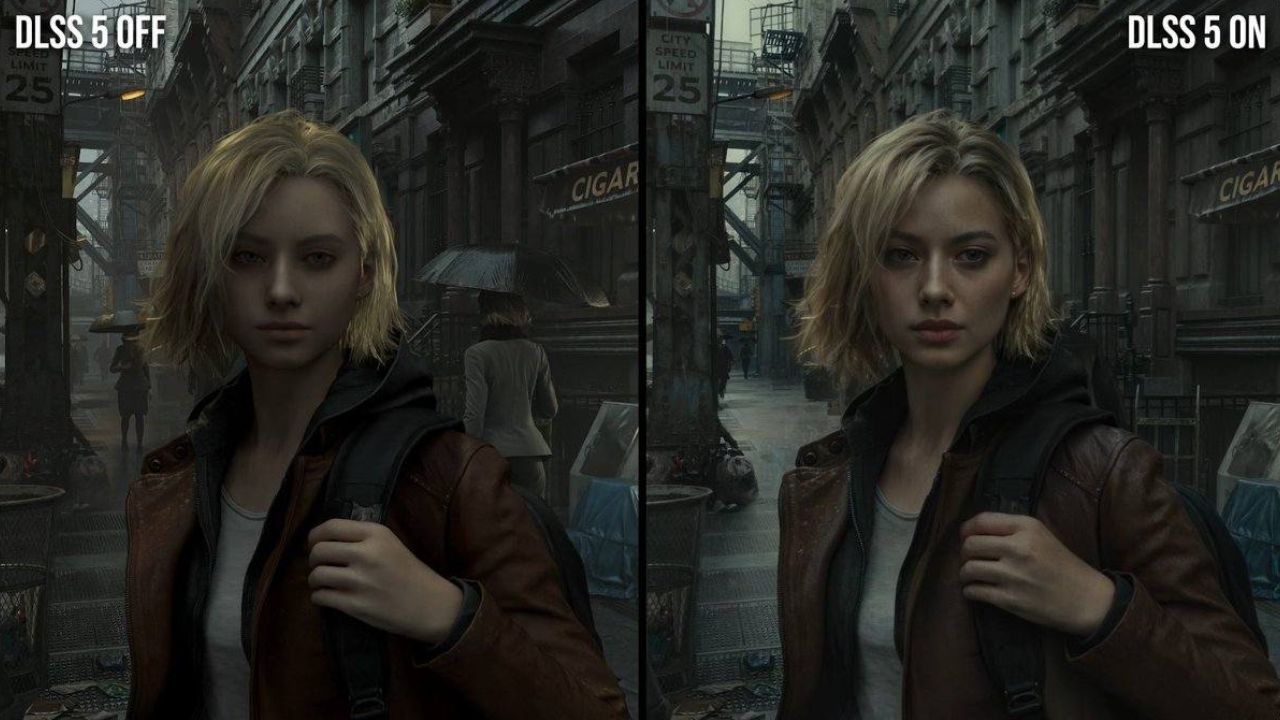
FSR 4.1 Could Become AMD's Strongest Anti-DLSS Argument Yet
This means that AMD is in an entirely different position in the current AI upscaling war than NVIDIA. NVIDIA has increasingly locked its more advanced features — in particular, newer versions of its DLSS Frame Generation technology — with its newest RTX cards. NVIDIA has always been on the side of offering more advanced AI features to push for higher upgrade rates, with older GeForce cards getting some DLSS support.
AMD is now doing just the opposite. In this way, AMD is clearly indicating to Radeon users that the platforms they have invested in are still relevant years after launch, even RDNA 3 and ultimately RDNA 2. This is a good message for PC gamers who are already tired of the high price tag on GPUs and the increasingly segmented generation-based market.
What's more important is that AMD could pick up a real asset: community trust. For years, Radeon fans have been saying that, as a company, AMD should offer open, intergenerational support for its software products as a serious competitive edge. With this announcement, this philosophy becomes reality on a vast scale.
AMD's announcement of FSR 4.1 for older Radeon graphics cards is more of a reaction to the current market of modern PCs than a typical feature update.
Gamers are holding on to their GPUs longer. Gamers are staying with their GPUs. For upgrades, costs are going up. It's becoming increasingly unfashionable to support software that relies on artificial generation. Right now, AMD seems to know the truth much better than most hardware vendors.
Support for Radeon RX 7000 cards will be available in July 2026, while RX 6000 cards will be introduced a year later in early 2027, leaving millions of current systems with a free upgrade to a new rendering pipeline.
And most of all, the modding community got the ball rolling until AMD got around to it. The fact that this seems to be the most obvious indication that the future of PC gaming features will be shaped more by communities than marketing departments, which are no longer willing to have their fun limited by arbitrary restrictions.
Senior Editor, NoobFeed
Gaming Hardware Updates
No Data.