
AORUS GeForce RTX 5080 vs. RTX 4080 Super: Complete Comparison
The RTX 5080 delivers notable advancements in ray tracing and AI-powered upscaling compared to the RTX 4080 Super.
Hardware by Tanvir Kabbo on Aug 11, 2025
AORUS GeForce RTX 5080 is available now, though finding it in stock may still be a challenge. The new 50 Series GPUs come with improved performance, DLSS 4, and other advanced AI-powered technologies designed to elevate gaming experiences. While having the latest GPU is exciting, many gamers wonder how RTX 5080 compares to RTX 4080 Super, especially if they already own a solid 40 Series GPU.
RTX 4080 Super is arguably the best 40 Series card available without entering the extremely high price range of RTX 4090. To offer some clarity, we compared RTX 4080 Super with RTX 5080. We own an RTX 4080 Super and appreciate its excellent balance of power between the 4070 Ti and 4090. With RTX 5080 now on the desk, we wanted to determine whether upgrading is truly worth it, considering it uses more power and costs more.
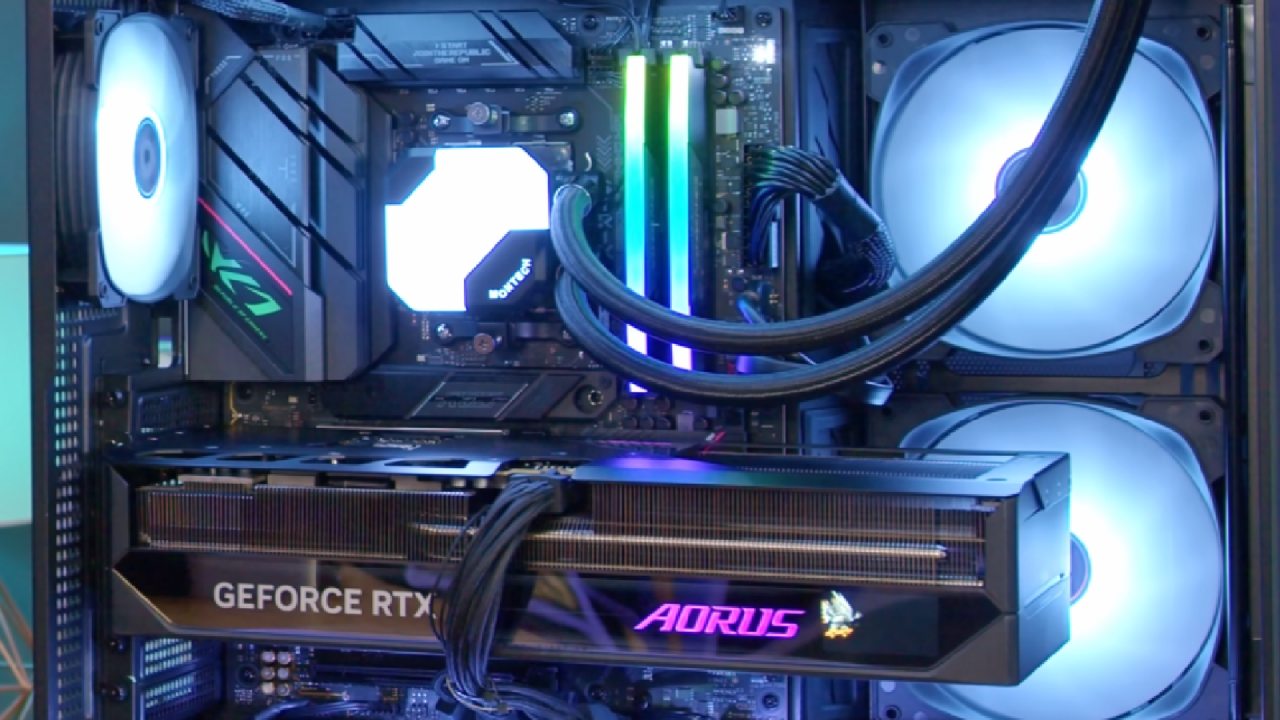
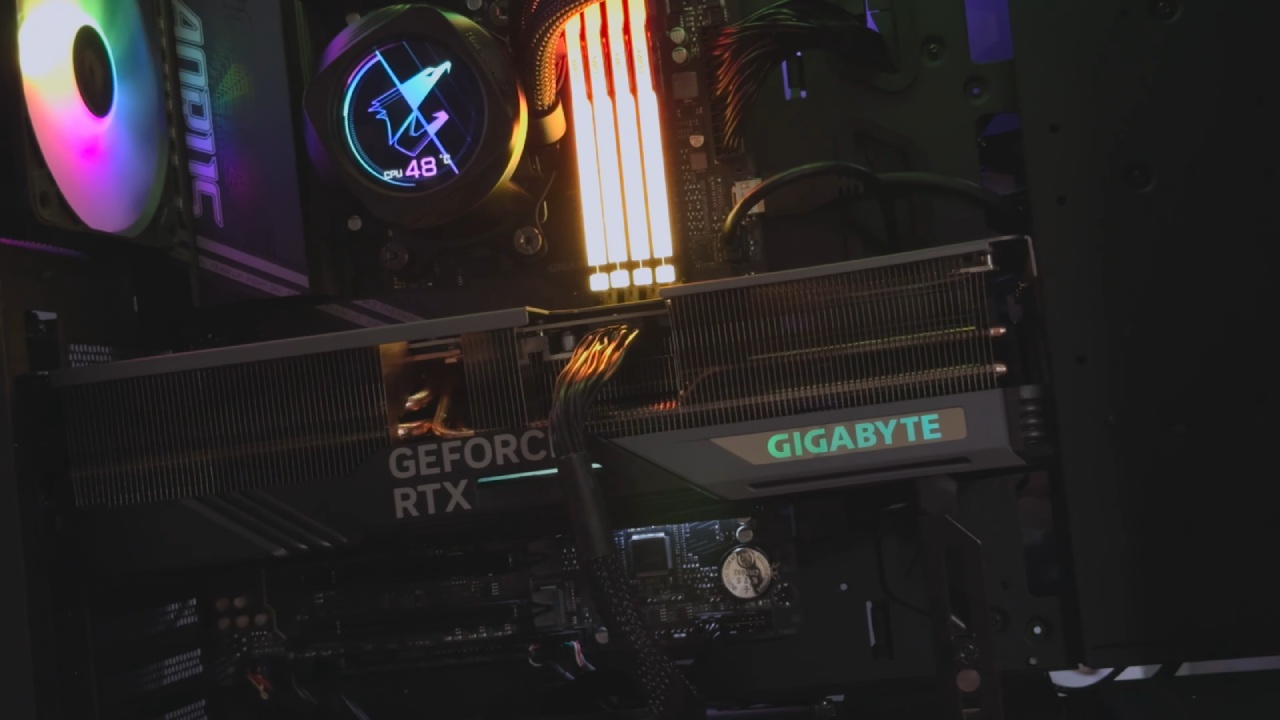
For this comparison, we tested Aorus RTX 5080 Master Ice against Gigabyte RTX 4080 Super Gaming OC. All tests were conducted on our daily gaming PC, which features an AMD Ryzen 9 9900X, 64GB RAM clocked at 6000MT/s, an Aorus Waterforce 360 X2 cooler, and an X870 Aorus Elite WiFi 7 motherboard.
Design and Features of Aorus RTX 5080 Master Ice
Aorus RTX 5080 Master Ice is a high-end card from Gigabyte, packaged in a large box containing the GPU and some new accessories. Unlike previous designs, the support bracket is no longer motherboard-mounted; instead, it uses metal rails screwed into the GPU and supported by a foot. This design frees you from motherboard restrictions, which is great for those upgrading to newer boards like the X870.
One standout feature is the new fan included—the Screen Cooling Plus. This fan mounts on top of the GPU and helps expel heat from the cooling cutout, improving heat dissipation. While it seems late for GPUs to introduce such a feature, I tested it to see if it makes a difference.
The box also includes a white 12V cable to match the GPU's color scheme. The card itself boasts a sleek design with a triple-fan layout illuminated by RGB Halo technology around the fan edges. Additional RGB lighting highlights the Aorus logos on the back and sides, including a customizable LCD Edge View screen that displays sensor indicators or custom graphics.
RTX 5080 Master Ice measures 360mm long, 150mm wide, and 75mm thick. It offers one HDMI 2.1b port and three DisplayPort 2.1b ports. To power this card, an 850W power supply is recommended. The white shell contrasts nicely with typical black PC builds, adding a unique aesthetic.
Technical Specifications and Clock Speeds
On paper, RTX 5080 comes with 16GB of GDDR7 RAM clocked at 30GB/s. RTX 4080 Super also has 16GB of GDDR6 RAM but runs at 23GB/s. Both cards feature a 256-bit memory bus.
RTX 5080 includes 10,752 CUDA cores with a core clock of 2850MHz, overclocked from the reference 2617MHz. RTX 4080 Super has 10,240 CUDA cores and a core clock of 2595MHz, overclocked from 2550MHz. 5080's higher core count and clock speed hint at better out-of-the-box performance and more overclocking headroom.
Benchmark Testing Environment and Settings
The benchmarks were run using the same PC build, settings, and game configurations to ensure fair comparisons. I did not apply any overclocking tweaks through Gigabyte's control center on RTX 5080.
However, RTX 4080 Super was slightly overclocked with a +160MHz boost clock (2755MHz), a 25% increased power limit, an 88°C temperature limit, and a 998MT/s increase in memory speed (24GB/s). DLSS 4 and other 50 Series exclusive features were disabled for the initial tests, although DLSS 4 results are included later.
Game Performance Comparisons
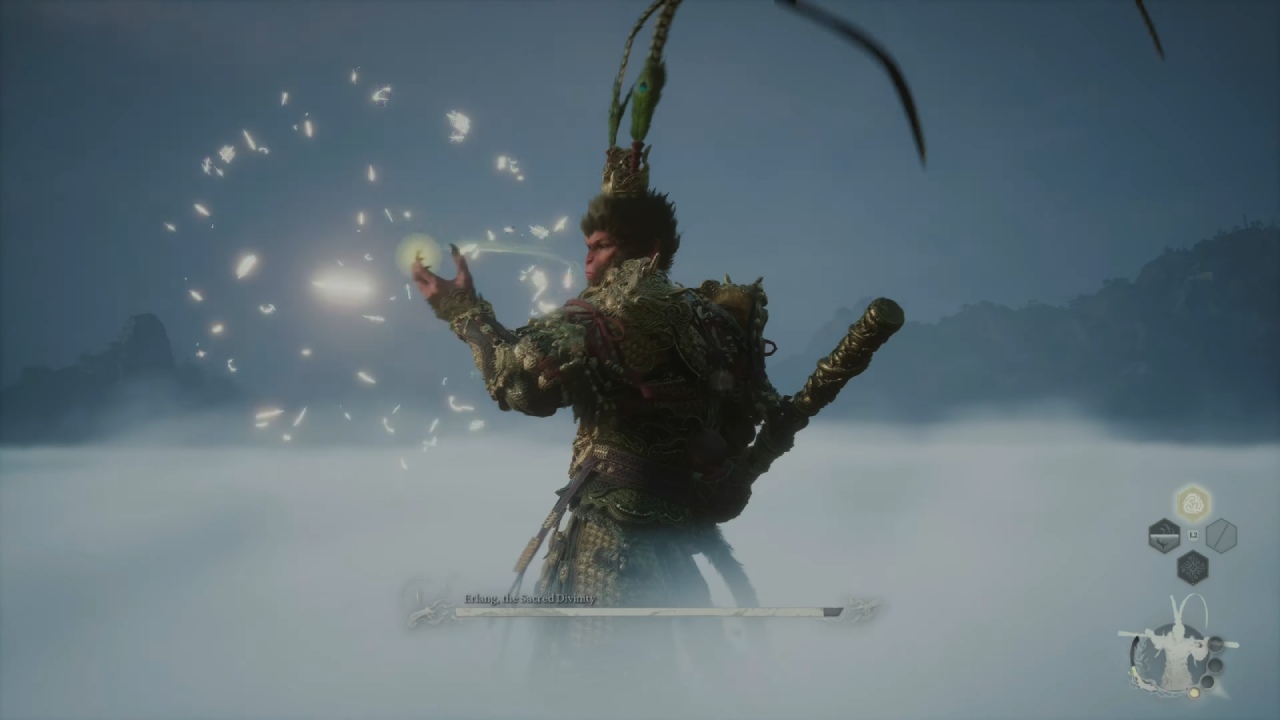
The first game tested was Black Myth: Wukong, which does not support DLSS 4 Frame Generation. The scores at both Ultra Performance and Quality presets were close, indicating that the raw power of RTX 5080 is not drastically ahead of RTX 4080 Super.
Next, Cyberpunk 2077 was tested without Frame Generation to focus on raw performance. RTX 5080 uses a new Transformer neural network DLSS, unavailable on the 40 Series GPUs. Testing revealed that enabling Frame Generation provides RTX 5080 with a noticeable performance boost. Turning off upscaling features, however, shows only minor differences between the cards.
Dragon Age, a demanding game with maxed-out settings, showed that RTX 5080 struggles to maintain 4K 60 fps without DLSS.
In Indiana Jones and the Great Circle, the RTX 5080 genuinely excels at ray tracing. At medium settings, RTX 5080 sustained about 50 fps with ray tracing enabled and DLSS off, but RTX 4080 Super could only reach 8 fps, which rendered it unplayable. When ray tracing and DLSS are disabled, performance between the two cards is similar, highlighting RTX 5080's superior ray tracing capabilities.
DLSS 4 and Multiframe Generation Performance
Additional tests on games supporting DLSS 4 show that multiframe generation offers an impressive performance uplift, likely contributing to RTX 5080's generational performance gains over the 40 Series.
Screen Cooling Plus Fan Impact
We monitored temperatures with and without the Screen Cooling Plus fan on RTX 5080 during a Steel Nomad stress test. With the fan attached, GPU temperatures hovered around 66-67°C at roughly 2100 rpm, pulling about 360W of power.
Without the fan, temperatures rose slightly to 68-69°C at the same fan speed. The 2°C difference was minimal and may be better addressed by optimizing system airflow rather than relying solely on this extra fan. Results can vary based on PC case and airflow.
Final Thoughts
Comparing these two GPUs reveals that their raw performance is closer than expected. Although its support for games is still limited, RTX 5080's ray tracing and DLSS 4 features are excellent and provide an insight into future gaming technologies to come. RTX 4080 Super, on the other hand, is still a formidable competitor since it offers great value and can manage ray tracing when used with DLSS.
Numerous games support DLSS 3, guaranteeing playable experiences without requiring special hardware. With its new AI algorithms and higher performance ceiling, RTX 5080 provides superior future-proofing, but RTX 4080 Super is still a good option for gamers on a tight budget.
RTX 5080 is a good choice if you want the newest and greatest GPU to ensure your system is future-proof. But for the majority of games, RTX 4080 Super offers outstanding performance and might be more affordable. Ultimately, your choice depends on budget and the importance of cutting-edge features like DLSS 4 and advanced ray tracing.
Check Our Other Articles:
- GeForce RTX 5090 Unleashed: Is NVIDIA's New Flagship the Ultimate 4K Gaming GPU?
- NVIDIA GeForce RTX 5080 Review (2025): Still A 4K Gaming Powerhouse?
- RTX 5090 Performance Testing In GTA 5 – 1080p, 1440p, and 4K Max Settings Benchmark
- NVIDIA RTX 5070 Review: Mid-Range Muscle or Marketing Hype?
- RTX 5070 Ti Review: Performance, Thermals & Power Efficiency Tested
- ASUS ROG Astral RTX 5090 OC Edition Review: 32GB GDDR7 & 4K Gaming Benchmark
- ASUS GeForce RTX 5090 LC Liquid Cooled GPU Review: Unmatched Silence & Speed
- MSI GeForce RTX 5090 32GB SUPRIM SOC Review: Power Efficiency, Cooling, and Gaming Performance
- INNO3D RTX 5060 Ti 16 GB X2 Review: Gaming Benchmarks, Temps, and Power Efficiency
- HP Omen 45L Review: RTX 5090 Performance, Thermals, and Value Analysis
- ASUS TUF Gaming GeForce RTX 5060 Ti Review: DLSS 4, Power Efficiency, and Gaming
- ASUS Prime RTX 5060 Ti OC 16GB Review: DLSS 4, Ray Tracing, & Thermals Tested
- NVIDIA GeForce RTX 5060 Review: Specs, Gaming, and Cost per Frame
- MSI GeForce RTX 5090 GAMING TRIO OC Review: A Monster Power GPU
Senior Editor, NoobFeed
Gaming Hardware Updates
No Data.