
Intel Arc B570 vs. GTX1080Ti Performance Comparison in Modern Games
Budget GPU performance in modern titles shows how new architectures compete with historic flagship hardware.
Hardware by Shinji Okazaki on Dec 28, 2025
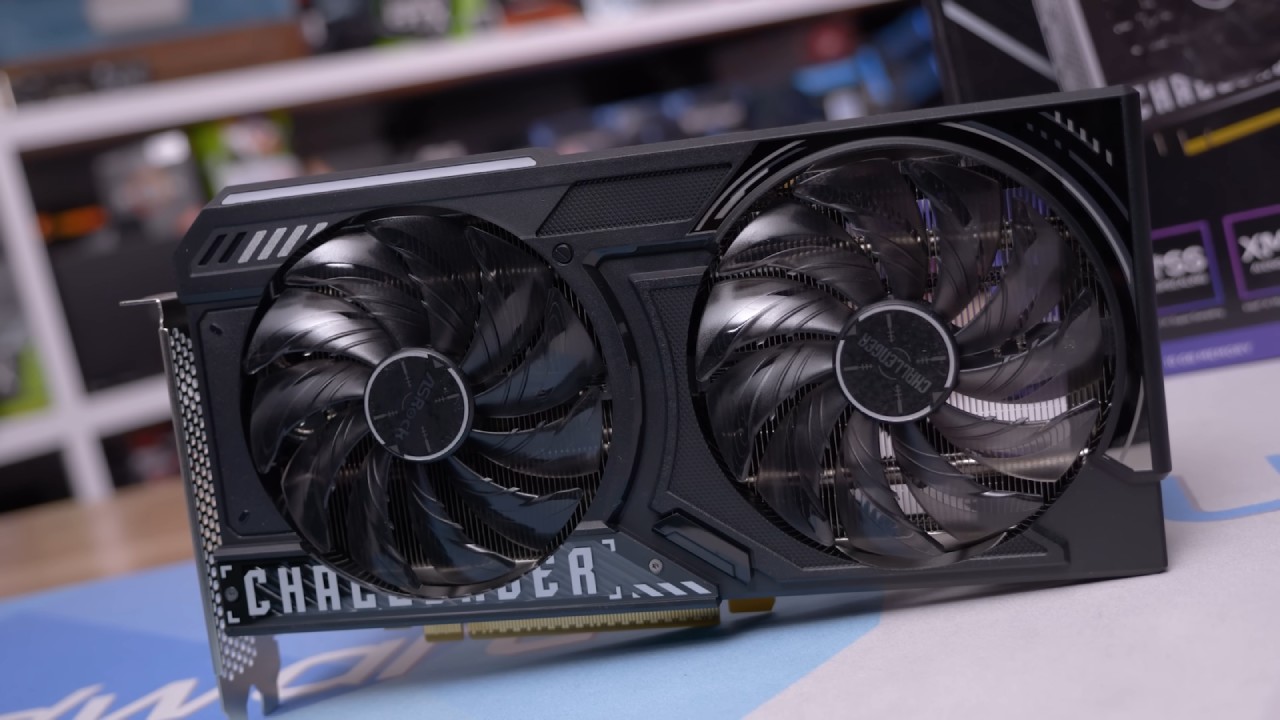
Intel Arc B570 is undoubtedly the best-looking graphics card in its price range right now, even though it doesn't say much. For about $180, you can get hardware ray tracing, upscaling, and frame creation with 10GB of VRAM.
The only direct competitors have older architectures, lack at least one current feature, and usually have only 6GB of VRAM. If you're open to buying used, you could get the GeForce GTX 1080 Ti, which many people still consider the best graphics card ever, for the same price.
The GTX 1080Ti's Legacy
People definitely call the GTX 1080 Ti the GOAT. That term is too much, but it also has some emotional validity. GTX 1080 Ti is from a different era of PC gaming, but it is still a flagship that can run 9 out of 10 recent PC games, even though it is almost 10 years old. When it first came out, it cost $700, but now it costs between $150 and $200. There aren't any new graphics cards at that price with 11GB of VRAM. That amount of memory can still be important in newer games.
Price Segment Setting and Test System
Arc B570 is the only new graphics card in this price range that has almost as much memory. It has 10GB of VRAM. It is the smaller version of the B580 and enters a market full of inferior options like the 6GB RTX 3050, RX 6400, and RX 6500 XT. The latter one is very hard to explain, save for bus-powered versions.
The test machine has a Ryzen 57500F processor and 32GB of DDR56000 memory. The RAM package alone costs more than either graphics card at this point.
Arc Raiders Performance
Arc Raiders seemed like the best game to test an Intel Arc GPU with. Even though the researchers didn't know much about the genre, they were able to get good findings by spending enough time on the same map. With XAA and static lighting, the B570 averaged 92 fps at 1080p high. When high RTGI was enabled, performance decreased to 79 fps. There are higher settings, but the high preset is still the best choice for a competitive experience.
GTX 1080 Ti played at the same settings at 75 fps, which is really good given its age. Arc B570, on the other hand, gives you about 20% greater performance, which is what this is all about. Even with ray tracing turned on, the B570 is still as fast as the GTX 1080 Ti when it's not operating.
Dying Light: The Beast
Dying Light: The Beast is one of the games that comes with the Arc B570. B570 averages 61 fps in native 1080p high settings outdoors, with lows in the 40s. Going down to medium keeps the frame rate around 60fps. At the Ultra Plus setting, XESS upscaling raises the average to 77 fps, with lows just below 60.
GTX 1080 Ti can also use XESS and FSR. Still, it doesn't have the hardware acceleration needed for better image quality. When the settings are the same, it lags by around 20%, hardly reaching 50 fps at native resolution and barely reaching 60 fps with aggressive upscaling.
Assassin's Creed Shadows
Performance in Assassin's Creed: Shadows isn't as good. Arc B570 averages 41 fps at native 1080p HD. Upscaling doesn't give you enough of a boost to reach 60 fps, and even on very low settings with XESS, it's hard to get there. You may now generate frames, and while people are starting to like it more, it doesn't completely fix the performance problems. When you compare them directly, the Arc B570 is still 10–20% better than the GTX 1080 Ti. This is because it has a full XMX-powered XESS, which improves image quality.

Testing for Battlefield Multiplayer
We tested Battlefield multiplayer in Conquest mode on Liberation Peak. At native 1080p high, the Arc B570 averages 82 fps, with 1% lows just below 60. GTX 1080 Ti is still playable and fun, but it is about 15% slower.
The Last of Us Part Two and VRAM Limits
At first, testing at maximum settings showed the Arc B570 was quite fast, but it suddenly stopped working due to VRAM issues. The smooth 50fps experience turned into heavy stuttering. The problem was fixed by lowering the texture and shadow quality, or by changing from very high to high. Arc B570 is more than 20% faster than the GTX 1080 Ti here, though the 11GB card is still more stable at very high settings. This was the only test where 11GB worked, but 10GB didn't.
Kingdom Come 2
Kingdom Come 2 works fine on the Arc B570. The experimental default isn't realistic, but the high settings average 61 fps. High settings provide greater consistency and an average of over 80 fps. The performance difference between the Arc B570 and GTX 1080 Ti is smaller here, but the Arc still wins by about 15%.
How Spider-Man 2 Works
Spider-Man 2 is still hard. The gameplay is fine most of the time; however, moving around makes it stutter a lot. Arc B570 averages 67 fps at 1080p medium, with 1% of the time dropping to roughly 30 fps. GTX 1080 Ti is around 10% lower. Both cards still have trouble getting a steady 60 fps.
Results for Cyberpunk 2077
Intel Arc is still doing well in Cyberpunk 2077. Arc B570 gets more than 90 fps at 1080p high, while the GTX 1080 Ti gets 75 fps. Ray tracing is also an option. RT Ultra with XESS Quality, which renders at 635p internally, gets close to 60 fps. It is not perfect, but it is playable and not doable with the GTX card.
GTA V Enhanced Edition
In GTA V Enhanced Edition, both GPUs work fine. At very high settings, both stay about 130 fps. Arc B570 can do ray tracing at native 1080p, very high, with an average of 83 fps and lows slightly below 60.
Marvel Rivals and UE5 Games
Marvel Rivals shows off the Arc B570's best features. It gets slightly under 60 fps at native resolution, while the GTX 1080 Ti gets less than 50 fps. GTX card goes over 60 fps at lower quality, but the Arc B570 gets to about 80 fps. UE5 titles still prefer modern architectures.
Ray Tracing Only Games
Ray tracing technology is needed for Indiana Jones and Doom: The Dark Ages, which means the GTX 1080 Ti is out right now. Arc B570 can run Indiana Jones at medium settings, averaging 61 fps. With Ultra Plus XESS, the frame rate reaches 73 fps. Doom: The Dark Ages takes up a lot of RAM. At 1080p low, the frame rate is over 60 fps. Using XESS Quality lets you switch to the Nightmare setting with only a small drop in performance and better graphics.
.jpg)
Final Thoughts
Intel Arc B570 is 15–20% faster than the GTX 1080 Ti and features hardware ray tracing, upscaling, and frame generation. You get a new GPU with a warranty, it uses less power, and you can use modern features. GTX 1080 Ti has been around for a long time, so its drivers are stable, but it won't see any further game optimizations. Intel, on the other hand, has steadily improved game performance and speed.
We want Intel to do well as a third major GPU competitor, and the Arc B570 is a real choice for under $200. GTX 1080Ti deserves respect for how long it lasts and how much it has changed the game, but if you're going to spend $200 on a graphics card in 2025 or 2026, it doesn't make sense to get a GPU that is over ten years old, even if it is the GOAT.
Also, check our other hardware articles below:
- AMD Ryzen 9 9950X3D Review: Setting The Standard For 2025 Gaming CPU
- Amazon Luna 2025 Review: Is Prime Gaming's Cloud Service Your Go-To For Casual Fun?
- AMD RX 9070 XT Review: AMD's RDNA 4 Champion for 1440p Gaming
- GeForce Now Ultimate: Ditching Your Gaming PC For Cloud RTX 4080 Power?
- GeForce RTX 5090 Unleashed: Is NVIDIA's New Flagship the Ultimate 4K Gaming GPU?
- NVIDIA GeForce RTX 5080 Review (2025): Still A 4K Gaming Powerhouse?
- Intel Core Ultra 9 285K Review And Performance Breakdown (2025)
- AMD Ryzen 7 9800X3D Review: 3D V-Cache Goes God Mode with Stunning Gaming Performance
- Intel Core Ultra 9 285K vs AMD Ryzen 7 9800X3D: In-Depth Gaming Performance and Benchmark Comparison
- NVIDIA GeForce RTX 5080 Super Performance In Cyberpunk 2077: Path Tracing & DLSS 4.0 Tested
- RTX 5090 Performance Testing In GTA 5 – 1080p, 1440p, and 4K Max Settings Benchmark
- AMD Radeon RX 9070 XT In Cyberpunk 2077: Ray Tracing & FSR 4.0 Tested
- Intel Arc B580 Review: The $250 GPU Revolutionizing 1440p Gaming
- Intel Arc B570 Vs. B580: Value, Specs, And Real-World Gaming Performance
- RTX 5090 Laptop Vs. M4 Max MacBook Pro: Ultimate Raw Performance Vs. Battery Endurance
- Intel Arc b580 Vs. RTX 4060: Game Performance And Value Analysis
- RTX5090 Hell Is Us Demo 4K Ultra Benchmark: DLSS Vs. Native Performance Guide
- NVIDIA RTX 5070 Review: Mid-Range Muscle or Marketing Hype?
- Nintendo Switch 2 Review: Handheld Performance, Features & Value Breakdown
- RTX 5070 Ti Review: Performance, Thermals & Power Efficiency Tested
- Samsung Odyssey OLED G81SF Review 2025: Ultimate 32-Inch QD-OLED Gaming Monitor
- AMD RX 9070 Performance Review: Thermals, Clocks, and Real-World FPS
- AMD Ryzen 5 7600 Review: Best Budget Gaming CPU of 2025?
- AMD Radeon RX 7800 XT Review: RDNA 3 Power For Midrange Gaming
- Asus ROG RTX 5090 Astral OC Vs. Founders Edition: The 4K Gaming Benchmark
- ASUS ROG Astral RTX 5090 OC Edition Review: 32GB GDDR7 & 4K Gaming Benchmark
- Intel Core i5-13400F Gaming Performance: Still Worth It in 2025?
- ASUS GeForce RTX 5090 LC Liquid Cooled GPU Review: Unmatched Silence & Speed
- ASUS ROG Ally X Handheld Review: Double the Battery, Double the Comfort
- Lenovo Legion Go S Review: The Ultimate Steam Deck 2 Alternative
- Sapphire NITRO+ AMD Radeon RX 9070 XT Review: The Ultimate 4K Gaming GPU
- Alienware 16 Area 51 Review: The Ultimate 2025 Gaming Laptop
- Alienware Area-51 Review: Unmatched 4K, Thermal, and Acoustic Performance
- AMD Ryzen 7 7800X3D: Delivers Gaming Performance Far Beyond Expectations
- AMD Ryzen 9 7900X Review: Powering the AM5 Era with DDR5 & PCIe 5.0
- Intel Core i9‑14900K vs. AMD Ryzen 7 7800X3D: Power Profiles & Gaming Benchmarks
- Intel Core i9 14900K: Specs, Benchmarks, and Competitor Comparison
- Sapphire PURE AMD Radeon RX 9070 XT Review: Cooling, Specs & Gaming Benchmarks
- ASRock Radeon RX 7800 XT Challenger OC Review: Best Price-to-Performance GPU of 2025
Editor, NoobFeed
Gaming Hardware Updates
No Data.