
Pimax Dream Air VR Headset: Lightweight Design with Pancake OLED Optics
Pimax Crystal Super now features dual micro OLED displays running at 3840x3552 per eye.
Hardware by Tanisha Aria on Jan 12, 2026
New hardware from Pimax focuses on clarity, modularity, and enthusiast-grade PCVR speed. This is another step forward for Pimax's high-end VR. The newest news includes both an improved optical engine for a current headset and a brand-new, very small design that shows how competitive the VR market has become.
You may remember the Pimax Crystal Super as a VR gear with optical engines that could be switched out. Pimax has now released a new engine that can power two 3840x3552 micro OLED screens.
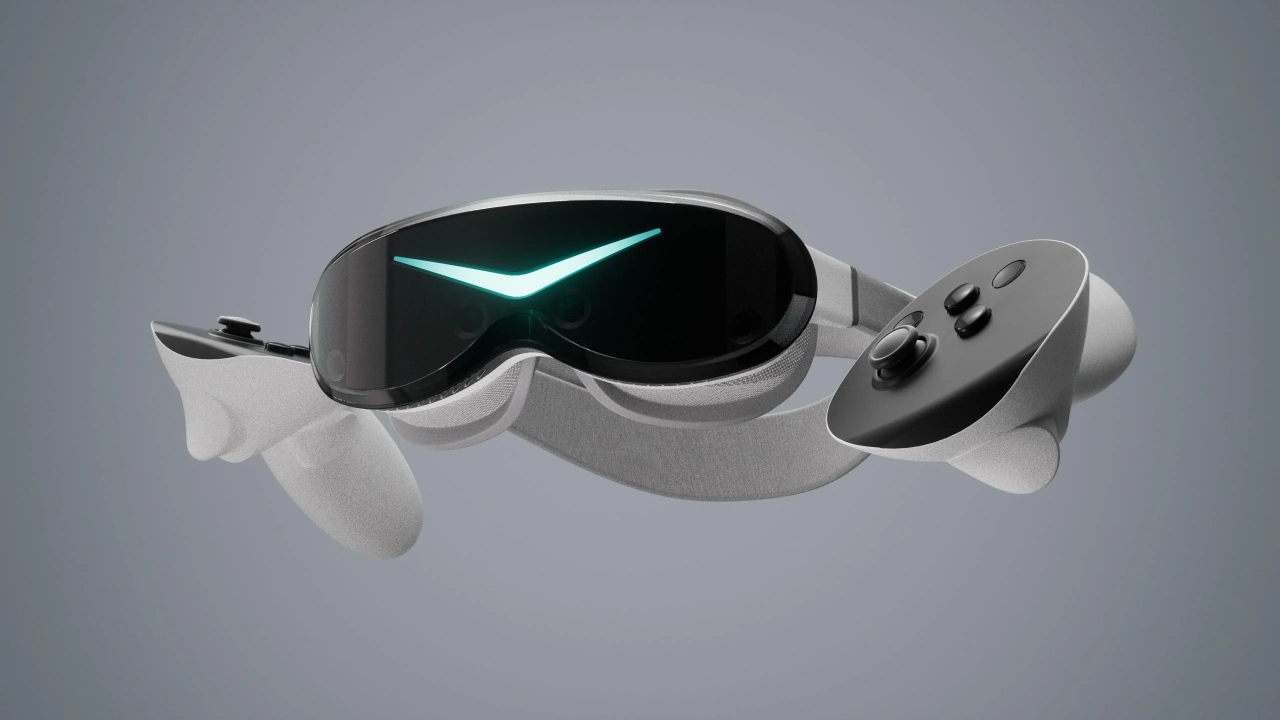
That resolution alone is truly amazing, and it makes the Crystal Super a headset that puts clarity first and is clearly aimed at high-end PCVR users. The update focuses on driving panels at native resolution rather than relying on internal upscaling tricks. This keeps the picture quality as pure and clear as possible.
The Pimax Dream Air
The brand-new Pimax Dream Air headset is the real star of the show, not the new visual engine. The optical engine is the same as the one in the Crystal Super, but the headset as a whole is smaller than just the optical module.
There is a lot of competition in the VR space, and Pimax has taken a sensible approach that prioritizes comfort without sacrificing high-end features.
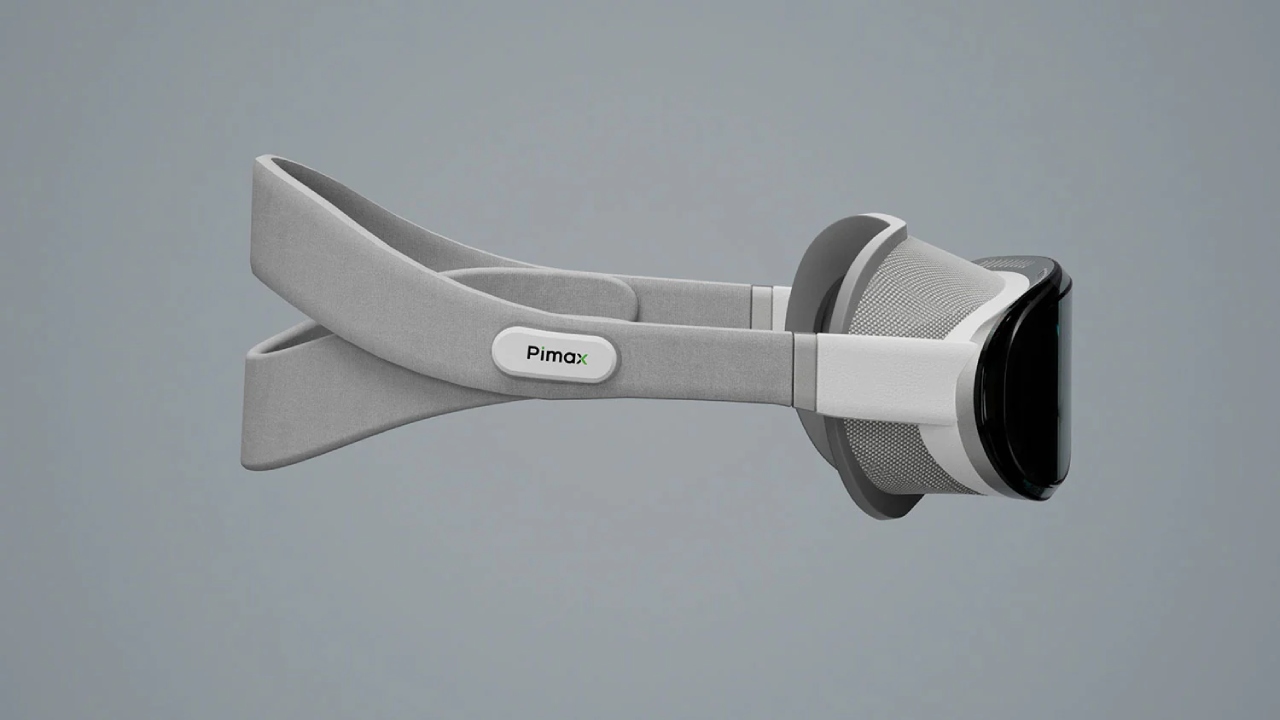
The Dream Air wants to be less than 170g. Pimax's goal is not to make the smallest headset ever. Instead, they are focusing on keeping important features, such as motorized IPD adjustment and magnetic lens inserts, for people who need prescription support.
Cooling, Tracking, and PCVR Focus
Even though it's small, the Dream Air has two fans, one for each screen, to make sure it stays cool. It also has four built-in cameras that support black-and-white passthrough and inside-out tracking.
This headset isn't meant to be used on its own. It was made for PCVR users who want the clearest sound possible, which still means using a wired link.
The Dream Air uses Display Stream Compression to achieve refresh rates of up to 90 Hz at its very high resolution. This lets it hit its performance goals. Another important thing is that the displays don't do any internal upscaling, so the picture quality stays the same.
Pancake Optics and Image Quality
The glasses make a big difference in picture quality. These are not your average pancake-shaped glasses; they are used in this, Pimax's first headset. These are pancake lenses with a curved shape, like the ones in the Apple Vision Pro.
This design helps keep the field of view pretty wide—Pimax aims for about 110°—while also reducing flashing and blooming around bright objects by a large amount. Early views suggest the glare control is among the best we've seen so far, but we won't know for sure until we test it for a longer period.
As a surprise, the lens shape makes them more comfortable for people with long eyelashes, as their eyelashes are less likely to rub against the lenses. When you blink, you can feel a breeze, which is probably due to the lens's shape and the cooling inside. It feels weird, but not bad.
Eye Tracking and Performance Optimization
The Tobii eye-tracking in the Dream Air is powered by 10 infrared lights per eye. This enables features for social engagement and focused rendering.
Focused rendering wasn't covered in this lesson. Still, it's an important way to reduce GPU load, making it easier to drive high-resolution screens without slowing down the computer.
Clarity, Brightness, and Visual Impressions
Once everything is set up correctly, the general clarity is clear right away. The sharpness of OLED makes reading gauges and small text very easy to see.
There is still some sample-and-hold blur, but it's not as noticeable as the amount of detail on the screen. The brightness seems to be between 100 nits and 150 nits, which is good for pancake OLED lenses, especially when used with external power.
Cable Design and Expandability
The split wire design is one of the most useful parts. On one side is DisplayPort, and on the other side is other info. A single-sided cord can pull on lighter headsets unevenly. Hence, this design helps maintain the headset's balance and comfort.
The headset uses a standard USB-C port for the interface, and it also has an additional USB-C port for connecting devices.
The Dream Air has two threaded mounting points, even though it is not as flexible as some other Pimax designs. These let you use different types of head straps, like a halo-style mount that lets you flip the headset up and down without taking it off completely.
Future Accessories and Tracking Options
To make things more comfortable and useful, Pimax is working on an automatically tightening strap and a better audio strap. Tracking is another important subject. Pimax is giving flexible solutions since Lighthouse base stations aren't easy to find anymore.
People who use flexible headsets can pick between a Lighthouse front plate or an SLAM-based front plate with cameras that track from the inside out. There will be two versions of the Dream Air: one with built-in cameras and one without. This will give users a clear choice based on their preferred tracking environment.
Final Thoughts
The Pimax Dream Air and the improved Crystal Super engine make it clear that they are dedicated to PCVR with a high resolution and won't settle for less. Pimax is putting itself in a strong position for fans who want the clearest images while also prioritizing balance and comfort.
It does this by focusing on high-resolution micro OLED panels, advanced pancake optics, and well-thought-out ergonomics.
Also, check our other hardware articles below:
- AMD Ryzen 9 9950X3D Review: Setting The Standard For 2025 Gaming CPU
- Amazon Luna 2025 Review: Is Prime Gaming's Cloud Service Your Go-To For Casual Fun?
- AMD RX 9070 XT Review: AMD's RDNA 4 Champion for 1440p Gaming
- GeForce Now Ultimate: Ditching Your Gaming PC For Cloud RTX 4080 Power?
- NVIDIA GeForce RTX 5080 Review (2025): Still A 4K Gaming Powerhouse?
- Intel Core Ultra 9 285K Review And Performance Breakdown (2025)
- AMD Ryzen 7 9800X3D Review: 3D V-Cache Goes God Mode with Stunning Gaming Performance
- Intel Core Ultra 9 285K vs AMD Ryzen 7 9800X3D: In-Depth Gaming Performance and Benchmark Comparison
- NVIDIA GeForce RTX 5080 Super Performance In Cyberpunk 2077: Path Tracing & DLSS 4.0 Tested
- AMD Radeon RX 9070 XT In Cyberpunk 2077: Ray Tracing & FSR 4.0 Tested
- Intel Arc B580 Review: The $250 GPU Revolutionizing 1440p Gaming
- Intel Arc B570 Vs. B580: Value, Specs, And Real-World Gaming Performance
- RTX 5090 Laptop Vs. M4 Max MacBook Pro: Ultimate Raw Performance Vs. Battery Endurance
- Intel Arc b580 Vs. RTX 4060: Game Performance And Value Analysis
- RTX5090 Hell Is Us Demo 4K Ultra Benchmark: DLSS Vs. Native Performance Guide
- NVIDIA RTX 5070 Review: Mid-Range Muscle or Marketing Hype?
- Nintendo Switch 2 Review: Handheld Performance, Features & Value Breakdown
- RTX 5070 Ti Review: Performance, Thermals & Power Efficiency Tested
- Samsung Odyssey OLED G81SF Review 2025: Ultimate 32-Inch QD-OLED Gaming Monitor
- AMD RX 9070 Performance Review: Thermals, Clocks, and Real-World FPS
- AMD Ryzen 5 7600 Review: Best Budget Gaming CPU of 2025?
- AMD Radeon RX 7800 XT Review: RDNA 3 Power For Midrange Gaming
- Asus ROG RTX 5090 Astral OC Vs. Founders Edition: The 4K Gaming Benchmark
- Intel Core i5-13400F Gaming Performance: Still Worth It in 2025?
- ASUS GeForce RTX 5090 LC Liquid Cooled GPU Review: Unmatched Silence & Speed
- ASUS ROG Ally X Handheld Review: Double the Battery, Double the Comfort
- Lenovo Legion Go S Review: The Ultimate Steam Deck 2 Alternative
- Sapphire NITRO+ AMD Radeon RX 9070 XT Review: The Ultimate 4K Gaming GPU
- Alienware 16 Area 51 Review: The Ultimate 2025 Gaming Laptop
- Alienware Area-51 Review: Unmatched 4K, Thermal, and Acoustic Performance
- AMD Ryzen 7 7800X3D: Delivers Gaming Performance Far Beyond Expectations
- AMD Ryzen 9 7900X Review: Powering the AM5 Era with DDR5 & PCIe 5.0
- Intel Core i9‑14900K vs. AMD Ryzen 7 7800X3D: Power Profiles & Gaming Benchmarks
- Intel Core i9 14900K: Specs, Benchmarks, and Competitor Comparison
Contributor, NoobFeed
Gaming Hardware Updates
No Data.