
RDNA 2 and State of Mid-Range Gaming in 2025
Mid-range RDNA2 GPUs face growing limitations as modern games demand more VRAM, stronger ray tracing, and efficient upscaling support.
Hardware by Nahe Yan on Nov 11, 2025
RDNA2 is already on shaky ground. The RX 6400 and 6500 XT, the most basic models, don't have enough VRAM for modern games. Their ray tracing cores are only the first generation, and you can only get full AI upscaling through unapproved means.
The RX 6600 XT, its 6650 XT equivalent, and the non-XT versions are AMD's minimum viable products for gaming in 2025, according to the company's own documents. The question is still how well they work in real life.
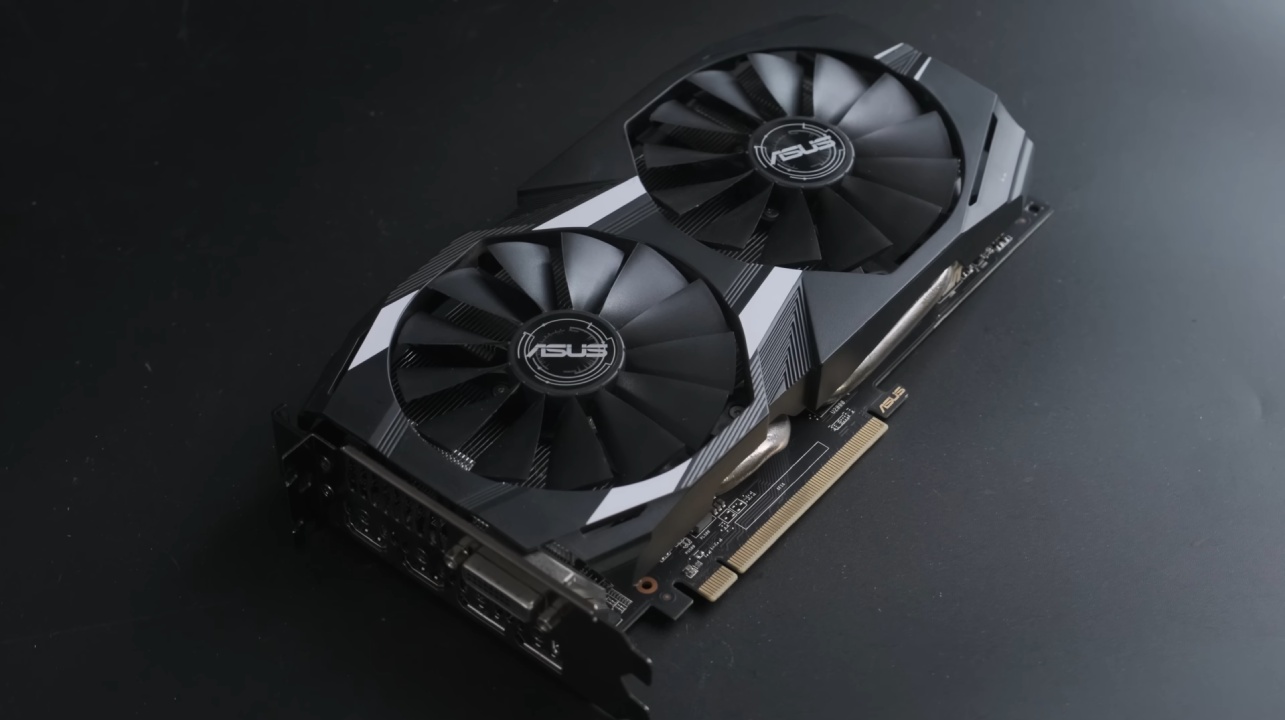
Driver Support and AMD's Change of Heart
AMD announced a few weeks ago that the RX 5000 and 6000 series GPUs, based on RDNA 1 and RDNA 2, would no longer receive day-one game optimizations. The community strongly reacted to this move, prompting AMD to change its mind shortly after.
The business made it clear that both generations of RDNA would still receive game-specific updates on day one. Still, they would be in separate development branches. This isn't full maintenance mode like GCN4 and 5, but it does mean it won't work with later RDNA models either.
Setting up the test and the market context
The RX 6600 XT remains a viable option for those who prioritize existing games over new ones. The card features 8GB of VRAM, supports ray tracing, and is available for approximately $150 on the used market. It was released in 2021 and proved to be a good GPU for gaming at 1080p and even some 1440p resolutions.
The Sapphire Nitro Plus is the test sample, and it is connected to a gaming PC that isn't too expensive. The benchmark suite has a mix of old and new games that run on different engines.
How Battlefield 6 Works
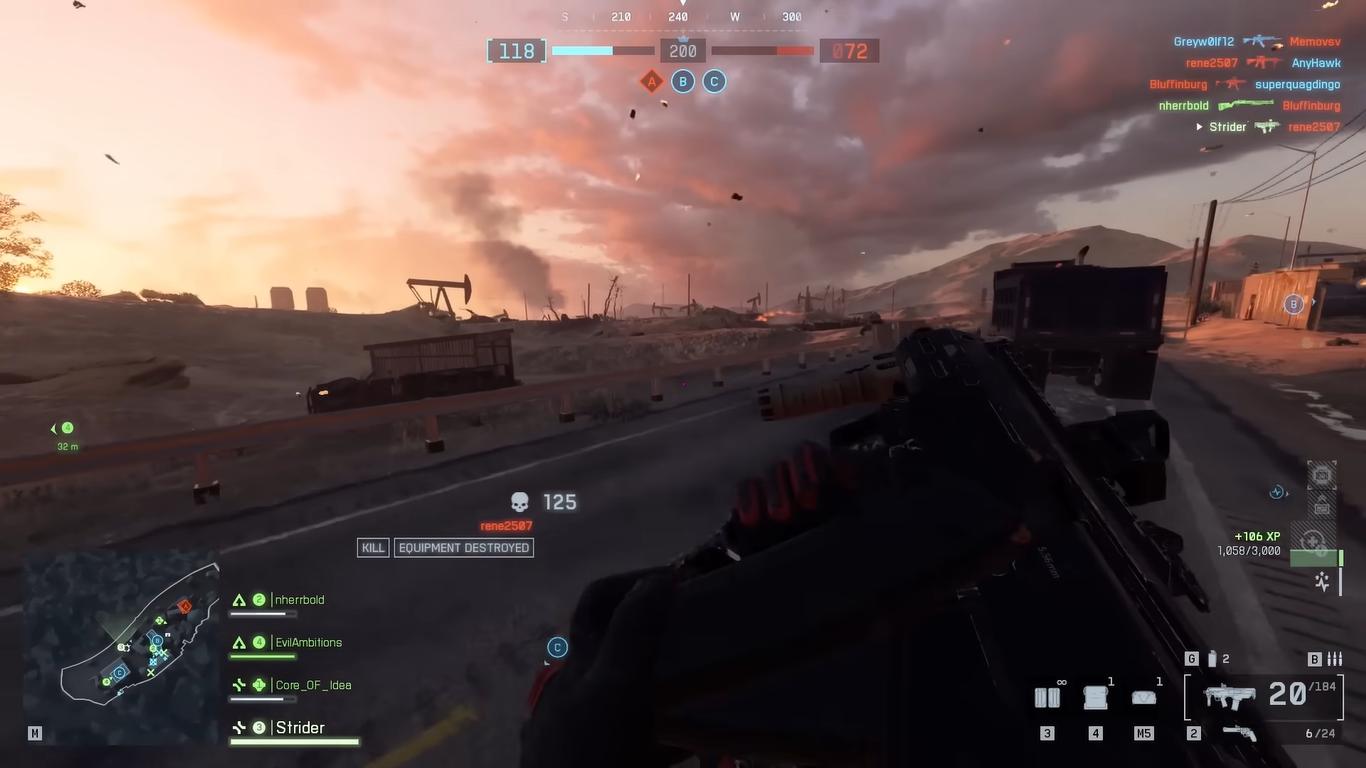
For an online shooter, Battlefield 6 doesn't need a lot of powerful hardware. The RX 6600 XT averaged 116 fps at 1080p low settings. The GPU reached almost 96% utilization, while the CPU stayed high. A better processor might make things a little better, but the GPU can still keep up with high-refresh performance in this game.
Doom: The Dark Ages
The newest version of Doom added ray tracing features that are hard for 8GB GPUs. The RX 6600 XT struggles to maintain 60 fps at native 1080p resolution on low settings. Enabling FSR in quality mode increased the average frame rate to 85 fps, making the game easier to play without significantly compromising the graphics.
The Last of Us Part 2
The Last of Us Part Two does better than predicted. Very high settings exceed the card's VRAM limit, but high settings provide an average of 60 fps. Lowering to medium ensures a steady 60 fps with minimal loss of quality.
Kingdom Come two runs well in all settings. When the resolution was set to 1080p high, the frame rate averaged 74fps. Ultra settings dropped just below 60 fps, while 1440p high stayed at 43 fps. 1440p still works for smooth gameplay when upscaling is turned on.
Dying Light: The Beast
Dying Light: The Beast ran at 1080p high and got an average of 40 fps when playing in an open world. Reducing the frame rate to medium almost doubled it to 80fps. The game's own engine works well, but the GPU's memory buffer limits its performance.
Shadows of Assassin's Creed
Assassin's Creed Shadows features a custom engine that alters how textures behave. At 1080p high, the average frame rate was about 50 fps. FSR made things smoother, while full ray tracing kept 30 fps without upscaling.
Marvel's Enemies
Marvel Rivals struggles with optimization, despite its subpar graphics. At low settings, the RX 6600 XT only achieved 56 fps. Lowering effects like SSGI and reflections further raised frame rates to about 100 fps, indicating the engine isn't working well.
Clare Obscure: Expedition 33
At 1080p high, Expedition 33 averaged 45 fps, with lows of 1% near 40. Upscaling raised the average frame rate above 60 fps. Still, it also introduced visible visual aberrations, such as motion trails and shadow noise.
GTA 5: The Better Version
The GTA 5 update for 2025 works well. The RX 6600 XT achieved over 100 fps at 1080p, which is very high. With full ray tracing enabled, the frame rate stayed around 70 fps, proving that older games are still fully playable with higher settings.
.jpg)
Cyberpunk 2077
Without ray tracing, Cyberpunk 2077 ran at 77 fps at 1080p high. When ray tracing and FSR quality mode were enabled, the frame rate dropped to 40 fps. The built-in FSR implementation is still not as good as Intel's XeSS upscaler, which works better on this GPU.
Final Thoughts
In 2025, the RX 6600 XT is expected to remain AMD's lowest-end GPU, suitable for general gaming. It works well with most new games, but not as well with newer ones or those that use a lot of ray tracing.
The 3060 Ti offers better ray tracing and native AI upscaling features, albeit at a slightly higher cost. You can manually enable FSR 4 on the RX 6600 XT; however, it requires older drivers and doesn't perform as well as FSR3.
People who already have the card should still try out FSR. However, buying an RX 6600 XT to improve FSR 4's performance isn't worth it, as there are better options with higher performance and better driver support.
Also, check our other articles:
- AMD Ryzen 9 9950X3D Review: Setting The Standard For 2025 Gaming CPU
- AMD Ryzen 7 9800X3D Review: 3D V-Cache Goes God Mode with Stunning Gaming Performance
- AMD RX 9070 Performance Review: Thermals, Clocks, and Real-World FPS
- AMD Ryzen 5 7600 Review: Best Budget Gaming CPU of 2025?
- AMD Radeon RX 7800 XT Review: RDNA 3 Power For Midrange Gaming
- Sapphire NITRO+ AMD Radeon RX 9070 XT Review: The Ultimate 4K Gaming GPU
- AMD Ryzen 7 7800X3D: Delivers Gaming Performance Far Beyond Expectations
- AMD Ryzen 9 7900X Review: Powering the AM5 Era with DDR5 & PCIe 5.0
- ASRock Radeon RX 7800 XT Challenger OC Review: Best Price-to-Performance GPU of 2025
- Intel Core i9‑14900K vs. AMD Ryzen 7 7800X3D: Power Profiles & Gaming Benchmarks
- NVIDIA GeForce RTX 5080 Review (2025): Still A 4K Gaming Powerhouse?
- NVIDIA RTX 5070 Review: Mid-Range Muscle or Marketing Hype?
- RTX 5070 Ti Review: Performance, Thermals & Power Efficiency Tested
- ASUS GeForce RTX 5090 LC Liquid Cooled GPU Review: Unmatched Silence & Speed
- MSI GeForce RTX 5090 32GB SUPRIM SOC Review: Power Efficiency, Cooling, and Gaming Performance
- INNO3D RTX 5060 Ti 16 GB X2 Review: Gaming Benchmarks, Temps, and Power Efficiency
- HP Omen 45L Review: RTX 5090 Performance, Thermals, and Value Analysis
- ASUS TUF Gaming GeForce RTX 5060 Ti Review: DLSS 4, Power Efficiency, and Gaming
- ASUS Prime RTX 5060 Ti OC 16GB Review: DLSS 4, Ray Tracing, & Thermals Tested
- NVIDIA GeForce RTX 5060 Review: Specs, Gaming, and Cost per Frame
- MSI GeForce RTX 5090 GAMING TRIO OC Review: A Monster Power GPU
Editor, NoobFeed
Gaming Hardware Updates
No Data.