
RTX 5060 vs. Past Generations: How NVIDIA’s Shrinkflation Hurts Gamers
Shrinkflation in modern GeForce GPUs shows weaker configurations and inflated costs compared to historic mainstream graphics card trends.
Hardware by Tanvir Kabbo on Oct 01, 2025
A couple of months ago, the GeForce RTX 5080 is essentially an RTX 5070 based on its hardware configuration. Since then, Nvidia has released more graphics cards, and the shrinkflation problem continues.
The underwhelming RTX 5060 is effectively an RTX 5050. Data supports this, and even then, it's an under-equipped 50-class product. When you adjust the product lineup to more closely reflect the reality of the hardware you're getting, the GeForce 50 series becomes more palatable at better prices for gamers, though not so much for Nvidia and its margin-hungry investors.
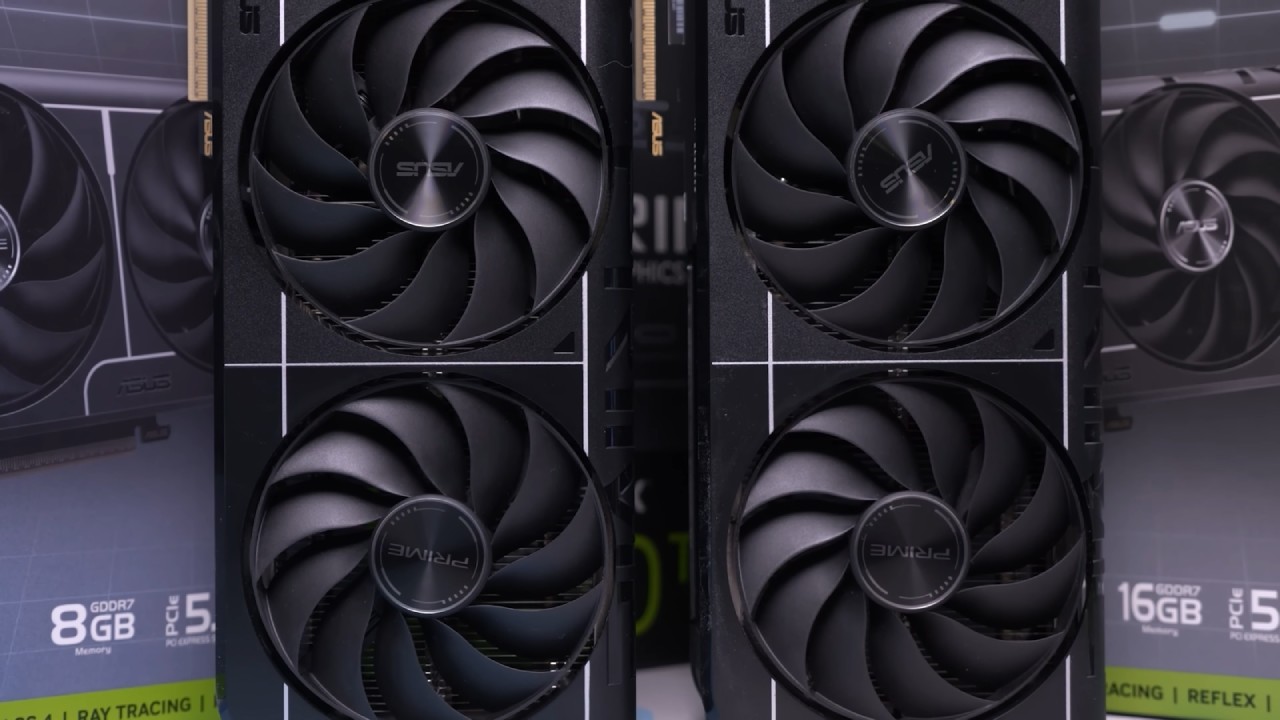
It's also time to examine VRAM stagnation and how badly Nvidia has failed PC gamers relative to console gamers throughout this console generation.
The RTX 5060 is not only similar to the 5050 in terms of core configuration and memory bandwidth, but it also has significantly less VRAM than a modern mainstream graphics card should have, considering the history of PC GPUs versus console hardware.
Looking back over 20 years of data shows just how far things have slipped.
Core Configuration Cuts
Looking at Nvidia GPU hardware configurations dating back to the 700 series in 2013, we can see how each product class compares to the flagship of that era. The RTX 5090 features 21,760 CUDA cores, reduced to 10,752 in the RTX 5080, 6,144 in the RTX 5070, and 3,840 in the RTX 5060. In comparison to the flagship, the RTX 5060 offers only 18% of the cores, which is significantly lower than the historic 36% average for a 60-class GPU.
In fact, cutting to just 18% is more aligned with Nvidia's historical 50-class products, slightly worse than average, resembling the GTX 750 and GTX 1050. The RTX 5060 even falls below the RTX 3050 8GB from only a few generations ago. Clearly, what we're seeing is a rebranded version of the 50-class product.
Pricing and Shrinkflation
Switching the analysis from configuration to price shows the shrinkflation issue more clearly. Historically, GPUs configured to around 20% the size of the flagship were priced at 10-15% of the flagship's cost.
With the RTX 5060, you're paying 15% of the flagship price for 18% of the configuration—slightly better than last gen but still expensive.
The bigger problem is that the flagship itself has doubled in price over the years. During the GeForce 700 era, the GTX Titan was priced at $1,000. Today, the RTX 5090 costs $2,000. Adjusted for inflation, what used to buy you a 30-35% configuration at $300 now only buys you a 20% configuration. You're paying more and getting less.
Memory Bandwidth Cuts
Memory bandwidth, driven by bus width and memory speeds, is another area where Nvidia makes significant cuts. The RTX 5060 has just 448GB/s compared to 1,792GB/s on the RTX 5090—25% of the flagship's bandwidth. Historically, the 60-class offered much more, averaging closer to 40%.
Once again, the RTX 5060 aligns more closely with historic 50-class GPUs, such as the GTX 1050 or RTX 3050. What used to be 60-class bandwidth has now been pushed up to the 70-class, leaving mainstream buyers with worse value.
VRAM Stagnation
VRAM is the most damaging cut. Typically, 60-class GPUs ship with around 41% of the flagship's VRAM. The RTX 5060 has only 8GB, compared to 32GB on the RTX 5090—just 25%. Historically, $300 GPUs offered 12GB by this point in a console generation; however, Nvidia is still limited to 8GB.
When you compare VRAM trends against console hardware, the problem is even more glaring. Developers target consoles for baseline requirements, making equal VRAM capacity essential for smooth PC performance. In past generations, PC GPUs quickly caught up to consoles within one to three years. Today, four to five years into the PlayStation 5 era, Nvidia still sells $300 GPUs with half the VRAM of the console.
Historical Console Comparisons
During the Xbox 360 era, Nvidia GPUs exceeded console VRAM capacity within 3 years. By the PS4 era, mainstream GPUs matched the console's 8GB within two generations. That ensured PC gaming kept pace with console requirements.
Today, with the PS5 offering 16GB since 2020, Nvidia's mainstream GPUs still only have 8GB or 12 GB of memory. This is a clear departure from past trends. By now, we should be seeing at least 12GB in $300 GPUs and 16GB in $400-$500 models. Instead, VRAM stagnation leaves PC gamers under-equipped for modern games designed for consoles with 16GB or more of VRAM.
Why Shrinkflation Exists
So why has Nvidia embraced shrinkflation? The simple answer is money. Manufacturing costs for modern GPUs have skyrocketed. Silicon wafer prices are significantly higher than they were during the Pascal era, and Nvidia's margins necessitate that retail prices rise even higher. A GPU die that once cost $40 to produce can now cost $140 when Nvidia insists on 50% margins; that $100 increase translates to $200 higher prices for gamers.
The second factor is competition—or the lack of it. With no strong rival forcing them to offer better value, Nvidia has no incentive to stop shrinkflating. As a result, mainstream buyers are left with products that cost more, deliver less, and fail to meet the historical standards set by prior generations.
.jpg)
The Lineup That Should Have Been
If Nvidia had shifted its lineup down by one tier and priced accordingly, the RTX 50 series could have been a success. The RTX 5080 should have been the 5070. The RTX 5070 should have been the 5060, priced at $300-$350 with 12GB of VRAM. The RTX 5060 should have been branded as an RTX 5050, priced at $200 with its 8GB of memory and cut-down cores.
Instead, we got inflated names, inflated prices, and shrunken hardware. The result is a generation that appears to be worse in every way compared to what history suggests we should expect. Shrinkflation has made mainstream gaming GPUs weaker, more expensive, and far less competitive than they should be.
Check Our Other Articles:
- GeForce RTX 5090 Unleashed: Is NVIDIA's New Flagship the Ultimate 4K Gaming GPU?
- NVIDIA GeForce RTX 5080 Review (2025): Still A 4K Gaming Powerhouse?
- RTX 5090 Performance Testing In GTA 5 – 1080p, 1440p, and 4K Max Settings Benchmark
- NVIDIA RTX 5070 Review: Mid-Range Muscle or Marketing Hype?
- RTX 5070 Ti Review: Performance, Thermals & Power Efficiency Tested
- ASUS ROG Astral RTX 5090 OC Edition Review: 32GB GDDR7 & 4K Gaming Benchmark
- ASUS GeForce RTX 5090 LC Liquid Cooled GPU Review: Unmatched Silence & Speed
- MSI GeForce RTX 5090 32GB SUPRIM SOC Review: Power Efficiency, Cooling, and Gaming Performance
- INNO3D RTX 5060 Ti 16 GB X2 Review: Gaming Benchmarks, Temps, and Power Efficiency
- HP Omen 45L Review: RTX 5090 Performance, Thermals, and Value Analysis
- ASUS TUF Gaming GeForce RTX 5060 Ti Review: DLSS 4, Power Efficiency, and Gaming
- ASUS Prime RTX 5060 Ti OC 16GB Review: DLSS 4, Ray Tracing, & Thermals Tested
- NVIDIA GeForce RTX 5060 Review: Specs, Gaming, and Cost per Frame
- MSI GeForce RTX 5090 GAMING TRIO OC Review: A Monster Power GPU
Senior Editor, NoobFeed
Gaming Hardware Updates
No Data.