
Ryzen 7 9850X3D vs. 9800X3D: Minimal Performance Difference Despite Higher Clock Speed
Higher boost clocks on Ryzen 7 9850X3D fail to deliver meaningful gaming improvements compared with Ryzen 7 9800X3D.
Hardware by Shinji Okazaki on Mar 15, 2026
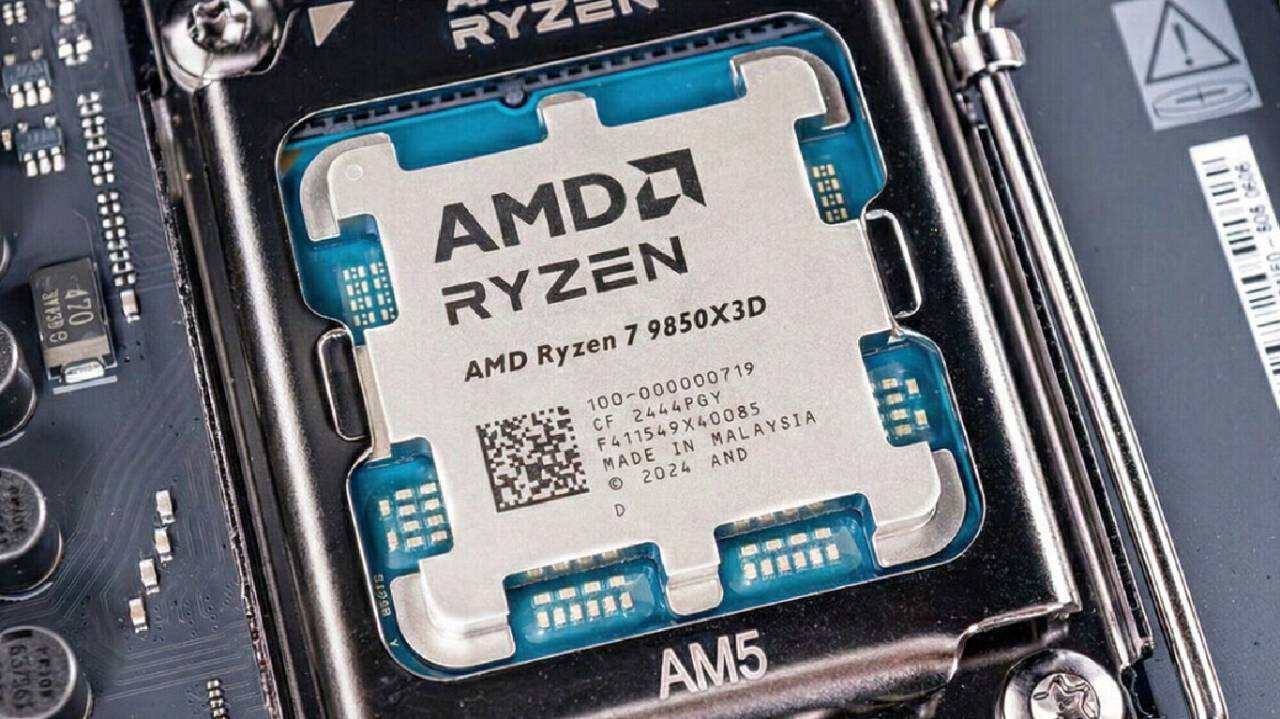
Ryzen 7 9850X3D has come out, and at first glance, the price seems fair. But if you look more closely at street prices and benchmark performance, you'll see that things are different.
When you compare the Ryzen 7 9850X3D to the Ryzen 7 9800X3D, you won't see a big difference in performance for the extra money. In real-life gaming situations, both processors deliver quite similar results, making it hard to justify the higher price of the newer model.
Pricing on the Street and in the Market
Street pricing is generally clearer than launch pricing. Ryzen 7 9800X3D costs about $450 to ship, and the Ryzen 7 9850X3D costs about $520. Prices on major retail sites are approximately $430 for the 9800X3D and around $490 for the 9850X3D. That makes the price difference about $60.
Looking at the price-performance gap, it's evident that the extra cost doesn't guarantee a significant improvement. Benchmarks for gaming reveal that the performance boost is very minimal. In a lot of cases, the results are so similar that you wouldn't be able to tell the difference without benchmarking tools.
Benchmarks for Gaming at 1080p and 1440p
Two setups were used for gaming tests. The first setup used 1080p low settings, which is what competitive gamers who want the highest frame rates should use. The second setup used high 1440p settings to test performance in situations that required heavy graphics while maintaining high frame rates.
The scores for the Ryzen 7 9800X3D and Ryzen 7 9850X3D were quite similar in several games. The changes in frame rates were small, and the experience would feel the same in most gameplay conditions. It would be hard to see the difference between the two CPUs without keeping an eye on benchmark data.
Clock Speeds and how they Boost
Ryzen 7 9850X3D lists its highest boost clock at about 5.6 GHz. But testing indicated that these rates were rarely reached by monitoring technologies. The highest frequency seen in Cinebench R23 single-core testing was about 5.1GHz, which is extremely close to what the Ryzen 7 9800X3D already does.
When playing games, the Ryzen 7 9800X3D usually runs at roughly 5.215GHz. Ryzen 7 9850X3D extends this range a bit, usually running at about 5.4GHz; this can vary depending on the workload. The new model technically runs faster, but the difference is minor and doesn't affect performance much.
The way it works overall suggests that the Ryzen 7 9850X3D works like the 9800X3D but with fewer restrictions on its boost limits. In practice, the frequency variation in the real world remains small.
Adjusting the BIOS and the Performance
We can improve the Ryzen 7 9800X3D's performance by adjusting the BIOS settings. Using a negative frequency curve helps reduce power consumption while still allowing the processor to improve performance efficiently.
With these changes, the Ryzen 7 9800X3D can sometimes beat the Ryzen 7 9850X3D in some games. The results are still very comparable, even when the same bad PBO curve is used on both processors.
This shows that the two CPUs are very similar in their construction. The main difference is how the default settings are configured, not a major architectural enhancement.
Benchmarks for Productivity
Productivity tests exhibit the same pattern as gaming tests. Both CPUs produce almost identical results when running applications such as rendering and multi-threaded tasks.
If you want a CPU mostly for gaming but also want it to handle some work tasks from time to time, either processor will work just as well. In these workloads, the Ryzen 7 9850X3D doesn't have a distinct advantage.
How Much Power does it Use?
Measurements of power consumption from the wall indicate that the two processors are very similar. Ryzen 7 9850X3D uses a little more power when running Cinebench and gaming tasks.
The rise is small and stays in a similar range. When playing games, the 9850X3D's slightly faster clock rates use a little more power, but the difference is still very modest.
Using a negative frequency curve can make both CPUs use even less power while still maintaining about the same efficiency.
Sales and Demand Data
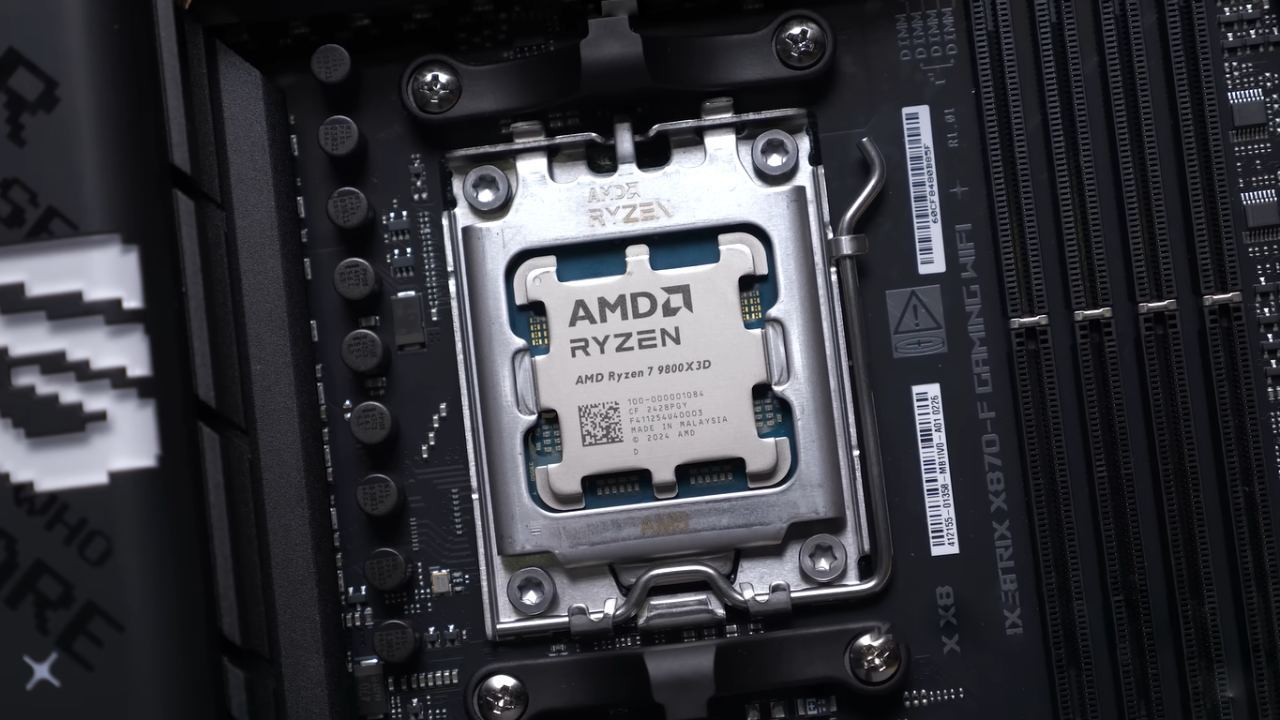
Sales numbers also show where buyers are leaning. According to data from a big retail site, the Ryzen 7 9800X3D sold about 4,000 units, while the Ryzen 7 9850X3D sold about 500 units.
The sales discrepancy shows that purchasers are choosing the cheaper processor because it performs almost as well.
Final Thoughts
Ryzen 7 9800X3D costs about $480, and the Ryzen 7 9850X3D costs about $500, a $20 difference. Some purchasers might be okay with the price increase at that level because they think the item will sell for more later or because they want the newer model.
But for now, the price on the street is closer to $60. There is no need to pay more for better performance at that price difference.
People who build systems can use the money they save to buy other parts of the system, like DDR5 memory. Choosing the Ryzen 7 9800X3D gives you almost the same performance while lowering the overall cost of the build.
Also, check our other hardware articles:
- AMD Ryzen 9 9950X3D Review: Setting The Standard For 2025 Gaming CPU
- Amazon Luna 2025 Review: Is Prime Gaming's Cloud Service Your Go-To For Casual Fun?
- AMD RX 9070 XT Review: AMD's RDNA 4 Champion for 1440p Gaming
- GeForce Now Ultimate: Ditching Your Gaming PC For Cloud RTX 4080 Power?
- NVIDIA GeForce RTX 5080 Review (2025): Still A 4K Gaming Powerhouse?
- Intel Core Ultra 9 285K Review And Performance Breakdown (2025)
- AMD Ryzen 7 9800X3D Review: 3D V-Cache Goes God Mode with Stunning Gaming Performance
- Intel Core Ultra 9 285K vs AMD Ryzen 7 9800X3D: In-Depth Gaming Performance and Benchmark Comparison
- NVIDIA GeForce RTX 5080 Super Performance In Cyberpunk 2077: Path Tracing & DLSS 4.0 Tested
- AMD Radeon RX 9070 XT In Cyberpunk 2077: Ray Tracing & FSR 4.0 Tested
- Intel Arc B580 Review: The $250 GPU Revolutionizing 1440p Gaming
- Intel Arc B570 Vs. B580: Value, Specs, And Real-World Gaming Performance
- RTX 5090 Laptop Vs. M4 Max MacBook Pro: Ultimate Raw Performance Vs. Battery Endurance
- Intel Arc b580 Vs. RTX 4060: Game Performance And Value Analysis
- RTX5090 Hell Is Us Demo 4K Ultra Benchmark: DLSS Vs. Native Performance Guide
- NVIDIA RTX 5070 Review: Mid-Range Muscle or Marketing Hype?
- Nintendo Switch 2 Review: Handheld Performance, Features & Value Breakdown
- RTX 5070 Ti Review: Performance, Thermals & Power Efficiency Tested
- Samsung Odyssey OLED G81SF Review 2025: Ultimate 32-Inch QD-OLED Gaming Monitor
- AMD RX 9070 Performance Review: Thermals, Clocks, and Real-World FPS
- AMD Ryzen 5 7600 Review: Best Budget Gaming CPU of 2025?
- AMD Radeon RX 7800 XT Review: RDNA 3 Power For Midrange Gaming
- Asus ROG RTX 5090 Astral OC Vs. Founders Edition: The 4K Gaming Benchmark
Editor, NoobFeed
Gaming Hardware Updates
No Data.