
Valve Next-Gen Steam Hardware: Steam Machine, Controller, and Frame Announced
Valve’s latest hardware push signals a strategic move toward unified gaming experiences across desktop setups, consoles, and VR platforms.
Hardware by Tanisha Aria on Nov 15, 2025
There was big news in the gaming world that could change how PC and console games are played. Valve has unveiled a new line of Steam devices, including the Steam Machine, the Steam Controller, and the SteamVR headset.
These devices aren't just minor updates; they're also Valve's latest attempt to combine the freedom of PC gaming with the ease of console gameplay. After years of experimenting with various hardware, including the Steam Deck and other projects, this launch suggests that the market is finally ready for a Valve-branded console environment.
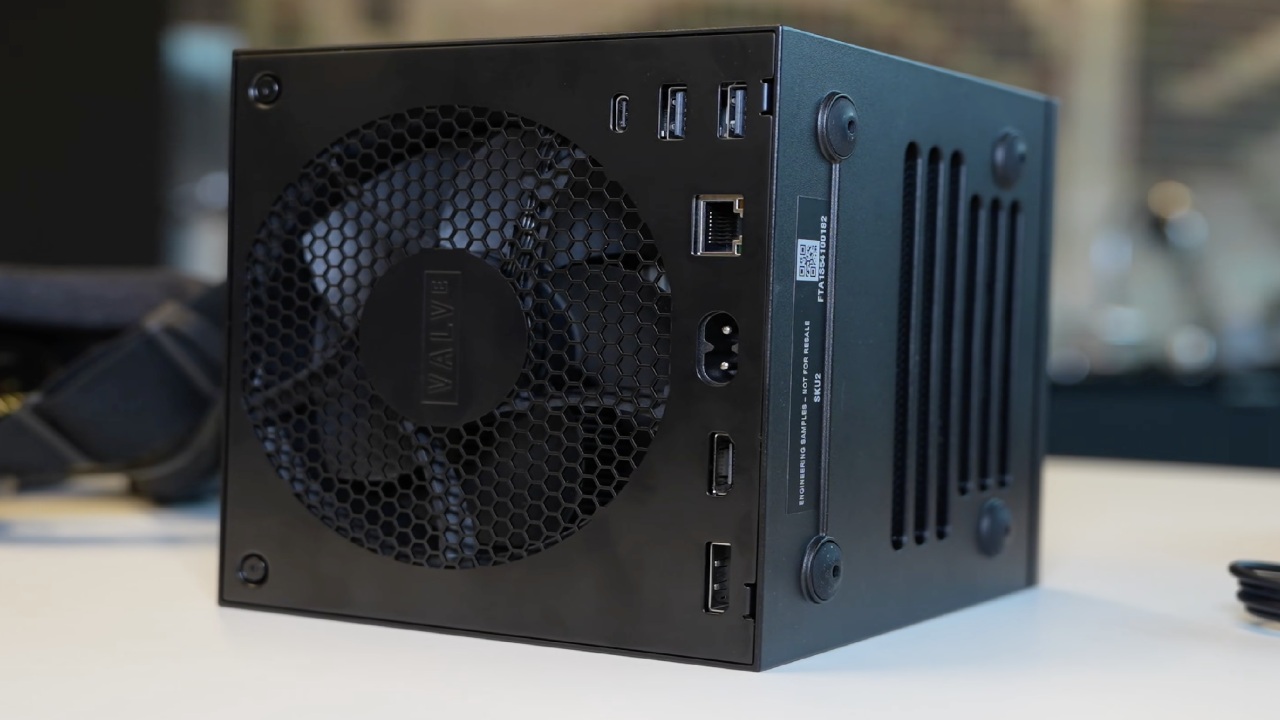
This could be a turning point for gamers seeking flexible, high-quality gaming options, thanks to its compact size, advanced performance, and compatibility with multiple devices.
A Quick Look Back at Steam
Gabe Newell and Mike Harrington, who worked at Microsoft, quit in the late 1990s to make a game called Half-Life. The game changed the way people played games in a small or even a big way.
They were not happy with their publisher, Sierra Online, though, because they wanted to make more money than the creators were okay with. In response, they created their own launcher, called Steam. It was initially intended to be a DRM system to prevent piracy and track the sales and distribution of their games.
Over time, Steam expanded to include games developed by other companies, allowing them to be sold on the platform. Steam evolved from being a launcher for a few games to becoming the most popular PC gaming platform in the world.
Valve experimented with both hardware and software. They attempted to release Steam Machines about ten years ago. The first Steam Machine wasn't just one device from Valve like the one they announced today; it was a partnership with PC makers.
Different companies, such as Dell's Alienware, could produce their own models. However, this plan failed because there weren't enough games, it was too expensive, and the eighth-generation systems had already been released.
Today, ten years later, Valve is releasing a new line of Steam Machines under its own name. This time, the launch appears to be more successful.
Steam Machine: compact PC designed for gaming
What does the Steam Machine really do? It's essentially a compact PC that resembles a device, allowing you to play games from your Steam library. The Steam Machine is a small cube that is 16x16cm, which is smaller than most regular game systems. It features a simple black design and a removable front panel.
You can use a 3D printer to make your own designs to replace this panel, or you can buy replacements from other companies. A strip of LED lights on the front panel indicates when important events occur, such as turning on or playing games. These lights can be turned off entirely if you don't want to use them.
There is a panel with a power button, LED lights, and ports below the LED strip. It features two USB 3.0 ports and a microSD card reader, allowing you to expand your memory capabilities.
The device features one USB-C port, two USB 2.0 ports for a keyboard and mouse, a power port, an Ethernet port, an HDMI port, and a DisplayPort port on the top. The Steam Machine has its own power source, so the cube only needs one cable to connect to it.
Wifi 6i and Bluetooth 5.3 are used for connectivity. The console also comes with a 2.4GHz wifi adapter if you buy it with the new Steam Controller.
Although I refer to the Steam Machine as a game, it's actually a mini-PC that runs SteamOS, an operating system based on Linux. This will feel familiar if you've used Steam Deck before.
.jpg)
Details about the hardware
They developed their own AMD processor for the Steam Machine, which features six cores, twelve threads, a boost clock of up to 3.5 GHz, and a TDP of 30W. It features an RDNA3 GPU with 28 processing units and a TDP of 110–130W, which is comparable to that of the RTX 4060 or RX 7600 Mobile.
The computer has 16GB of RAM, and 8GB of that is set aside for video memory. This setup isn't anything new, but it works six times better than the Steam Deck.
The Steam Machine can run most current games, even at 4K, thanks to features like FSR that improve AI in performance mode. One IGN editor reported playing Cyberpunk 2077 in 4K with Ultra settings and ray tracing enabled, and the game ran smoothly and was usable.
However, for some games, such as Silent Hill F, which was developed using Unreal Engine 5, the resolution needs to be lowered to 1440p for smooth gameplay. In general, the hardware appears to be designed for 1440p or Full HD games rather than 4 K 60fps performance that lasts.
Thoughts on Price and Ecosystem
Valve has learned from the Steam Deck, which has become one of the most important portable platforms, despite selling fewer units than the Nintendo Switch.
If the base form of the Steam Machine costs around $600, it may follow a similar trajectory. Most Steam games also work well on Linux thanks to SteamOS support and Proton, Valve's translation layer for Windows games. You can even install Windows on it, which allows you to play games from Epic, Xbox, and other systems.
With user-replaceable SSDs, there will be two models of the Steam Machine: 512GB and 2TB. The device features a microSD slot on the front, allowing you to store games on removable storage. This storage can then be transferred between devices, such as the Steam Deck, without needing to be downloaded again.
Steam Controller and the Steam Frame
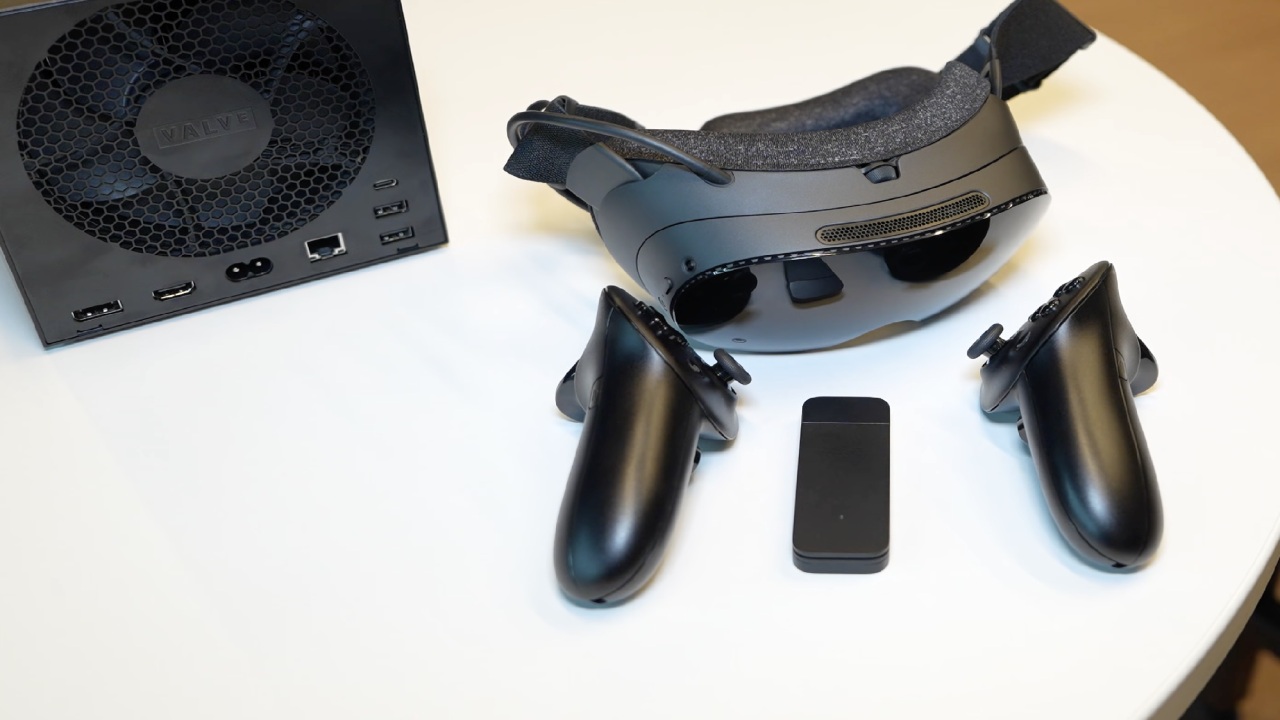
Valve also released the new Steam Controller and SteamVR gear simultaneously with the Steam Machine. The new Steam Controller features two touchscreens that resemble those on the Steam Deck, a left pad, four buttons on the right, two joysticks in the middle, and standard triggers on top.
It also has capacitive gyro sensors in the handles and customizable buttons on the back. By gripping the handles, you can turn them on or off. The controller can link via Bluetooth, 2.4GHz, or USB, and it works with PCs, Macs, and any other device that has Steam installed.
The Snapdragon 8 Gen3 chip in the Steam Frame VR headset powers it on its own. It features 16GB of RAM, 256GB of internal storage, and a microSD card slot.
It allows you to play VR games and stream PC games through a specialized 6GHz wireless adapter featuring two receivers for seamless audio and video transmission. The two 2160x2160 screens can handle frame rates between 72Hz and 144Hz, making for a great VR or virtual monitor experience.
Final Thoughts
The Steam Machine is the most interesting of the three new gadgets because it can compete with both PCs and consoles simultaneously. Many gamers prefer to play only one game at a time, such as Dota, FIFA, or Counter-Strike. To play Counter-Strike, you no longer need to build a full gaming PC.
The Steam Machine can do it, as long as Valve sets the price between $500 and $700. This gadget could become a real bestseller if it works. As soon as the gear comes out in early 2026, we'll know how it really changes things.
Also, check our other hardware articles:
- AMD Ryzen 9 9950X3D Review: Setting The Standard For 2025 Gaming CPU
- Amazon Luna 2025 Review: Is Prime Gaming's Cloud Service Your Go-To For Casual Fun?
- AMD RX 9070 XT Review: AMD's RDNA 4 Champion for 1440p Gaming
- GeForce Now Ultimate: Ditching Your Gaming PC For Cloud RTX 4080 Power?
- NVIDIA GeForce RTX 5080 Review (2025): Still A 4K Gaming Powerhouse?
- Intel Core Ultra 9 285K Review And Performance Breakdown (2025)
- AMD Ryzen 7 9800X3D Review: 3D V-Cache Goes God Mode with Stunning Gaming Performance
- Intel Core Ultra 9 285K vs AMD Ryzen 7 9800X3D: In-Depth Gaming Performance and Benchmark Comparison
- NVIDIA GeForce RTX 5080 Super Performance In Cyberpunk 2077: Path Tracing & DLSS 4.0 Tested
- AMD Radeon RX 9070 XT In Cyberpunk 2077: Ray Tracing & FSR 4.0 Tested
- Intel Arc B580 Review: The $250 GPU Revolutionizing 1440p Gaming
- Intel Arc B570 Vs. B580: Value, Specs, And Real-World Gaming Performance
- RTX 5090 Laptop Vs. M4 Max MacBook Pro: Ultimate Raw Performance Vs. Battery Endurance
- Intel Arc b580 Vs. RTX 4060: Game Performance And Value Analysis
- RTX5090 Hell Is Us Demo 4K Ultra Benchmark: DLSS Vs. Native Performance Guide
- NVIDIA RTX 5070 Review: Mid-Range Muscle or Marketing Hype?
- Nintendo Switch 2 Review: Handheld Performance, Features & Value Breakdown
- RTX 5070 Ti Review: Performance, Thermals & Power Efficiency Tested
- Samsung Odyssey OLED G81SF Review 2025: Ultimate 32-Inch QD-OLED Gaming Monitor
- AMD RX 9070 Performance Review: Thermals, Clocks, and Real-World FPS
- AMD Ryzen 5 7600 Review: Best Budget Gaming CPU of 2025?
- AMD Radeon RX 7800 XT Review: RDNA 3 Power For Midrange Gaming
- Asus ROG RTX 5090 Astral OC Vs. Founders Edition: The 4K Gaming Benchmark
- Intel Core i5-13400F Gaming Performance: Still Worth It in 2025?
- ASUS GeForce RTX 5090 LC Liquid Cooled GPU Review: Unmatched Silence & Speed
- ASUS ROG Ally X Handheld Review: Double the Battery, Double the Comfort
- Lenovo Legion Go S Review: The Ultimate Steam Deck 2 Alternative
- Sapphire NITRO+ AMD Radeon RX 9070 XT Review: The Ultimate 4K Gaming GPU
- Alienware 16 Area 51 Review: The Ultimate 2025 Gaming Laptop
- Alienware Area-51 Review: Unmatched 4K, Thermal, and Acoustic Performance
- AMD Ryzen 7 7800X3D: Delivers Gaming Performance Far Beyond Expectations
- AMD Ryzen 9 7900X Review: Powering the AM5 Era with DDR5 & PCIe 5.0
- Intel Core i9‑14900K vs. AMD Ryzen 7 7800X3D: Power Profiles & Gaming Benchmarks
- Intel Core i9 14900K: Specs, Benchmarks, and Competitor Comparison
- ASRock Radeon RX 7800 XT Challenger OC Review: Best Price-to-Performance GPU of 2025
Contributor, NoobFeed
Gaming Hardware Updates
No Data.