
Active Matter Review
PC
A tense mix of tactical gunplay, time loops, strange anomalies, and high-risk extraction makes Active Matter stand apart from the usual extraction crowd.
Reviewed by Tahmid Mahi on Sep 15, 2026
Active Matter comes from Matter Team, an internal studio built around the idea of making an extraction shooter where unstable matter and a time loop matter as much as guns and loot. The team includes developers with experience at Darkflow Software, the studio behind Enlisted and CRSED: Cuisine Royale, so the project already has multiplayer shooter experience.
That background shows that Active Matter isn't trying to reinvent the basic extraction formula from scratch. Instead, it takes the familiar structure of entering a dangerous zone, collecting resources, fighting enemies, and getting out alive, then builds a strange science-fiction system around it.
That system is Active Matter itself.
The substance is tied to collapsing timelines and can bend space and time, creating unstable areas where the normal rules of the world no longer apply. It also allows objects and even parts of the environment to be pulled from parallel timelines, making every unstable zone feel unpredictable.
The result is an extraction shooter that feels grounded when you are handling a rifle or searching a cabinet, then suddenly becomes something completely different when gravity changes, a creature appears out of nowhere, or the environment starts to behave as if reality is falling apart.
The basic story puts you in the role of an operative trapped inside a time loop. You die, return, and head back into the same dangerous cycle while searching for a way to escape. That escape seems tied to the Monolith, a mysterious structure that becomes both your ultimate objective and a key part of your progression.
The story is intentionally quiet. You don't get long cinematic scenes explaining every part of the universe, and Active Matter doesn't stop you every few minutes for another exposition dump. Instead, you learn about the world through the Codex, conversations, abandoned facilities, environmental details, and the things you discover while exploring.
The first raid serves as a basic introduction, sending you to find the body of a fallen operative and retrieve an activation card to help establish your base. From there, Active Matter gradually introduces the larger mystery.
The setting is strongly tied to Soviet experimentation.
The backstory centers around secret research on Dali Island, where scientists attempted to control Active Matter. The experiment went horribly wrong, fracturing reality into pockets of quantum collapse. This gives the world its ruined Soviet industrial look while also explaining why you are dealing with things that should not exist.
The game's time-loop narrative also has an interesting premise. Your operative is not necessarily unique in the traditional sense. The existence of different timelines means there are countless versions of these events and potentially countless versions of the people involved. Active Matter doesn't simply destroy the physical world, either.
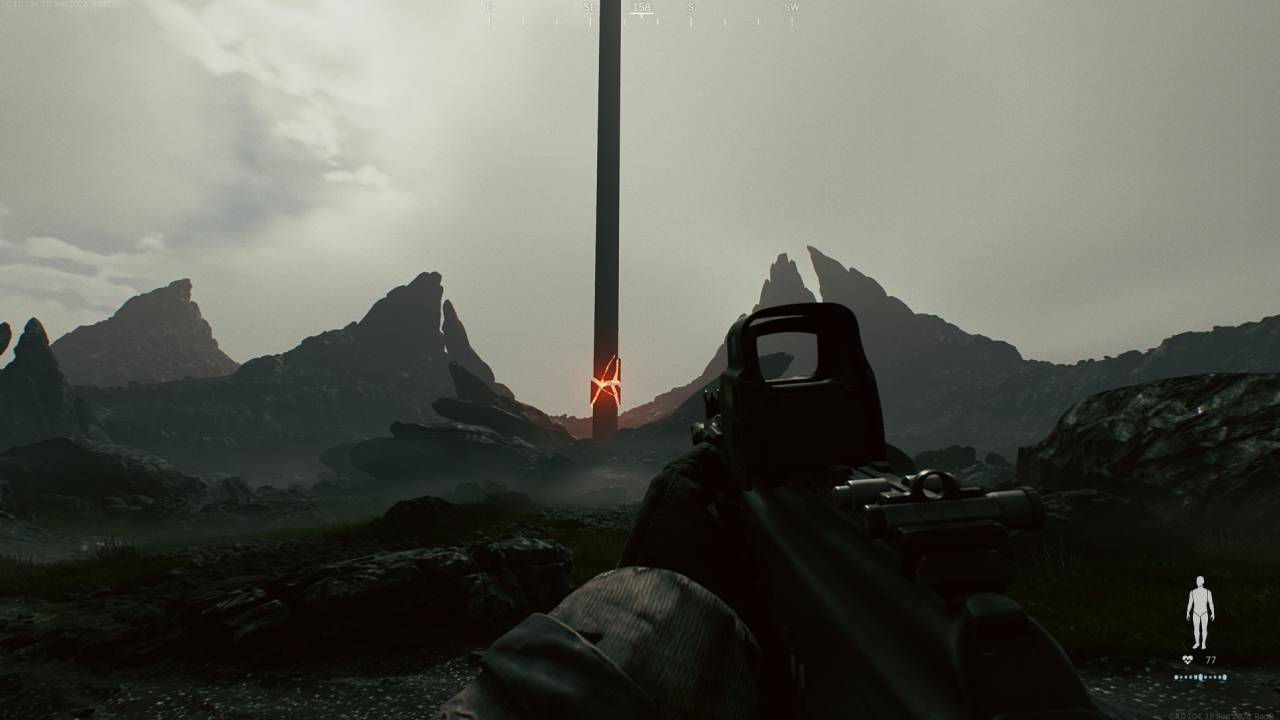
Prolonged exposure affects flesh and sanity, which helps explain the twisted creatures roaming around these locations. At the same time, rival corporations and armed groups are still fighting over the substance, turning a reality-ending catastrophe into another resource war.
That combination gives the narrative more personality than you normally expect from an extraction shooter. The downside is that anyone expecting a traditional campaign will find the story fairly fragmented. Active Matter is much more interested in letting you discover its world between raids than sitting you down and delivering a complete story in a straight line.
The Monolith also connects the narrative directly to progression. When you reach it, you can either add your operative to the list of pioneers or reset your Monolith progress in exchange for a permanent passive upgrade to your base. With multiple upgrades, you have a reason to repeat the process instead of treating the first successful run as the end of everything.
Once you understand that, the entire game becomes easier to describe. You enter a raid, decide what you want to accomplish, collect whatever resources you can, complete objectives, fight your way through the map, and try to extract. Then you return to your base, use what you brought back, prepare another loadout, and go again.
The raid maps are built around pressure.
The zones gradually close in under what Active Matter calls the fourth field, pushing players toward the center. You can leave through earlier extraction portals, but if you take certain contracts and fail to complete them, you can lose access to those early exits and have to wait for the final portal. That changes how you approach every mission.
You also have two very different ways to experience raids. PvPvE puts other players and AI enemies into the same space, meaning a gunshot can attract both. Isolated PvE removes the player-versus-player pressure and lets you focus on the environment and AI enemies.
For solo players, that is especially useful because you can spend time learning maps, experimenting with weapons, and understanding the game’s systems without constantly worrying about another operative appearing behind you.
The PvPvE option, however, is where the extraction formula really starts to matter. You can spend several minutes moving through a location without seeing another player, only for a completely unexpected encounter to turn the entire raid around. Gunshots become information.
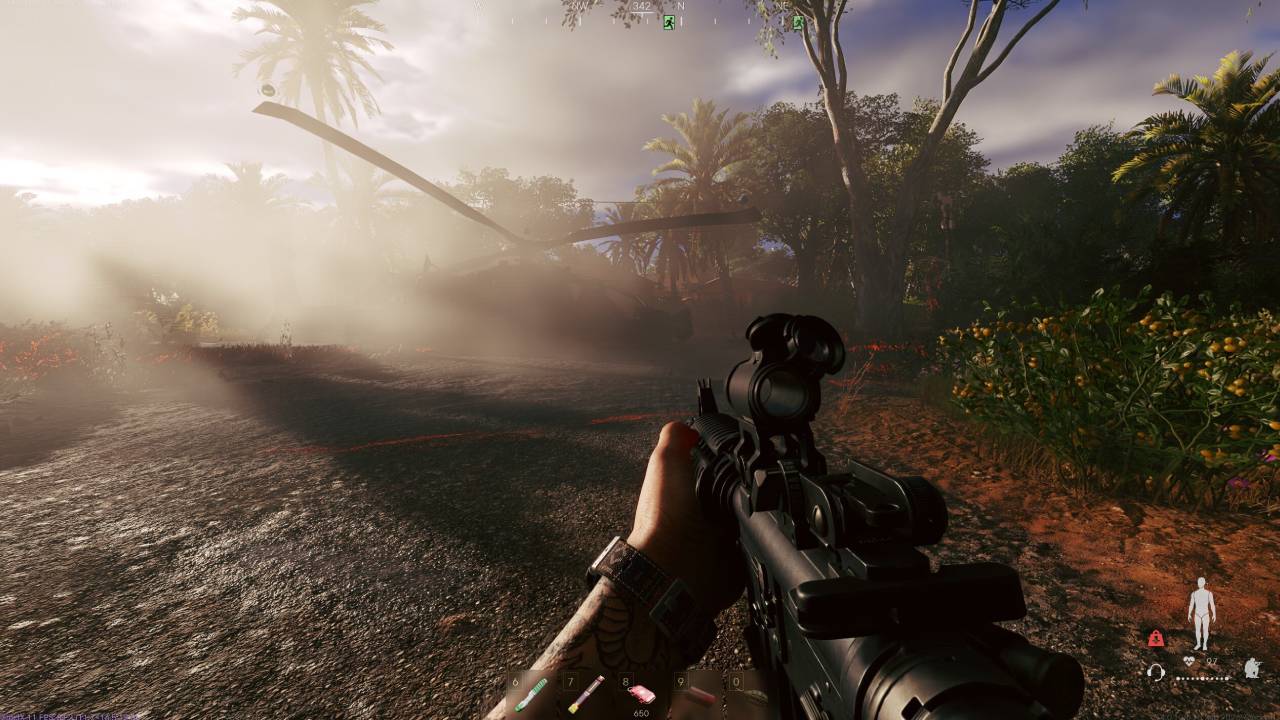
If you hear combat nearby, you have to decide whether to investigate, avoid it, or use the distraction to reach your objective. The experience can feel too quiet at times, especially when you are actively looking for a fight, but that slower pace also makes the moments when combat finally happens much more intense.
The inventory system reinforces that tension.
Almost anything you find can be useful, whether it comes from a container, a vehicle, a cabinet, or a defeated enemy. Searching takes time rather than instantly revealing everything, so looting is itself a risk.
You might know a drawer contains several items, but checking them one by one while standing in an exposed area isn't always a good idea. Every item also has weight, meaning you cannot endlessly fill your backpack without consequences.
Overloading yourself can even affect movement and make falls more dangerous. That may sound like a small detail, but it gives weight management a real purpose instead of making it another number on the screen. You constantly have to decide whether one more item is worth the extra weight.
Secure containers protect what you put inside if you die, but they are limited and single-use in the described system. Death also means losing the gear you brought into the raid, though free starter loadouts let you return without having to rebuild your equipment from scratch.
The base is where the consequences of each raid become useful. Between missions, you can work on your shelter, manage your storage, prepare equipment, and use the replicator to craft weapons, armor, ammunition, gadgets, and carrier drones.
Blueprints come from quests or items recovered during raids, while production takes real time. The system gives you a reason to care about what you find, even when the item itself isn't immediately useful in combat.
Your weapon setup also avoids the complexity that sometimes makes extraction shooters intimidating.
Assault rifles, pistols, sniper rifles, and submachine guns are available, with attachments such as suppressors, optics, grips, and barrels. Higher-rarity weapons offer more attachment slots, with four being the highest noted in the source material. You can create a weapon that fits your style without spending an absurd amount of time rebuilding it after every death.
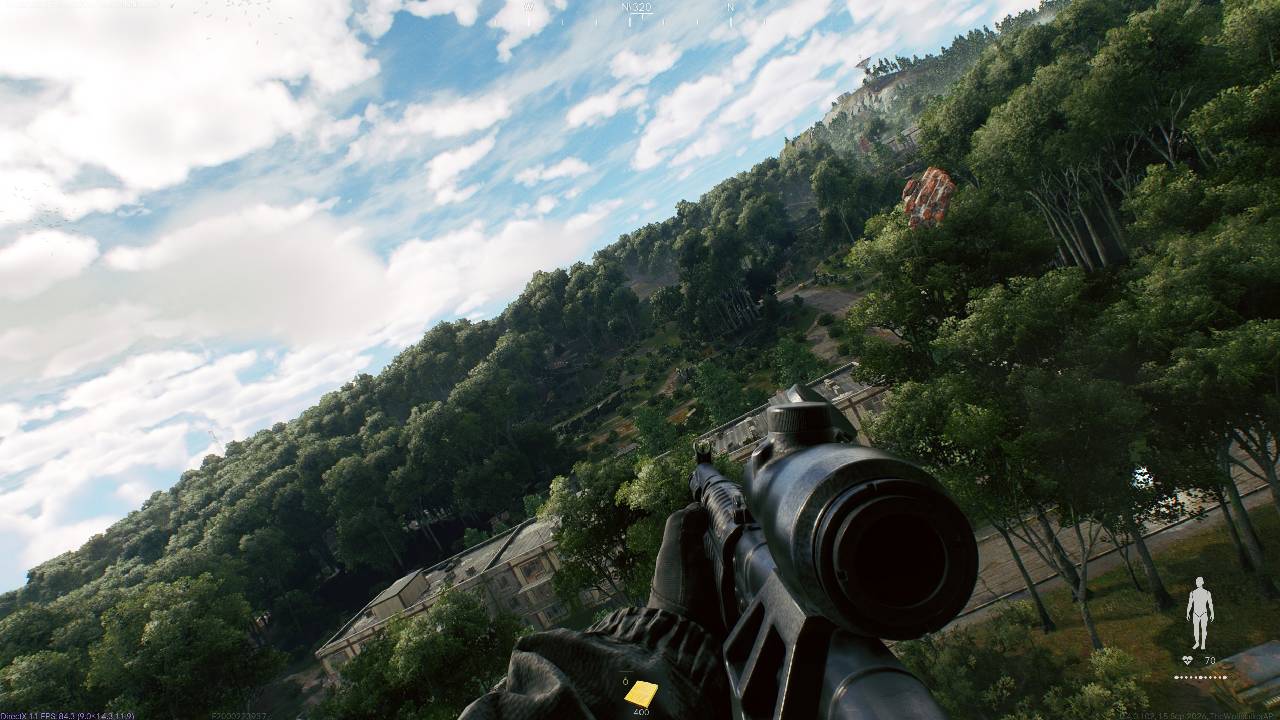
That accessibility is one of Active Matter’s better decisions. Active Matter clearly wants you to think about your equipment, but it does not make customization feel like a second job. You can prepare an effective weapon, bring appropriate armor and healing supplies, and get back into the action.
Progression extends beyond simply collecting better equipment. The Monolith is central to unlocking new maps, blueprints, and operatives, while the base gradually becomes more capable as you invest in it.
Loadouts can also include perks that affect movement speed, jump height, damage, healing efficiency, breathing stability, and the weight penalty. These bonuses give you reasons to specialize your operative instead of treating every character the same.
The progression system works best because it feeds directly into the raid loop. You are not grinding XP just to watch a number go up. The rewards give you better options for the next raid, while successful raids provide more resources to improve the base and future loadouts.
Nexus Battles also offers a separate way to practice PvP using issued gear, so you don't have to risk your best equipment every time you want a fight. It is a useful entry point, though the gap between a newer player with basic gear and a veteran with stronger armor can still make some encounters feel uneven.
Combat is where Active Matter feels noticeably different from a conventional arcade shooter.
There is no traditional on-screen crosshair, so you rely on the weapon’s physical sights or hip fire. Weapons have weight, reloads use detailed animations, and accuracy is influenced by your condition. You can hold your breath to improve stability, but injuries and even your character’s heartbeat can affect how reliably you shoot.
The body is divided into six areas, and taking damage changes your condition. Wounds can affect movement, aiming, and vision, and an indicator shows which parts of your body are damaged. Healing is not an instant button press either.
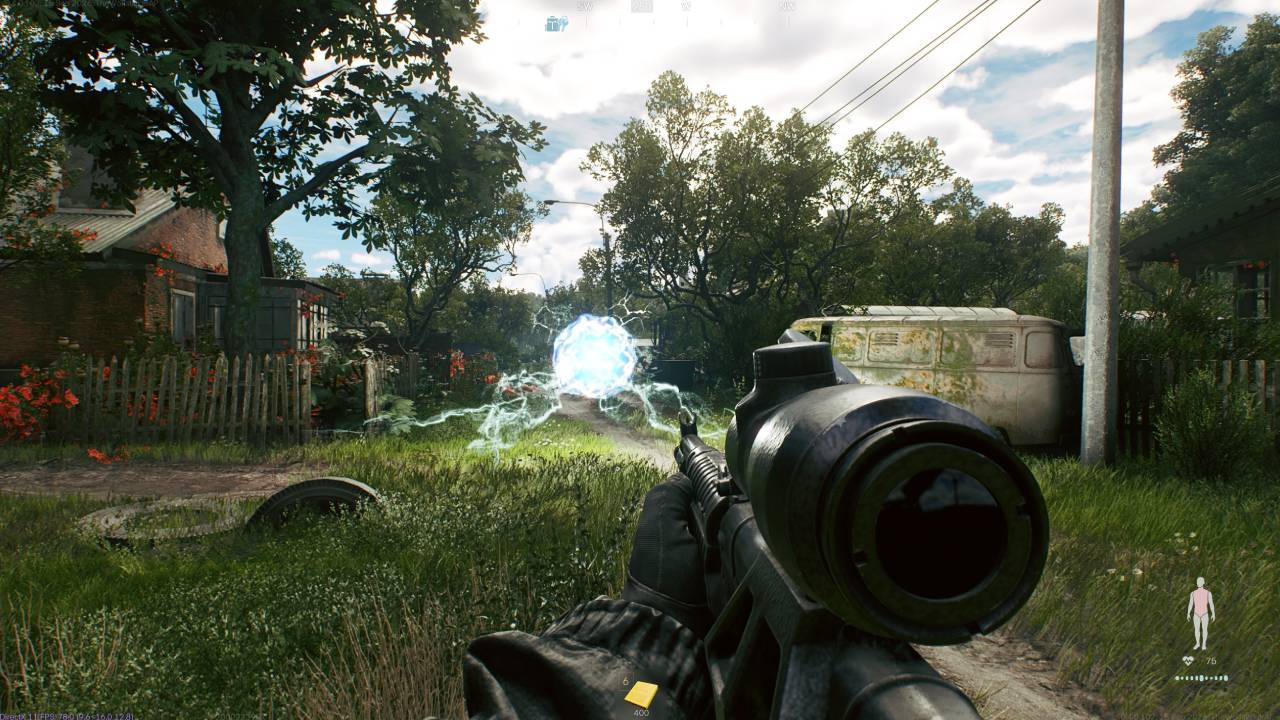
You have to commit to an animation in real time, which means finding cover before treating yourself is often just as important as winning the firefight itself. If you start healing in the wrong place, an enemy can punish you before the process finishes.
That slower combat makes every encounter more deliberate. You cannot always sprint into a room and rely on fast movement to survive. You have to consider where you are standing, how much ammunition you have, whether you are injured, and whether firing your weapon will attract more enemies.
The AI responds to gunshots, so shooting one enemy inside a building can quickly turn into a fight against several occupants. Some enemies also have specific weaknesses, which gives you another reason to think about what you carry.
The enemy variety is one of the strongest parts of the combat design. You face zombie soldiers, hell hounds, creatures that disguise themselves as bushes, invisible enemies that can appear unexpectedly, flying ghosts, electrical poltergeists, and strange statues that move when you are not watching.
The anomalies make combat and movement even less predictable.
Gravity zones allow you to run along walls and sometimes ceilings, creating routes that would be impossible in a normal shooter. That can completely change a firefight because an enemy expecting you to approach from the floor suddenly has to worry about an attack from the side or above.
Other anomalies act like mines, launching or damaging you when triggered. You can deal with some of them by shooting them or using bolts, but you still have to pay attention because Active Matter itself can be found around these dangerous areas.
An artifact also temporarily transforms your operative into a monster. This gives you special abilities, including a sonic scream that reveals enemy positions. The ability also announces your presence to other players, creating an interesting trade-off. You gain information and power, but you also make yourself easier to track.
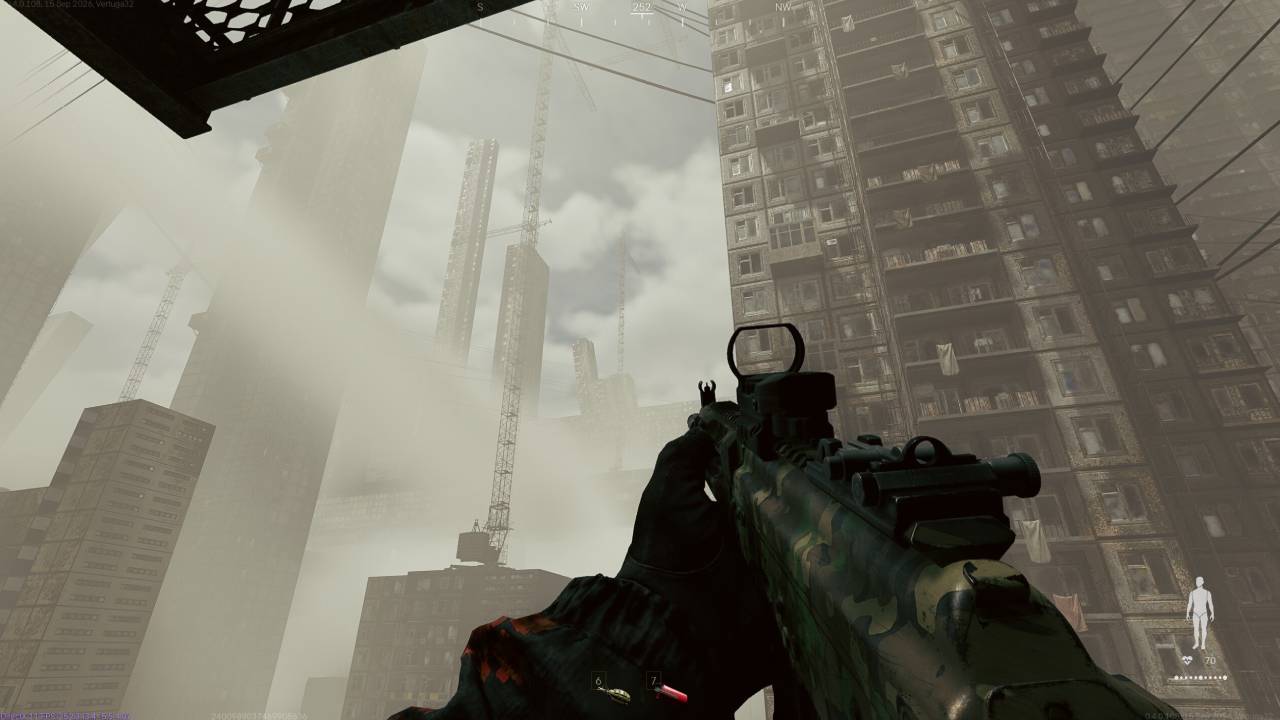
Movement is another area where Active Matter feels unusual. Some animations can look rough, particularly during running, but that doesn't always hurt the gameplay. Quick directional movement and the ability to snap around during fights can make close-range encounters surprisingly skill-based.
The bigger issue is consistency. The movement and gravity systems can feel uncomfortable at times, especially when the camera shifts rapidly while you navigate altered-gravity areas. Players sensitive to heavy head movement or sudden perspective shifts might find these sections unpleasant.
Visually, Active Matter has a clear identity.
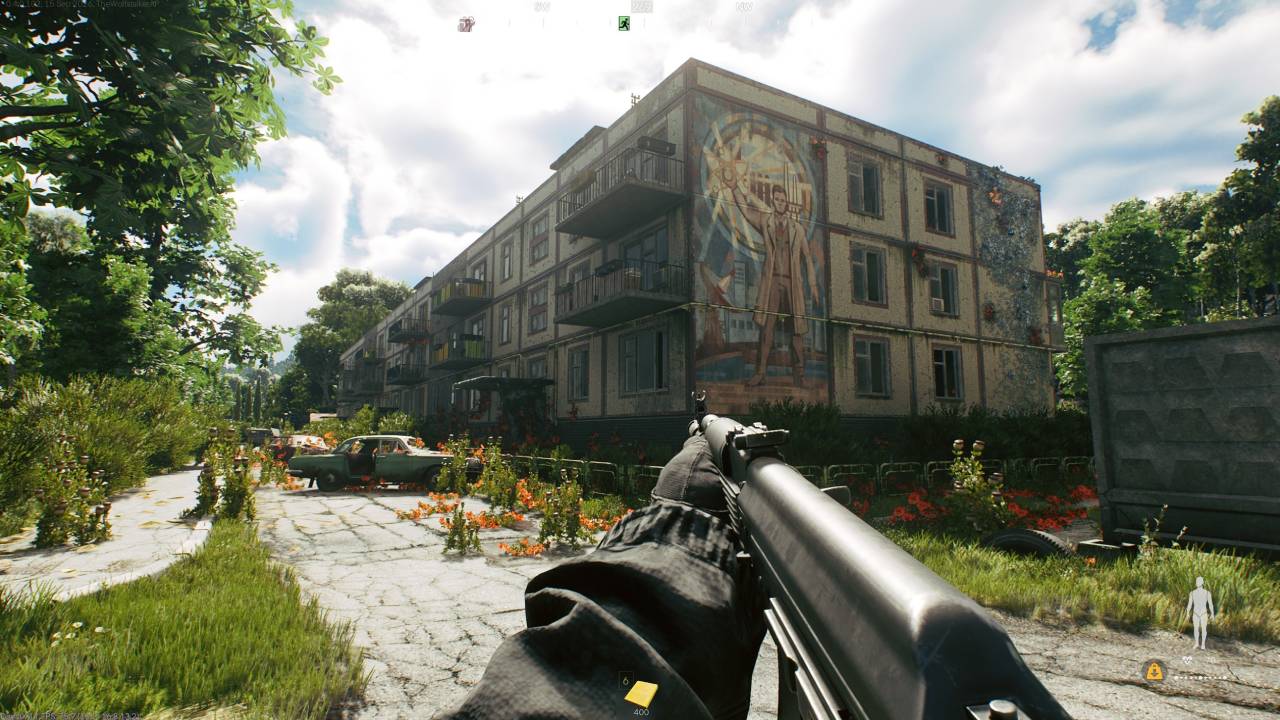
The updated Dagore engine creates a world dominated by worn Soviet brutalist buildings, cracked concrete, rust, abandoned industrial spaces, and dark interiors. Instead of making the world colorful and clean, Active Matter leans into decay. You feel like you are exploring somewhere that has been left behind for a long time.
Lighting does a lot of the work. Dark corridors, exterior fog, underground spaces, flashlights, and volumetric dust create an environment where even a quick room check can feel tense. Ray-traced shadows and reflections add detail, while the anomalies provide the biggest visual break from the otherwise grounded military setting.
The weapon and character models are also detailed. Rifles show wear, dust collects around components, and scopes have convincing optical distortion. That attention to equipment helps sell the game’s tactical approach.
At the same time, the creatures are intentionally grotesque. Active Matter seems to merge flesh, bone, armor, and other materials, producing enemies that look less like ordinary zombies and more like something that should not exist.
The sound design is more inconsistent. The gunfire and overall atmosphere support the tense setting well, but the footsteps are a notable weakness. In an extraction shooter, reliable audio information is extremely important because players often use footsteps to decide whether someone is nearby before they ever see them.
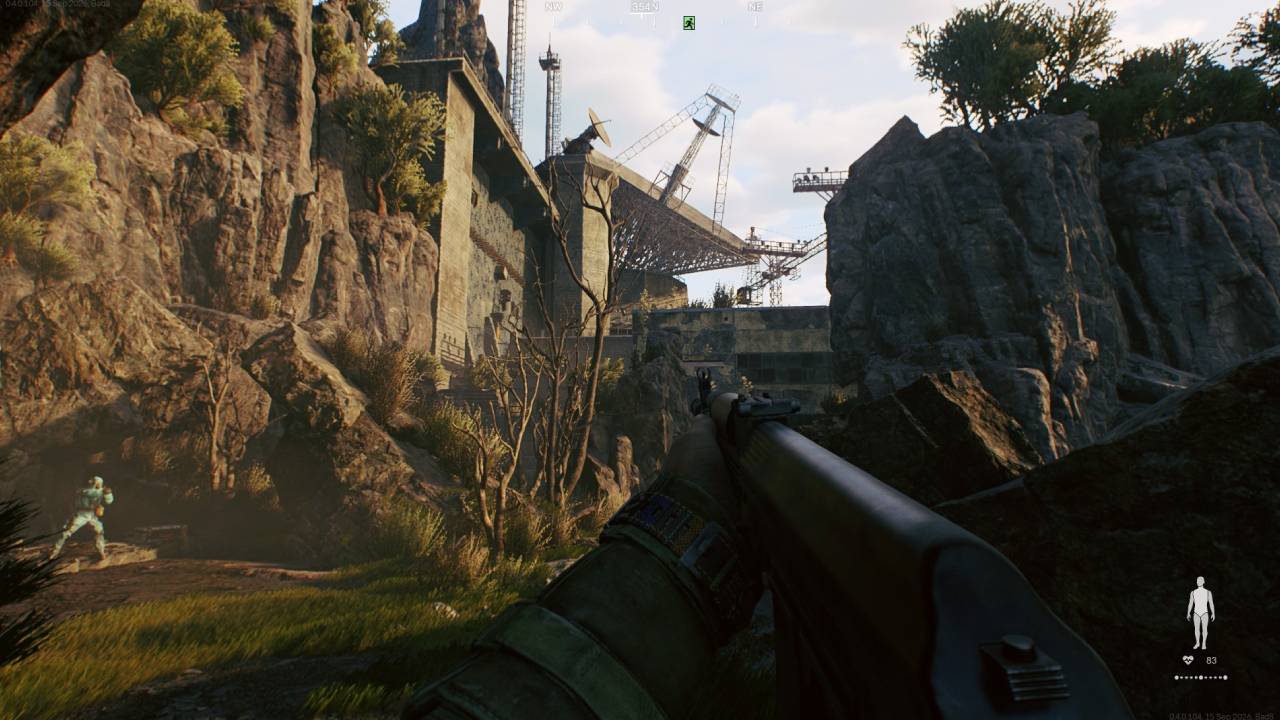
That problem becomes more noticeable because the rest of the game encourages careful listening.
You are constantly trying to understand whether a sound came from an AI enemy, another player, or the environment. When audio positioning does not give you enough confidence, some deaths can feel less like mistakes you made and more like information you never received. That is an area where Active Matter needs stronger consistency.
Even with those issues, the overall package has a clear identity. Active Matter takes the familiar extraction formula and gives it enough science-fiction horror mechanics to make the loop feel different. You are not only worrying about another player taking your loot.
You are also watching the fourth field close in, dealing with anomalies, managing injuries, listening for enemies, tracking your weight, and deciding how much longer you can safely stay in a collapsing zone.
The biggest strength is that most of these mechanics support the same idea: risk. The longer you stay, the more you can gain, but the more opportunities there are for something to go wrong. You can leave early with a smaller haul, stay longer for better resources, take a dangerous route through an anomaly, or fight another player and risk losing everything.
The biggest weakness is that some systems don't always feel as polished as the ideas behind them. The interface can be rough, some animations look awkward, PvP balance can feel harsh for new players, and unreliable footsteps are particularly damaging in a game that depends on information.
Still, Active Matter has something that many extraction shooters struggle to find: a reason to exist beyond copying the formula. Its tactical gunplay feels familiar enough to understand, while the anomalies, time-loop premise, strange creatures, and Monolith progression give Active Matter its personality. If you enjoy games that make you think before every fight and punish you for treating danger casually, the loop has plenty to offer.
Once you understand how the systems connect, the appeal becomes obvious.
You enter a raid with equipment you do not want to lose, move through an unstable environment, collect what you can, fight when necessary, manage your injuries and weight, and then make the decision that matters most: leave now or risk staying longer. Sometimes you make it out with exactly what you wanted.
That uncertainty is the heart of Active Matter. It doesn't try to make every raid feel like an action movie. Some runs are slow, some are tense, some barely involve other players, and others suddenly become chaotic.
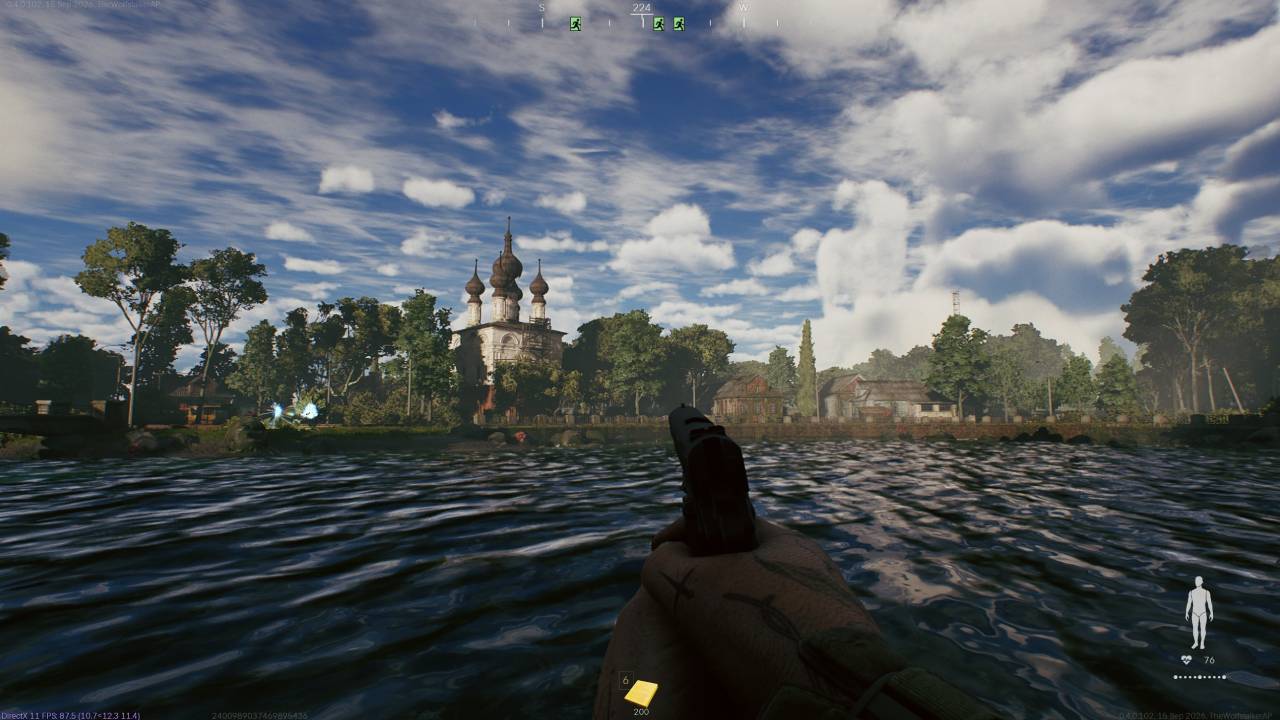
Active Matter asks you to accept that unpredictability as part of the experience. For players who enjoy that style of gameplay, the slower moments make the successful extraction feel much more rewarding.
Active Matter ultimately works because its unusual ideas are directly tied to its core systems.
The time loop explains the repetition, the Monolith gives it purpose, Active Matter explains the anomalies, and the unstable zones create the pressure that keeps every raid moving. It is a game built around repetition, but the world keeps giving you reasons to approach the next run differently.
It is not the cleanest extraction shooter around, and it does not need to be. What matters is that it has a strong foundation and a recognizable identity. The combination of tactical shooting, survival mechanics, PvPvE tension, horror creatures, gravity manipulation, and base progression creates an experience that feels familiar without becoming completely predictable.
If you are willing to accept the consequences of dying and enjoy slowly learning how a dangerous world works, Active Matter has plenty of reasons to keep you coming back. The constant risk of losing your gear also makes every successful extraction feel rewarding, especially as you gradually become more confident in handling its systems.
Editor, NoobFeed
Verdict
Active Matter mixes tactical extraction gameplay with time loops, horror, and reality-bending anomalies. Rough edges hold it back, but its risk-heavy raids and unusual systems give the shooter a personality of its own.
65
Related News
No Data.