
Marsupilami 2: Salsa Palombia Review
Nintendo Switch
A short platformer with distinct character abilities and quick movement, building on its predecessor.
Reviewed by Adeela Tas on Sep 05, 2026
When you step into Palombia in Marsupilami 2: Salsa Palombia, you immediately face a setup as straightforward as it is silly. A strange musical curse has spread across the land, sending the animals into uncontrollable dancing and throwing everything into chaos.
Behind it is a mummy queen and her mummy followers, who have returned with the intention of putting on a cursed concert. Your job is to take control of three young marsupilamis - Hope, Punch, and Twister - and put an end to the musical mess.
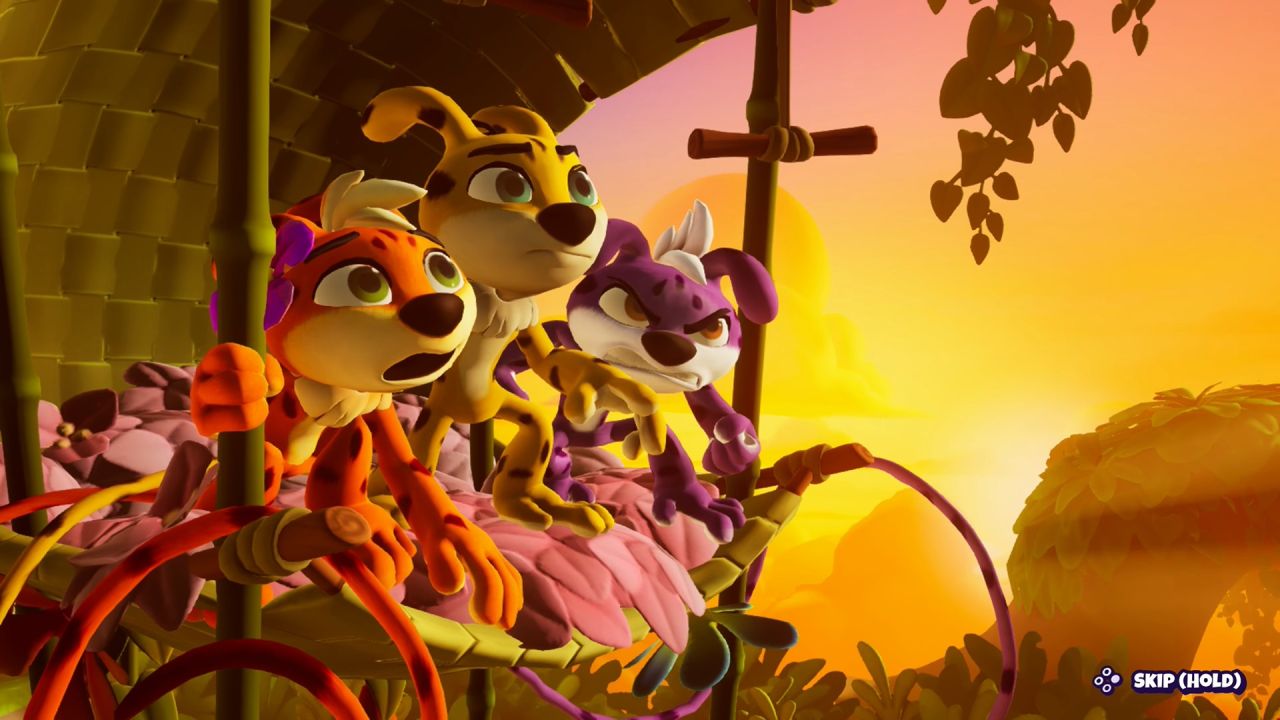
Marsupilami 2: Salsa Palombia follows the same basic route as Marsupilami: Hoobadventure, the 2021 game that came before it.
The sequel clearly builds on that foundation rather than trying to reinvent the series. You can feel that connection in the story, the enemies, the bosses, and even several of the small design choices. At other times, it feels like the sequel stands too close to its predecessor instead of developing a stronger identity of its own.
In Marsupilami 2: Salsa Palombia, the biggest change comes from how the three marsupilamis actually play. In the previous game, having three characters sounded like a meaningful choice, but they ultimately were handled in almost exactly the same way. Here, that illusion is gone.
Each character shares a basic movement set, including running, wall jumping, a tail attack, and a ground slam, but each also has a distinct ability that changes how you approach certain sections. Hope is the most comfortable character for tricky platforming because she can perform an extra jump and use her tail to stay airborne.
Punch turns into a bouncing ball, giving you a way through spikes and letting you smash certain blocks. Twister has a purple aura-based ability that lets him bounce off particular enemies, and his air movement gives you another way to cross gaps.
Switching between them is built into the levels, so you can't just pick a favorite character at first and forget the others.
Instead, each stage gives you a specific pair and lets you swap between them whenever you need. You can see a hazard, recognize which character is suited to it, switch, and keep moving. The controls feel responsive enough that this never becomes a chore. You can build speed, roll forward, break through crates, grab fruit, and move from one section to another without constantly fighting the controls.
Still, the character abilities do not reach their full potential. Punch is the clearest example. Being able to roll safely across spikes sounds useful, but after the opening world, you rarely find yourself genuinely dependent on it. Hope can often clear the same hazards with her extra jump, leaving Punch with more optional jobs, such as reaching basketball hoops that reward you with extra fruit.
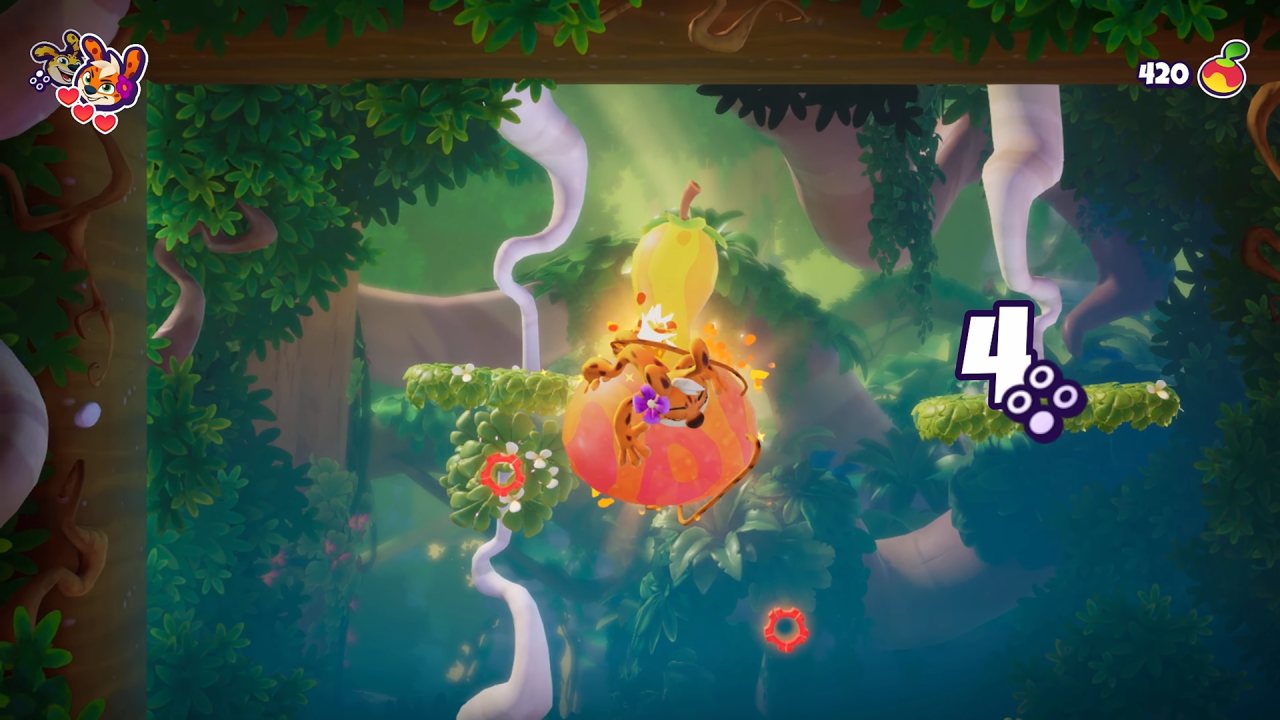
Twister also has moments where his ability is useful, but you may often prefer the other characters. The game offers variety, but the level design doesn't always push it as far as it could. That becomes more noticeable because the worlds themselves improve as you move forward.
The first jungle area is enjoyable, but it feels like familiar 2D platformer territory. By the second world, the game starts doing more with its surroundings, bringing electricity and moving cars into the mix. The snowy third world then becomes a standout section. You run through snow-covered villages, travel through icy caves, deal with strong winds, and climb mountain areas that feel much larger than the early jungle stages.
The winter setting gives the game a cozy visual quality, and at one point you even have to outrun a chasing dinosaur.
Thankfully, the game gives you plenty of reasons to revisit stages. Musical notes are the main collectibles, and finding all of them means paying attention rather than simply racing toward the exit. Some are tucked into difficult areas, others are tied to fruit collection, and you can earn additional notes through special challenge rooms.
Fruit also has a practical purpose because collecting enough of it lets you open optional stages, so gathering everything does not feel completely disconnected from progression. The biggest extra mode in Marsupilami 2: Salsa Palombia is the fruit-focused Salsa mode.
Here, you are trying to maintain a collection streak while moving quickly through a level. The longer the streak survives, the better your multiplier becomes, so suddenly every piece of fruit matters. You find this mode much more demanding than simply reaching the end of a stage because you have to think about your route, your character choice, and your timing while keeping the chain alive.
A missed fruit can mean more than just missing a collectible; it can damage the score you have been building. That speed-focused approach also highlights how much momentum the game wants you to have. You can keep rolling, build speed, smash objects, and get launched between sections by birds.
Those birds serve much the same gameplay function as launch barrels in Donkey Kong Country, sending you flying across the level.
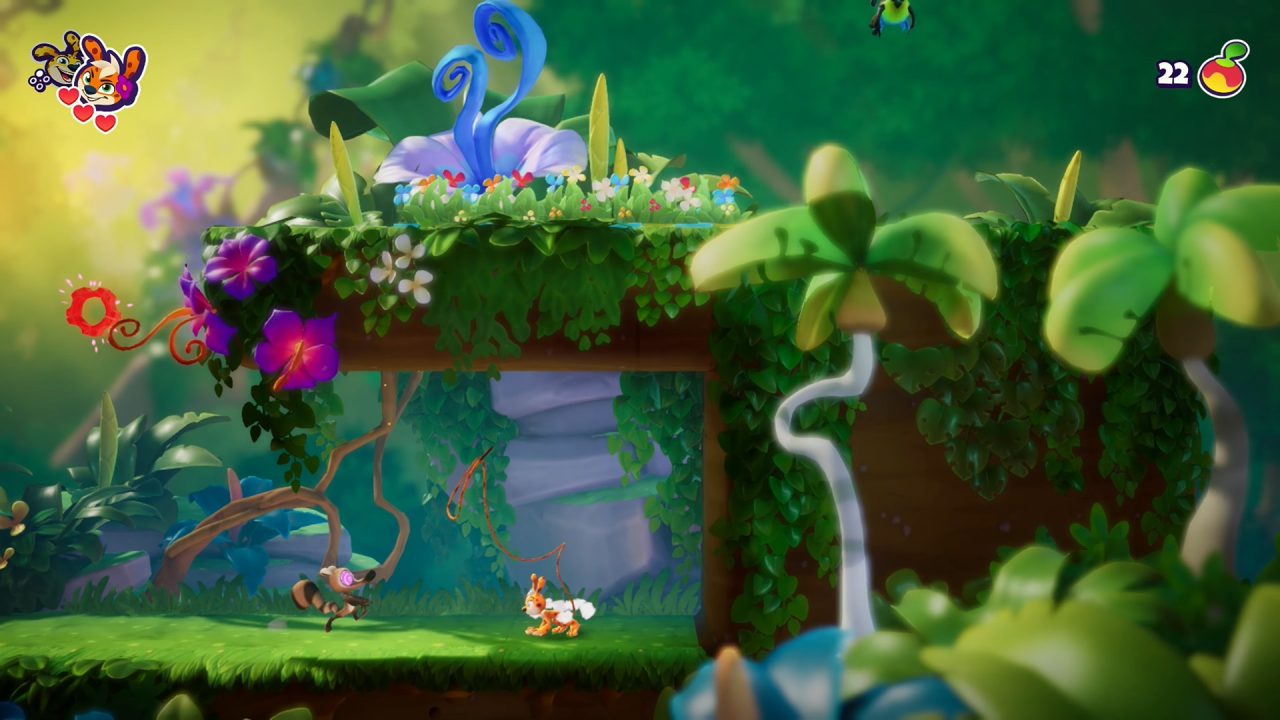
The constant flow of fruit while you are airborne can be particularly satisfying when everything lines up. At the same time, some of the game's design choices make its influences very obvious. The toucans acting as launch points, the way you finish a stage with a familiar-looking fruit-eating moment, and certain sound effects all remind you strongly of other platformers.
There is nothing inherently wrong with taking inspiration from games that established these ideas, but you may wish the series would put more distance between itself and those references. Small details like iconic collection sounds can give a platformer its own personality, and here some of those details feel borrowed rather than fully developed.
The same issue in Marsupilami 2: Salsa Palombia applies to the enemies, too. You should have no problem with the sequel bringing back familiar enemy types, because that is normal for a series. The problem is how little variety there is around them. The same squirrel-like enemies and floating radioactive bats show up repeatedly, with only a small number of new designs appearing in each world.
Each area gets something of its own, such as fly traps in the jungle or hostile snowmen in the mountains, but by the later stages you may be ready to see more different threats. Combat itself is simple. You have your basic tail attack and can use your movement abilities to deal with obstacles and enemies.
The platforming, movement, collectibles, and route planning are doing most of the work.
That is fine for this type of game, although a larger enemy roster and more inventive encounters could have made the later levels feel less repetitive. In Marsupilami 2: Salsa Palombia, the otherwise forgiving structure becomes uneven at the bosses. Easy difficulty can go even further by giving you effectively unlimited chances, while harder settings reduce your health.
Yet the difficulty changes are not especially dramatic outside boss fights. The bosses themselves can feel like they belong to a different game. Some encounters drag on and become surprisingly frustrating compared with the smooth platforming around them. The first one is manageable on normal difficulty, but later fights can make you consider lowering the difficulty simply to get back to the parts that are actually enjoyable.
Oddly, the final boss is easier than some of the earlier ones, so the overall boss progression never feels particularly well balanced. Their visual designs are also far too close to the first game's bosses, which reinforces the sequel's wider identity problem.
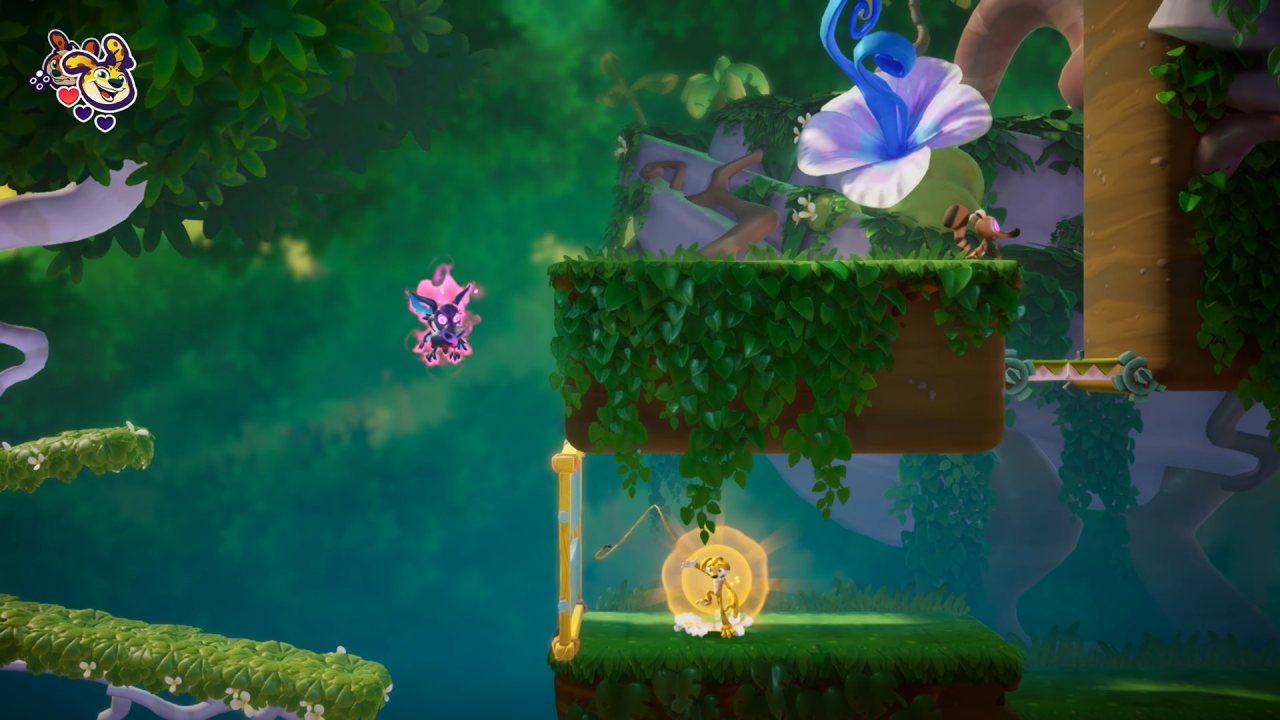
Visually, though, Marsupilami 2: Salsa Palombia is easy to enjoy. The cartoon presentation uses bright, lively environments without making them difficult to read in most situations. The city has a Day of the Dead-inspired look that stands out, while the snowy mountains are easily the strongest environment.
Moving from snow-covered settlements into caves and then out into exposed mountain sections gives that world a clear sense of progression.
Even when the underlying platforming ideas are familiar, the environments give them a pleasant setting. The audio in Marsupilami 2: Salsa Palombia is another strong point. The music is consistently enjoyable, and some tracks stick with you after you stop playing.
The music also changes in useful ways during certain challenges, including more intense passages when your fruit score is climbing. There are even moments with more processed, old-school-sounding music that suit the challenge sections nicely.
Playing Marsupilami 2: Salsa Palombia with another person adds a worthwhile extra layer. Local two-player co-op lets you experience the campaign together, and although the level design does not always feel properly built around two separate characters, it is still enjoyable to have someone alongside you. The bigger surprise is the versus content inside the dojos.
Five different minigames give you a break from normal platforming, including a football game with a Rocket League-like setup and a territory-painting game reminiscent of Splatoon. Finding more dojos unlocks additional maps for these activities.
Those competitive games can be much more addictive than expected because rounds are quick and easy to understand.
They also solve a visual problem that you can notice during the main campaign. With two characters moving around a busy 2D screen, it can be hard to tell what is happening at a glance, and the visual activity can even feel a little uncomfortable at times. The versus stages use darker backgrounds and highlight the characters more clearly, which makes the action easier to follow.
Co-op in Marsupilami 2: Salsa Palombia has one major weakness, though. Bosses become almost laughably easy when two players can repeatedly attack together. Encounters that can take some effort alone can be finished in around a minute with coordinated button presses.
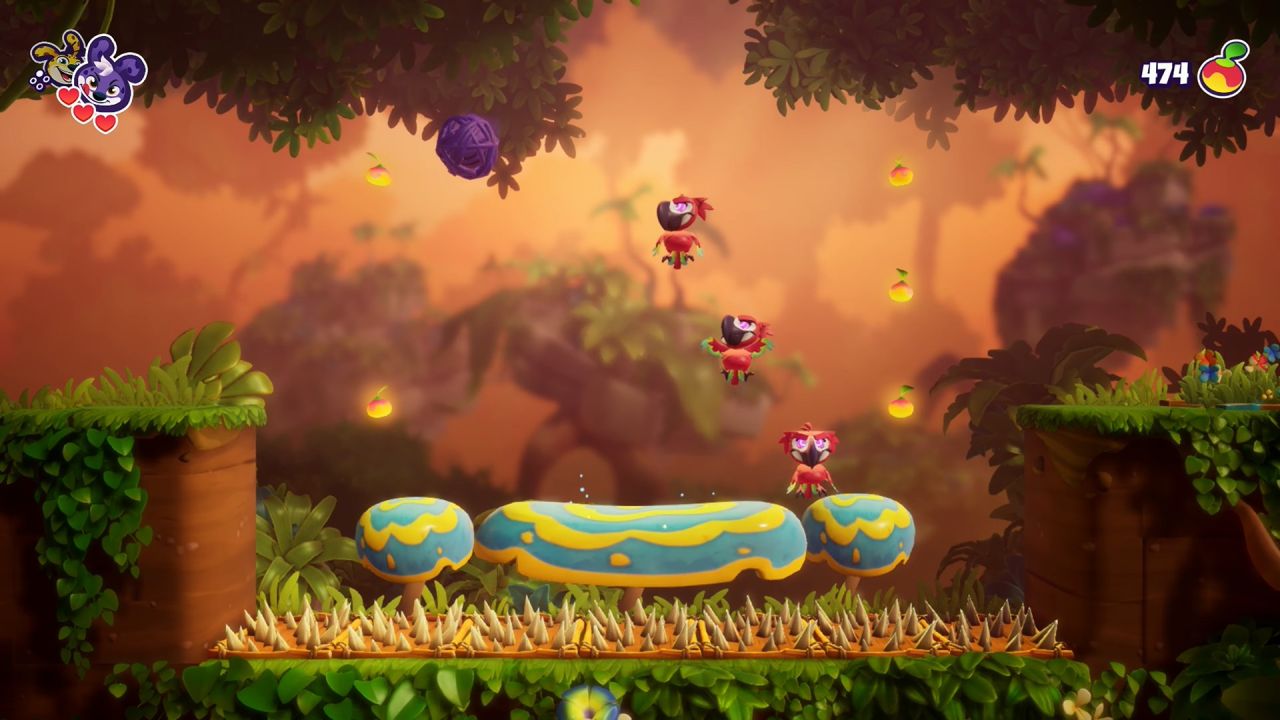
That takes away much of the challenge. The campaign also does not always give both players meaningful reasons to use their separate abilities, so the multiplayer experience feels more like an enjoyable addition than something the entire game was designed around.
For those looking for a deep narrative in Marsupilami 2: Salsa Palombia, there is not much here. The story is minimal and closely follows the first game's structure. Players who want a wide bestiary may also be disappointed by the repeated enemies.
Anyone expecting a long adventure should know the main campaign lasts around three hours.
Hardcore platformer players looking for the pressure of later Donkey Kong Country Returns stages or Celeste will also find the regular levels forgiving. The game draws on that tradition without reaching its toughest intensity, except in some boss fights.
For fans of classic 2D platformers, Marsupilami 2: Salsa Palombia has a much clearer appeal. If you enjoy the general style of Donkey Kong Country, Rayman Origins, or Sonic, you can settle into the movement quickly.
You do not need deep knowledge of the marsupilami character to enjoy the platforming. Families can also get something from the accessible structure, especially with the easier option. Completion-minded players have the notes, dojos, fruit challenges, and extra stages, while anyone looking for local multiplayer can spend plenty of time with the versus minigames.
In the end, Marsupilami 2: Salsa Palombia is a solid continuation rather than a huge leap forward. It fixes one of the first game's clearest gameplay problems by giving Hope, Punch, and Twister genuinely different abilities, and it introduces enough optional content to make a short campaign feel less bare.
The later environments are stronger than the opening jungle, the fruit challenges add replay value, and the versus minigames are a welcome surprise.
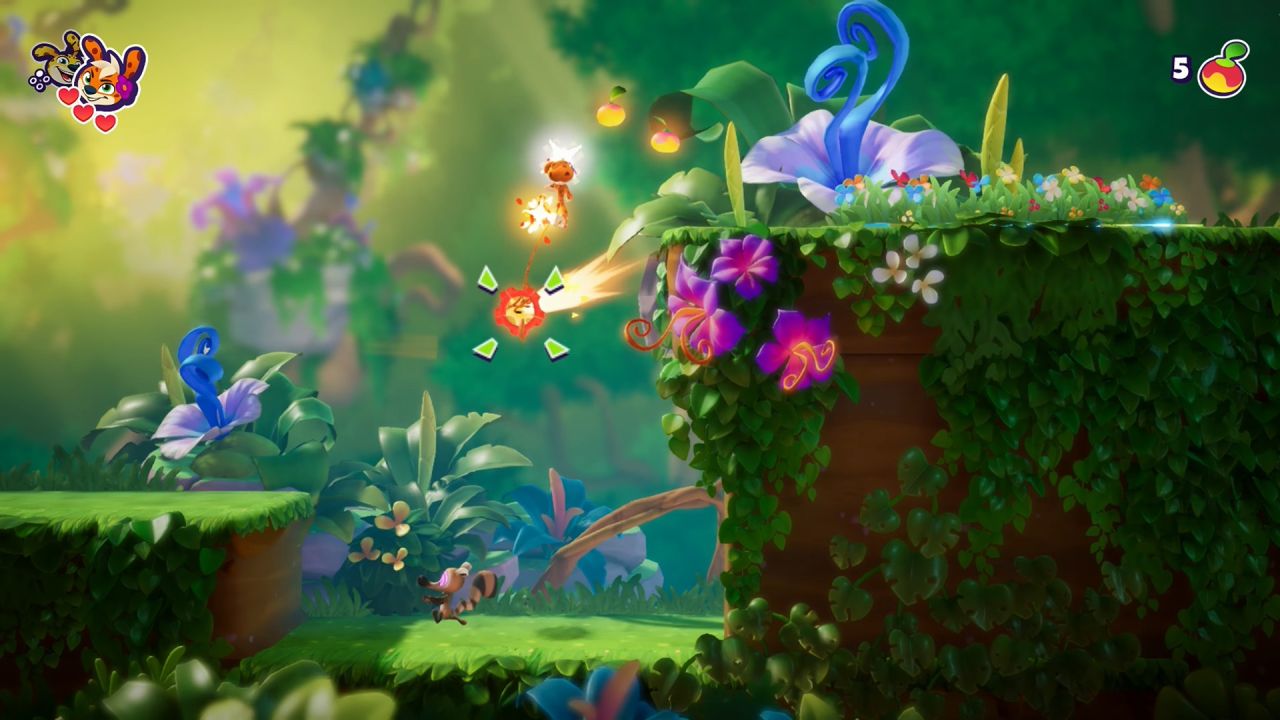
There is plenty left to say about the sequel to Marsupilami 2: Salsa Palombia. The game needs to use its characters’ unique powers to drive its development. It needs many enemies and bosses that will differ from each other.
Its storyline needs to go on once the game environment becomes more interesting. Finally, it needs to build its own franchise and not resort to Donkey Kong clichés. Despite all these shortcomings, there are things that could allow you to have fun in this game if you like basic 2D platforming games. The forgiving checkpoints let players start the adventure without any problems.
The various collectibles, dojos, and fruit-based minigames will also encourage you to replay levels if simply finishing them isn't enough. Plus, the game looks colorful, has a nice soundtrack, and playing with a friend adds extra fun. For you, Marsupilami 2: Salsa Palombia is a promising step for the series.
It isn't trying to transform the genre, and it doesn't always make the most of its ideas, but it clearly improves on its predecessor in important places. You finish wishing there had been more to play with and more room for the developers to push the concepts they introduced. The foundation works; the next step is making the series feel unmistakably like itself.
Editor, NoobFeed
Verdict
Marsupilami 2: Salsa Palombia is a joyful, charming platformer with distinct characters, gorgeous visuals, and a soundtrack that sticks with you. It doesn't quite hit greatness, but it's an easy game to fall in love with.
72
Related News
No Data.