
Rune Dice Review
PC
A physics-driven roguelike where dice collisions quietly take over your attention span.
Reviewed by Adeela Tas on May 20, 2026
Rune Dice has emerged from a smaller studio arrangement, with Smart Raven Studio responsible for development and Kwalee handling publishing. As opposed to many other similar titles, Rune Dice is not produced under budgetary constraints and is neither a sequel nor an expansion pack of an already existing series of games.
Moreover, unlike numerous other action-adventure games, Rune Dice does not pretend to be anything cinematic or narrative-driven. On the contrary, this game can be viewed as a large-scale indie experiment exploring possibilities opened by the physics of dice-throwing mechanics in the roguelike genre.
This concept is clearly manifested upon the very first contact with the game, because Rune Dice does not bother the player with detailed lore and worldbuilding aspects. The moment you get into Rune Dice, however, you’ll understand that this game is definitely not another deck builder masquerading as something else.
Even when Rune Dice is classified as such a game, there’s nothing abstract about it. While other games of this genre will ask you to choose certain cards or activate particular abilities by simply selecting them from the menu, in Rune Dice you are responsible for the actual action of rolling dice that will be thrown on a battlefield crowded with other dice and environmental obstacles.
The very design of the game is oriented towards motion, collision and time. It always requires the player to consider trajectories rather than inputs. Rune Dice does not actually depend on stories to create the experience. There will be no complex storylines here, or any highly scripted experiences. In Rune Dice, what players get is an open-ended fantasy environment where they can choose between different types of heroes and participate in various branching events.
While the actual structure of the game is a map of options that takes you through fighting, shopping, upgrades, and bosses, the stories remain quite limited so as not to interfere with gameplay. But what Rune Dice does is allow the character classes to assume the mantle of identification. No longer will your focus be on following a protagonist with a rich history behind him.
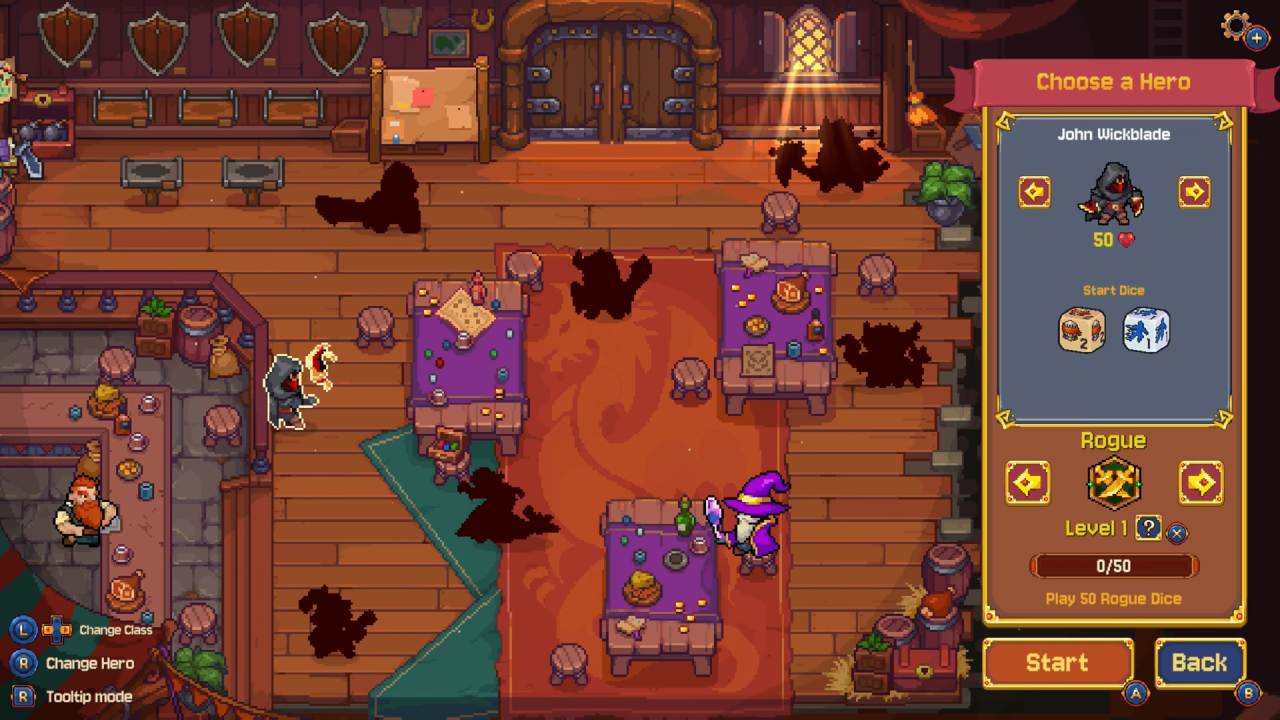
Instead, you will be making choices between characters who represent archetypes such as the warrior, rogue, mage, paladin, necromancer, druid, archer, or bard. In Rune Dice, these character classes function as gameplay styles rather than characters. Any narrative elements exist merely to establish the reason you have moved from one encounter to another.
At its core, Rune Dice focuses on players rolling dice onto a common field where interactions take place between dice rolled by players.
Every single dice in Rune Dice is assigned a numerical value and some even come with an extra effect based on the dice's class or type. The basic principle behind Rune Dice is very easy, although difficult in practice, which is to make dice collisions resulting in merged dice with high values.
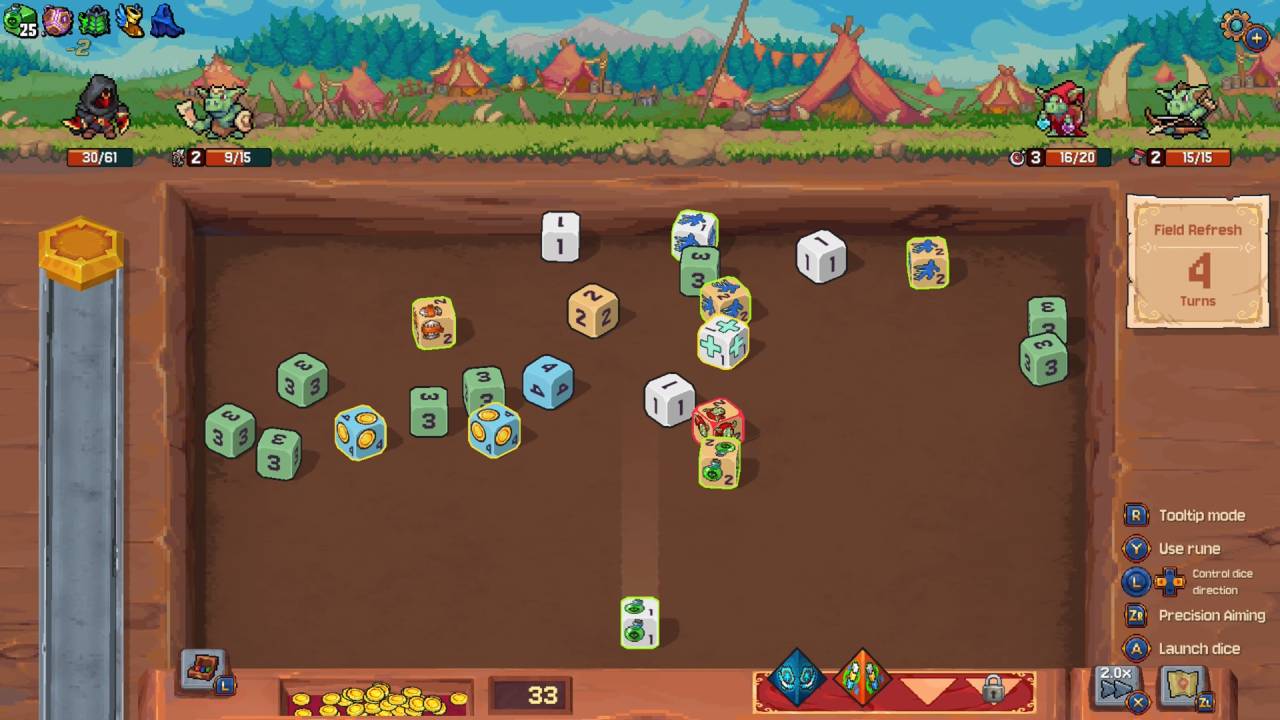
More interesting about Rune Dice becomes evident when talking about the physics behind it. In Rune Dice, the dice themselves are dynamic. They not only remain static for someone to click on them but can also move around, sometimes even attracting each other, depending on their value. Each roll in Rune Dice becomes a cause-and-effect game, where you have to predict the behavior of the dice.
As players advance in Rune Dice, the game will eventually introduce more possibilities of interacting with their foes by way of introducing more dice options. There are some dice in Rune Dice that concentrate solely on damaging their foes, while there are others that specialize in restoring health, earning money, and providing some other kind of benefit based on certain build-ups within a run.
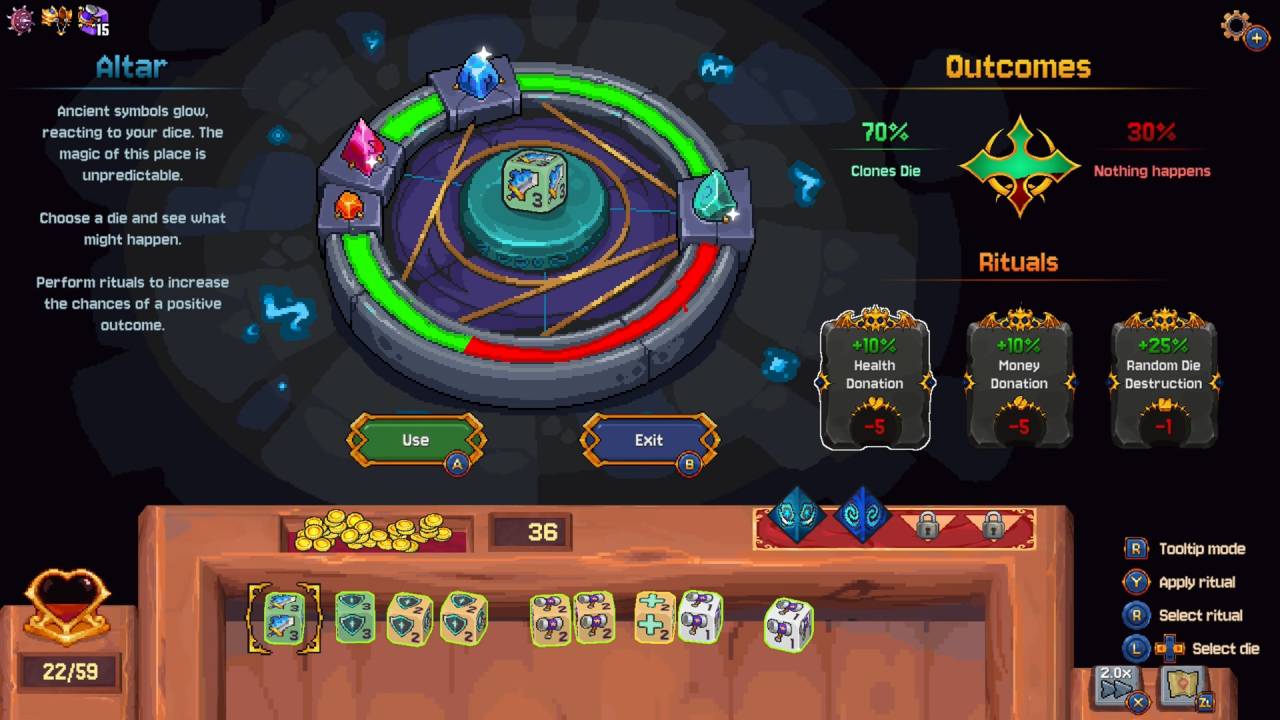
Furthermore, each class in Rune Dice comes equipped with its own unique set of dice, which adds more variety in terms of how players deal with their foes when choosing a particular hero to play with. In addition to this, Rune Dice provides players with runes and relics. These components in Rune Dice provide you with temporary abilities that you can use within the run, such as changing the state of combat by changing the gravity of your dice, instant heals, and even shuffling the positions of dice on the battlefield.
The other component is called relics, which are permanent upgrades that affect you throughout your future runs.
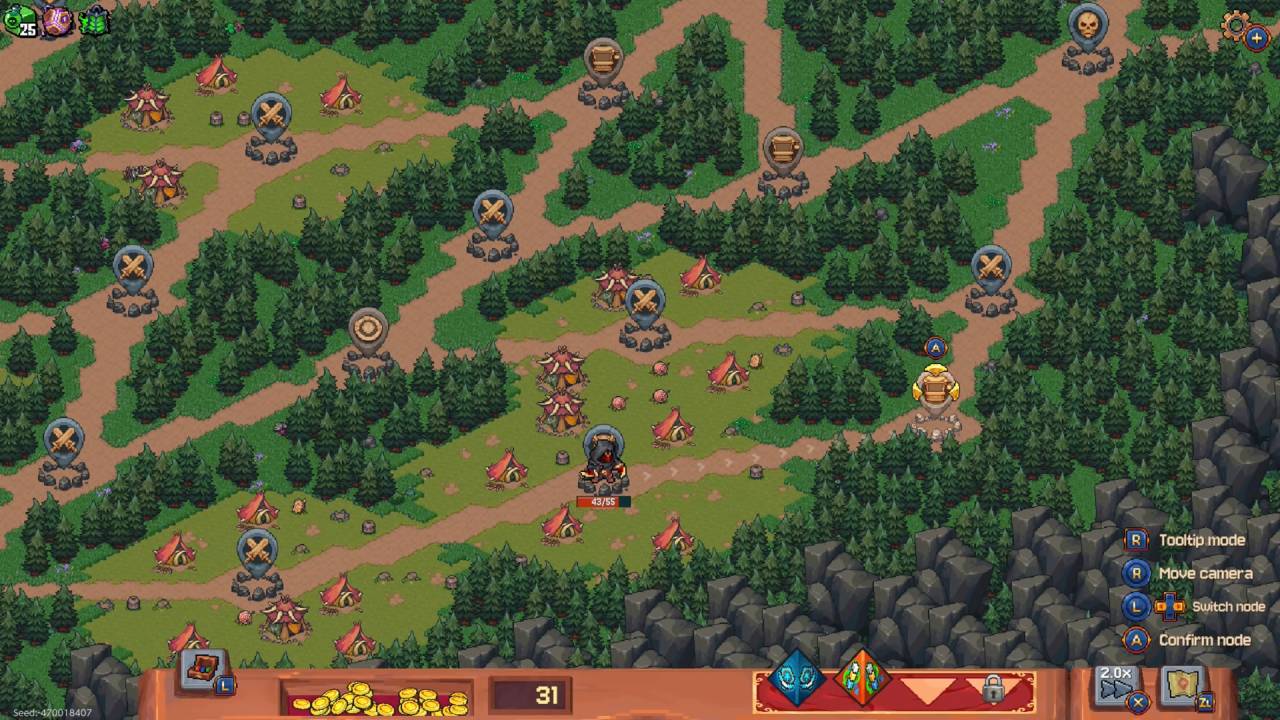
Thus, this game possesses both short-term and long-term mechanics. Rune Dice uses a map with branching paths. This map allows you to travel from one point to another. These points consist of encounters that can involve battle with an enemy, visits to a shop where you get more equipment for yourself, visiting locations for upgrading, and encountering powerful bosses.
The way Rune Dice presents its maps is quite convenient and keeps everything simple. Battle in Rune Dice is the stage where all elements are combined. In Rune Dice, players roll their dice into a common field, and whenever two dice of identical numbers meet on the battlefield of Rune Dice, they fuse into a more powerful one.
The fused dice do not remain there but continue to move around the battlefield, possibly encountering other dice and fusing once again. Rune Dice makes use of these cascading events in its gameplay. The puzzling part of Rune Dice comes from trying to predict the way the battlefield will be changed after each throw. The main thing about Rune Dice is that you are not only supposed to aim for fusions but also prepare the battlefield by making specific throws.
Players in Rune Dice are expected to anticipate the movement paths rather than specific spots on the board. A successful throw in Rune Dice may result in the start of a chain reaction or vice versa. Enemies in Rune Dice are very much a part of this system. Not only will they drop dice on the playing field, but these dice can get in the way of chaining or forming your chain.
Therefore, in addition to the players, enemies in Rune Dice contribute to the continuous reshaping of the playing environment. Another interesting mechanic in Rune Dice is the presence of classes, as some classes may be better suited for dealing out poisonous damage, whereas others will deal more physical damage or provide healing. Rune Dice handles escalation in a pretty decent manner.
When you chain up the dice, it feels really good because of the way these dice bounce and form new combinations. However, sometimes the game can be a little inconsistent because of the physics involved in playing the game. While the inconsistent physics can make the game even more unpredictable, sometimes it might become a little frustrating, rather than exciting.
Progression in Rune Dice is achieved by unlocking and advancing through various hero classes instead of just the typical experience point bar system.
When playing Rune Dice, you will be able to add more heroes to your collection, each of which comes with a specific dice pool and way of playing the game. Rune Dice makes use of hero classes, as all of them change the game dynamic entirely. Some of the hero classes in Rune Dice focus on stacking poison damage and other types of damage over time, whereas others focus on brute merging and survival.
This variety of ways of playing is what keeps each run interesting, despite having the exact same framework to work with. As you progress through Rune Dice, you will have access to new starting classes and better means of progression for each. The grinding aspect of Rune Dice is deliberately minimalistic. There isn’t pressure on you to spend your time farming through repeated attempts, and failed attempts in Rune Dice will help you make progress in some way too.
Whether that's unlocking a new class, working towards a build path or becoming familiar with how dice behave. Rune Dice manages to keep progression both consistent and gradual without being complicated. In regard to graphics, Rune Dice does not include fancy features, yet this is quite beneficial for the gameplay mechanics involved.
Regardless of how many dice start to roll around in chains and collisions across the playing area, the arena design still manages to provide clarity, so the player can easily follow their value and position without getting confused. Keeping visuals simple is key because of the nature of the gameplay itself.
The enemy types in Rune Dice are clearly differentiated and thus easily recognizable, and the general fantasy style is kept simplistic yet still interesting.
While other titles might have chosen to make things more realistic and visually impressive, the developer chose simplicity and clarity instead, which makes reading dice movement easy even amid complex collisions. Rune Dice relies on sound to complement its gameplay feedback system. For instance, every single dice collision gives rise to a sound effect that indicates whether the merge was successful or not.
Dice merging is repeated throughout the game as part of the gameplay, and thus becomes one of its pleasures. The music in Rune Dice is influenced by the intensity of the moment since it progressively becomes louder with each longer chain. As more dice start coming together on the playing field, the background music also gains energy and contributes to the excitement of the moment.
This also creates an anticipation factor whenever players are able to create a chain reaction or get close to making a big combo. Rune Dice operates on one central theme that is developed repeatedly using game systems rather than being told through an elaborate story. If you are looking for something story-driven, then you will not find what you seek in this game.
However, the game offers compensation for the lack of a storyline by having a complex dice interaction system grounded in physics. In Rune Dice, a session will last 20 to 25 minutes at most. Rune Dice becomes more complex as time passes because of its various classes, relic systems, runes, and maze design.
The class type is bound to influence the way the players play during the fights. The system of relics and runes makes sure that there is a greater variety of build styles available within the game. While the game follows many standard roguelike gameplay formulae concerning progression and replayability, it does remain unique in its mechanics.
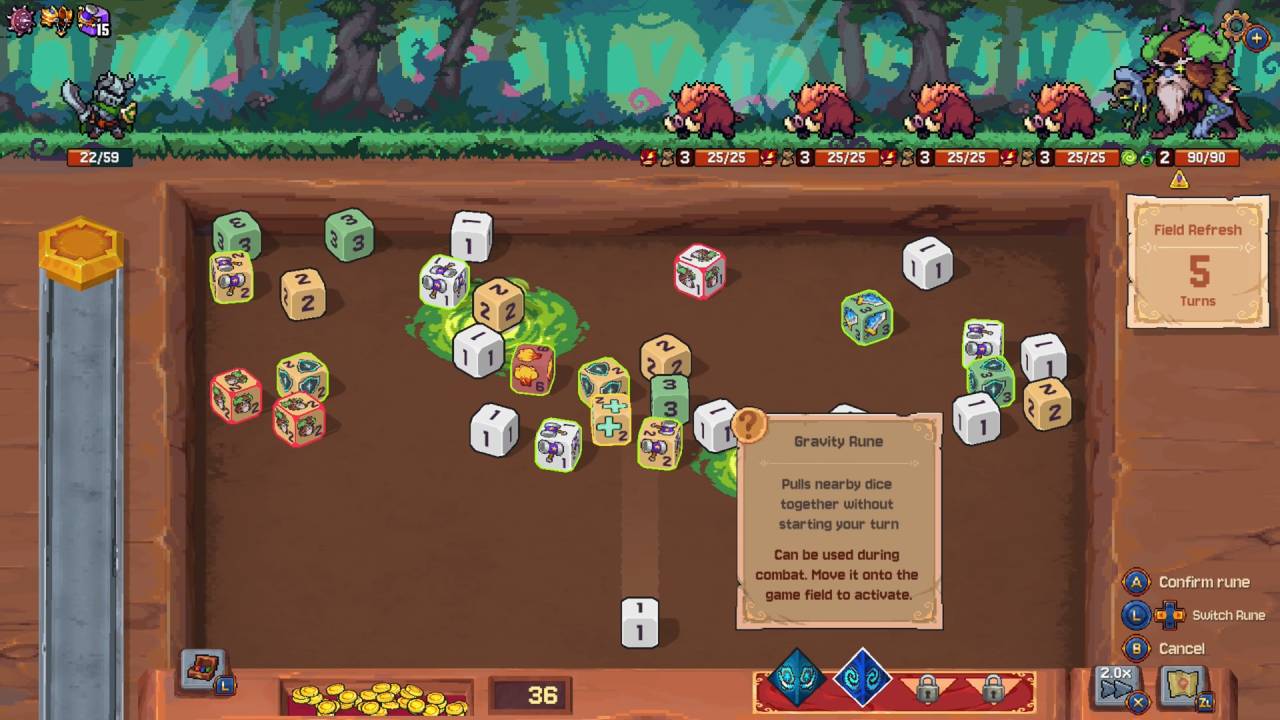
Instead of simply using menus and static moves, the game is always about maneuvering, collision, and reaction chains. The replayability in Rune Dice lies not in complexity, but in experimentation. Every single game will have you experimenting with different classes, dice types, and playstyles to discover new chain patterns.
Rune Dice does not have to be a game that requires deep thought for all actions taken in it. Rather, the game focuses on the dynamics of playing dice. In most scenarios, the gameplay ends up being more about adjusting to the dice dynamics rather than making strategies to play the game.
This unpredictability of the dice is the reason why people become so addicted to playing the game. It does not matter whether the results are clean, messy, or chaotic because Rune Dice keeps delivering an engaging cycle of cause and effect.
Editor, NoobFeed
Verdict
Rune Dice is a physics-based roguelike that revolves around dice merging chaos with short plays and steady progression, providing a very enjoyable game with many chances to play.
74
Related News
No Data.