
Twisted Tower Review
PC
A demented carnival ride that earns its BioShock comparisons while carving out its own weird little corner of horror.
Reviewed by Adeela Tas on Aug 18, 2026
Comparing a game to BioShock is risky business; it's the kind of reference that raises expectations quickly and rarely meets them. Twisted Tower, the new release from small studio Atmos Games, doesn't shy away from that comparison. It leans right into it. And once you've spent a few hours climbing through its twisted, blood-splattered version of a theme park, you start to understand why the developers weren't worried about inviting it.
This is a project that's apparently been cooking for about five years, led largely by Thomas Brush, the same guy behind Neversong, working with what sounds like a tiny team that eventually became close to a one-man show by the time it shipped.
That kind of scrappy background matters once you actually start playing, because Twisted Tower wears its budget honestly instead of hiding it, and somehow that ends up working in its favor. Even though the marketing leans into the comparison, pitching the whole thing as something like BioShock crossed with a rundown Disney World, and having actually played it, you'd say that description is fair, though it's not the whole story.
Before getting into the story, here's what Twisted Tower borrows from and where it breaks off on its own.
There are shades of other things in here too, a bit of the old arcade rail shooter CarnEvil in how each area of the park is built around a different showbiz archetype, and a touch of the mascot horror genre that's become so common lately, though this one avoids most of the pitfalls that usually come with it.
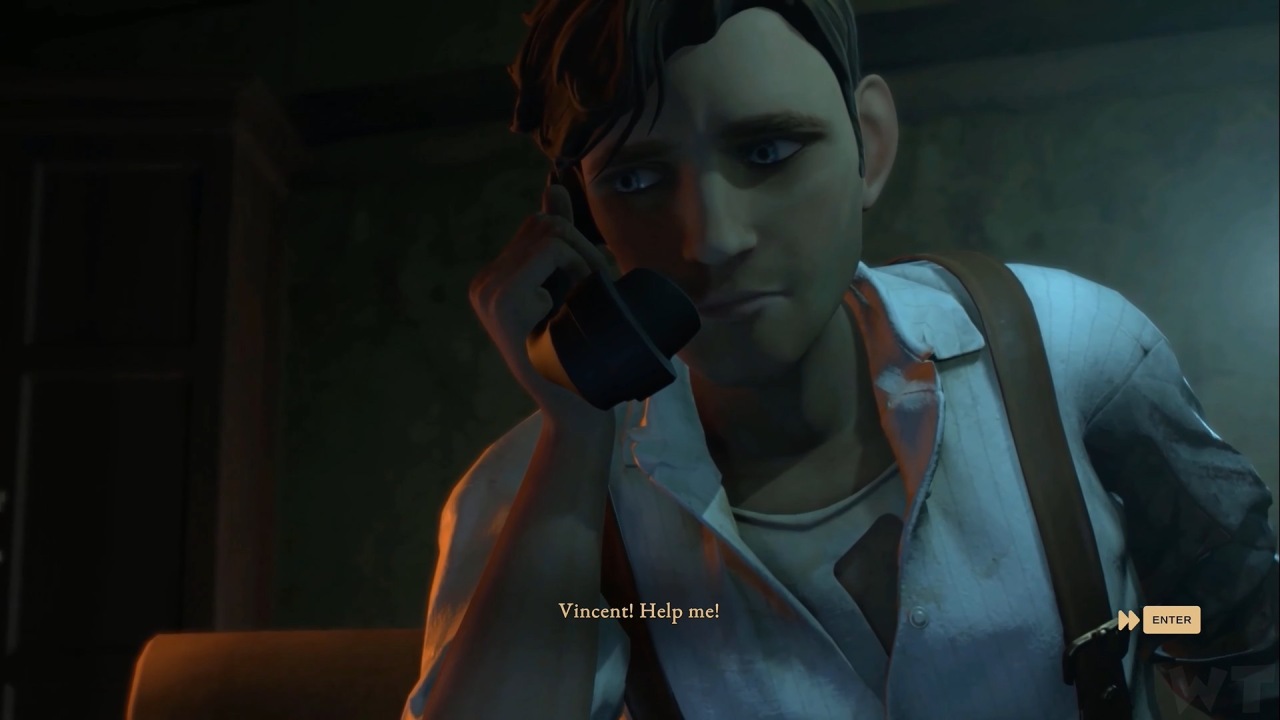
You step into the shoes of Vincent, an ordinary guy who proposes to his girlfriend Charlotte at a drive-in theater, fittingly while her favorite movie plays on the screen behind them. She says yes, the night ends, and then you wake up the next morning to find her gone.
An invitation slides under your door not long after, informing you that Charlotte has been taken by a washed-up film director and one-time actor who goes by Mr. Twister, and that she's being held somewhere inside his abandoned theme park resort. From there, you're off to the island, and the setup takes almost no time to get you moving, which you'll appreciate once the game shows its hand.
Once you're inside, Mr. Twister becomes a constant presence, taunting you through old recordings and screens scattered around the park while Charlotte's voice occasionally cuts through in the background. You start finding tape recorders, notes, and photographs tucked into corners of every level, and piecing them together fills in a surprising amount of backstory.
That backstory turns out to be more tangled than you'd expect from a game about smashing mascots with a giant mallet.
An overbearing mother pushing Vincent toward a life he didn't want, a mentally struggling sister, a strange nephew who keeps popping up in places he shouldn't be able to reach, and a growing sense that everyone in this story knows more about what's happening than you do.
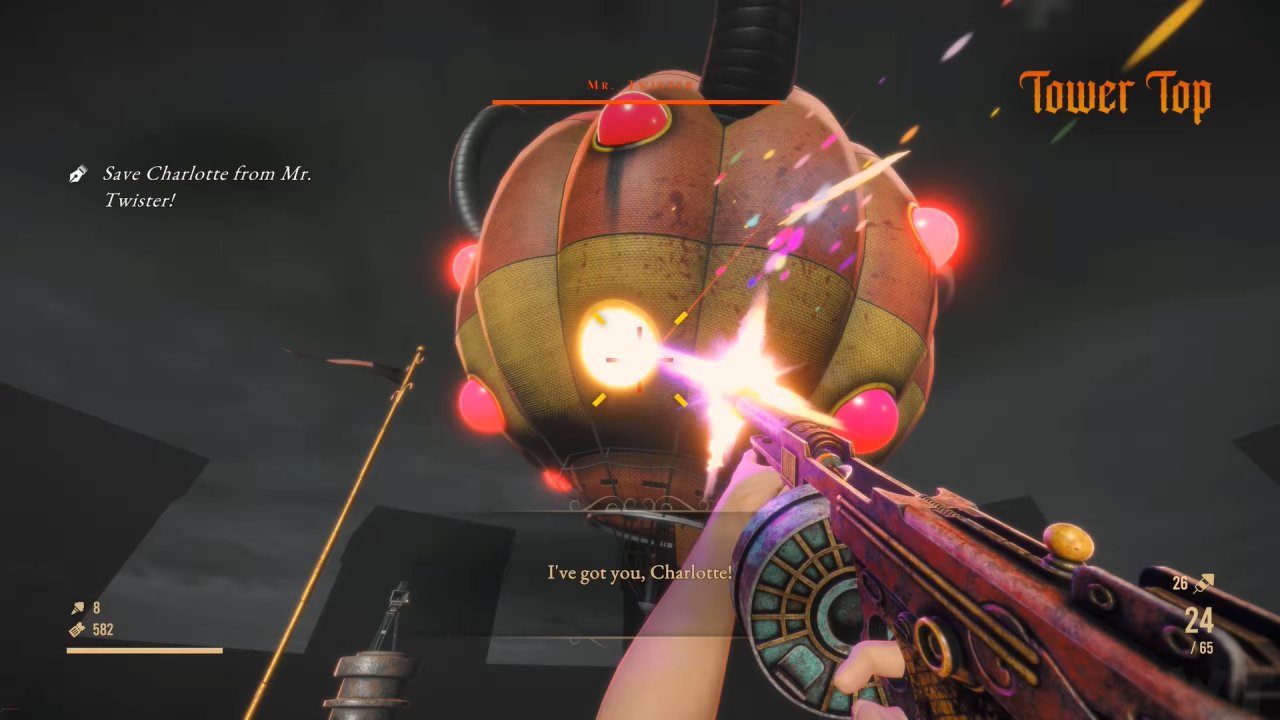
The mystery of why Mr. Twister fixated on Vincent and Charlotte specifically is genuinely compelling, and you'll find yourself trying to connect the dots well before the game spells it out for you.
The one knock you can level at the writing is that Twisted Tower sometimes gets a little too eager to explain itself, leaning so hard on all those notes and recordings that some of the tension of discovery gets flattened out by the time you reach the ending.
There's also a tonal push and pull between the goofier jokes, which lean heavily into potty humor and corny one-liners, and the more grounded, emotional stuff about Vincent's family, and that combination doesn't always sit comfortably together.
Even so, you stay invested, because the emotional throughline between Vincent and Charlotte is strong enough to carry you through. It helps that Mr. Twister himself is such a memorable presence even though you barely share the screen with him directly, speaking almost entirely in rhyme and theatrical flourishes through his recorded messages, which makes him feel like a genuine showman rather than just a generic villain barking orders at you.
With the story's hooks in place, it's the park itself that ends up doing a lot of the storytelling—one floor, one twisted attraction at a time.
Structurally, Twisted Tower is built around a central lobby that works like a hub, complete with an elevator that gets you around once you've unlocked new sections. You need tickets to open up each floor, and the park is broken into five very distinct zones: a hotel full of ransacked guest suites, a mermaid-themed water park, a neon-soaked clown casino, a carnival forest with a hedge maze and a towering Ferris wheel, and finally a retro-styled space station.
Each area is clearly meant to represent one of Mr. Twister's old film projects, and the further you get, the more unhinged and messier those projects apparently got, which the level design communicates without needing to spell it out. Beyond tickets, you'll also come across Twisted Tokens hidden throughout the park, and these are what unlock new traversal tools back at the lobby.
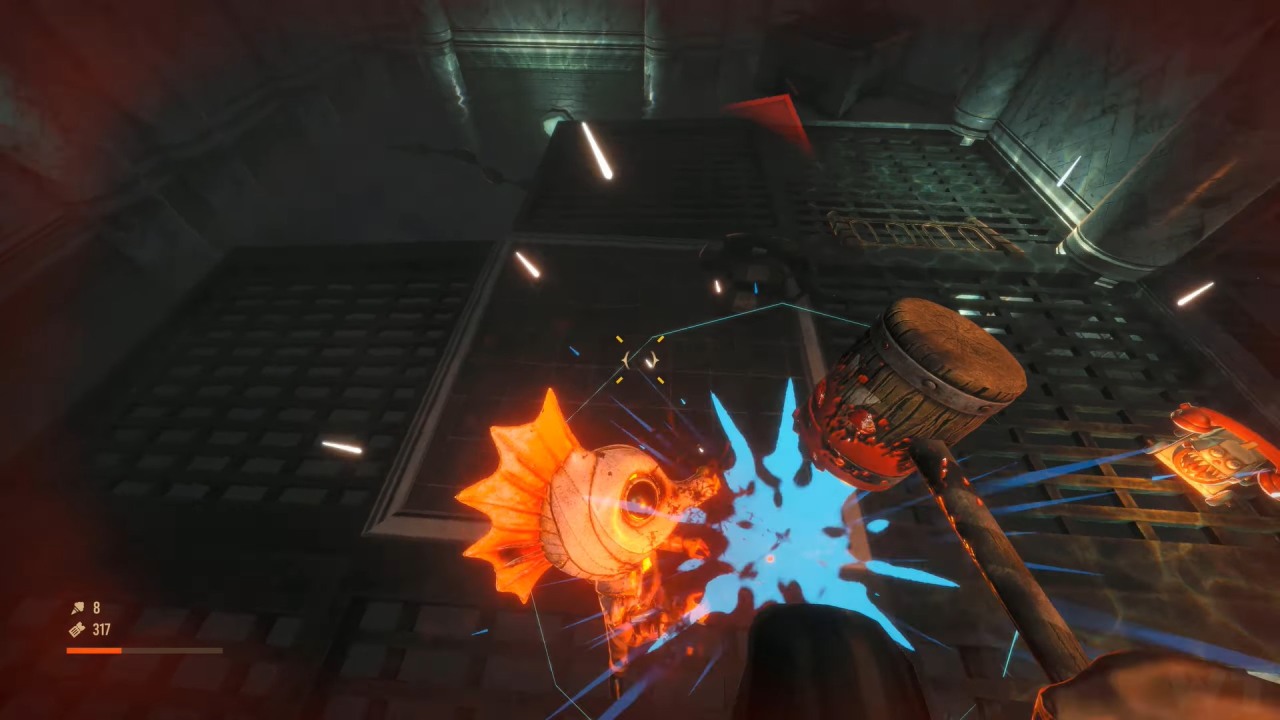
You get a grappling hook fairly early, which becomes essential for reaching blue markers on walls and pulling yourself into areas you couldn't otherwise touch. Later you'll pick up fairy wings that let you air-dash across gaps, a pair of clown shoes that let you bounce off trampolines, and something that functions like a jetpack even though it mostly just gives you a double jump.
On top of all that, certain rooms let you pull a lever and flip the entire space upside down, opening up completely different paths through areas you thought you already understood, and a few sections let you hop on a roller coaster or climb the Ferris wheel for a genuinely different kind of set piece.
All those tools are great for getting around the park, but Twisted Tower really wants you fighting through it.
None of this ever feels like padding. Every new area tends to introduce some new gimmick, so you're rarely doing the exact same thing for very long. The room-flipping trick in particular stands out, since pulling that lever and watching a familiar space invert completely changes how you read a room you thought you'd already figured out, and the level design leans on that idea more than once without it ever feeling repeated.
Combat is where Twisted Tower spends most of its energy, and it shows. You start out with nothing but the Twisted Mallet, a comically oversized melee weapon, and within minutes you're already caving in the skulls of the park's demented mascots with it.
From there, the arsenal expands quickly and never really stops growing. You'll pick up a rubber-bullet revolver with a four-shot burst alt-fire. There's a Tommy gun whose alt-fire triggers a bullet-time mag dump. The shotgun hits hard at close range and can also latch onto enemies with an explosive alt-fire shot. A chain gun sprays bubblegum balls in rapid bursts.
You get a slingshot sniper with a magnifying glass sight fairly late, but it ends up being absurdly strong once you do. There's a magnum that fires marbles and rewards headshots with bonus currency. You'll also find a ray gun, firecrackers that work as grenades, and an oversized cannon that stands in for a rocket launcher.
All that firepower needs somewhere to go, and Twisted Tower hands you plenty of targets.
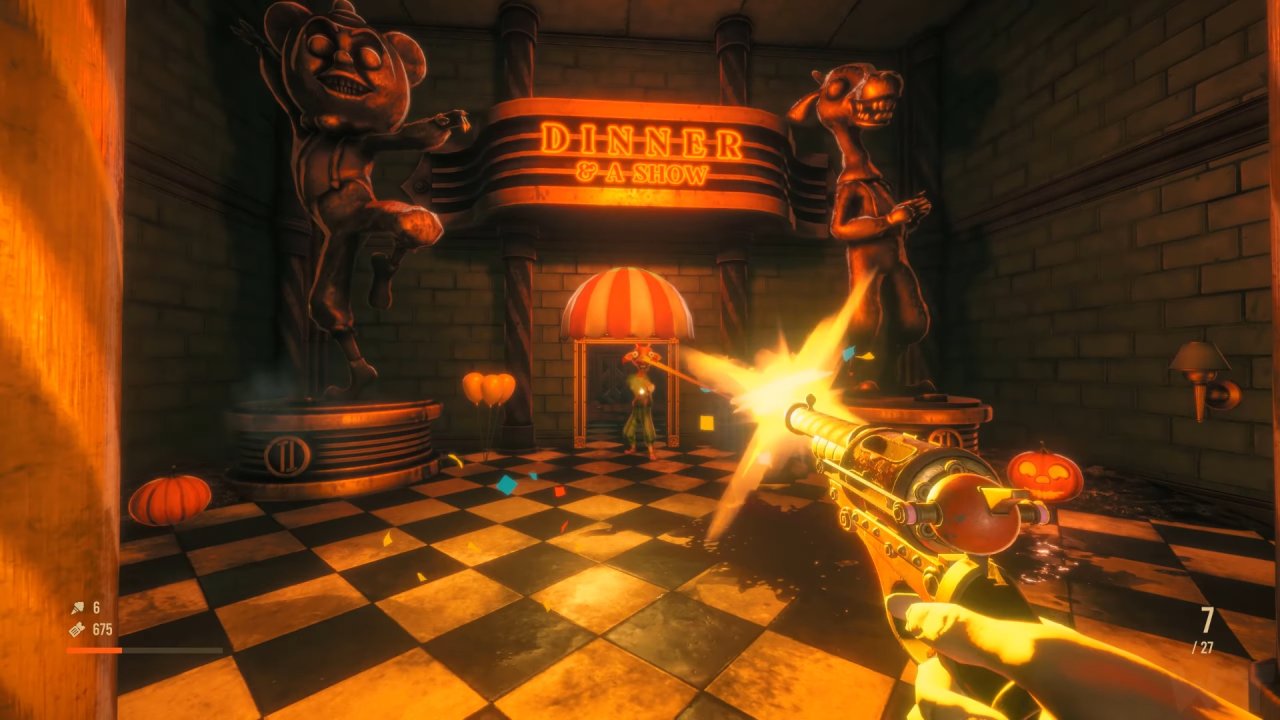
Weapon switching happens through a wheel that pauses the action, and you can cancel a reload by swapping to another gun mid-fight, which becomes second nature once you're juggling a full loadout. Enemies burst into confetti when you finish them off, which sounds silly written out but actually gives every kill a satisfying bit of feedback.
The enemies themselves carry a lot of Twisted Tower's personality. You'll fight Huggy Bear, a hulking bear mascot who shows up constantly and sometimes carries a riot shield; Jerry Giraffe, a rifle-toting giraffe clearly poking fun at a certain retired toy store mascot; Mr. Quackers, a duck with a shotgun and a genuinely unsettling voice; and Ticklin' Tommy, a machine-gun-wielding clown with more than a little serial killer energy to him.
Later areas throw in demonic toy telephones that swarm you in packs. Aggressive, unpleasant-looking mermaids close the distance fast with fishhooks. Hostile fairy godmothers show up too, with faces that don't match their name. Alien pilots fire down at you from hovering saucers, while teleporting seahorses leave trails of fire behind them.
The sewer sections bring waves of oversized venomous spiders that poison you and turn your screen a sickly green while you're trying to navigate a maze of tunnels. That particular chase sequence is probably the low point of the combat variety, mostly because it trades the game's usual tactical back-and-forth for straightforward panic.
Not every enemy in that lineup is created equal, and that unevenness carries over into how the fights themselves actually hold up.
Elsewhere, though, fights ask you to actually think about target priority, since slower melee enemies and faster ranged ones tend to show up together and punish you if you ignore either type. The one consistent criticism worth raising is that enemy behavior stays fairly simple throughout, with most of them either charging straight at you or hanging back and taking potshots, so don't go in expecting deep tactical AI.
Scenery hitboxes can also get in your way during busier fights, occasionally snagging you between furniture in a cluttered room at the worst possible moment, and a few arena encounters have an odd pause before enemies actually spawn in that drains some of the tension right before a fight starts. None of that ruins the combat, but it does keep the experience from feeling fully polished.
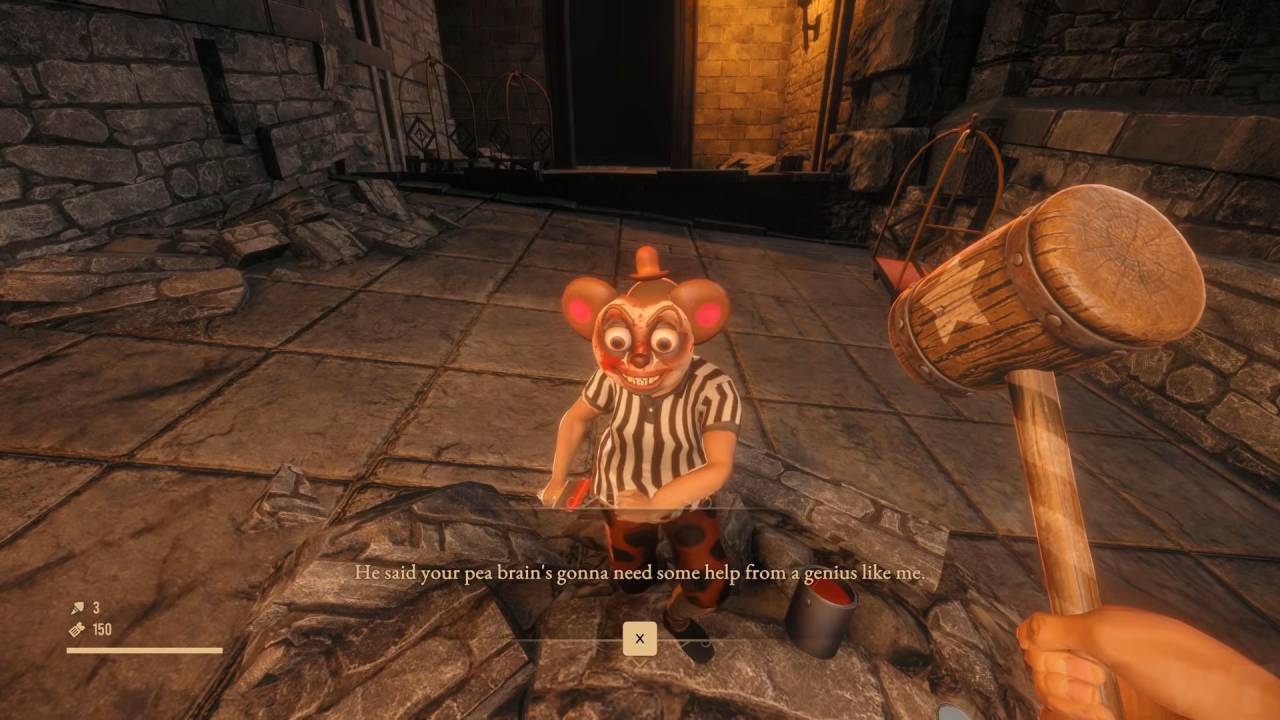
It's also worth saying that by the final couple of areas, you'll have your whole kit available at once: the grappling hook, the air dash, the trampoline shoes, and every weapon in your back pocket, yet the fights rarely ask you to use all of it together. You'll find yourself wishing a few more of the later encounters forced you to weave movement and gunplay together the way the game clearly could have, since you can tell the tools are there for it.
Instead of experience points, Twisted Tower uses tickets for its entire progression system, a nice thematic touch given the setting. Tickets drop from smashed balloons, broken crates, and defeated enemies, and you spend them at upgrade stations scattered around the park to boost a weapon's magazine size, damage, reload speed, or unlock a special attack.
That system only works if the tickets actually keep flowing, and Twisted Tower makes sure they do.
The marble gun's headshot bonus makes farming tickets fairly painless once you have it, which helps offset the fact that some individual upgrades cost more than feels reasonable for what they actually give you. Tickets also buy ammo and the snack-based healing items you'll rely on, things like popcorn, soda, and corn dogs, so exploring off the beaten path in Twisted Tower is consistently worth the detour.
One small disappointment is that upgraded weapons never change how they look, so you don't get that satisfying visual payoff some other games in this genre offer when you sink resources into a gun. Secrets are spread generously across every floor too, and while a handful are easy to spot, at least one late area hides its two secrets well enough to genuinely frustrate you.
Finishing the story unlocks a New Game Plus-style mode that carries your upgrades forward and opens alternate routes through levels that were previously blocked off, stretching what's normally a four-to-six-hour campaign into something closer to seven or eight hours if you go back for a second lap. There's also a harder difficulty mode for players who want more of a fight the second time around.
Visually, Twisted Tower leans into a deliberately exaggerated, cartoonish look for its mascots, with oversized heads and small hands that make it obvious there's a person crammed inside each suit, which somehow makes it creepier once heads start popping off.
Progression is one thing, but Twisted Tower sells itself the moment you actually see it.
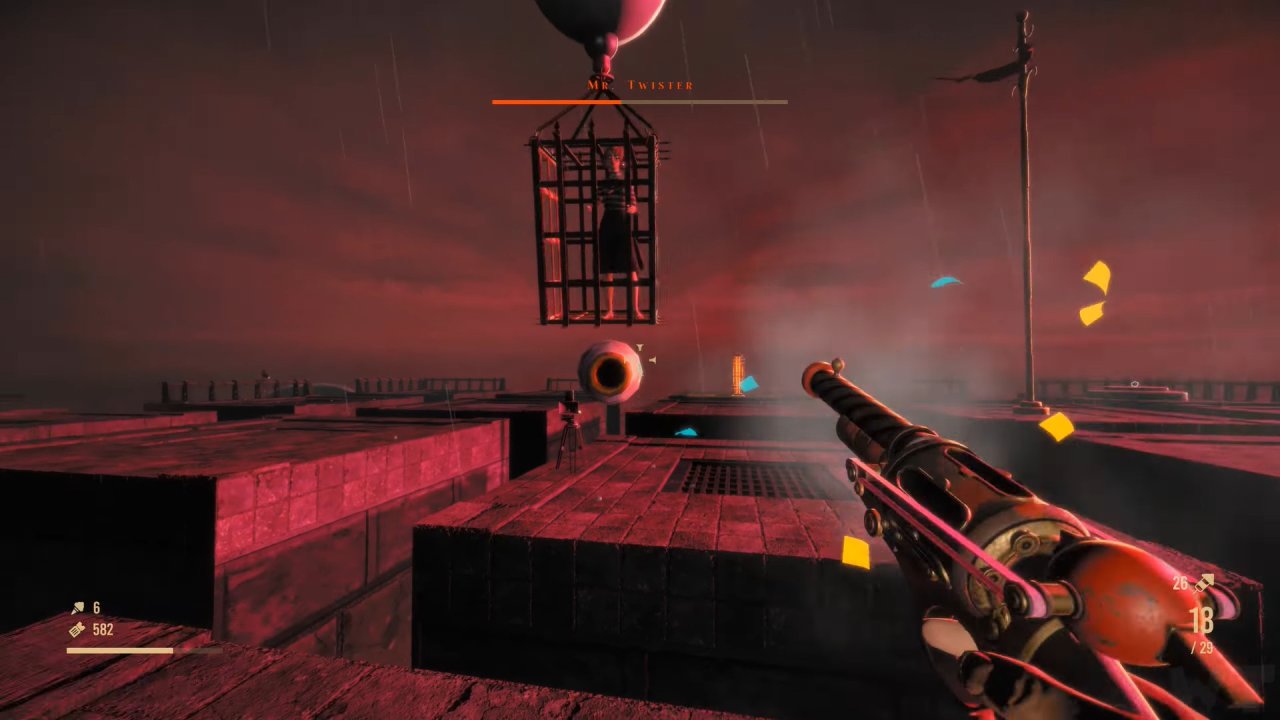
The overall presentation has a distinctly old-school console feel to it, the kind of normal-mapped, bloom-heavy look games had in the late 2000s, and that choice suits a small team well since nothing needs to be hyper-detailed to sell the illusion of a rundown, plywood-and-smoke-mirrors amusement park.
Every floor of Twisted Tower has its own clear identity, from the Art Deco menace of the hotel to the murky, uncomfortable mermaid palace, the neon glow of the casino, the overgrown hedge maze of the carnival forest, and the retro sci-fi space station at the top.
Performance stayed steady throughout, with no crashes or stutters worth mentioning, and there are enough graphical options, like film grain and motion blur, to tweak things to your liking. Small visual gags are tucked into almost every room too, the kind of details you'd miss if you rushed through, and slowing down to actually look around the park pays off more often than not.
The sound design deserves credit too. Voice performances lean fully into camp, matching the tongue-in-cheek tone Twisted Tower is going for rather than fighting against it. The soundtrack mixes original hard-synth carnival themes with music that sounds pulled from the mid-1900s, and it's genuinely catchy in places.
The music sets the tone, but it's the quieter moments in between that really sell the atmosphere.
Ambient sound layers machinery, distant storms, and the wails of nearby mascots convincingly enough that just walking through an empty hallway in Twisted Tower can feel tense on its own. The one sour note is that some of the combat music feels like generic stock-library filler, and it occasionally clashes with the jazzier, more restrained ambient tracks that play outside of fights.
Weapon sounds fare much better, with every gun given its own goofy, distinct pop or squeak that makes the whole arsenal feel toy-like without ever feeling weak in your hands. By the time you reach the top of the tower, Twisted Tower has made its case. It's not a long game, and it's not trying to be a deep immersive sim either, but it doesn't need to be.
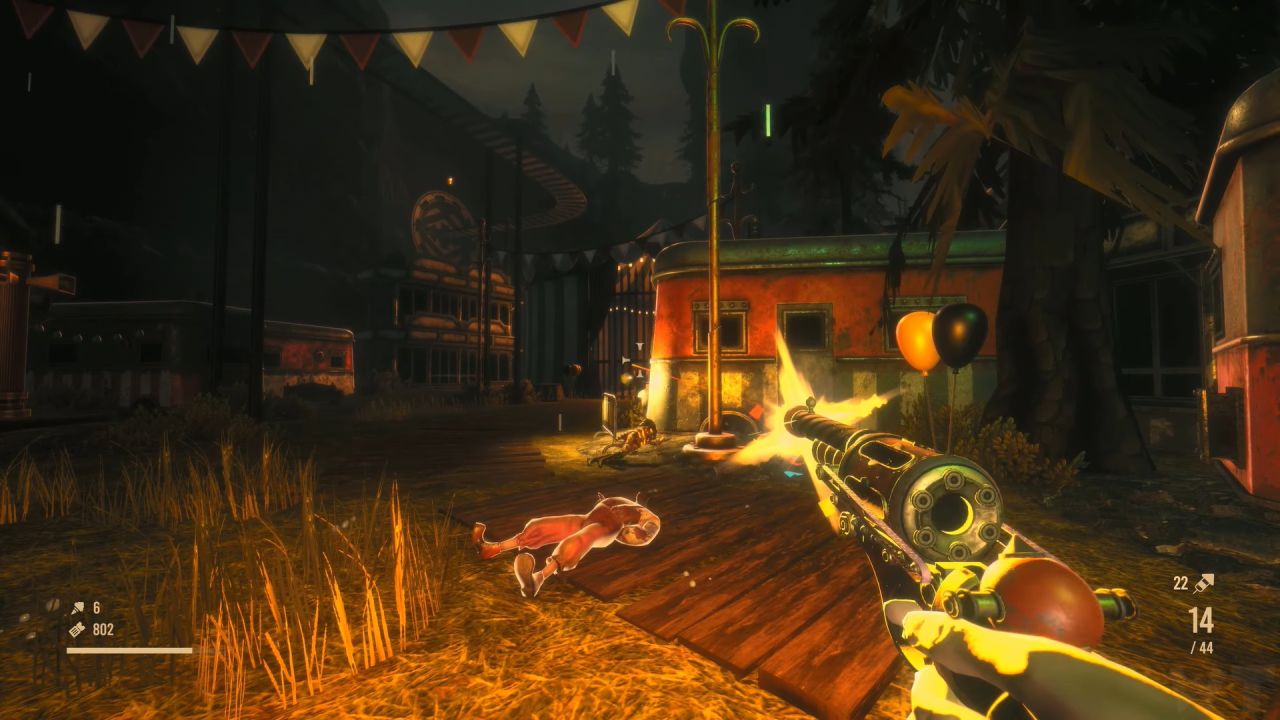
What you get instead is a tightly paced, genuinely funny, occasionally unsettling shooter with a real emotional core underneath all the carnival chaos, built by a small team that clearly loved every strange idea they put into it. The rough edges keep it from being flawless.
Enemy AI stays fairly simple. The camera can feel squirrelly in bigger fights. Combat encounters don't always use every traversal tool you've unlocked by that point. Even so, none of it stops Twisted Tower from being a genuinely good time.
If you've got a soft spot for BioShock, appreciate horror with a sense of humor, or just want a shorter shooter you can finish over a weekend, this one is worth the price of admission. You'll likely walk away wanting to go back for the secrets you missed and the routes you never opened, and honestly, that pull to return says more about how well it all comes together than any single feature could.
Editor, NoobFeed
Verdict
Twisted Tower is a creative, big-hearted carnival shooter packed with a wide variety of weapons, memorable mascots, and a setting horror games rarely explore. Rough edges and all, it's a genuinely fun ride well worth the ticket price.
82
Related News
No Data.