
Intel Panther Lake Launch: 16-Core CPU and Xe3 iGPU Power Up Next-Gen Devices
Panther Lake introduces Intel’s advanced 18A architecture with improved efficiency, higher core counts, and next-generation Xe3 integrated graphics.
Hardware by Masaru Hoshino on Oct 13, 2025
Intel has officially announced its next-generation Panther Lake portfolio. It includes a new Xe3-based iGPU that promises to change the game for thin-and-light laptops, handhelds, and tiny PCs. The Panther Lake platform improves on the great work done by Lunar Lake, making big advances in speed, efficiency, and visuals.
Panther Lake is Intel's renewed focus on innovation, efficiency, and AI-driven performance across a spectrum of devices. It has a 100% U.S.-made manufacturing process and superior 18A architecture.
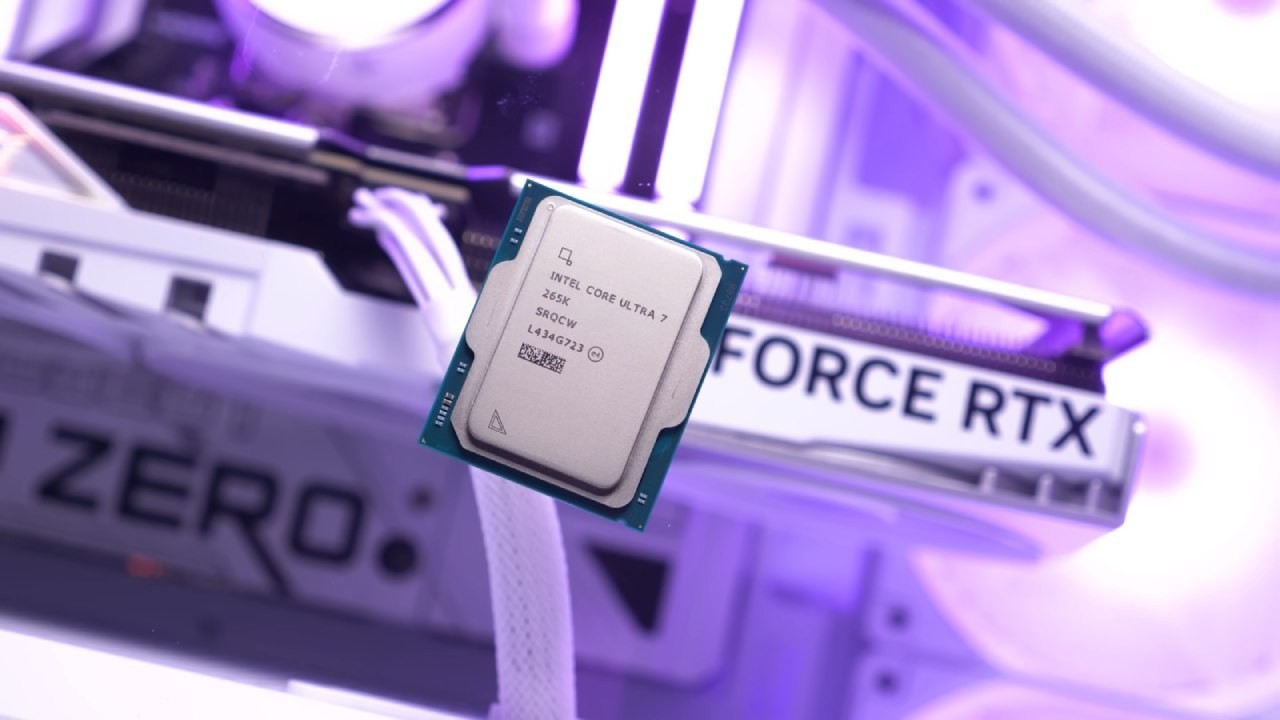
Hands-On Experience with Panther Lake
Earlier this month, we had the opportunity to go hands-on with Panther Lake. Intel invited a group of us to tour their fully functional fabrication facility and see firsthand how these new CPUs are being built in the United States.
The experience provided a clear sense of how Intel is refining its process to deliver more powerful and efficient chips.
While company-hosted tours naturally highlight the positives, what stood out most was the clear performance and efficiency leap Panther Lake demonstrates over its predecessors. Lunar Lake already impressed many of us with its responsiveness and single-thread performance, but Panther Lake takes things a step further.
Performance and Efficiency Gains
Panther Lake makes big increases in many performance indicators compared to both Lunar Lake and Arrow Lake. Single-threaded performance is improved by about 10%. This may not seem like much, but it makes a big difference in how quickly things respond when you use your computer every day.
The multi-threaded boost is much bigger, with performance up to 50% better than Lunar Lake and Arrow Lake.
Power efficiency has also made major strides. Panther Lake operates at 30% lower power while delivering similar multi-thread performance to Arrow Lake, with 10% lower power draw than Lunar Lake. GPU performance improves by 50%, while the integrated NPU delivers 40% more TOPS with reduced power consumption.
In practical testing, we observed extended battery life during multitasking scenarios. Averaging across tests, Panther Lake systems offered about 1h20m more runtime than Arrow Lake and roughly 3h30m more than older configurations with similar battery capacities, such as a 70Wh setup.
These efficiency improvements could be transformative for handheld gaming and ultrabooks.

The Three Panther Lake Chips
At launch, Intel is developing three variants in the Panther Lake family: an 8-core model, a 16-core model, and a 16-core model with 12 XC GPU cores. Each version targets a distinct balance of power and efficiency.
Panther Lake 8-Core
Built on the Intel 18A architecture, this chip features 4 Cougar Cove performance cores and 4 Darkmount efficiency cores. It supports up to 6800 MT/s LPDDR5X memory or 6400 MT/s DDR5 memory, and includes 8 MB of memory-side cache.
The iGPU, fabricated on Intel 3, houses 4 XC3 cores and 4 ray-tracing units, delivering impressive graphics performance for its class.
Panther Lake 16-Core
Also built on Intel 18A, this variant offers a total of 16 cores: 4 performance, 8 efficiency, and 4 low-power efficiency cores. Memory support is expanded to DDR5 at up to 7200 MT/s and LPDDR5X at up to 8533 MT/s.
Like the 8-core model, it includes an 8MB memory-side cache and a 4-core XC3 GPU with 4 ray-tracing units. The CPU horsepower here is notably higher, making it ideal for multitasking and heavier workloads.
Panther Lake 16-Core 12XC
The most exciting chip in the lineup, this 16-core model features the same CPU configuration as the standard 16-core version but offers a greatly enhanced GPU. With 12 Xe3 cores and 12 ray-tracing units, it's designed for gaming and high-performance handhelds.
Memory speeds go even higher, supporting LPDDR5X at up to 9600 MT/s. Given that Lunar Lake's top iGPU had 8 XE cores, this marks a substantial jump in graphical capability—offering roughly 50% more GPU performance and significantly better rendering and AI task acceleration.
Advancements in Gaming and AI
For gaming enthusiasts, Panther Lake's integrated graphics deliver an impressive step forward. The Xe3 iGPU enables smoother frame rates and better visual fidelity, especially when combined with Intel's latest technologies, such as XeSS3 with multi-frame generation.
This new version of XeSS supports all Arc GPUs with XMX engines, allowing even older models like the Arc A140V to benefit from frame generation enhancements.
The upcoming frame generation override feature in Intel's graphics software will let users fine-tune settings for supported games, offering flexibility similar to what Nvidia provides—but without requiring new hardware.
Another clever innovation is Intel's use of pre-compiled shaders. Many games, such as Borderlands 4, typically require a shader compilation phase before gameplay begins. This process can be time-consuming and battery-draining, especially on lower-power devices.
Intel's solution involves pre-compiling shaders on a server, allowing users to download them directly to skip waiting time and conserve battery life—a significant improvement for portable systems.

Step Forward for Handhelds and Portable Systems
Panther Lake has 16 CPU cores, up to 12 Xe3 GPU cores, and better efficiency, making it suited for mobile gaming devices and thin-and-light laptops. Devices that had trouble with CPU limits in Lunar Lake will now have greater frame stability and performance.
Given Intel's strong driver updates for Arc graphics and continuous improvements since launch, we can expect ongoing optimizations for Panther Lake that will further enhance both gaming and productivity performance.
The integration of high-efficiency cores also ensures that portable devices can deliver desktop-class power without compromising on battery life.
Looking Ahead
Panther Lake is a big step forward for Intel in the development of efficient, high-performance mobile computing. It sets a new bar for what handhelds and ultrabooks can do with its better AI processing, streamlined architecture, more core options, and next-gen Xe3 graphics.
We can't wait to get our hands on the first retail units —whether handhelds or laptops —to put these chips through extensive testing. The early hands-on experience already shows immense promise, and as these systems roll out, we'll see just how far Intel has pushed the boundaries of mobile performance with Panther Lake.
Check Our Other Intel Chips Articles:
- Intel Core Ultra 9 285K Review And Performance Breakdown (2025)
- Intel Core Ultra 9 285K vs AMD Ryzen 7 9800X3D: In-Depth Gaming Performance and Benchmark Comparison
- Intel Core i5-13400F Gaming Performance: Still Worth It in 2025?
- Intel Core i9‑14900K vs. AMD Ryzen 7 7800X3D: Power Profiles & Gaming Benchmarks
- Intel Core i9 14900K: Specs, Benchmarks, and Competitor Comparison
- Intel Core Ultra 5 245K Review: Gaming, Productivity & Power Efficiency Tested
- Intel Core Ultra 9 285 K's iGPU Gaming: In-Depth Benchmarks & Analysis
- Intel vs. AMD Gaming Laptop: Performance, Thermals & Battery Life Compared
- AMD Ryzen 7 9800X3D vs.7800X3D vs. Intel Core Ultra 7 265K: Gaming, Thermals & Price Analysis
Editor, NoobFeed
Gaming Hardware Updates
No Data.