
NVIDIA RTX 3060 in 2025: Still Worth It?
Despite offering 12GB VRAM, RTX 3060 shows limitations at 1440p, where raw GPU power becomes the real bottleneck.
Hardware by Tanvir Kabbo on Aug 29, 2025
Since its release, RTX 3060 has maintained its position as one of the most popular graphics cards, solidifying its position as a favorite among PC gamers in general. When it was first released, it had a hard-to-beat balance between good gaming performance, a substantial 12GB of VRAM, and an affordable MSRP.
Both builders on a limited budget and those looking for a future-proof entry into modern gaming were drawn to these features. Because of this, the market was flooded with units, and the card quickly became one of Nvidia's most well-known and well-liked models.
.jpg)
However, with the rapid pace of new GPU releases, increasingly demanding game engines, and the growing importance of features like ray tracing and AI upscaling, the question today is no longer whether RTX 3060 was a good buy at launch, but rather how well it stands up in 2025's gaming landscape.
Specifications and Testing Setup
RTX 3060 is unique in Nvidia's Ampere lineup because it launched with 12GB of VRAM, more than even some higher-tier models such as the RTX 3070 Ti.
This made it a standout at its price point and remains one of its strengths today. For testing, we paired the card with a Ryzen 5 7600 and 32GB DDR5 memory running at 6000MHz.
Benchmarks were run at both 1080p and 1440p resolutions, with stock out-of-the-box settings and the latest Game Ready driver.
1080p Gaming Performance
At 1080p, RTX 3060 continues to deliver a smooth gaming experience across modern titles. In Cyberpunk 2077, the card achieves an average of 69 fps with 50fps lows, and enabling DLSS enhancement overall smoothness without sacrificing image quality.
God of War Ragnarok also performs exceptionally well with 74 fps on the high preset and ultra textures, showing how well-optimized the game is. Jedi Survivor, however, reveals weaknesses not of the card but of the game itself, averaging 61 fps but suffering from stuttering and inconsistent frame pacing.
Fortnite is where the 3060 shines for competitive players, delivering performance that can push up to 360Hz at 1080p with low settings, while still managing over 240Hz at 1440p. Hogwarts Legacy also performs well, achieving just under 80 fps at 1080p, while dipping below 60 fps at 1440p; however, DLSS can help stabilize the experience.
The Witcher 3 Next-Gen build delivers nearly identical results to Cyberpunk, with 69 fps at 1080p and a slightly weaker 1440p result that can also benefit from DLSS.
Black Ops 6 achieves 115 fps at 1080p but suffers from poor 1% lows, which are exacerbated by stuttering that carries over to 1440p.
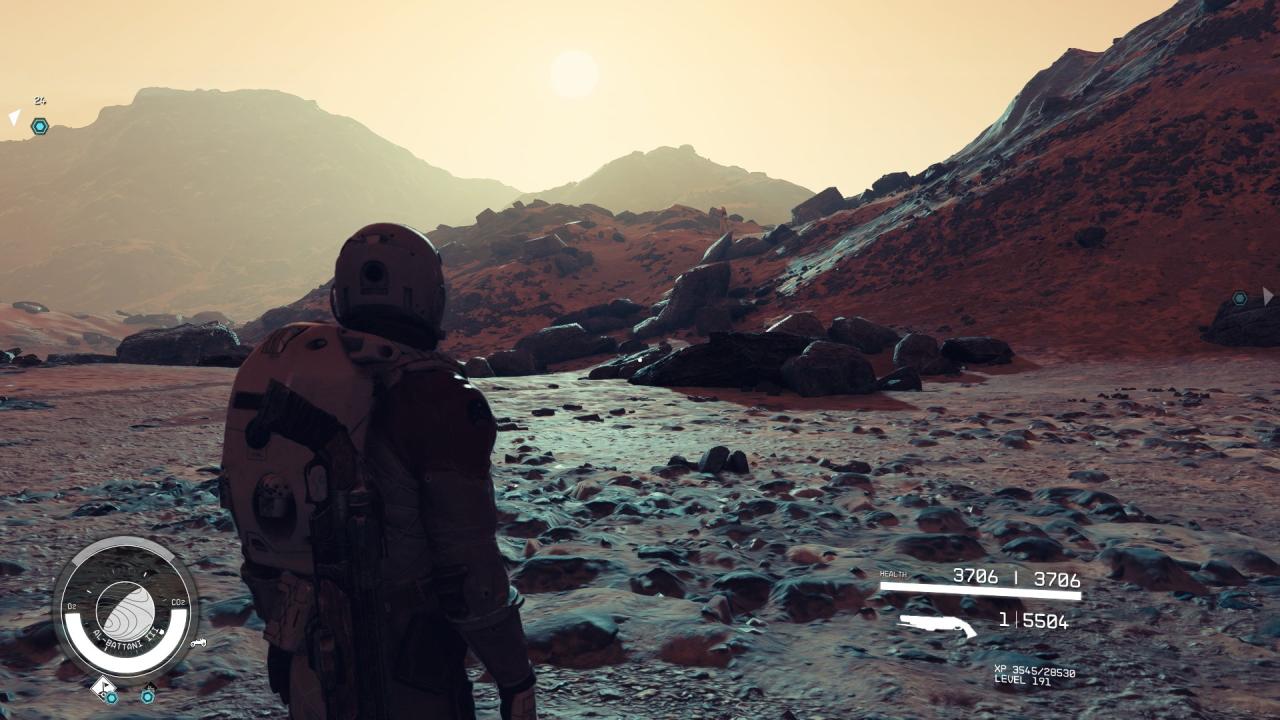
Starfield, on the other hand, struggles significantly, as even on medium presets, the performance is inconsistent and far below expectations. Overall, if you are gaming at 1080p with ultra or high settings, RTX 3060 is still capable of handling today's titles, especially when DLSS is enabled to smooth out demanding scenarios.
1440p Gaming Performance
At 1440p, RTX 3060 begins to show its limitations. Although the card's 12GB VRAM is more than enough for high textures and demanding assets, the raw compute performance is not always sufficient to maintain a steady 60 fps across the board.
Games like God of War and Hogwarts Legacy remain fairly smooth at this resolution, while Fortnite continues to deliver a competitive experience. However, titles such as Cyberpunk 2077, The Witcher 3, and Starfield reveal the GPU's shortcomings.
While you can absolutely play at 1440p, most of the time you will find yourself relying on DLSS to achieve smooth and consistent frame rates.
This reliance highlights the RTX 3060's unusual position in the market: it has enough memory to handle 1440p textures but not always enough raw power to maintain a high frame rate without some form of upscaling.
Ray Tracing Performance
Ray tracing is not a strength of RTX 3060, and while it can technically run ray-traced games, the performance often falls below acceptable standards.
Cyberpunk 2077 on the RT Medium preset drops under 40 fps at 1080p and hovers at a cinematic 23 fps at 1440p, making it unplayable without DLSS.
Jedi Survivor, with ray tracing enabled, suffers from constant stuttering, averaging 47 fps at 1080p but collapsing to 1% lows, resulting in a choppy experience.
Hogwarts Legacy comes the closest to being somewhat acceptable, achieving 55 fps averages at 1080p and 40 fps at 1440p, but even here, rasterization remains a smoother and more reliable choice.
The Witcher 3 with ray tracing enabled runs at 42 fps at 1080p and 29 fps at 1440p, which, while visually striking, is still inconsistent enough to detract from smooth gameplay.
The reality is that the RTX 3060 simply does not have the horsepower required for reliable ray tracing. While it has the VRAM capacity to handle the assets, the performance drop compared to rasterization makes it impractical for most players.
.jpg)
Value and Used Pricing
RTX 3060's pricing in the used market is unusual. The card frequently retails for just a little less than the RTX 3060 Ti in the US, but it offers noticeably better raw performance.
The 12GB VRAM, which still draws customers who view the larger memory pool as a long-term benefit, is probably the cause of these differences.
While having more VRAM is undeniably useful for cranking textures and avoiding memory limitations, the performance gap between the 3060 and 3060 Ti is considerable, making the Ti the better buy in most situations.
If you already own an RTX 3060, however, there is little reason to rush for an upgrade, as the card still provides a capable 1080p experience and can stretch into 1440p with DLSS.
Final Thoughts
In 2025, RTX 3060 remains a dependable GPU at 1080p. With 12GB VRAM, you can play modern games at high or ultra settings without worrying about running out of memory for textures, even in the most demanding games. Its lifespan is increased, and seamless gameplay in a variety of games is maintained by the addition of DLSS.
At 1440p, the card starts to struggle, and while the VRAM is sufficient, the compute power often falls short of maintaining 60 fps without relying on upscaling. Ray tracing is another weak area, as performance drops too severely to be practical in most cases.
For players primarily gaming at 1080p, the RTX 3060 still delivers a solid experience with enough flexibility to last for a few more years.
If you are looking for stronger raw power or aiming for consistent 1440p performance, then upgrading to an RTX 3060 Ti or a newer GPU generation is the smarter choice.
Check Our Other NVIDIA Articles:
- GeForce RTX 5090 Unleashed: Is NVIDIA's New Flagship the Ultimate 4K Gaming GPU?
- NVIDIA GeForce RTX 5080 Review (2025): Still A 4K Gaming Powerhouse?
- RTX 5090 Performance Testing In GTA 5 – 1080p, 1440p, and 4K Max Settings Benchmark
- RTX 5090 Laptop Vs. M4 Max MacBook Pro: Ultimate Raw Performance Vs. Battery Endurance
- NVIDIA RTX 5070 Review: Mid-Range Muscle or Marketing Hype?
- RTX 5070 Ti Review: Performance, Thermals & Power Efficiency Tested
- Asus ROG RTX 5090 Astral OC Vs. Founders Edition: The 4K Gaming Benchmark
- ASUS ROG Astral RTX 5090 OC Edition Review: 32GB GDDR7 & 4K Gaming Benchmark
- ASUS GeForce RTX 5090 LC Liquid Cooled GPU Review: Unmatched Silence & Speed
- MSI GeForce RTX 5090 32GB SUPRIM SOC Review: Power Efficiency, Cooling, and Gaming Performance
- INNO3D RTX 5060 Ti 16 GB X2 Review: Gaming Benchmarks, Temps, and Power Efficiency
- HP Omen 45L Review: RTX 5090 Performance, Thermals, and Value Analysis
- ASUS TUF Gaming GeForce RTX 5060 Ti Review: DLSS 4, Power Efficiency, and Gaming
- ASUS Prime RTX 5060 Ti OC 16GB Review: DLSS 4, Ray Tracing, & Thermals Tested
- NVIDIA GeForce RTX 5060 Review: Specs, Gaming, and Cost per Frame
- MSI GeForce RTX 5090 GAMING TRIO OC Review: A Monster Power GPU
Senior Editor, NoobFeed
Gaming Hardware Updates
No Data.