
NVIDIA RTX 5080 vs 5070Ti: Cost, Performance, and Frame Rate Evaluation
A detailed comparison of performance gaps, pricing differences, and real-world gaming results across the RTX 5080 and 5070 Ti series
Hardware by Nahe Yan on Nov 18, 2025
When you buy a high-end 5050 series card, you might wonder if it's worth it to pay more for the 5080 and by how much. Prices and availability of GPUs frequently change, making it hard to decide when you see a good offer on one model or another.
Because MSRPs change and don't always reflect real-world prices, you need to look at both performance disparities and actual price discrepancies to compare the 5080 and the 5070 Ti. On most tests, the 5080 is about 14% faster. It can range from 4% to 21%, with 14–15% being the most common.
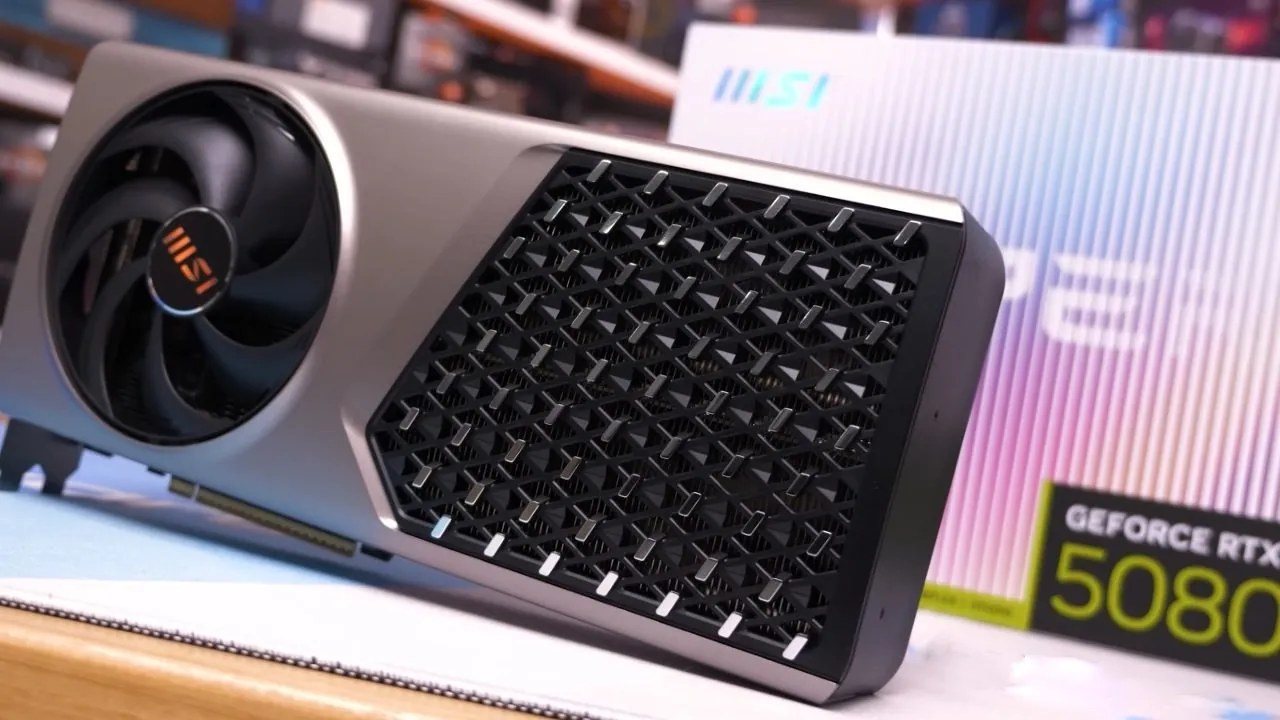
If you take out the 1080p CPU-limited results and focus on 4K, the geom will still be ahead by 14%. With this baseline, it's easy to compare values.
Differences in Prices and Value in the Real World
The lowest price for the 5080 identified in retail listings at the time of the investigation is $1800. The 5070Ti costs $1450. That's about 24% more for the 5080. There is a 33% difference between the 5080's MSRP of $ 1,000 and the 5070 Ti's MSRP of $750.
When comparing prices in the real world and at MSRP, the 5070Ti is a better deal. So the question is, is the 14% better performance of the 5080 worth paying 24–33% more for?
Analysis of 4K Path Tracing Performance
The 5070 Ti gets 161 fps with all features turned on, the DLSS performance mode, times-4 frame gen, and the new Transformer model. The 5080 gets 183 fps. The 14% lead stays, and the 5080 has a little less delay, by a few milliseconds.
The improvement is clear, but it doesn't change everything. Both GPUs are still on the edge for users who care about how quickly their inputs respond.
When you turn off frame gen and preserve DLSS performance scaling, you get 52 fps instead of 63 fps. This is the biggest lead the 5080 had in testing, at 21%.
Even if frame gen increases expenses, it doesn't change the fact that the 5080 sometimes drops below 60 fps, even though it usually stays above that. Both GPUs are still on the edge for people who care a lot about latency, but usable for others.
Performance of 1440p Path Tracing
Both GPUs struggled with native 1440p path tracing, with the 5070 Ti getting 40 fps and the 5080 getting 35 fps. When you turn on DLSS quality, the experience drops from 73 fps to 64 fps, but the lead stays at 14%. The 5080 works better, but not by a lot.
The 5070 Ti gets just under 200 fps with DLSS quality and frame generation enabled, while the 5080 gets 227 fps. Latency is generally below 50ms, though it can reach the high 30s or mid-40s depending on the setting. The 5080 has a slight edge again, but the experience is still the same.
Path tracing at 1080p is still hard, with 55 fps on the 5070 Ti and 64 fps on the 5080. There is still a 14% disparity, but both are close to 60 fps.
The Great Circle RT Tests and Indiana Jones
The 5070Ti gets 83 fps at native 4K Supreme settings, while the 5080 gets 92 fps, a 11% lead. Both do a good job with 4K non-path-traced RT. At 1440p Supreme settings, the difference narrows to 9%, with 127 fps compared to 138 fps. The latency reporting in this game isn't always accurate, probably because there are no reflex tags.
Games made with Unreal Engine 5
When testing UE5 titles with Hardware RT and DLSS at 4K, one title averages 79 fps and the other 88, giving the first a 11% lead. At 1440p native, the disparity grows to 18% with 65fps vs 77fps.
At 1440p, using DLSS quality gives you 91fps instead of 101fps, which is an 11% lead. At 1440p, running Epic settings without Hardware RT gets 84 fps, which is 12% lower than the 94 fps with Hardware RT. Both GPUs deliver stable UE5 performance and a similar experience.
Native 4K high settings in Hellblade II show 44 fps for the 5080 and 51 fps for the 5080. When you use DLSS quality, you get 73 fps, compared to 82 fps, which is a 12% lead. At 1440p high, the difference is 74fps to 84fps, which is a 14% lead.
The frame rates are often satisfactory because the game moves slowly enough for both GPUs to work well. There is a well-known aliasing issue on 50-series cards at native TSR, but it goes away when you use DLSS.
Final Fantasy 16
Both GPUs drop below 60fps at 4K Ultra native, with the 5080 leading by 13% at 47-53fps. With DLSS, you get 93 fps and 106 fps, which is a 14% lead. At 1440p Ultra, both deliver 80 fps, compared to 92 fps, giving you a 15% lead. Because the game moves at a slower pace, all of these frame rates work.
Ragnarok: God of War
The 5070 Ti gets 73 fps at 4K Ultra native, whereas the 5080 gets 85 fps, which is a 16% lead. With DLSS quality turned on, performance jumps to 100 fps, up from 118 fps, for an 18% lead. With DLSS enabled, both GPUs perform well at 4K.
Horizon Forbidden West
At 4K very high, the 5070 Ti gets 65 fps, and the 5080 gets 75 fps, a 15% lead. Both achieved high refresh rates of 97 fps and 112 fps with DLSS enabled, preserving the 15% disparity. At 1440p, extremely high, the GPUs get 112 fps instead of 130, a 16% lead.
The Ghost of Tsushima
At 4K very high, the GPUs achieve 65 fps, compared to 75 fps, a 15% lead. When you turn on DLSS quality, the numbers drop to 103 fps from 119 fps, giving you a 16% lead. At 1440p, extremely high, the results reveal 112 fps vs. 130 fps, a 16% difference.
Scenarios for Multiplayer
The competitive-focused test shows a 9% edge at 4K basic settings, with 133 fps vs. 145 fps. The result at 1440p is 224 fps vs 237 fps, which is a 6% lead; however, the CPU can sometimes limit it. At 1080p, the test hits 292 fps vs 303 fps, a 4% lead, and CPU limits occur more often.
.jpg)
Summary of Overall Performance
Both GPUs deliver playable performance across all tests, and DLSS is available when native frame rates aren't high enough. Both are still functional even when path tracing is hard, but 4K path tracing is still hard for both, albeit a little less so for the 5080.
Final Thoughts
The 5070 Ti is still the superior choice if you want to get the most value. The 5080 is around 14% better, but it costs a lot more. The 5080 makes slight gains in latency, frame rates, and headroom. Still, it doesn't offer any substantial new experiences that the 5070 Ti can't at similar settings with minor scaling changes.
Neither card is a good value at the moment, but if you see a good deal on the 5070 Ti or if you were planning to buy a 5080 and find a 5070 Ti in stock at a lower price, choosing the 5070 Ti is still a good choice that won't affect your gaming experience too much.
Check Our Other NVIDIA Articles:
- GeForce RTX 5090 Unleashed: Is NVIDIA's New Flagship the Ultimate 4K Gaming GPU?
- NVIDIA GeForce RTX 5080 Review (2025): Still A 4K Gaming Powerhouse?
- RTX 5090 Performance Testing In GTA 5 – 1080p, 1440p, and 4K Max Settings Benchmark
- RTX 5090 Laptop Vs. M4 Max MacBook Pro: Ultimate Raw Performance Vs. Battery Endurance
- NVIDIA RTX 5070 Review: Mid-Range Muscle or Marketing Hype?
- RTX 5070 Ti Review: Performance, Thermals & Power Efficiency Tested
- Asus ROG RTX 5090 Astral OC Vs. Founders Edition: The 4K Gaming Benchmark
- ASUS ROG Astral RTX 5090 OC Edition Review: 32GB GDDR7 & 4K Gaming Benchmark
- ASUS GeForce RTX 5090 LC Liquid Cooled GPU Review: Unmatched Silence & Speed
- MSI GeForce RTX 5090 32GB SUPRIM SOC Review: Power Efficiency, Cooling, and Gaming Performance
- INNO3D RTX 5060 Ti 16 GB X2 Review: Gaming Benchmarks, Temps, and Power Efficiency
- HP Omen 45L Review: RTX 5090 Performance, Thermals, and Value Analysis
- ASUS TUF Gaming GeForce RTX 5060 Ti Review: DLSS 4, Power Efficiency, and Gaming
- ASUS Prime RTX 5060 Ti OC 16GB Review: DLSS 4, Ray Tracing, & Thermals Tested
- NVIDIA GeForce RTX 5060 Review: Specs, Gaming, and Cost per Frame
- MSI GeForce RTX 5090 GAMING TRIO OC Review: A Monster Power GPU
Editor, NoobFeed
Gaming Hardware Updates
No Data.