
PS6 Pro Release Rumors, Specs, and Expected Features
PS6 Pro aims to deliver advanced rendering capabilities and enhanced performance beyond the standard PS6 hardware.
Hardware by Tanvir Kabbo on Mar 18, 2026
Since Sony is probably looking at a PlayStation 6 lineup that might have both a handheld and a normal console, the issue comes up: Is there really a need for a PlayStation 6 Pro? This is not an easy choice because the price of silicon is going up, display patterns are changing, and rendering technologies are becoming better.
The unexpected arrival of the PS5 Pro already challenged earlier assumptions, and now the same debate is resurfacing for the next generation.
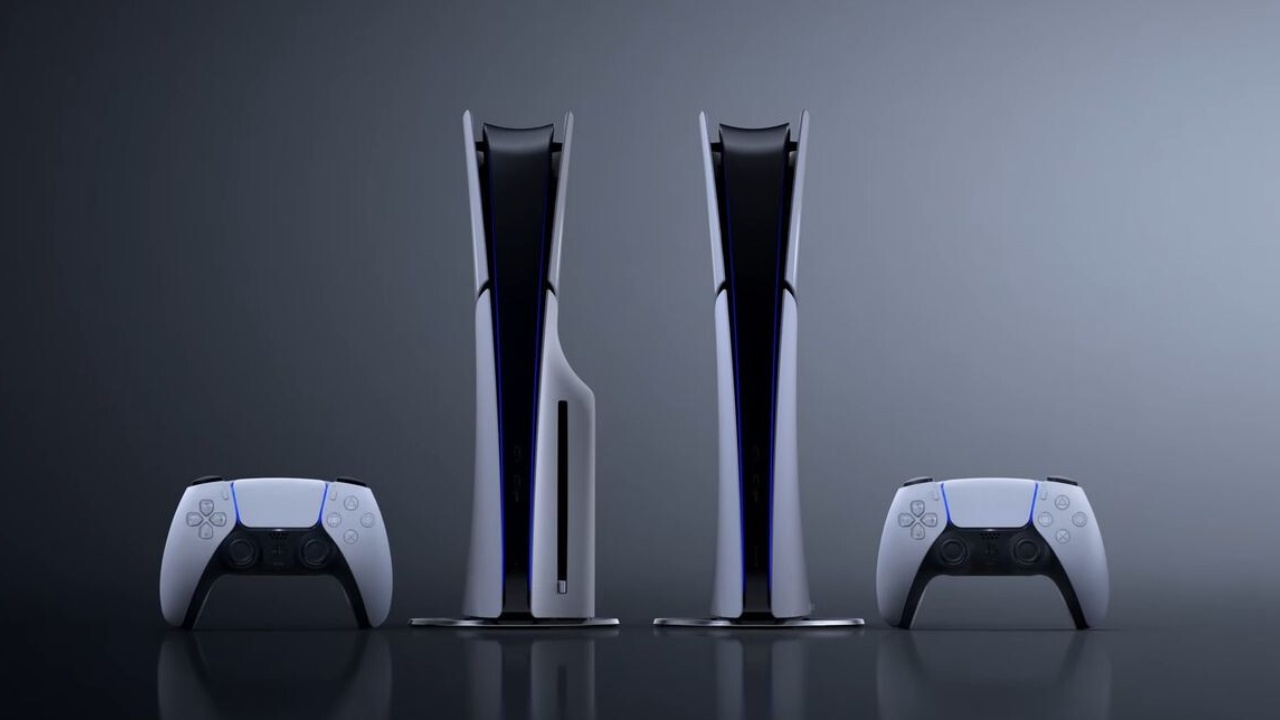
Why the PS5 Pro Happened
We think it all really depends on the trajectory of gaming technology and the extent to which it actually makes a meaningful difference. There was probably a solid reason to introduce the PS5 Pro. The direction of travel has clearly been toward better ray tracing and increased use of machine learning.
While the upgrade may not feel like a massive leap, there are already interesting improvements appearing on the PS5 Pro, especially with the incoming PSSR. The promise is finally being realized, at least to some extent.
The real question, though, is what happens next. If RDNA 5 turns out to be extremely capable and catches up to what Nvidia is currently doing, then you have to ask: what comes after that? What is Nvidia working on next, and will it be significant enough to justify a PS6 Pro?
Waiting for PS6's Weak Points
We don't really know yet what would count as truly game-changing. From our perspective, a Pro model typically exists to address the shortcomings of the base console. That is essentially how the PS5 Pro fits into the current generation. The original PS5 had limitations in machine learning capabilities and ray tracing performance, and the Pro version aims to improve those areas.
So, we would need to wait for the PS6 to launch and see where its deficiencies lie. Only then can Sony realistically design a Pro model that creates enough FOMO for enthusiasts. You might feel that, given how expensive hardware has become, releasing a PS6 Pro could seem unusual.
But then again, many of us were surprised by the PS5 Pro as well, especially given how early the current generation still feels given the long cross-generation period.
The Challenge of Defining a PS6 Pro
If we look at the progression, it becomes tricky to define what a PS6 Pro would even stand for. The PS5 excels at rasterization, while the PS5 Pro pushes further into ray tracing. So, if the PS6 becomes highly capable in path tracing, what does a PS6 Pro add on top of that?
We think there has to be a clear differentiator. Looking back, the PS4 targeted 1080p, while the PS4 Pro pushed toward 4K. There was a tangible shift. For the next generation, that shift could be more advanced path tracing, 8K rendering, or something entirely different involving AI and neural processing.
If a new rendering paradigm emerges or a breakthrough technology fundamentally changes how games are built and experienced, that could justify a PS6 Pro. Without that, it becomes harder to define its purpose.
The Rise of the Handheld Factor
At the same time, we feel like the market may be shifting in a different direction altogether. Instead of focusing on a Pro console, the real opportunity might lie in a PS6 handheld. Gaming is increasingly moving toward scalable experiences that work across a wide range of hardware.
You can already see this trend: games scale from lower-powered devices to high-end PCs with advanced GPUs. That kind of flexibility is becoming essential. A handheld that supports features like ray tracing, and maybe even light path tracing, could deliver a compelling experience at lower fidelity.
From a mainstream perspective, this changes how you play games entirely. The popularity of hybrid gaming devices illustrates that players seek both power and versatility. So, while hardcore gamers might want a Pro console, most people might be more interested in portable, flexible gaming systems.
Process Nodes and the Technology Curve
You should also think about how Sony uses new semiconductor technologies to its advantage. The PS5 Pro already uses a 4nm process, which has allowed Sony to deliver meaningful improvements. Looking ahead, the PS6 is expected to use a 3nm node, while 2nm is also on the horizon.
We need to consider how much these advancements actually translate into real-world gaming improvements. If the jump from 3nm to 2nm enables a significantly better experience, then a PS6 Pro could make sense. Otherwise, the gains might not be substantial enough to justify a mid-generation upgrade.
Final Thoughts
We think the idea of a PS6 Pro ultimately depends on whether there is a clear technological leap that players can feel. You might see it happen if new rendering techniques, AI-driven features, or hardware advancements create a noticeable gap between the base console and what is possible at the high end.
At the same time, the industry seems to be moving toward broader accessibility and scalable performance across devices. Because of this, the purpose of a Pro console is not as apparent as it was in earlier versions. Sony will probably decide whether to go after this or put more effort into portable innovation based on how gaming technology changes over the next few years.
Also, check our other hardware articles:
- AMD Ryzen 9 9950X3D Review: Setting The Standard For 2025 Gaming CPU
- Amazon Luna 2025 Review: Is Prime Gaming's Cloud Service Your Go-To For Casual Fun?
- AMD RX 9070 XT Review: AMD's RDNA 4 Champion for 1440p Gaming
- GeForce Now Ultimate: Ditching Your Gaming PC For Cloud RTX 4080 Power?
- NVIDIA GeForce RTX 5080 Review (2025): Still A 4K Gaming Powerhouse?
- Intel Core Ultra 9 285K Review And Performance Breakdown (2025)
- AMD Ryzen 7 9800X3D Review: 3D V-Cache Goes God Mode with Stunning Gaming Performance
- Intel Core Ultra 9 285K vs AMD Ryzen 7 9800X3D: In-Depth Gaming Performance and Benchmark Comparison
- NVIDIA GeForce RTX 5080 Super Performance In Cyberpunk 2077: Path Tracing & DLSS 4.0 Tested
- AMD Radeon RX 9070 XT In Cyberpunk 2077: Ray Tracing & FSR 4.0 Tested
- Intel Arc B580 Review: The $250 GPU Revolutionizing 1440p Gaming
- Intel Arc B570 Vs. B580: Value, Specs, And Real-World Gaming Performance
- RTX 5090 Laptop Vs. M4 Max MacBook Pro: Ultimate Raw Performance Vs. Battery Endurance
- Intel Arc b580 Vs. RTX 4060: Game Performance And Value Analysis
- RTX5090 Hell Is Us Demo 4K Ultra Benchmark: DLSS Vs. Native Performance Guide
- NVIDIA RTX 5070 Review: Mid-Range Muscle or Marketing Hype?
- Nintendo Switch 2 Review: Handheld Performance, Features & Value Breakdown
- RTX 5070 Ti Review: Performance, Thermals & Power Efficiency Tested
- Samsung Odyssey OLED G81SF Review 2025: Ultimate 32-Inch QD-OLED Gaming Monitor
- AMD RX 9070 Performance Review: Thermals, Clocks, and Real-World FPS
- AMD Ryzen 5 7600 Review: Best Budget Gaming CPU of 2025?
- AMD Radeon RX 7800 XT Review: RDNA 3 Power For Midrange Gaming
- Asus ROG RTX 5090 Astral OC Vs. Founders Edition: The 4K Gaming Benchmark
Senior Editor, NoobFeed
Gaming Hardware Updates
No Data.