
Resident Evil Requiem on Switch 2: DLSS and Optimization Secrets
Resident Evil Requiem demonstrates Capcom’s technical mastery on Switch 2 with optimized visuals and fluid handheld performance.
Hardware by Tanvir Kabbo on Oct 06, 2025
A lot of people, both fans and analysts, are discussing about Resident Evil Requiem coming to the Nintendo Switch 2. The graphics and performance of the game in both docked and handheld modes are really impressive. This sets a new benchmark for gaming on portable consoles. While the title maintains Capcom's RE Engine aesthetic, questions remain regarding whether it employs advanced techniques such as ray tracing and hair strand effects.
The footage we've analyzed suggests that Capcom might be using optimized rendering methods to achieve remarkable results without overburdening the hardware.

Hair Rendering and the Missing Detail
During the Nintendo Direct on September 12, an early trailer for Resident Evil Requiem confused due to differences between what was shown there and in the standalone game trailer. Initially, the hair in certain shots appeared more realistic, featuring visible individual strands that closely resembled Capcom's hair strand technology.
However, that footage was later edited out and replaced with visuals that matched the official standalone trailer, suggesting that the original version may have used PC footage by mistake.
Upon closer inspection, the final Nintendo Direct version reflects the standard RE Engine hair rendering approach, which does not utilize strand-based simulation. In previous games like Resident Evil 4 Remake, players could toggle hair strand effects on PC, revealing substantial differences between "on" and "off" modes.
With the feature turned off, hair appears smoother and more cohesive—often referred to as "hair cards"—rather than composed of numerous individual strands. It's likely that Reququum on Switch 2 uses this same non-strand method for performance optimization.
Performance Analysis and Frame Rate Stability
Recent footage analyzed from the handheld mode of the Switch 2 version suggests that Resident Evil Requiem targets a 60fps frame rate, with occasional dips in performance depending on the scene complexity. The frame rate appears fluid during most gameplay sequences, particularly in cutscenes and slower-paced sections of the game.
However, minor hitches become noticeable during intense action or when new environments load, suggesting dynamic performance scaling rather than reliance on Variable Refresh Rate (VRR). If VRR were active, those frame drops would be visually smoothed out. The Switch 2 can still target 60fps natively because the frames are still visible. Even with these short drops, the overall performance in handheld mode is really good.
It's clear that Capcom is using advanced upscaling technologies like DLSS here, which helps with both sharp graphics and smooth frame timing. The slight "screen door" effect visible in some close-up scenes—similar to what was seen in Street Fighter 6—confirms DLSS rendering is at play, particularly effective for maintaining detail without excessive performance cost.
.jpg)
Ray Tracing and Lighting Techniques
The biggest question remains: Is Resident Evil Requiem on Switch 2 actually using ray tracing? Despite earlier statements from Capcom indicating development with ray tracing in mind, visual evidence suggests the console version may not rely heavily on it.
Many of the reflective and lighting effects are achieved through traditional techniques like Screen Space Reflections (SSR) and baked global illumination rather than full RTGI (Ray Traced Global Illumination).
Capcom themselves have clarified that the game is optimized for a wide range of hardware, including PCs with entry-level specs. They showcased differences between path tracing on and off during PC demonstrations, highlighting that full ray tracing, particularly path tracing—is reserved for high-end systems.
Since consoles like the Switch 2 lack the GPU power for full-scale ray tracing, it's reasonable to infer that the version running on Nintendo's hardware uses a hybrid approach combining pre-baked lighting, SSR, and selective ray-traced elements where necessary.
Regardless of the method, the results are visually stunning. The lighting, reflections, and atmosphere are consistent with the franchise's high-quality presentation, showing how effectively developers can replicate realistic effects even without relying entirely on ray tracing.
Hair Physics and Realism Without the Strand Effect
When examining close-up sequences, the hair rendering in Reququum doesn't display individually rendered strands. Instead, it uses grouped or card-based hair models that behave naturally through physics simulations.
The motion appears smooth and believable, even without per-strand physics, which would otherwise consume significant processing power.
Capcom has mastered balancing visual realism with system performance, and on the Switch 2, this approach ensures both fluid gameplay and aesthetic quality. The hair may look a little "clumped" compared to PC versions that use strand rendering, but it still fits very well with the game's overall look.
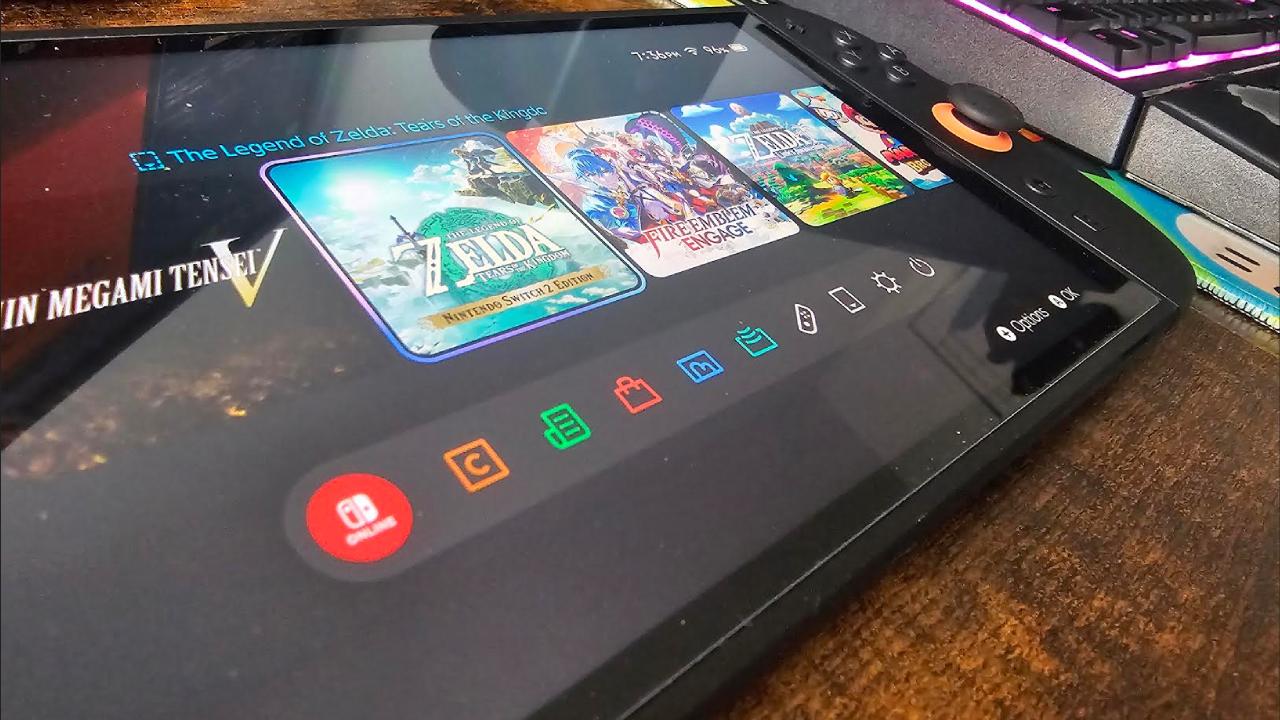
DLSS and Image Reconstruction
DLSS plays a crucial role in Resident Evil Requiem's performance on Switch 2. By reconstructing high-resolution frames from lower internal resolutions, DLSS allows the game to maintain strong image quality while targeting 60fps.
In still frames, some artifacts like grid patterns or faint aliasing may appear, but during gameplay, these are nearly invisible to the naked eye.
In docked mode, the resolution appears higher, and the combination of DLSS and optimized lighting produces results that rival other current-generation consoles. Capcom may offer performance and quality modes, with the trailer footage suggesting a 30fps lock for higher-quality settings and a 60fps target for dynamic performance.
Technical Comparison and Developer Intent
When you compare Switch 2 gameplay footage to PC builds, you can see that the Switch version doesn't have the super-fine details of features like hair strands and ray tracing, but it keeps almost all of the essential visual integrity. This is mostly because of Capcom's smart use of the RE Engine and its ability to make games run better on lower-end systems.
The developer's comments about targeting a "wide range of PCs including entry-level specs" clearly indicate scalability as a key goal. The Switch 2 version showcases just how far such optimization can go—delivering near-console-level quality in handheld mode without demanding the full ray tracing suite.
Additional Game Updates
Beyond Resident Evil Requiem, two major third-party titles—Shinobi Art of Vengeance and Ninja Gaiden Ragebound—have received noteworthy updates for Switch 2. Both games originally suffered from technical limitations on the previous Switch hardware, but now perform remarkably better.
Ninja Gaiden Ragebound used to be limited to 30 fps, but now it can run at any frame rate, making the motion on Switch 2 smooth and fluid. Shinobi Art of Vengeance has also had a big improvement in resolution.
Before, it could only show visuals below 720p, but now it shows sharp detail and less pixelation, making it look more like native 1080p when docked.
Both games now make the most of the new hardware, and their better graphics make them must-have games for anyone who likes pixel art action and Metroidvania-style gameplay.

Final Thoughts
Resident Evil Requiem represents a remarkable technical achievement on Nintendo's upcoming console. Even without relying on ray tracing or hair strand rendering, Capcom has managed to deliver a game that looks and performs exceptionally well in both docked and handheld modes.
By leveraging DLSS, efficient lighting techniques, and smart engine optimizations, the developer proves that cutting-edge visuals don't always require the most resource-intensive features.
Switch 2 fans will have a great time playing Requiem or checking out new hits like Shinobi Art of Vengeance and Ninja Gaiden Ragebound. The platform's real potential will be on display in these games.
Check our Other Handheld Articles :
- ASUS ROG Ally X Handheld Review: Double the Battery, Double the Comfort
- Nintendo Switch 2 Vs. Original Switch 1: A Full Comparison
- How To Connect A Camera And Join Voice Chat With Nintendo Switch 2
- Nintendo Switch 2 Review: Handheld Performance, Features & Value Breakdown
- Lenovo Legion Go S Review: The Ultimate Steam Deck 2 Alternative
- ROG Xbox Ally X Vs. ROG Ally X: Display, Battery & Controls
- ASUS ROG Ally X vs. Steam Deck OLED: Display, Battery & Gaming Benchmarks
- MSI Claw 8 AI+ Review: Display, Controls & Gaming
- Nintendo Switch 2 vs. Steam Deck OLED: Gaming, Performance, Battery, Display and Value
Senior Editor, NoobFeed
Gaming Hardware Updates
No Data.