
Sony and AMD's "Project Amethyst" Might Redefine PlayStation 6's Power
Mark Cerny and AMD are cooking up the smartest PlayStation yet.
Hardware by Mahi Araf on Oct 13, 2025
Mark Cerny has once again stepped into the spotlight, this time teaming up with AMD's Jack Huynh for a deep dive into what they're calling Project Amethyst. It's an ambitious showcase of where Sony wants to take its console technology next, and from what's been revealed, the future of PlayStation isn't just about power. It's about intelligence. Together, the duo is bringing life to "next-gen".
Three major innovations that define this new era have been highlighted: Neural Arrays, Radiance Cores, and something intriguingly named Universal Compression. These improvements might change the way the PS6 thinks.
Let's begin with neural arrays. Picture groups of computing units working together smoothly to do machine learning tasks. Sony and AMD don't want to add separate cores or tensor units as Nvidia does. Instead, they want to make the current GPU architecture smarter. It's a smart approach to change PlayStation hardware without having to start over.
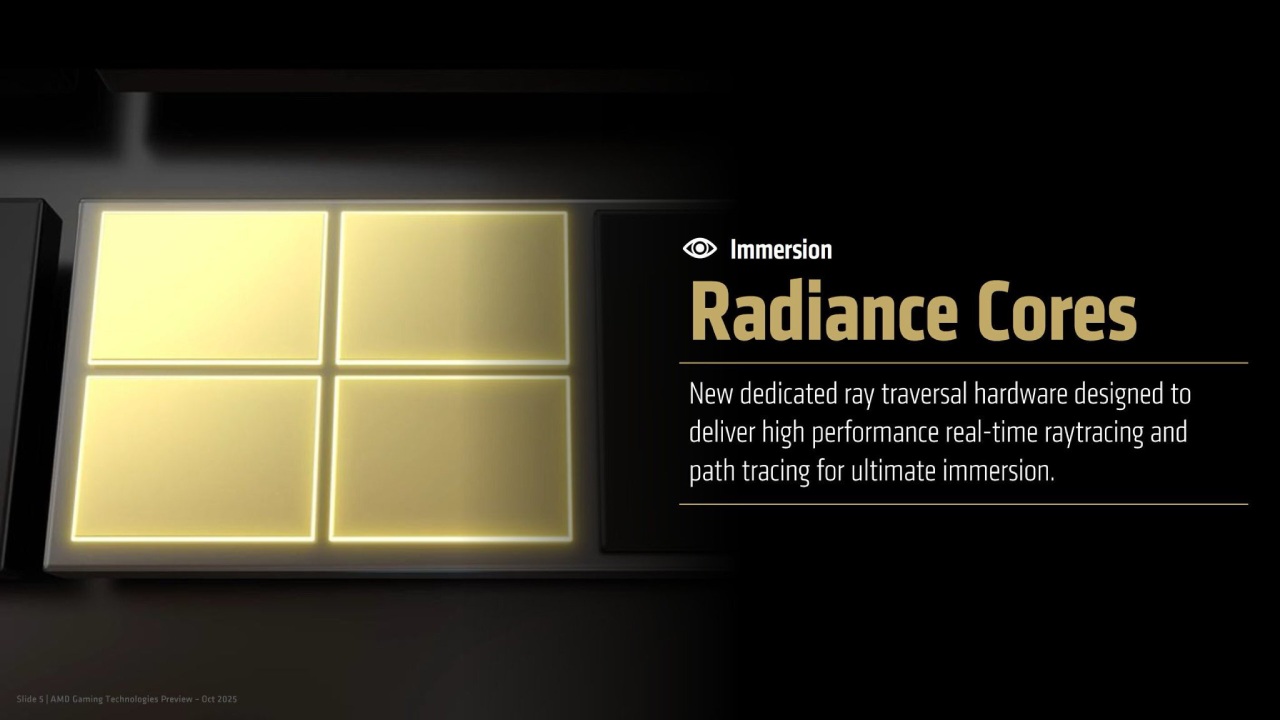
Then there are the Radiance Cores, AMD's answer to Nvidia's ray tracing cores. These specialized hardware units are built for unified light transport, meaning the PS6 could finally deliver real-time ray tracing performance that rivals that of high-end PCs. AMD seems ready to go toe-to-toe with Nvidia in the war of graphics.
But the most fascinating piece of the puzzle might be Universal Compression.
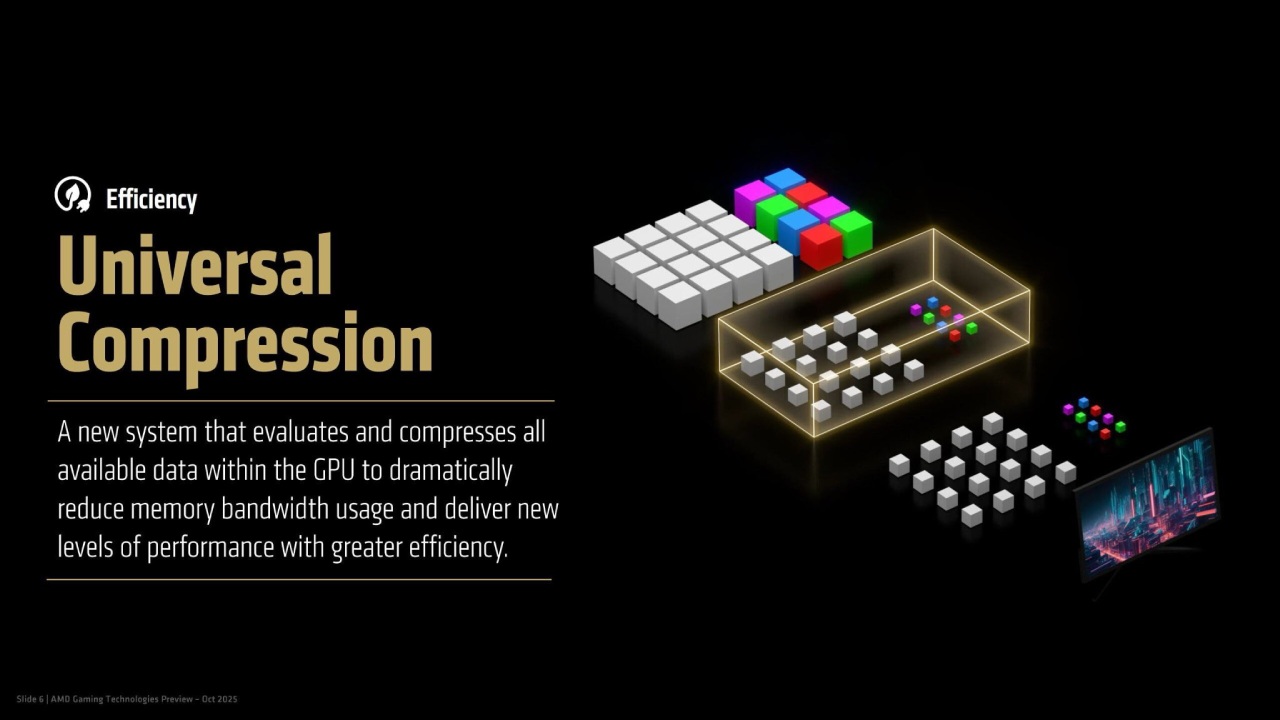
This brand-new system aims to improve GPU bandwidth efficiency without requiring massive memory buses or expensive GDDR upgrades. It's described as a mysterious little black box, likely a type of lossless compression tech that speeds up data flow across the system without increasing raw bandwidth.
Cerny, being Cerny, couldn't resist getting technical. In an email exchange, he explained that memory bandwidth has become one of the biggest bottlenecks in next-gen GPU design. Rather than simply adding more memory lanes and raising specs, Sony and AMD are trying to outsmart the problem. Cerny even said, "The extent to which the actual bandwidth of the GPU looks to exceed the paper spec is something I'm very interested in."
The PS5 used a 256-bit memory interface, but early hints suggest the PS6 might actually go smaller, somewhere around 160 to 192 bits. Now, trust me, that sounds like a downgrade, but with this new compression and smarter architecture, Sony's not chasing raw numbers this time, as I said, they are on the hunt for intelligence.
The Amethyst technology is built on RDNA5, AMD's next big architecture, which he says is designed to scale over the next decade.
Unlike RDNA4, which struggled with complex ray tracing workloads, RDNA5 is designed to handle advanced graphical features without tanking performance. "We're seeing an architecture that can probably scale well for the next 10 years of games," McKenzie from Digital Foundry said. It fits with Sony's long-term approach: consoles that age gracefully instead of fizzing out like a can of Coke.
John Linneman, also from Digital Foundry, added that this feels like AMD finally catching up to the roadmap Nvidia set back in 2018, the era of ray tracing and AI-assisted rendering. But the difference here is that Amethyst is custom-built for consoles, so you'll actually see the benefits for yourself in the games you play.
The real next-gen leap is coming from ray tracing and machine learning.
Cerny confirmed that Sony will continue to improve raster performance, but the true step forward will come from AI and RT capabilities. That's exactly the direction Sony's been heading with the PS5 Pro and its upcoming PlayStation Super Resolution (PSSR).
One of AMD's Achilles' heels has been ray tracing performance. You'd get beautiful lighting and reflections, but often at the cost of frames dropping. According to Linneman, these new Radiance Cores might finally fix that problem. "This seems like a real attempt to get a console that can handle these fancy new features with good frame rates, good image quality, and without the usual trade-offs," he said.
Now back to Universal Compression, Cerny's personal favorite topic. He believes this system could have massive implications for machine learning and upscaling technologies like FSR and PSSR. Those processes involve neural networks that constantly read and write feature maps to system memory, which creates significant overhead.
Cerny theorizes that if Universal Compression can efficiently compress those feature maps, it could drastically reduce the time needed for AI-driven rendering. In simple terms, it could make upscaling, frame generation, and lighting calculations all happen more efficiently. It's like the PS6 could have a brain of its own.
Cerny made it clear that this is all still in the simulation phase.
There's no finalized version. They are still working on the blueprint. These are early engineering concepts being tested. But he also hinted that the foundational work is already done. The next major milestone will be getting prototypes into developers' hands so they can also "develop" the know-how on working with this tech.
If developers get early access to this new architecture, the PS6 won't just look impressive on paper—it'll launch strong. This is no small upgrade. This feels like the kind of leap we haven't seen since the PS3 era.
You can only throw so many marketing buzzwords around, like "teraflops" and "gigahertz," at a problem before you run into issues like heating and power consumption. What the industry needs now are smarter designs, and Project Amethyst could be Sony's golden goose if it delivers the next-gen smartness we are waiting for.
But there's one thing Cerny and Sony have to get right: giving third-party studios early access.
Developers need those dev kits now—not later—so they can adapt their engines and learn how to tap into all these new features. The last thing anyone wants is another PS3 situation, where even the best developers struggled for years to fully understand the Cell Processor.
This innovation might be bigger than most people realize. This isn't just a new upscaler or a marketing term to slap on the box. This is the foundation of how the next PlayStation will think. It's a shift from raw specs to smart design.
If Sony really wants to flex, there's one more thing they could do—unlock the frame rates for older games. Imagine booting up your favorite PS4 or PS5 titles and seeing them click 60 or even 120 fps. You wouldn't even need full remasters. Just simple patches that uncap frame rates.
Sure, there are always excuses about developers not wanting their old games modified, but come on, PC gaming has been doing that forever. If Sony made it happen, it'd send a message: "We're not here to compete; we are here to replace" to PC gaming.
We're heading into an era where raw horsepower isn't everything. What matters now is how smartly that power is used. And that's exactly what Project Amethyst will do. The PS6 will be the single biggest console jump that even rivals will appreciate by the time it drops, but again, only if things go according to plan, and that's a big "if" Sony and AMD have to deal with.
Senior Editor, NoobFeed
Gaming Hardware Updates
No Data.