
Kernel Hearts Review
PC
Four magical girls, one endless tower, and a plan to end the ash by climbing straight up to God.
Reviewed by Adeela Tas on Sep 20, 2026
Kernel Hearts is Ephemera Games' debut title, an Argentinian studio, published by Whitethorn Games. It's a confident first outing with a clear sense of its own style. On paper, the mix sounds unusual: a magical-girl action roguelite RPG that looks a bit like Genshin Impact, plays like Devil May Cry crossed with Hades, and is set in a post-apocalyptic Tower of Babel packed with angels.
The pieces come together better than you'd expect, and after around two dozen hours, you're still hooked. The studio also got the word out well, with a few trailers and even a Fortnite skin, so you may already know the pitch before you boot up Kernel Hearts.

The backstory starts well before the tower.
After humanity touched space, girls with supernatural powers and bright yellow eyes began to be born. The ruling powers turned those abilities into weapons of war, and some of the girls were saved as backups after death, which grew into the MAHOU Project. Eventually, humanity wiped itself out.
What remains is a handful of survivors and one giant structure that appeared from nowhere, visible from anywhere on the planet, causing ash to fall without pause. That ash slowly erases the memories of the few people still alive, which is why the townsfolk in the last settlement give you only hazy answers.
The angels who were meant to rescue humanity are now finishing it off. You mainly play as Fernet, also known as Unit-001, the squad captain. Every cutscene and conversation in Kernel Hearts is told from her point of view, even though other girls are around to unlock and spend time with.
You wake up in Babel with a mission that is simple and insane at once: climb the tower, beat the angels, kill God, and stop the ash. It is not a metaphor, and Kernel Hearts means it literally. The squad structure and the endless tower will remind you of Persona, especially the SEES team from Persona 3, except here you get a tower where that game gave you school days.
The four girls are more than stock archetypes.
Fernet is the plucky, determined one from Argentina, fighting with a saber and telekinesis. Spika comes from Japan, lost an eye, and grew up in postwar hardship with her twin brother. She carries a katana, keeps to herself, and struggles to voice emotions she feels intensely.
Laika is the Crimson Demon from the USSR, dry and sometimes crude, who controls blood and swings a two-handed sword called Damocles that weighs over 100 kg. Dolce is the glamorous Italian with diva energy who was never meant to be a soldier, until it turned out she was a magical girl and she became a star instead.
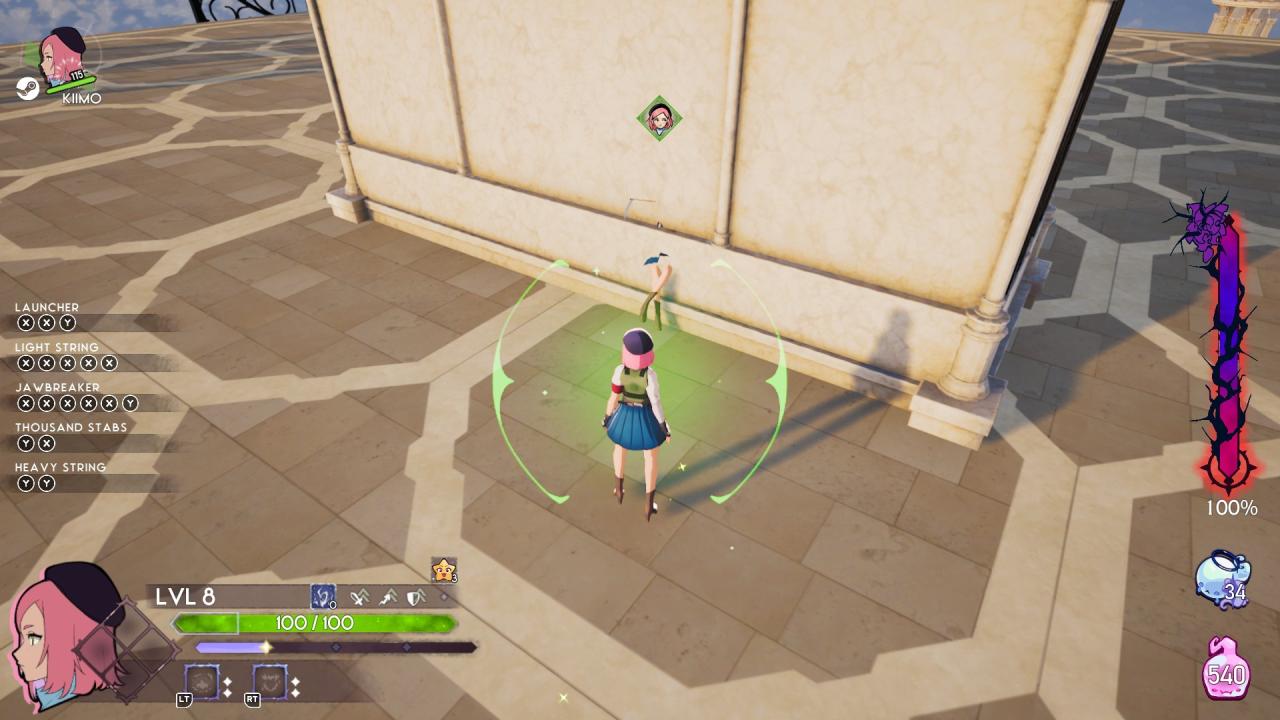
Each has enough history to avoid feeling like cardboard, though they sometimes lean on stereotypes of their home countries. Their charm makes up for most of it. At base camp, you can bond one-on-one with each teammate, and a few cutscenes show the group dynamic, which is deeply silly in a good way.
The story reaches you in fragments and short vignettes, which suits a world where ash keeps erasing memories. The religious imagery looks great, but it works more as a setting than as something that shapes the plot. The narrative is also backloaded.
Story surfaces gradually through play before giving way to the core gameplay loop.
The opening cinematic and early bonds cover the setup, then Kernel Hearts says little about the world until the later stages of the tower and focuses on the characters. Most of it comes through play. On expeditions, you find gifts for characters back at base, and handing one over unlocks a short scene and often a small permanent benefit.
Your first talk with the Creator, the maintenance man in Babel and not the capital-G God, covers humanity's early trips into the tower and lets your character use more passive stat upgrades. The writing is decent, apart from an odd typo, and you may care more about the small moments between the girls than about the overall plot.
The ending is the exception, with twists you probably will not see coming, delivered strikingly. Overall, Kernel Hearts runs on vibes and classic anime tropes, which is enough to carry you through the quiet stretches. Here is what you actually do. Babel is a simple hub where you upgrade your character, take quests, and start an expedition.
In the tower, you move through a linear series of maps, each a big open arena with ruins, hidden spots, and a running clock. The first level feels like a compressed Hyrule Field, and the scale is surprisingly large for an indie roguelite. You can go in any order and at any pace, which feels far less boxed in than the room-by-room structure of Hades or Moonlighter, and you can walk away from any fight that looks too big.
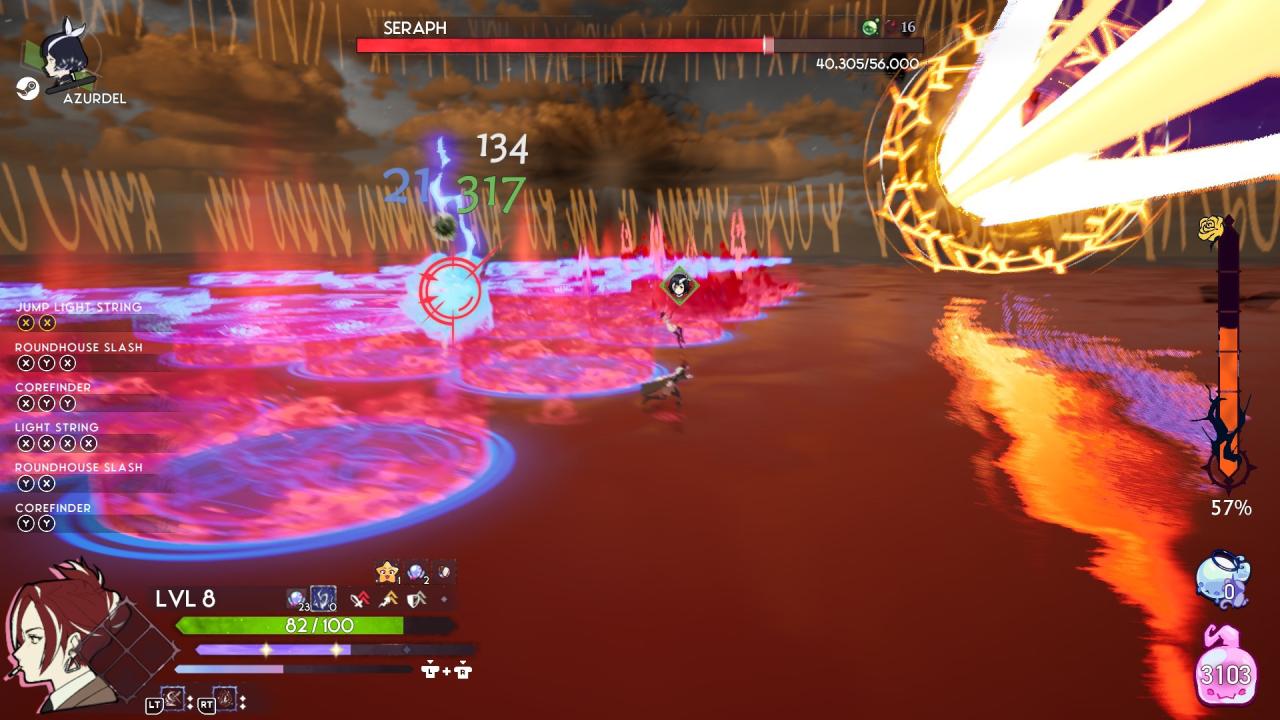
The catch is the sin meter, which really is called that.
It creeps up on the right side of the screen; enemies get tougher as it rises, and at 100 percent the Sky Angel descends to kill you. Your goal on each map is to gather as much as you can, build up, and find the exit before then. That pressure creates a steady push and pull, and you never wonder where to head next.
Maps are randomized on each entry, but encounters follow patterns you learn to read, and you choose how big a fight to take and which reward you want. Pink souls go to core stats like attack and defense, while blue souls start smaller arena encounters that reward abilities for the current run.
Coffins are one example, since clearing a small fight there gives an ability upgrade, and they are a reliable source of power. Mementos give passive effects, and Relics range from stat boosts to rare effects that change how you fight. Chests give coins for passive upgrades or items that unlock new dialogue, and Old World coins are scattered around, mostly on the first level.
A Relic Comet sometimes crashes onto the map, and grabbing it gives you a choice of items or a flat boost to one core stat. Hidden flowers are another thing to hunt, since finding three breaks a seal on a closed-off area, and the third is always well hidden.
Many playstyles work, but efficiency matters most, because the faster you cut through the angel hordes, the more upgrades you unlock before time runs out.
Randomization can get in the way when a layout hides the encounters you want, and you waste time running around. Early on, you may also feel overwhelmed, turn back, and waste time, but once you know the arenas and what each encounter offers, it clicks.
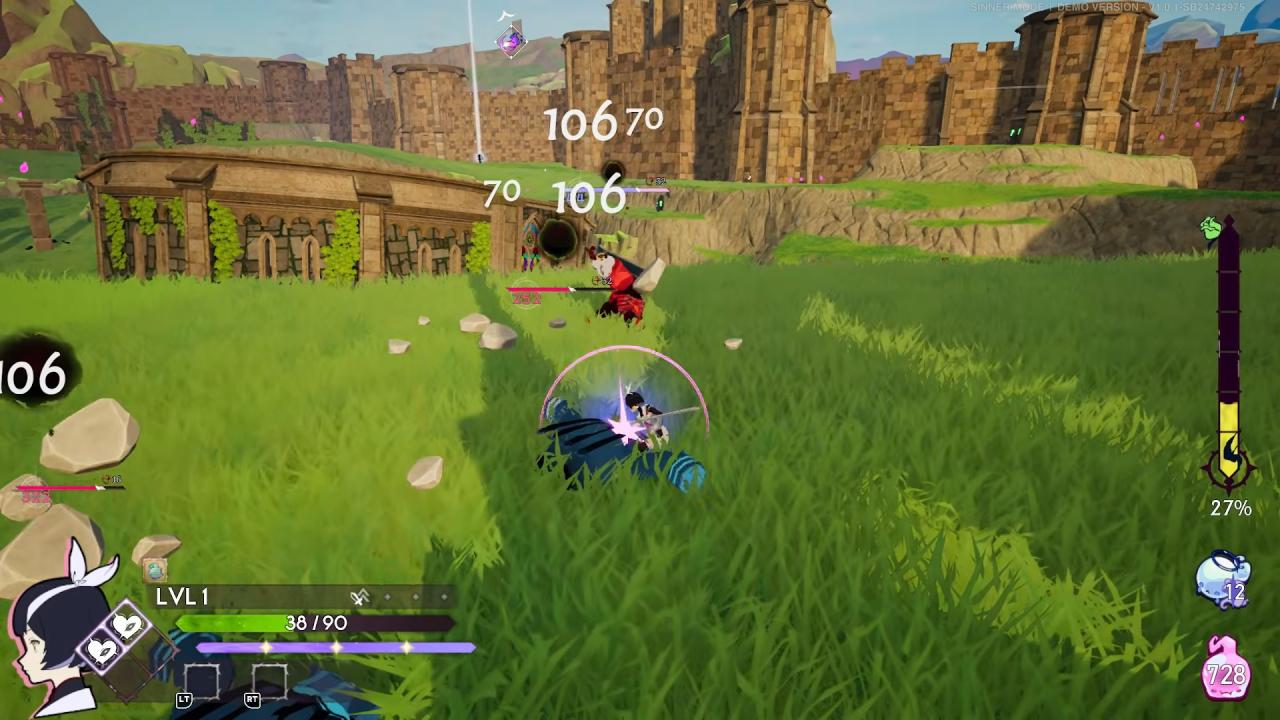
The levels each add something. The first is basic and gets you used to the world, with catapults that launch you across the map and catch you when you fall into a crack. The second removes the catapults and adds underground areas you can explore or skip. The third has floating platforms, a maze layout, and a coliseum in the middle.
The fourth is basically hell, with exploding and crumbling platforms and the biggest maze of all, though a teleport brings you back up if you fall. It may be overdesigned, but that seems intended. Green meadows, deserts, and surreal biblical dreamscapes keep the maps distinct.
After a boss, Kernel Hearts sends you to a random safe area with rewards, memories to recover, and small quests. A full run can take up to two hours, which is long for the genre but suits what Kernel Hearts is doing with its story. Online co-op for four is central, and the chaos of several girls on screen looks natural.
Resources are shared, so you decide whether to stick together for higher difficulty or split up to cover ground, and any player can initiate the teleport to the next area or boss. Combos and perfect dodges make latency a risk online, though private and public lobbies ran well.
Combat is where the Devil May Cry influence shows.
You chain light and heavy attacks, and the available combos sit on the left of the HUD, lighting up as you press the inputs, so you always know if you are doing it right. Fernet is a spiritmancer with a one-handed sword, dodges, blocks, and familiars. Her launcher is attached to a combo, and you can extend your air time with an air dash before jump canceling, which feels close to DMC3.
You can even build a run around it, using an element-casting ability and jump cancels to make it proc repeatedly while out of reach and stack fixed damage. Dodge timing is generous, so you can flit around when you need a breather, and a perfect dodge gives a Witch Time slowdown like NieR: Automata. Only certain attacks can be Witch Timed, each with a clear tell.
Cooldown abilities run off a meter that fills as you land hits, and Kernel Hearts never says so. The transformation is the big moment. By gathering the tower's power, you lift the heavenly curse and briefly become a magical girl for a devastating area attack.
Fernet is invincible during it, so it doubles as an escape, though you do not want to waste it. Spika is a close-range fighter with good mobility; her Sangetsu spell keeps opponents at a distance, and her Higanbana area attack grants brief invulnerability. Fernet suits newcomers, and the rest have a steeper curve. They also unlock slowly, tied to boss progress.
Laika arrives only after you beat Tseraf twice, and the first win sends you back to the tower's start.
Enemies are a mixed bag. Ground casters, flying pixies, and petrified angels appear early. Enemies have no stagger meters, and shielded ones can be launched and juggled once their shields break. Several shielded types together get annoying, some hitboxes feel cheap, and you may run past certain packs for the chests. Bullet-hell elements can blindside you, too.
Bosses are the highlight. Their patterns are telegraphed with just enough time to react, and the goal is learning their habits, with your items and abilities building on that. Gabriel takes several tries; the boss before him falls quickly to repeated jump cancels, and Tseraf filters out anyone unprepared.
The good side of combat is its approachability. The HUD combos, forgiving dodge, and readable bosses suit anyone new to action roguelites who finds combos intimidating. Power stays grounded compared with Risk of Rain, so bosses stay worth learning while builds still feel distinct.
The downside is its simplicity, especially early on. If you are used to the depth of Devil May Cry or the dodge tricks of Hades, it may feel plain, and the limited inputs make you repeat yourself. One face button, Circle or B, does nothing in battle.
A grab with i-frames that works only on small enemies and slams airborne ones to the ground would fill that gap, as long as it doesn't create a shockwave.
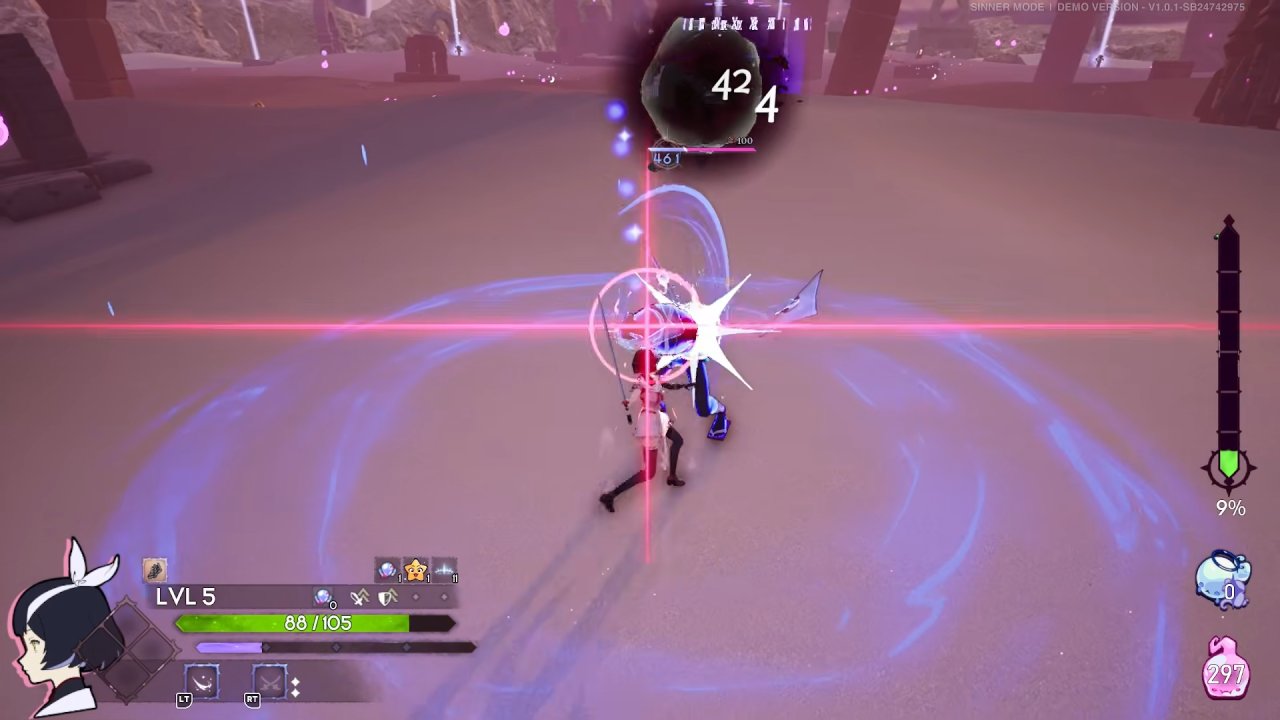
The other girls feel bare-bones next to Fernet. Laika is slow and has no launcher, so she has less control over enemies and her damage is less impactful. Movement is locked to WASD with no remapping, which is inconvenient if you use a different layout, though a patch may fix it. Many mechanics in Kernel Hearts go unexplained, and cooldown abilities would read better if they changed color when ready.
Difficulty needs a note. The first two maps are tame, but from the third on, Kernel Hearts ramps up sharply, and some bosses spike hard. The gap between modes is large. Story is trivial, Normal is a solid baseline, and Sinner jumps further than Story to Normal did. Coffins show it: they cost 40 blue souls on Normal, already cut from 60 before release, and 100 on Sinner.
That slows everything and eats into the build variety roguelites rely on. Start on Normal, and note that you can switch modes on the fly. Progression follows the usual split. Attacks, spells, and movement abilities picked during a run are temporary and assembled on the fly.
Permanent progress comes from a skill tree for health, attack, and defense, plus chips installed in the MAHOU. The OS system uses raid rewards and lets you tune abilities to your style. Progression in Kernel Hearts is closer to Hades than Risk of Rain, so a loss never feels wasted, though anyone wanting hardcore permadeath may find the tension light.
The weak point is how slow and limited early meta progression feels.
Most of it depends on resources scattered around the levels that do nothing for your current build. You give them to characters, some of whom appear only randomly, and even then you often unlock options that show up later in chests or Mementos.
Success speeds it up, but in the first hours, when you want permanent upgrades most, it drags. Visually, environments and portraits are gorgeous and expressive, and every dialogue scene is a pleasure.
Character models and animations are weaker, especially for regular enemies, and the game offers a narrow range of enemy types. The contrast is clear, but it matters little since the focus stays on building toward bosses.
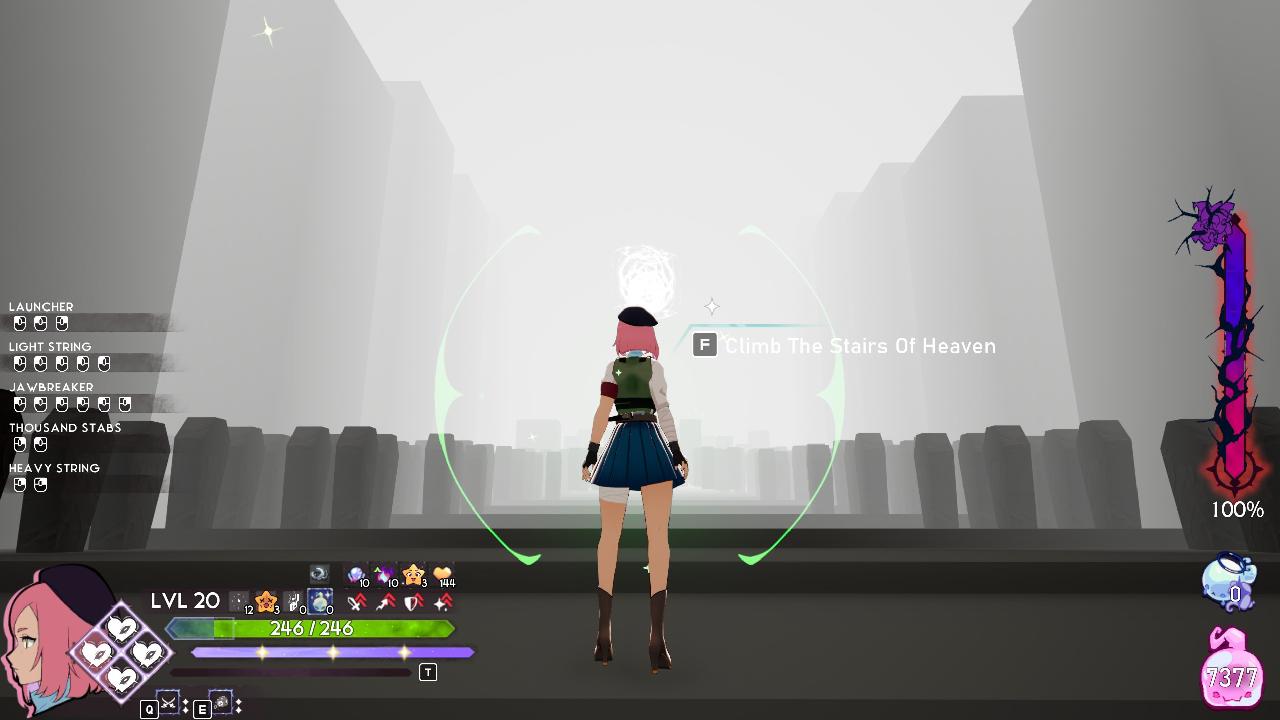
Kernel Hearts' map design is inventive. The audio is consistently excellent. The soundtrack covers many genres, and each track suits its area. Two standouts are Cataract Patterns, the core theme, and the music of the Ash Desert, the second stage.
Kernel Hearts does not aim for the depth of Devil May Cry or NieR, and it lacks the huge item pool of other roguelites. What you get is solid build variety and progression that keeps exploration rewarding. It opens up levels instead of trapping you in rooms, and the bosses are the best part.
The story is engaging, and the finale lands better than you would expect. None of the flaws stem from the core design, so they read as room for growth, such as more characters, items, and alternative tower routes. If magical girls, angels, and action roguelites sound appealing, Kernel Hearts is easy to recommend.
Editor, NoobFeed
Verdict
Kernel Hearts is an approachable magical girl roguelite with great bosses, open levels, and a superb soundtrack. Combat stays simple and repetitive, and the story runs on vibes, but it is easy to enjoy.
80
Related News
No Data.