
God of War Laufey Sparks Debate Over PlayStation’s AAA Formula After Bruce Straley’s Comments
The former Naughty Dog director says the game looks incredible but doesn't excite him, then apologizes for using it as an example of the industry’s lack of innovation.
News by Tahmid Mahi on Sep 19, 2026
PlayStation has been dealing with plenty of discussion around its current direction, and the latest controversy involves one of its biggest upcoming games, God of War Laufey. The conversation started after former Naughty Dog senior developer Bruce Straley discussed the state of AAA games and used God of War Laufey as an example of a title that looks technically impressive but does not excite him.
If you have followed Straley’s career, you know why his comments were more significant than those of an ordinary social media user. He served as game director on The Last of Us, Uncharted 2, and Uncharted 4 during his long career at Naughty Dog, where he reportedly spent 18 years.

The comments came during an interview with Edge magazine, where the interviewer asked Straley about the video game industry's current state.
He spoke about the absence of innovation and risk-taking in modern AAA development, particularly as games demand bigger budgets and longer development cycles. Experiences in the AAA space are getting more predictable, and developers have fewer opportunities to come up with something new, said Straley.
God of War Laufey became the most notable example from his comments because Straley specifically singled it out. He praised the technical work behind the game, noting that every pixel looks incredible and that the work and skill required to produce every frame are impressive.
That distinction is at the center of the discussion. Straley praised the developers behind God of War Laufey for their work and the game's technical success. Instead, his criticism focused on the broader structure of AAA games and how familiar their designs have become, using God of War Laufey as an example of a technically impressive game that still doesn't feel particularly fresh to him.
The criticism also feeds into a conversation that has been surrounding PlayStation games for years. The so-called PlayStation template often describes third-person action-adventure games built around cinematic storytelling, detailed environments, combat, exploration, and heavily produced narratives.
You can see why the topic has become particularly relevant during this generation.
First-party games are taking longer to develop, budgets are increasing, and major releases are becoming increasingly important to the companies behind them. When a publisher invests years and significant amounts of money into a single project, taking creative risks becomes more complicated because the potential cost of failure is much higher.
However, a change in tone followed Straley’s use of God of War Laufey as an example. After his comments received attention, he posted an apology to the game’s team, saying he was sorry for bringing them into an unnecessary wave of negative attention. He explained that he had been trying to illustrate a broader concern about the industry and believed that naming the game had allowed his comments to be taken out of context and used for clickbait.
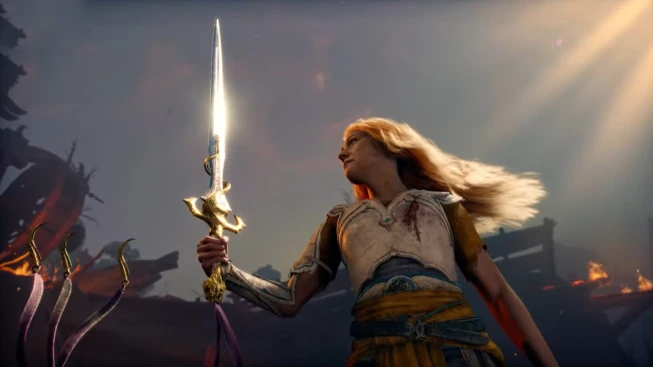
That apology has become another part of the controversy because the original comments were fairly specific. Straley praised the visual quality and development work behind God of War Laufey, but he explained that the actual gameplay did not excite him.
The situation also raises an interesting point about who gets to criticize modern AAA development.
Straley has spent much of his career working on the same kind of large-scale games he now says have become too familiar. His work on The Last of Us and the Uncharted series helped shape the style of cinematic, third-person PlayStation games that became increasingly prominent, which makes his comments partly reflective of the industry he helped build.
That is where the discussion around the PlayStation template becomes more complicated. During Straley’s time at Naughty Dog, PlayStation still had a wider variety of games and studios contributing to its lineup. You had Japanese studios, smaller projects, different genres, and established franchises such as SOCOM, Resistance, Killzone, Sly Cooper, Jak and Daxter, and Ratchet & Clank.
Many of those franchises have become less prominent over time, while PlayStation’s biggest releases have increasingly centered around major cinematic experiences. As a result, some players now see a narrower identity across the company’s first-party output, even though individual games still differ in their stories, mechanics, settings, and approaches to combat.
At the same time, God of War Laufey is not necessarily identical to its predecessors. The game reportedly moves its combat in a faster direction and draws more heavily on the style of the older God of War games, meaning it attempts to change the formula established by God of War and God of War Ragnarok.
Still, Straley’s original point was ultimately about his personal reaction to the experience. You can recognize the technical achievement behind a game while still feeling its gameplay offers nothing exciting, and those two opinions don't necessarily contradict each other. The discussion becomes harder when online conversations turn personal, and people treat positive or negative reactions as evidence of an agenda.
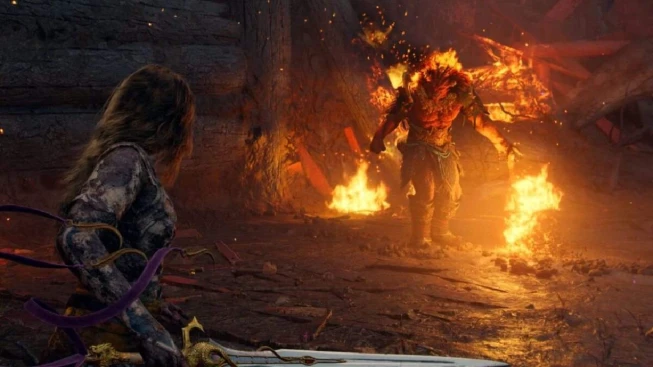
Straley’s comments have brought that broader problem back into focus.
Developers, journalists, critics, and players can all react differently to the same game, and those reactions don't always fit neatly into a positive or negative category. You can love a game’s gameplay while disliking its story or enjoy a game’s narrative while finding its mechanics frustrating, without needing to defend that opinion as an objective fact.
The Last of Us Part II is one example of this phenomenon. A player can dislike the direction of its story or ending while still appreciating its gameplay, combat, animation, and technical execution. The opposite can happen with a game such as Call of Cthulhu, where the gameplay might not appeal to everyone, but the story and mystery can be strong enough to keep you playing until the end.
That is also why Straley’s original statement stands out. He praised God of War Laufey and acknowledged the developers' capability to create something worthwhile. Instead, he acknowledged the enormous effort behind the project while explaining that the resulting experience didn't excite him because it felt tied to a broader AAA formula that he believes has become too familiar.
Straley has since left Naughty Dog and founded his studio, Wildflower, where he is working on a new project. His current position outside the company gives him a different perspective on the industry’s development practices, although his previous work remains closely connected to the type of games he is now discussing.
Ultimately, the controversy says as much about the culture surrounding major video games as it does about God of War Laufey itself.
When a developer with Straley’s background criticizes the direction of AAA development, his comments naturally receive more attention than a random social media post. His subsequent apology only added to the confusion, especially since the initial statement was clearly his own opinion and not an attack on the development team.
The bigger issue is the balance between technical ambition, financial risk, and creative experimentation in AAA games. PlayStation’s current approach has led to polished experiences, but the increasing conversation around its first-party formula indicates that some players and developers are seeking more variety and more chances for different ideas.
Editor, NoobFeed
Related News
No Data.