
Wartales - Contracts: The Fief Review
PC
Rule your own domain in Wartales - Contracts: The Fief… but is managing a kingdom as rewarding as surviving one?
Reviewed by Mezbah Turzo on Oct 01, 2025
Tactical turn-based RPGs have carved out a distinct niche in modern gaming, blending strategic depth with immersive world-building. Whether you're commanding squads in desperate battles or managing resources between skirmishes, the genre thrives on rewarding smart planning and narrative-driven exploration.
Wartales takes that foundation and fuses it with a gritty, low-fantasy open-world structure, pushing players to lead a mercenary band in a world where coin and steel are often more reliable than morals. With Contract: The Fief, the game expands on its sandbox systems by introducing a new way to grow influence through power, politics, and a fiefdom of your own.
Developed by Shiro Games, known previously for Northgard, another strategy-focused title, Wartales launched in early access in 2021 and has since grown into a robust tactical RPG with a loyal following.
The base game offered a strong foundation: open-world exploration, squad-based combat, and a survival-lite economy where food, wages, and morale matter. Past DLCs like The Skelmar Invasion and Pirates of Belerion introduced new regions and mechanics, but Contract: The Fief stands more along the lines of the minor expansions like The Pits or The Beast Hunt.
Wartales is a richly layered open-world tactical RPG that seamlessly blends group management, turn-based tactics, character customization, crafting, and non-linear role-playing into a cohesive, often punishing, yet highly rewarding experience.
From the outset, you begin your journey by answering a short series of background questions that determine the composition and context of your starting party. These choices influence your companions' initial classes, crafting materials, party morale, group traits like increased Constitution or bonus Critical Damage, and more.
Some scenarios even include impactful narrative weight; for example, starting as deserters from a tyrannical captain immediately increases your suspicion level, causing guards and patrols to hunt you down more aggressively.
Once the world opens up, you'll find yourself navigating one of many regions, each with its own threats, resources, and stories. When you start, you can choose between two main modes: Adaptive Exploration, where the difficulty of each region changes based on the size and strength of your group, and Region-Locked Exploration, where the difficulty of each region stays the same, meaning you need to put in a lot of work to progress before you can survive in harder areas.
You may make even more changes by changing the difficulty settings. For both fighting and survival, players may select between Novice, Experienced, and Expert. The level of difficulty in survival affects how hard it is to meet your party's fundamental requirements, such as food, weariness, morale, and pay.
On Expert, survival is a very hard part of the game; however, on Novice, the management layer is easier for players who are more interested in tactics and exploration. You may change the difficulty levels for both fighting and survival in the middle of the game, which gives you a lot of freedom in how you want to play Wartales.
Combat plays a central role in Wartales' loop, but survival and management are just as vital. Each character class, from Swordsman and Brute to Archer, Spearman, Ranger, and even the limited-but-unique Prisoner, comes with a specialization tree.
These unlock passive and active skills as they level, such as the Beastmaster's ability to tame animals or the Poisoner's ability to inflict deadly damage-over-time effects. Companion customization is extensive: you can rename characters, change appearances, choose starting weapons, assign traits, and specialize them into professions, which plug directly into the game's broader systems.
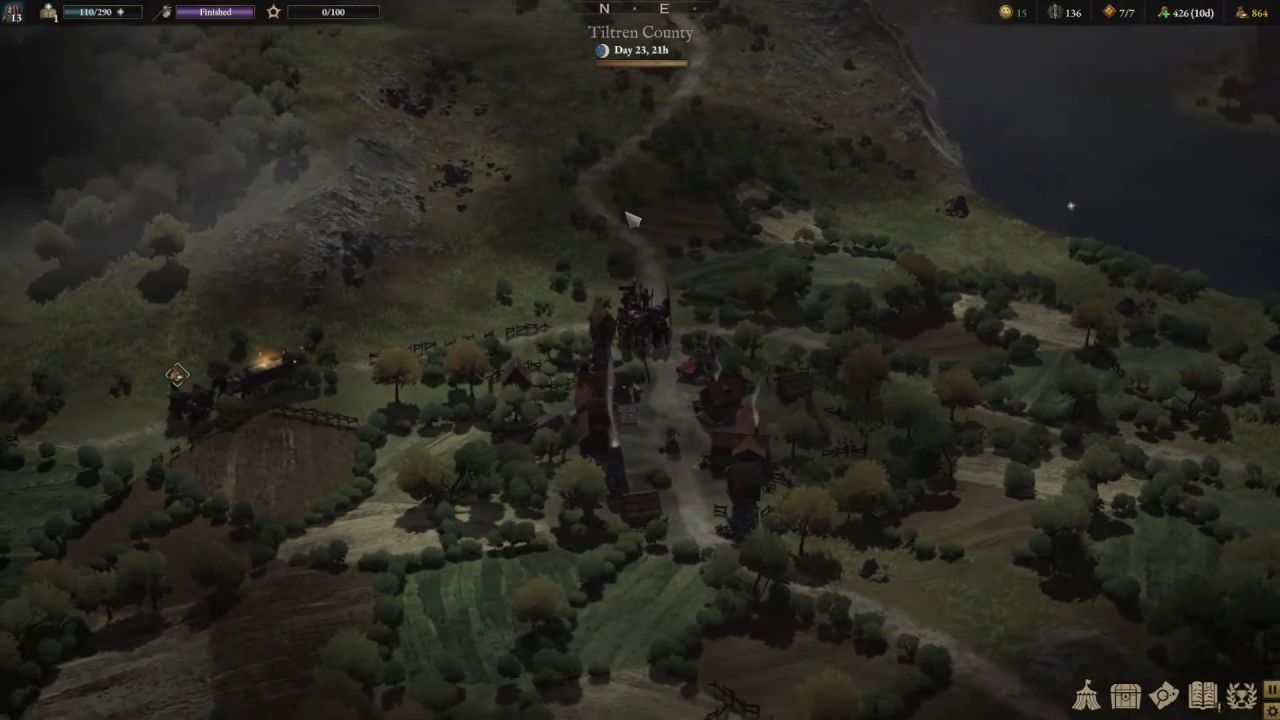
You'll need to manage your group carefully; keeping them fed, rested, and paid is essential. As time progresses (unless the game is paused), fatigue builds. Let it climb too high and your companions risk death.
You'll need to camp frequently, at which point your party gathers around a fire, where you feed them, pay wages, repair armor, craft items, and assign tasks at camp stations. The more companions you have, including ponies, fighting boars, and even a bear, the more resources are required. Finding the right balance between strength and sustainability is key.
Camp upgrades and crafting play a crucial role in long-term survival. Assigning professions like Tinker, Cook, or Alchemist to your companions unlocks access to essential items such as tents, cooking pots, torches, rope, and even enhancements for your combat gear.
Crafting is resource-driven, requiring materials such as cloth, iron, and leather to create valuable items that directly contribute to combat readiness or party sustainability. Many blueprints are discovered through exploration or earned via Knowledge Points, which serve as a progression system for unlocking recipes, gear, and utility upgrades like sprinting on the world map or even... cannibalism.
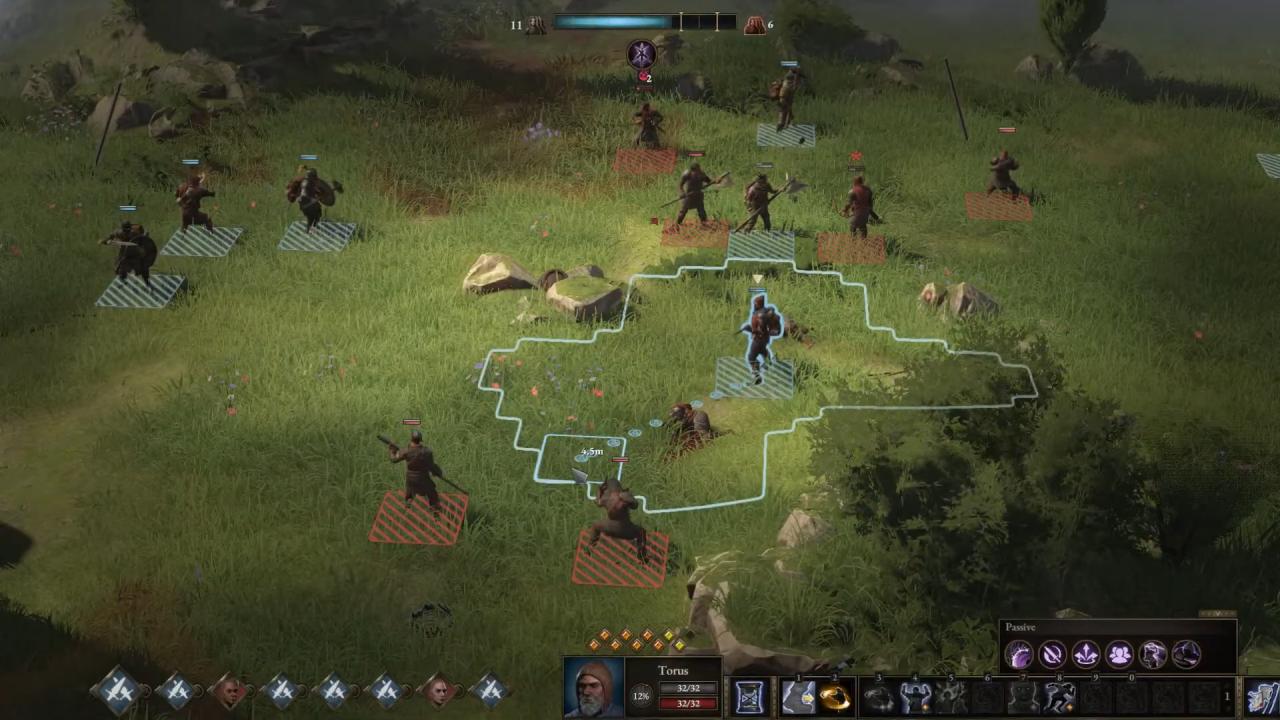
Combat in Wartales is tactical and tense. Once engaged in battle, the camera shifts to an instanced grid-based field. You position units before each encounter, then take turns freely with any unspent units during the round.
The system uses shared Valor Points for special abilities, a limited and regenerable resource that adds weight to every action. Positioning is crucial, especially with friendly fire always enabled. Flanking, kiting, and area-of-effect attacks must be calculated carefully. Engaging an enemy in melee locks them into combat, and any attempt to disengage allows an attack of opportunity for both your units and enemies.
Armor plays a major role in keeping characters alive, acting as a buffer to health points. It degrades quickly and must be repaired post-battle using resources or at blacksmiths. Wounded companions must be treated with medicine or in an apothecary. If a character is reduced to zero HP, they enter a "Dying" state.
They can be healed, or they'll die permanently. This constant cycle of risk and recovery adds both challenge and emotional investment. Loot, experience, and influence are rewarded after battles. Influence is a valuable currency used for recruiting new companions, persuading NPCs in dialogue, or completing quest objectives.
You'll also gather weapons, armor, and crafting components to continually improve your party's equipment. Leveling up allows you to increase core stats, Strength, Dexterity, Constitution, Willpower, Critical Hit Chance, and Movement, and unlock new specialization skills at key levels.
Towns and cities function as interactive hubs. Buildings like forges, markets, inns, and apothecaries offer services, recruitment, quests, and opportunities to trade or steal. Theft, while possible, increases your Wanted level and often leads to deadly run-ins with patrolling soldiers who somehow always know you took that cabbage. NPCs may also offer quest leads through purchasable rumors, which mark vague destinations on your map and kick off exploration-based storylines.
Wartales' atmosphere is bleak and grounded, capturing the harshness of a low-fantasy medieval world. Yet it avoids the trap of hopeless nihilism. The world is dark, with uprooted peasants, destroyed kingdoms, and choices that aren't always clear-cut. But what you do really matters. You don't have to rescue the world; you just have to live in it and do well.
There's no central narrative thread to follow, but there are the four Paths, long-term progression trees tied to playstyle: Power and Glory, Trade and Craftsmanship, Crime and Chaos, and Mysteries and Wisdom.
Each path unlocks milestones and rewards through specific actions. Whether you're a righteous force bringing order to the land or a ruthless gang pillaging caravans, your path reflects the emerging identity of your group.
That's the heart of the Wartales loop. You're always balancing the needs of your people with the realities of the world: weighing risk, choosing paths, customizing deeply, and fighting smart. And just when you think you've seen it all, the DLCs start asking: what if your mercs wanted more than just coin?
Enter the Fief DLC, where you don't just manage a party, you rule over a domain. Whether it enhances the game's strategic depth or simply stretches out the same systems across a bigger map... well, let's talk about that.
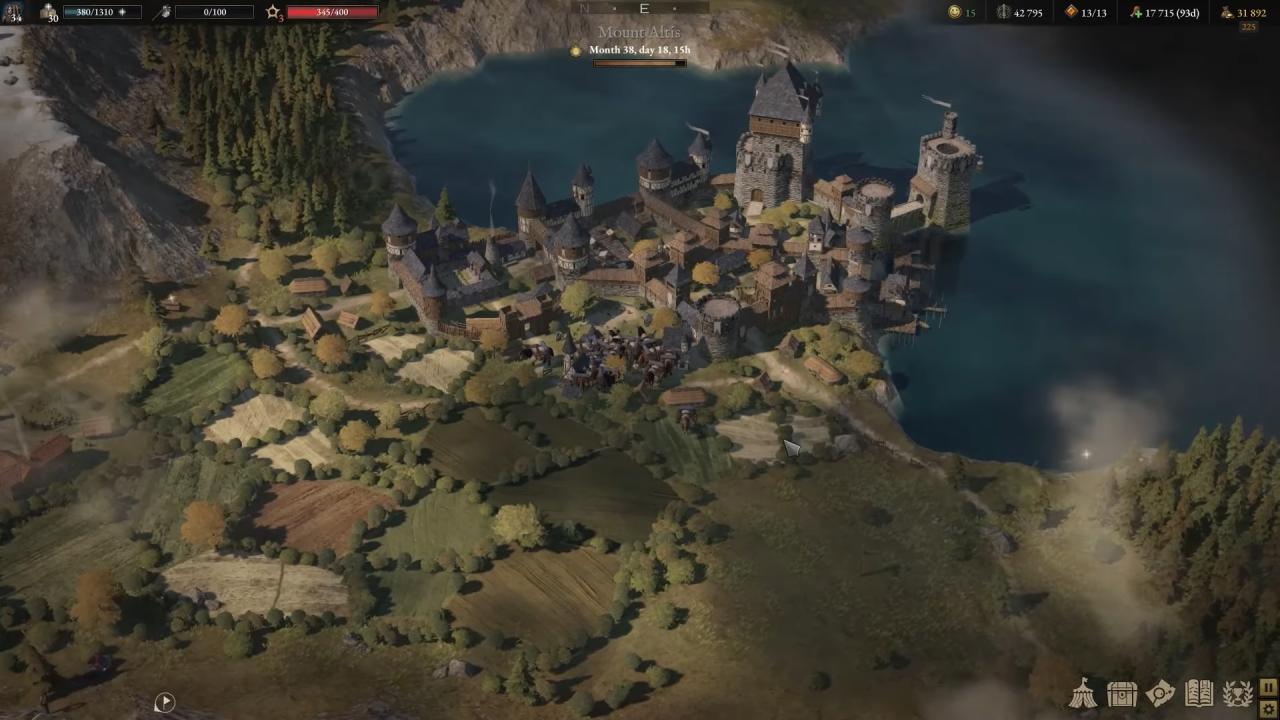
The Fief DLC starts with a rather big idea: your motley group of mercenaries may now become landowners. You're no longer simply fighting to stay alive. You're now in charge of your own region, building infrastructure, handling politics, and running a living population. On paper, it's a fun new way to play Wartales. In practice, however, it walks a fine line between an immersive addition and a hollow extension of features we've already seen.
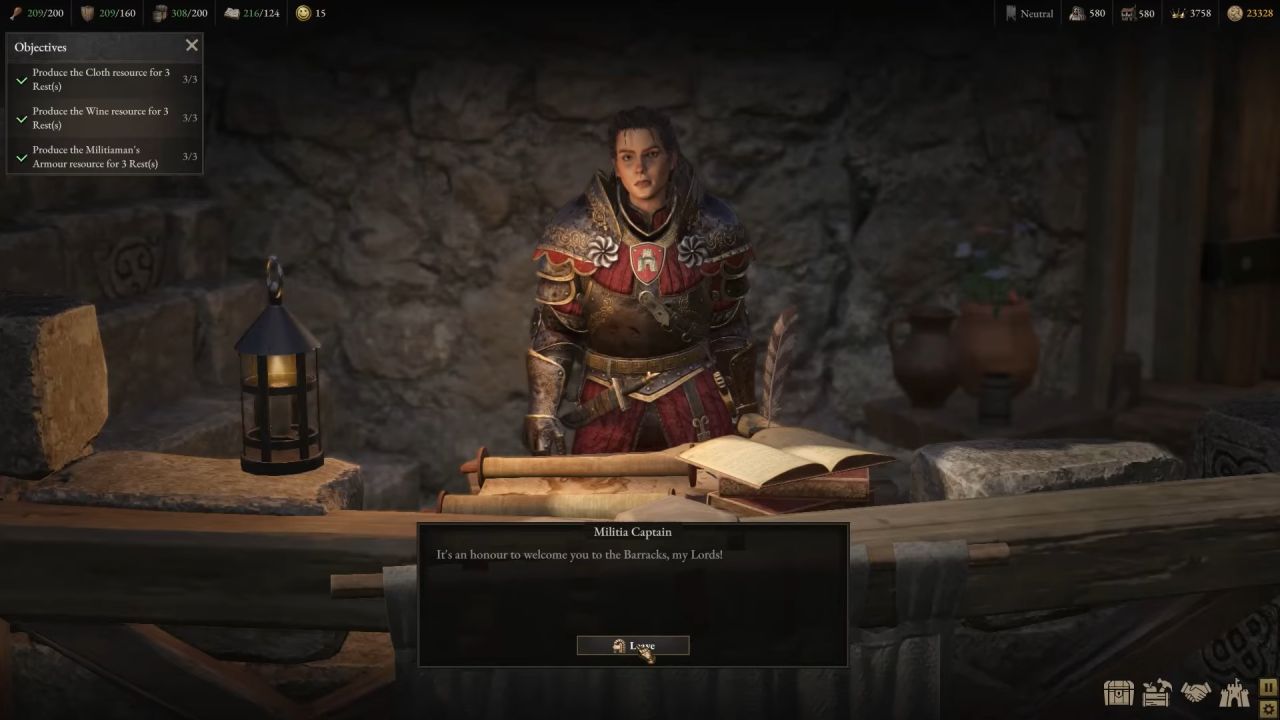
Once unlocked, your Fief becomes a new central hub for management, divided into districts such as the Market Square, Militia Barracks, Throne Room, and others. Each district has a purpose and unlocks NPCs who give you new tools for your campaign.
The Steward helps manage the Fief's needs. The Captain of the Militia gives access to training and combat-related upgrades. The Barber lets you customize your companions' looks, while the Executioner exists mostly to add flavor… and a bit of fear.
What your Fief produces ties into a basic set of four needs: food, defense, trade goods, and knowledge. Every rest cycle, the Fief generates resources to fulfill those categories. Keeping them balanced keeps your population happy.
Happy people attract more citizens, which creates more demand, which increases your need for production and... well, you get the idea. It's a feedback loop that sounds engaging in theory, but doesn't really impact your gameplay in any meaningful way.
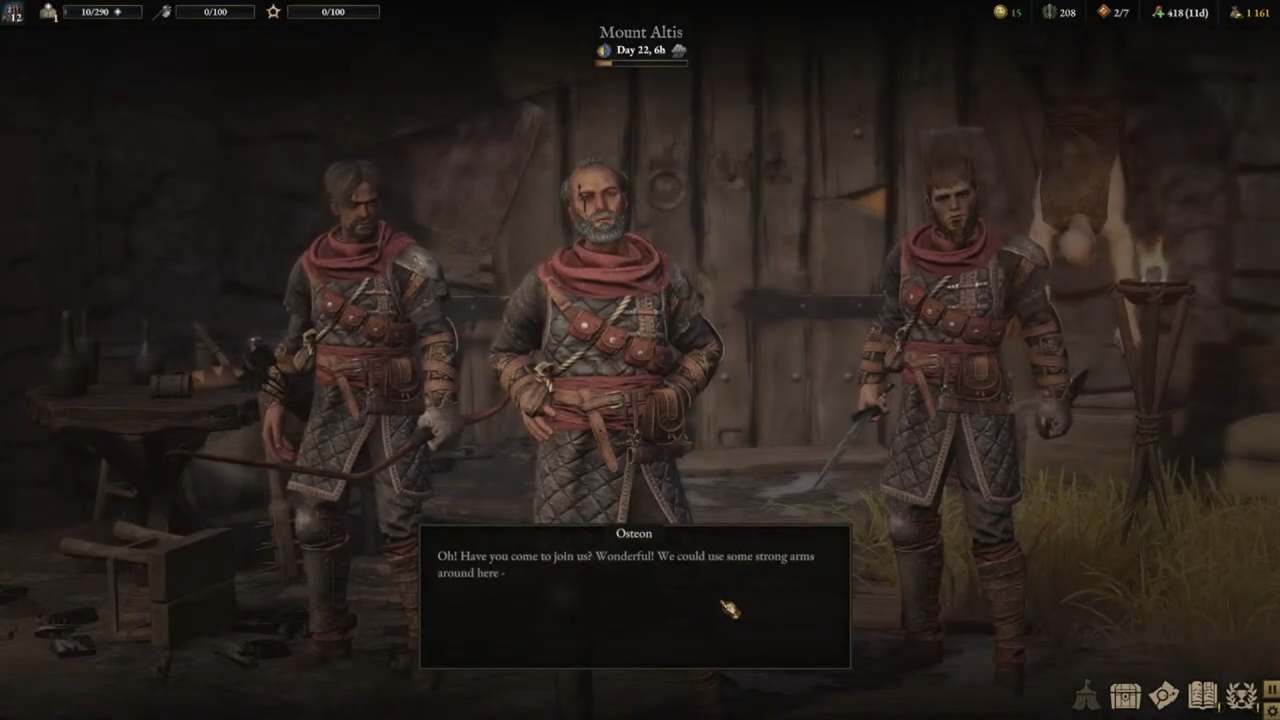
That's one of the biggest issues with the Fief DLC. Despite all the systems layered into it, mandates, alignment, district choices, and diplomacy, it all feels more cosmetic than functional. You can choose your government type, pursue long-term objectives known as mandates, and even shape your alignment to become a militarist state or a trade powerhouse.
But none of this actually matters much in the grand scheme of the game. It rarely changes how your troop plays, how other factions react to you, or how your choices influence the world.
For instance, you can become friends with multiple rival kingdoms at once without anyone raising an eyebrow. You can raid one, befriend the other, and then do the reverse the next day. There's no consequence, no friction, and no real political gameplay. It feels like diplomacy was added to check a box, not to reshape your campaign in any meaningful way.
Even the production system doesn't quite deliver. The idea of building goods in your Fief to support your mercenary group sounds promising, but the items you produce don't really end up in your inventory. Instead, they simply sustain the Fief and may allow you to send out some shipments to your active party, but this process is automated and fairly forgettable.
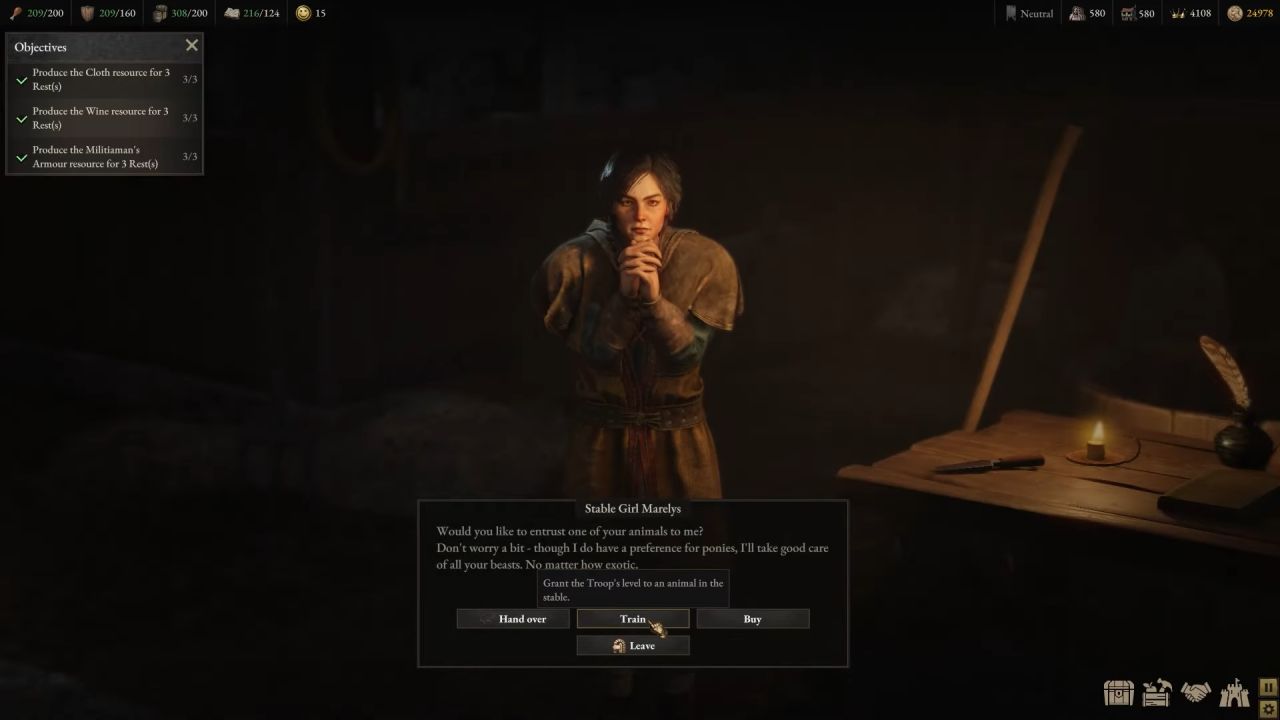
You're not trading with the world or developing a supply chain. You're just clicking a menu and occasionally getting a box of supplies. That said, the DLC does bring some genuinely useful features, especially for endgame players. You can now train animals, level up professions by spending Fief currency, and duplicate equipment.
These systems help bypass some of the more tedious grinding in the late game. If you've been slowly trying to level a scholar or alchemist for hours just to access a higher-tier blueprint, you'll appreciate being able to skip ahead. Likewise, being able to clone rare armor or level up new recruits instantly means less time babysitting underpowered troops.
Missions are also back, this time originating from your own inn and related to other kingdoms. They work similarly to the Tavern DLC: you receive job requests, assign troops, and get rewards like fief currency or influence.
But again, there's not much depth here. The missions don't require much strategy, troop composition barely matters, and even the lowest-level recruit with no gear can complete them without issue. You can ignore the mission's recommended setup entirely and still succeed. It feels more like checking a box than making a real tactical decision.
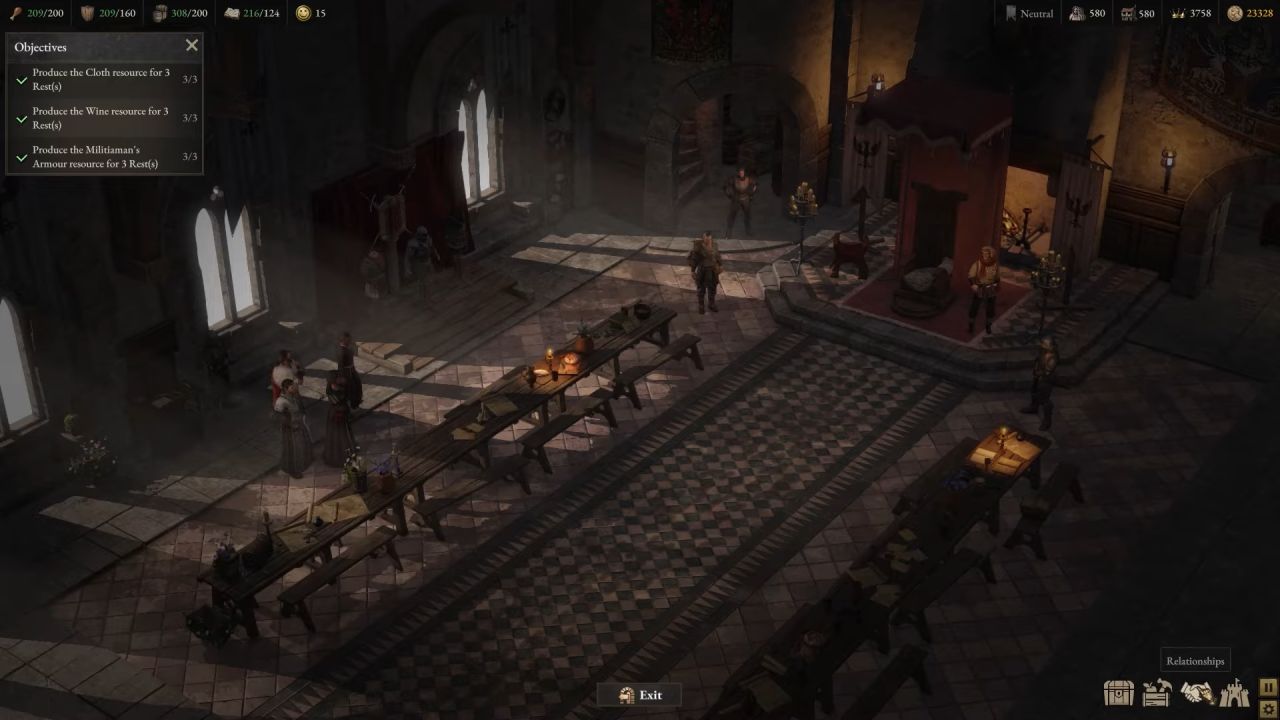
You're playing a kingdom simulator where no one really notices what your kingdom is doing.
The rewards themselves aren't particularly compelling either. Fief currency is only used for building and upgrades within your domain. Influence points with other factions exist, but they don't seem to do anything impactful.
You won't see events change based on who you're allied with. Your Fief doesn't get attacked if you upset someone. You're playing a kingdom simulator where no one really notices what your kingdom is doing. Even the much-touted alignment system, meant to shape your Fief into a militarist stronghold or a merchant paradise, lacks real consequence. It might change a few bonuses or unlock a building here and there, but your core gameplay remains untouched.
There are no unique questlines, no major forks in progression, no reason to play one alignment over the other unless you're chasing a specific passive perk. As for customization, there's surprisingly little. You can't really shape the look or feel of your Fief in any personal way. It's more of a menu-driven settlement than a base-building experience. If you were hoping for a medieval Sims-style management sim, this isn't it.
Now, if you already own the Tavern DLC, it's hard to recommend this one. The core loop is very similar. The Fief is, in many ways, just a slightly more involved version of the Tavern. You can assign mercenaries, train them, equip them, and send them off on errands.
The major difference lies in the additional fluff surrounding governance and the concept of running a functioning province, but that layer doesn't add much strategic value. In fact, the Tavern DLC arguably has more meaningful choices when it comes to who you cater to and what you specialize in.
That said, some of the DLC's features are undeniably useful for hardcore players. If you're knee-deep in endgame and tired of slowly grinding out profession levels or armor upgrades, the quality-of-life tools here are a blessing. Being able to instantly duplicate armor or fast-track a recruit's level is both efficient and satisfying. Just don't expect the colony-sim aspects to be particularly engaging or deep.
The Fief DLC ultimately feels like a missed opportunity. It adds a lot of systems, but most of them are shallow. It gestures at meaningful governance but doesn't deliver real consequences or changes in gameplay. There's potential here, and the visual presentation is nice, but it often feels like you're interacting with a simulation that runs on rails; you make decisions, but none of them ripple out into the world in a way that matters.
If you're new to Wartales or just want to improve the basic survival and fighting cycle, the Tavern DLC is a better choice. It's more focused, works better with your group, and gives you a higher return in terms of both fun and gameplay. If you're an endgame player looking to optimize, automate, and clone your way to efficiency, then The Fief might be worth a look, but only if you're comfortable knowing that it's more spreadsheet than sandbox.
In the end, The Fief gives you power, but not much responsibility. It gives you systems, but not much depth. And while it's nice to feel like a lord for a while, the illusion fades quickly once you realize your kingdom is mostly just a menu. At its core, Wartales: Contract – The Fief tries to answer a simple question: what happens when mercenaries put down roots? The base game thrives on movement, survival, and tactical decision-making.
The Fief DLC ambitiously expands that loop into something more permanent, letting you build, govern, and (at least in theory) leave a mark on the world. But in practice, the DLC walks a fine line between meaningful expansion and shallow repetition. While the idea of running your own medieval domain is appealing, much of the content feels like dressed-up busywork, especially for players already familiar with the Tavern DLC.
Despite a few standout features, like profession leveling and equipment duplication, the Fief ends up feeling more like a quality-of-life mod for veteran players rather than a transformative addition to the game's core experience, and it certainly doesn't add too much to the game's tactical RPG side of things. Still, there's something to be said for the fantasy it offers.
If you've sunk dozens of hours into Wartales and want a new way to flex your endgame strength without being constantly bogged down by scavenging and micromanagement, the Fief delivers a power fantasy with just enough depth to be satisfying… if not essential. But if you're looking for a fully realized colony sim layered on top of Wartales' gritty tactical loop? You might want to wait for future updates… or just stick with the Tavern.
Contributor, NoobFeed
Verdict
The Fief DLC adds some endgame convenience and light kingdom management, but lacks real impact or depth. A decent upgrade for die-hard fans, skippable for everyone else.
70
Related News
No Data.