

NVIDIA RTX Spark Wiped Billions Off Intel, AMD, and Qualcomm Stock in One Day
RTX Spark combines a twenty-core Grace CPU and a Blackwell GPU into a single unified chip package.
Hardware by Okazaki on Jul 08, 2026
NVIDIA has moved beyond selling graphics cards and has introduced a complete system-on-a-chip built specifically for Windows laptops and compact desktops. Announced during a recent GTC keynote at the start of Computex week, the RTX Spark superchip represents Nvidia's first ARM-based chip designed for this category, combining local AI capabilities, content-creation power, and RTX gaming performance into a single package aimed at reshaping what a premium Windows laptop can do.
RTX Spark goes well beyond functioning as another laptop GPU. It combines the CPU, GPU, and memory into a single fused package, communicating through Nvidia's NVLink chip-to-chip interconnect rather than relying on slower, more traditional pathways.
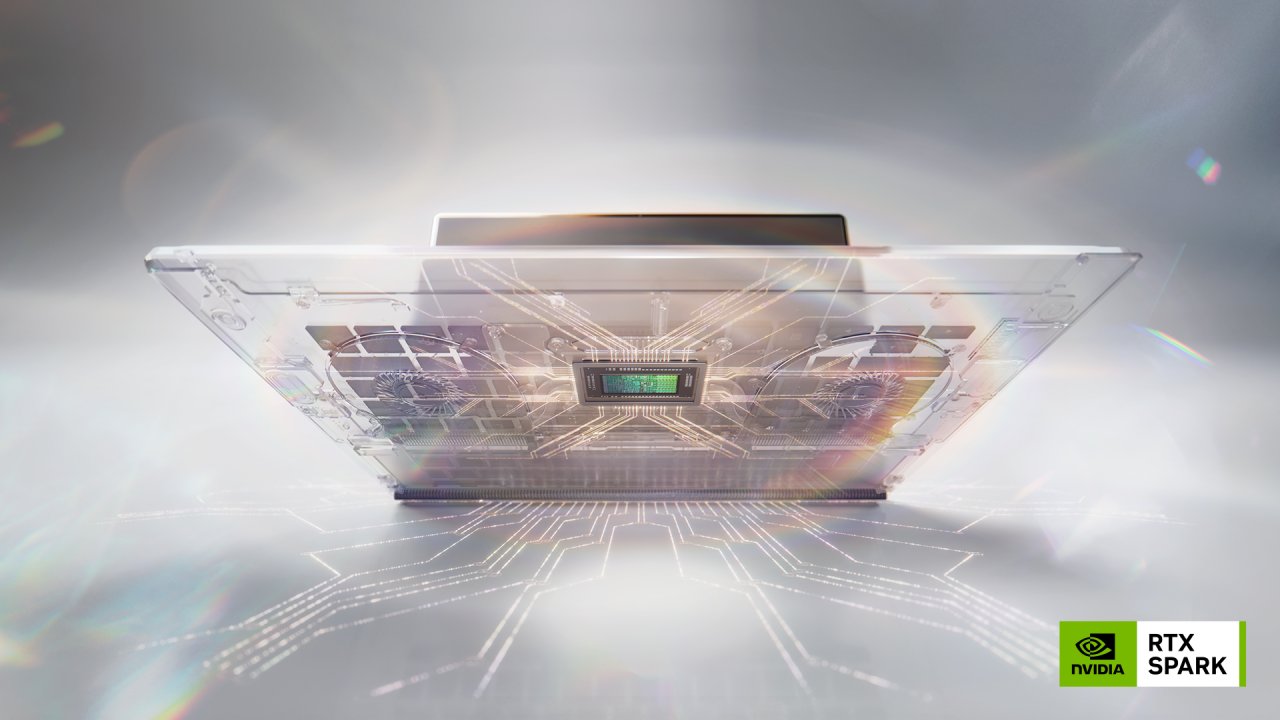
RTX Spark Is a Full System on a Chip, Not Just a GPU
After decades focused primarily on graphics cards, Nvidia is now entering CPU territory directly. NVIDIA's CEO described this shift as a broader reinvention of the PC itself, moving away from decades of launching applications and clicking through menus toward a model where you simply make a request, and the system carries out the work.
The specifications reflect that ambition. RTX Spark includes a 20-core Nvidia Grace CPU, a Blackwell RTX GPU with 6144 CUDA cores, fifth-generation Tensor cores, and up to 128GB of unified memory. NVIDIA states the chip delivers around 1 petaflop of FP4 AI performance inside a laptop chassis as thin as 14mm and as light as 3lb.
Unified Memory Changes How the Chip Handles AI
Unified memory means the CPU and GPU share a single memory pool, rather than maintaining separate RAM and VRAM that constantly compete for the same data. That allows the system to hold an entire AI model or a full 3D scene in memory at once, rather than repeatedly retrieving data from storage.
For AI, the chip can run large language models with up to 120 billion parameters locally, supporting context windows of up to 1 million tokens, effectively functioning as a private AI agent capable of reading entire codebases or document libraries without relying on cloud processing. NVIDIA has also built a security layer, OpenShell, in partnership with Microsoft, designed to keep these AI agents operating within defined rules.
For content creators, RTX Spark supports 12K 4:2:2 video editing and rendering 3D scenes exceeding 90GB using ray tracing. Adobe is rebuilding Photoshop and Premiere specifically for this chip, with claims of up to twice the AI and editing performance compared to existing hardware, and Blender, Blackmagic, and ComfyUI are also supporting the platform.
For gaming, Nvidia states that the RTX Spark can run AAA titles at 1440p above 100 fps with ray tracing enabled, along with the full DLSS suite, Reflex, and support for G-Sync OLED displays. DLSS4.5 ray reconstruction is also planned, powered by a second-generation transformer model running on a thin laptop chassis.
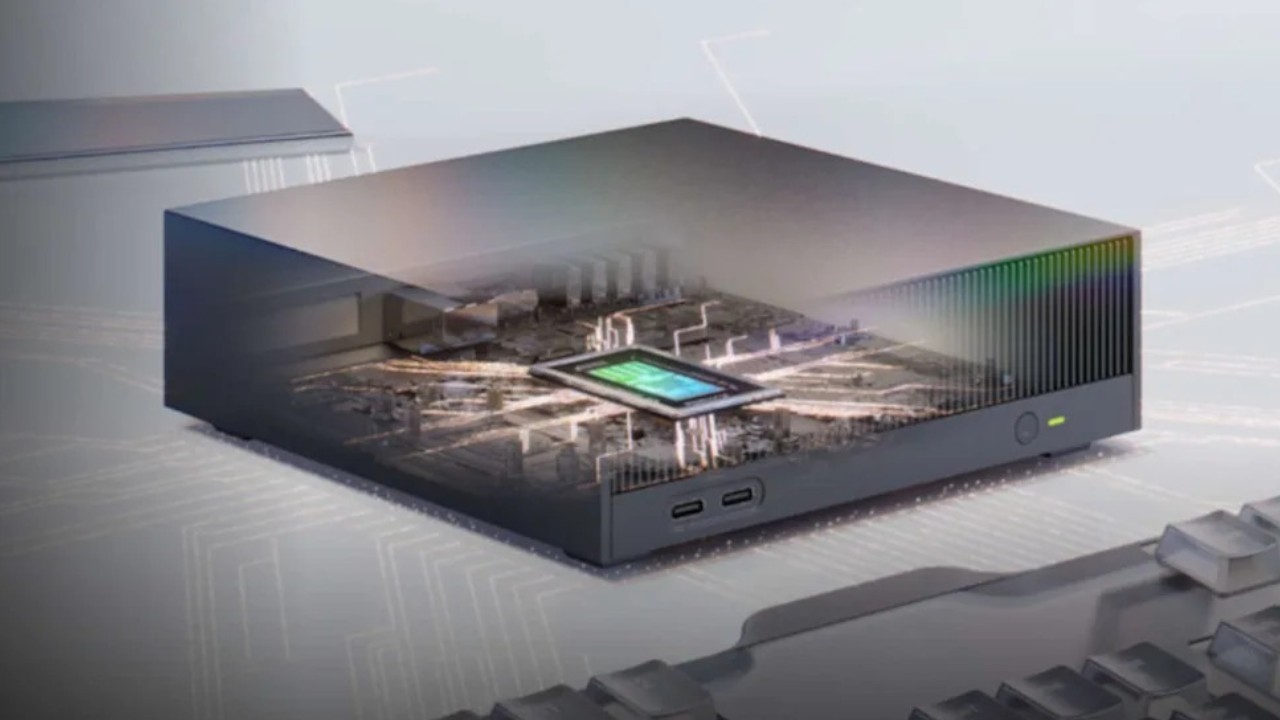
Microsoft and MediaTek are Central Partners
Microsoft is developing a new generation of Windows on ARM AI PCs alongside RTX Spark, including native agent experiences built directly into the Windows taskbar and new security primitives intended to prevent AI agents from operating outside their intended boundaries. Microsoft's CEO described the goal as delivering unmetered intelligence on every desk.
MediaTek co-designed the custom ARM CPU, handling power efficiency, the memory controller, and the connectivity needed to support all-day battery life claims. Several important questions remain unanswered. Battery life under real gaming and AI workloads remains unknown, since Nvidia's all-day battery claims have not been tested outside marketing materials.
Windows on ARM compatibility with older games, anti-cheat systems, and niche applications also remains unproven. Sustained thermal performance inside a 14mm chassis is another open question that will require independent reviews to answer. As of now, these laptops are not shipping yet, and all performance figures come directly from Nvidia's own claims, with no independent benchmarks available.
The announcement's impact was immediate, regardless of unanswered questions.
Intel's stock dropped roughly 6%, and AMD fell around 5% the same day. At the same time, Qualcomm, whose Windows on ARM chips face the most direct competitive threat from RTX Spark, saw its stock plunge close to 10% in premarket trading, erasing more than $10 billion in market value within hours.
NVIDIA has not announced official pricing, but analyst estimates from Morgan Stanley suggest the higher-end configuration could price around $2,899, with lower-tier variants starting closer to $1,799, positioning RTX Spark firmly in premium laptop territory rather than as a budget option.
If NVIDIA delivers even a portion of what was shown during the announcement, RTX Spark laptops could represent one of the more significant shifts in Windows hardware in recent years. However, that judgment will ultimately depend on how the hardware performs in independent testing.
Editor, NoobFeed
Latest Articles
No Data.