
Intel's Big Last Level Cache Explained: A Deep Dive Into Nova Lake vs. Zen 6X3D
Intel’s expanding last level cache architecture reshapes expectations for next-generation desktop processors across gaming and workstation performance segments.
Hardware by Tanvir Kabbo on Nov 28, 2025
Intel's next-generation CPUs are headed toward substantially larger last-level cache designs, aiming squarely at the performance crown formerly held by AMD's X3D chips. With Intel already showing off Clearwater Forest and its huge cache design, the world of consumer and workstation CPUs is about to change significantly as Nova Lake approaches its projected 2026 release.
Cache density, multi-tile layouts, and advanced silicon interposers are becoming central to how future processors will deliver both gaming and productivity performance.

Nova Lake's Architectural Ambition
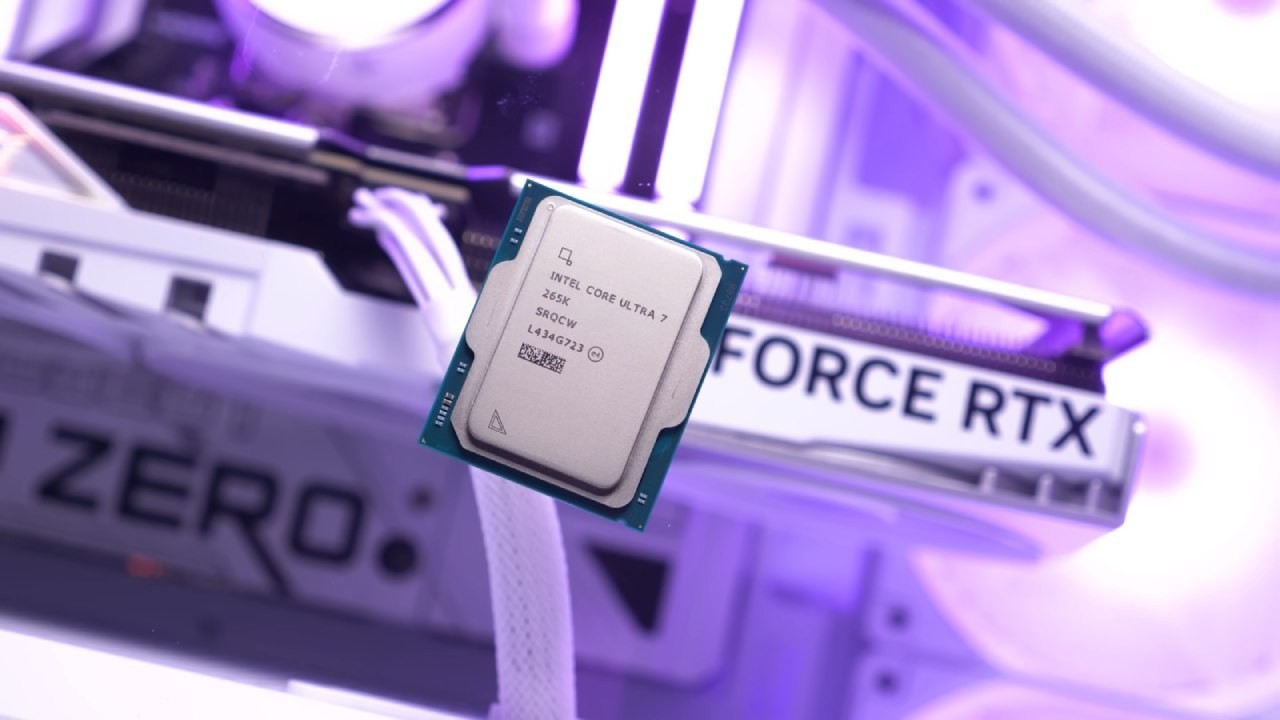
We've been hearing for a long time that Nova Lake is shaping up to be a major leap, and the rumored core configuration alone is enough to prove it. The full-fat design includes 52 cores: 16P cores, 32 efficient eCores, and 4 low-power eCores, for a total of 52 threads with no hyperthreading. While the top-end model is striking, our focus is on Intel's counter to AMD's X3D lineup—their Big Last Level Cache (BLLC) implementation.
The BLLC variant of Nova Lake dedicates a significant portion of the compute tile to 144MB of last-level cache. It's not stacked; it's physically part of the die itself. Combined with a layout of 8P-cores, 16 eCores, and 4 low-power eCores, this configuration yields a total of 28 cores. Based on earlier projections, we could expect around 30% more performance than Arrow Lake, putting it near the Ryzen 9800X3D. With optimal scaling, overclocking, and architectural efficiency, it might even slightly surpass it.
We would likely see strong multithreaded uplift as well—potentially 20–30% above a 28-core Arrow Lake-based 285K—alongside a highly capable integrated GPU.
Intel Going "Nuclear": Dual BLLC Tiles
What truly excites us is the possibility of Intel releasing a dual-tile BLLC configuration. This would practically quadruple the number of cores (52 total) and provide them access to a big pool of last-level cache. Some estimates say 180 MB for the whole assembly, while others say 288 MB (twice 144 MB). Even the smaller number shows an amazing amount of cache space.
While gaming might not gain as much from parallelism beyond a certain point, having symmetric cache across both tiles avoids the same split-CCD issues seen with AMD's 9950X3D. As an all-around CPU—high-thread workloads plus gaming—this dual-tile design could redefine the high-end segment. Pricing could easily land above $1,000, but the sheer hardware density would justify it for enthusiasts and workstation users.
Zen 6X3D and AMD's Response
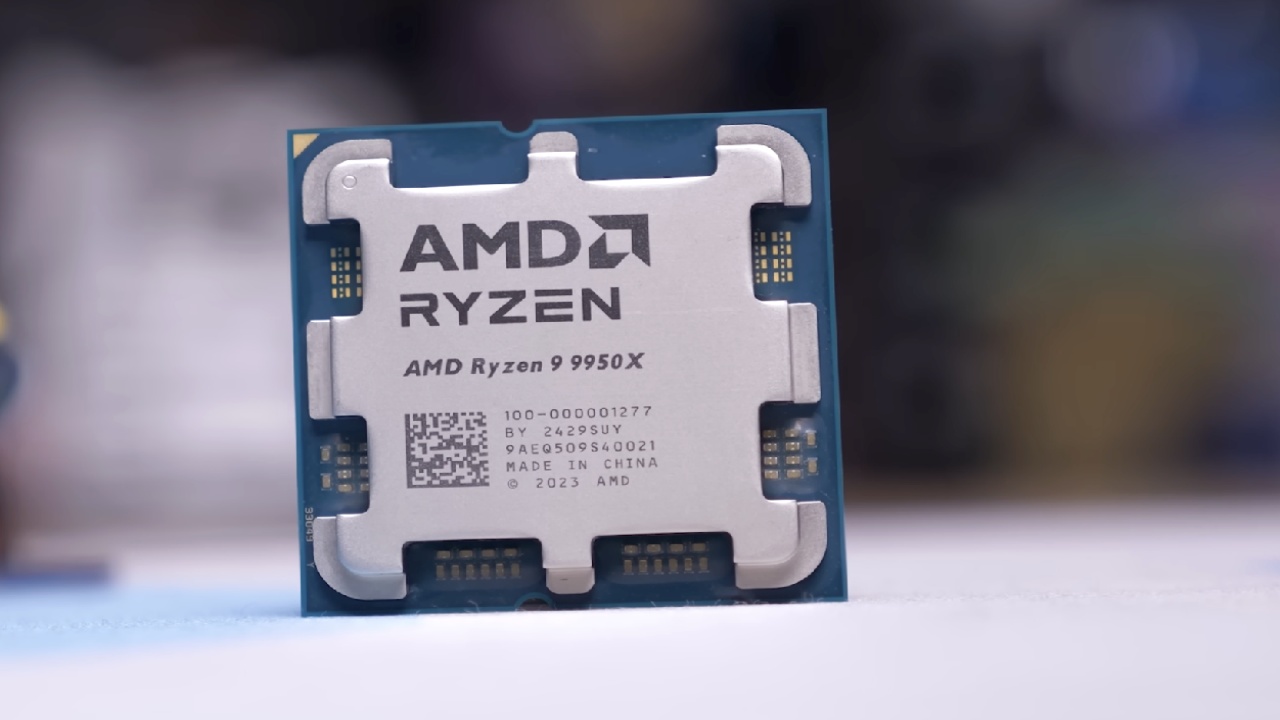
On the AMD side, the Zen 6X3D design is rumored to feature 96MB of 3D stacked cache in addition to 48MB of on-die L3, applied to a 12-core chiplet. This gives 12 high-performance cores with massive cache and potentially very high frequencies. For pure gaming, AMD likely retains an edge due to its mature chiplet architecture and latency-optimized design.
If AMD implements a refined silicon interposer similar to the one rumored for Strix Halo, then Zen 6X3D could easily push 20–25% above the 9800X3D. That would still leave it around 10–20% faster than Intel's initial BLLC models, assuming Intel struggles with inter-tile latency and off-die memory controllers.
Interposers, Latency, and the Real Challenge
Both Intel and AMD are pursuing architectures where the memory controller sits off the compute tile. While AMD has years of chiplet experience, Intel is just beginning to adapt its designs. This shift introduces latency challenges that could hold back Intel's gaming performance. Even with QCLK memory tuning, die-to-die optimizations, and software updates, out-of-the-box performance may not match AMD's single-CCD X3D gaming efficiency.
Clock speeds also matter. AMD's Zen 6X3D will feature SMT, offering 24 threads per CCD. Intel's 8P cores on a single tile provide only 8 threads. That difference affects many gaming and hybrid workloads.
Nova Lake as a Workstation Platform
Gaming aside, Nova Lake appears more like a workstation platform disguised as a consumer CPU. The PCIe configuration alone shows this. With 36 PCIe Gen5 lanes and an additional 16 PCIe Gen4 lanes, users can run extensive NVMe storage arrays without stepping into true workstation motherboard pricing.
A system offering 16 lanes for the GPU, 20 for storage, plus extra Gen4 bandwidth for more drives, transforms Nova Lake into a dream for content creators, developers, and heavy multitaskers. For people who run out of NVMe capacity quickly, this platform solves a long-standing limitation.
With 52 cores in the top SKU and enormous cache, Nova Lake begins to look like an endgame CPU—something a user could realistically keep for 15–20 years, depending on workloads.
Future Tile-Based Cache Revolution
Mors Law Is Dead once referenced ELLC (possibly "Elevated" Last-Level Cache), a scrapped 3D-stacked cache design originally intended for Titan Lake. High Yield's breakdown of Clearwater Forest introduced a promising successor: active base tiles filled with cache built on Intel 3. These tiles could function both as a silicon interposer and a massive cache reservoir.
If Intel implements these active tiles in Titan Lake, the implications would be massive. Imagine an 18A or 2nm compute die sitting atop a large Intel 3 cache tile holding 100MB or more. That frees up the die area for more cores or larger cores. Future CPUs could easily scale to 70–80 cores for consumer platforms.
The idea of an interposer acting not only as an interconnect but also as a high-bandwidth cache buffer is thrilling and could fundamentally shift CPU design for the next decade.
CPU Market Is Heating Up
Intel is finally fighting back with bold designs. At the same time, AMD continues to refine the efficiency of its interposers and chiplets for unbeatable gaming performance. And both companies are preparing for major architectural leaps rather than incremental refreshes.
With memory prices rising, DDR5 cost instability, and advanced nodes likely facing delays, now isn't the time to upgrade CPUs unless necessary. Investing in a GPU is the better move for most people today. But once Nova Lake and Zen 6 arrive—with huge IPC gains, larger caches, and unprecedented core counts—you'll see upgrades worth waiting for.
As cache structures scale upward, interconnects become faster, and silicon interposers take on more roles, the future of CPUs looks more exciting than ever. The race between Intel and AMD is not slowing down, and the next generation of high-end platforms may redefine what a long-term computing investment looks like.
Also, check our other AMD articles:
- AMD Ryzen 9 9950X3D Review: Setting The Standard For 2025 Gaming CPU
- AMD Ryzen 7 9800X3D Review: 3D V-Cache Goes God Mode with Stunning Gaming Performance
- AMD RX 9070 Performance Review: Thermals, Clocks, and Real-World FPS
- AMD Ryzen 5 7600 Review: Best Budget Gaming CPU of 2025?
- AMD Radeon RX 7800 XT Review: RDNA 3 Power For Midrange Gaming
- Sapphire NITRO+ AMD Radeon RX 9070 XT Review: The Ultimate 4K Gaming GPU
- AMD Ryzen 7 7800X3D: Delivers Gaming Performance Far Beyond Expectations
- AMD Ryzen 9 7900X Review: Powering the AM5 Era with DDR5 & PCIe 5.0
- ASRock Radeon RX 7800 XT Challenger OC Review: Best Price-to-Performance GPU of 2025
- Intel Core i9‑14900K vs. AMD Ryzen 7 7800X3D: Power Profiles & Gaming Benchmarks
Senior Editor, NoobFeed
Gaming Hardware Updates
No Data.