

NVIDIA RTX Spark Explained: Specs, Release Timing, and What It Means for Windows PCs
Independent benchmarks remain absent, but Nvidia's RTX Spark platform signals a serious shift in how Windows PCs get built.
Hardware by Okazaki on Jul 06, 2026
For decades, one company built graphics cards while two others fought over CPUs. That division shaped nearly every conversation about PC hardware. NVIDIA's entry into the CPU space with a full Windows platform changes that structure, raising real questions about what the next generation of laptops and desktops will look like.
NVIDIA has officially announced RTX Spark Windows PCs. This is not just another GeForce laptop chip. It is a full NVIDIA PC platform built with a 20-core Grace CPU, a Blackwell RTX GPU, 6144 CUDA cores, up to 128GB of unified memory, and up to 1 petaflop of AI performance.
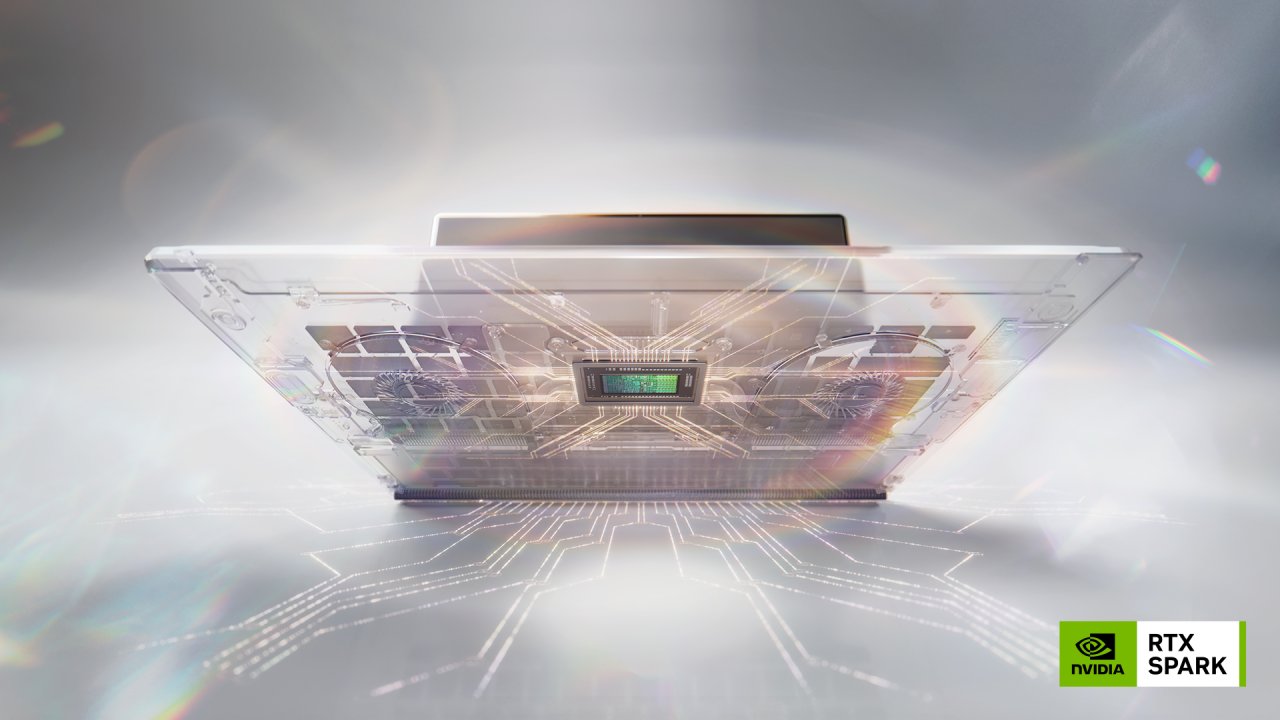
NVIDIA's PC Platform Focusing on CPU, GPU, and AI
For decades, NVIDIA was known as the GPU company, while Intel and AMD competed over CPUs. Apple took a different route, building its own complete system around M-series chips. Now, NVIDIA is bringing that same approach to Windows, combining CPU, GPU, AI, memory, software, and RTX features into a single platform.
That represents a major shift in how a PC can be built. RTX Spark is aimed at creators, AI developers, gamers, and personal AI agents, positioning it as a platform for serving multiple user types rather than a single narrow segment. NVIDIA says systems will arrive this fall from manufacturers including Dell, HP, Lenovo, Microsoft Surface, Asus, and MSI.
Real-world performance and compatibility remain unproven ahead of launch.
Here is the catch worth keeping in mind. Independent benchmarks do not yet exist, and the actual pricing has not been confirmed. Because RTX Spark runs on Windows on ARM, compatibility becomes a central concern.
Games, anti-cheat systems, creator applications, drivers, plugins, and older software all need to function properly for the platform to succeed with everyday users.
This is not an automatic win, but it strategically poses a real threat to Intel and AMD. If NVIDIA can deliver strong AI performance, solid gaming performance, long battery life, and premium RTX software within a single chip, the laptop market could shift quickly. Nothing here is proven yet, but RTX Spark stands as Nvidia's most serious move into the PC processor market to date.
The main idea behind RTX Spark is that NVIDIA is no longer happy just providing graphics hardware to systems built by others. It wants full control over the CPU, GPU, memory, and software stack, just as Apple does with its own chips.
That bet might pay off, but we don't yet know for sure how well RTX Spark performs on real workloads, how stable the battery life is, or how well Windows software runs on ARM-based hardware.
Editor, NoobFeed
Latest Articles
No Data.