

Sony Faces Massive Backlash Over Ending Physical PS Games
The backlash over killing physical disc production for new PlayStation titles has spread far beyond gamers, and now lawmakers are weighing in, too.
News by Adsey on Jul 04, 2026
You're watching something happen right now that feels like a genuine all-time low for Sony, and it all comes down to one decision: ending physical disc production for new PlayStation games starting in January 2028. The backlash has been massive, and it keeps growing by the day.
This isn't confined to the usual gaming circles anymore, either; people well outside that world are talking about it, and some of the posts covering this have racked up millions and millions of impressions. Government officials and various representatives have even started commenting on the situation.
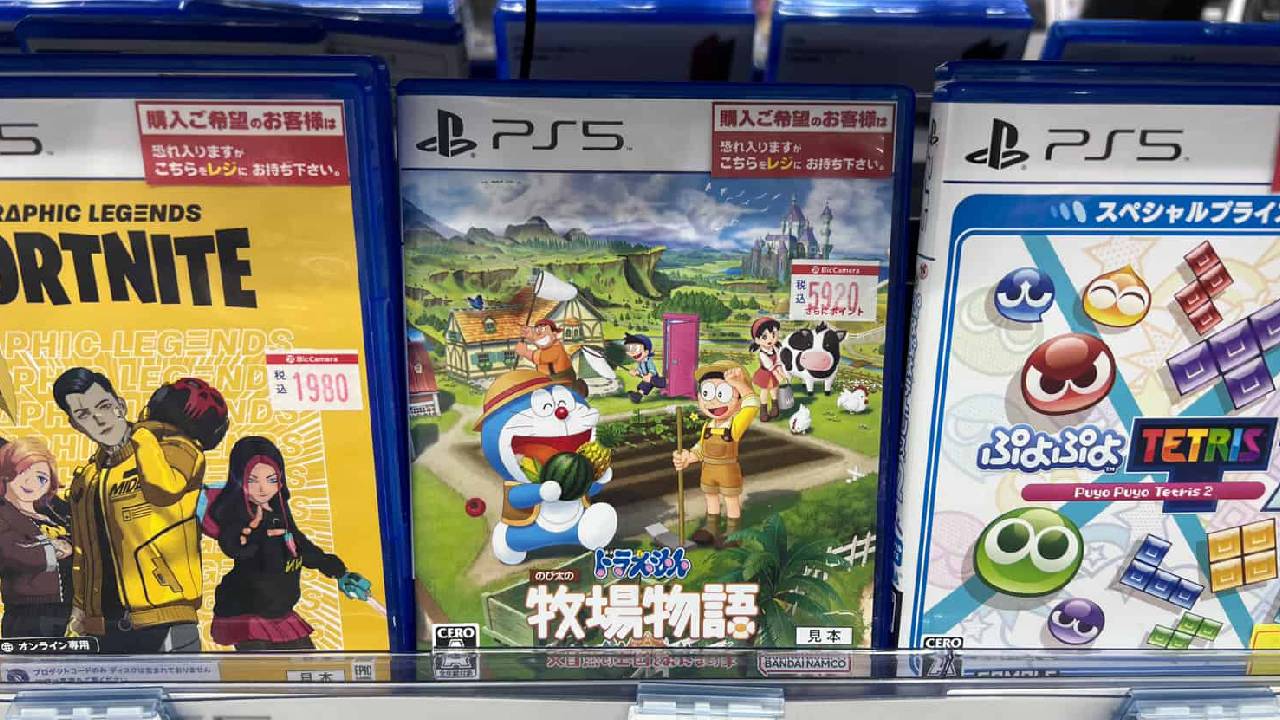
This whole situation has people speculating about whether Sony might reverse course entirely.
You've seen plenty of rocky moments in PlayStation's history before, but nothing that compares to the scale of this one. It all traces back to a blog post Sony published confirming that physical disc production for new titles on PlayStation hardware will wind down.
At the time this was written, that post had racked up around 960 likes and over 7,800 comments, with fresh replies rolling in by the hour. Scroll through them, and you won't find much positivity. Phrases like "we literally own nothing" keep popping up, and a lot of the frustration centers on the idea of losing physical discs for the PS5, even though most people already assume the PlayStation 6 was going to be a digital-first machine anyway.
One big unanswered question is whether the PS6 will even include a disc drive at all. If it doesn't, and there's no clear way to use your existing library of PS4 and PS5 titles that you've built up over the past decade or so, you might think twice about following Sony into its next generation.
You could easily decide to just stick with your PS5 instead. And with rumors pointing to a system that could cost somewhere around $1,000, getting people to make that jump is going to be an uphill battle for Sony, regardless of how this plays out.
Sony has already begun repurposing its main Blu-ray disc manufacturing and distribution facility.
This is according to a report, citing the Austrian public broadcaster, ORF Salzburg. If you've ever flipped over a PS5 disc and checked the fine print around the edge, there's a good chance it says the disc was made in Austria; that's the case for the overwhelming majority of them.
Every once in a while, you might spot one made in the U.S., though that's become rarer, especially for anything released in the last four years. Japan shows up occasionally, too; a physical copy of NINJA GAIDEN 2 Black, for example, lists Japan as its origin.

Still, Austria is where most of this manufacturing has been happening, and that's exactly the facility now being converted. Roughly 300 employees at that plant are reportedly being retrained to work on optical microlenses instead, and some people have connected this shift to AI development, wondering aloud what else these companies might be pulling resources toward.
Sony appears to have anticipated backlash over this decision, though probably not to the degree it's actually received. The company hasn't posted anything from its main account since the original announcement about ending physical disc production went live.
This mirrors how Sony handled the Bluepoint situation previously.
Go quiet, let the news cycle move on, and hope people forget about it in a few days. That approach tends to work because news travels fast and gets buried under whatever comes next. This time feels different, though, given just how far this story has traveled.
The original tweet linking to that blog post has pulled in around 115 million views, and it has noticeably more comments than likes, which tells you people are showing up specifically to voice their frustration rather than just scrolling past.
Adding to the fire, media coverage surrounding the announcement has repeatedly pointed back to Sony's infamous 2013 PS4 Used Game Instructional video that Sony originally put out as a pointed jab at Microsoft, back when Microsoft was trying to restrict used game sales.
Sony already deals with ongoing scrutiny and lawsuits questioning whether the PlayStation Store operates as a monopoly, given how closed off the ecosystem is and how much control Sony holds over pricing within it. Physical discs have historically given Sony something to point to as proof that customers still have choices outside that closed digital storefront.
Cutting physical disc production removes one of the clearest counterarguments to that monopoly criticism.
It's not just an issue for people who buy discs; even fully digital-only players benefit from physical media existing in the background, since it keeps prices honest and gives you options like borrowing a friend's copy or grabbing a cheap used game instead of paying $60 or $70 through the PlayStation Store.
Check the prices on some of the earliest PS5 launch titles on the digital store right now, and you might be surprised at how little they've actually dropped. All of this matters even more when you consider the timing relative to the PlayStation 6.

Sony really needed public sentiment to be strong heading into its next console reveal, and instead, it's arguably at its lowest point. This isn't the first time overconfidence has bitten Sony, either. Something similar happened during the transition from PS2 to PS3. Back then, the PS3 itself looked genuinely impressive on stage: Blu-ray support, backward compatibility with PS1 and PS2 titles, built-in Wi-Fi, HDMI output, a hard drive, plenty of ports.
Then Sony revealed the price: $600. That single number undercut everything that came before it, especially once executives suggested people just "get a second job" to afford one. What makes the current situation potentially worse is that Sony hasn't even revealed the PlayStation 6 yet, and it's already stacked up several self-inflicted setbacks before the console has been shown once.
People are already assuming the PS6 will be an all-digital system.
Ending physical disc production does nothing to benefit consumers in any meaningful way. Physical media has been a consistent thread running through every PlayStation generation , CDs, DVDs, standard Blu-ray, dual-layer, triple-layer , with Sony pushing that format forward each time.
That streak effectively ends at the start of 2028. Combine that with a rumored $1,000 price tag, and you've got a recipe for a lot of hesitation right out of the gate for the PS6. Convincing people to leave their PS5 behind was already going to be a tough sell, and none of this is making that job any easier.
There's still a chance Sony could reverse this decision. It's technically possible, though it would mean going back to that manufacturing plant and reorganizing everything all over again. Realistically, that kind of shift would likely push the PlayStation 6 release timeline back, too, possibly all the way to holiday 2028.
For some people, a later release might not be a dealbreaker. For Sony, though, that delay could carry real consequences, especially with titles like MARVEL Tōkon: Fighting Souls and the upcoming Wolverine game still needing marketing pushes on social platforms Sony has currently gone silent on.
.jpg)
It raises the question of whether Sony leans into overconfidence again and pushes forward with its current plan regardless of the reaction.
Similar to what unfolded with Microsoft's XBOX One launch. Whether this ends up being Sony's version of that moment remains to be seen, especially with the PS6 itself still unrevealed, but the early signs are pointing in that direction.
Looking back at Sony's rockiest PR moments, the PS3's $600 reveal, the AT&T partnership announcement that got booed on stage, the jump from $60 to $70 games, the cross-generation confusion around PS5 and PS4 titles marketed as "next-gen" experiences, this latest fallout over cutting physical disc production stands out as the most damaging by a wide margin.
It's a rare situation where a single decision has managed to unite frustrated gamers, mainstream commentators, and government representatives all at once, and how Sony chooses to respond once it returns to social media will likely shape how this entire chapter is remembered heading into the PlayStation 6 era.
Editor, NoobFeed
Related News
No Data.