
Sony Brings QSSR AI Upscaling to Base PS5 With Wolverine and Ghost of Yōtei
Sony's new QSSR technology brings AI-assisted image reconstruction to the standard PS5, improving image detail and stability while balancing the additional performance cost.
News by Rahe Numa on Oct 02, 2026
Sony has launched Quick Spectral Super Resolution (QSSR), an AI-powered upscaling technology made for the standard PlayStation 5. QSSR builds on PlayStation Spectral Super Resolution (PSSR), used on the PS5 Pro, and comes from Project Amethyst, a joint effort between Sony and AMD to advance AI graphics.
While PSSR was made for the more powerful PS5 Pro, QSSR is built to run well on the original PS5. Sony says QSSR uses a simpler neural network and a carefully tuned setup to get the best performance from the standard console's hardware.
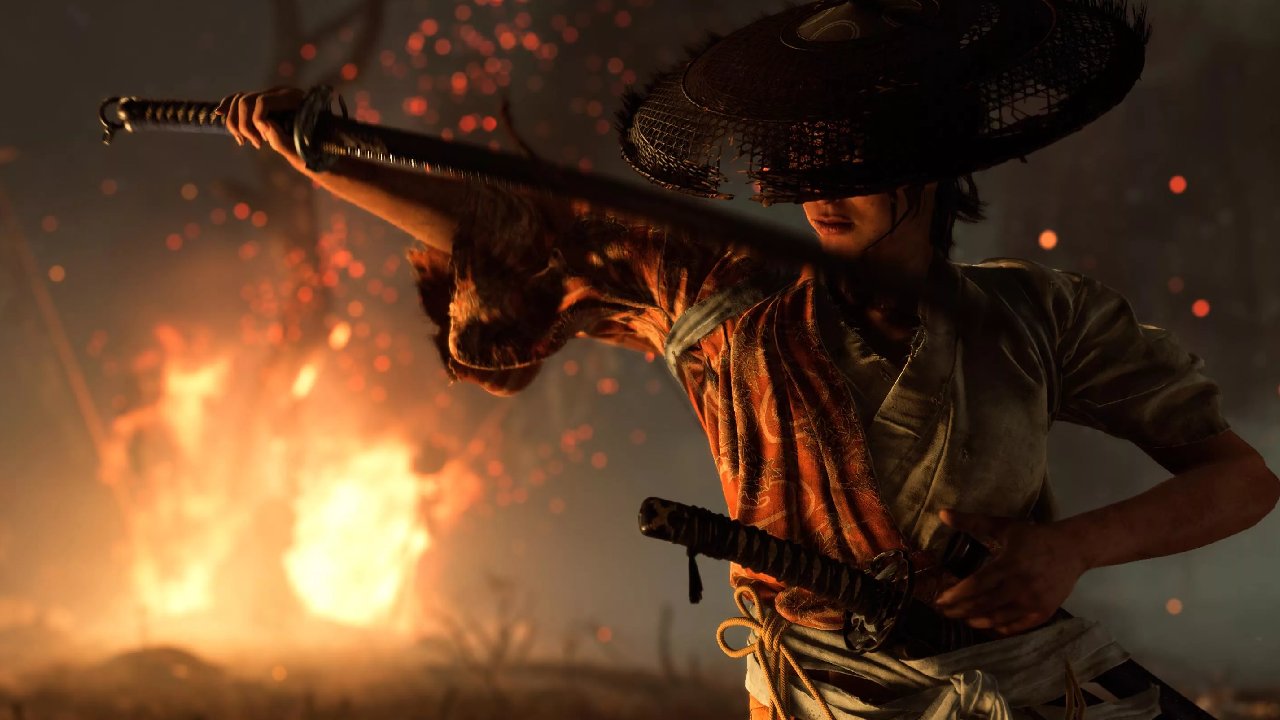
The announcement is significant because it applies to the standard PS5.
This is important. After all, the regular PS5 did not have Sony’s dedicated PSSR upscaling before. Rather than moving PSSR to older hardware, Sony made a lighter version that offers similar benefits while using fewer resources.
Sony has already used QSSR in two of its own games. Marvel’s Wolverine and Ghost of Yōtei now have patches that add QSSR as a graphics option for the standard PS5. With QSSR, developers have a new way to balance resolution and image quality without putting extra strain on the console.
Games can render at a lower resolution and then use QSSR to create a sharper final image. This is particularly useful for performance-focused modes targeting 60 FPS. This is especially helpful for modes that aim for 60 FPS.
Instead of using all GPU power to render at a higher resolution, developers can allocate some of it to AI-powered image reconstruction. An image looks sharper. Sony describes how imps' does more than make images look sharper. Sony says it improves both detail and stability, so images stay consistent even when objects move on screen, such as fences and other thin geometry.
Traditional upscaling techniques can produce shimmering or unstable pixels when these objects move or when the camera changes position.
QSSR is designed to reduce those problems while recovering additional detail from a lower-resolution image. Early comparisons have shown particularly visible improvements in Marvel’s Early tests show clear improvements in Marvel’s Wolverine, with better fine details and more stable images thanks to QSSR.

Ghost of Yōtei also looks better, but since its image quality was already high, the changes are sometimes less noticeable. Digital Foundry testing found that QSSR can add around 1.5 to 1.8 milliseconds of GPU processing time when reconstructing a 1440p output. Without a frame-rate limit, that can translate into roughly an 8–10 FPS performance hit.
However, developers don't have to accept that performance loss. They don't have to accept it. They can lower the game’s internal resolution a bit to offset the extra processing QSSR needs. This way, they trade some raw resolution for a cleaner final image. Processing requirements increase considerably.
Digital Foundry’s testing found that reconstructing a native 4K output can require substantially more frame time, making 1440p a more practical balance between image quality and performance on the standard PS5. In Ghost of Yōtei, QSSR was also found to have a Performa In Ghost of Yōtei, QSSR had a similar performance cost to FSR3 but gave better image stability in tests.
This gives developers another way to maintain stable performance without the visual artifacts that come with some older upscaling methods.
The most interesting aspect of QSSR is how Sony plans for developers to use it. QSSR is meant to be a performance-focused upgrade to PSSR, not a completely new way to rebuild images. For developers, games that already use PSSR on PS5 Pro can potentially be adapted to use the new technology on the standard PS5 with relatively little additional work.
That could make QSSR particularly useful for existing games. This could make QSSR very helpful for current games. Developers don't have to rebuild their graphics systems from scratch; they can add QSSR as another option in their graphics settings—quality without requiring users to upgrade to a PS5 Pro.
.jpg)
QSSR does not replace PSSR on the PS5 Pro, and Sony still sees PSSR as its top solution. QSSR is designed for the standard and includes its own AI upscaling tailored to its hardware. It offers temporal stability while still allowing developers to target performance-oriented modes. The trade-off is additional processing time, meaning studios must carefully balance internal resolution, output resolution, and frame rate.
For existing PS5 owners, however, the biggest development is tabor current PS5 owners, the main news is that AI-powered image reconstruction is now available beyond just the Pro model. With Marvel’s Wolverine and Ghost of Yōtei already using QSSR, this technology could play a major role in how future PS5 games handle graphics and performance.
Editor, NoobFeed
Related News
No Data.