
Future GDDR7 GPUs Could Reach 24GB VRAM on 128-Bit Bus
GPU Memory Configurations Show Why VRAM Capacity Alone Cannot Define Graphics Card Gaming Performance.
Hardware by Shinji Okazaki on Sep 27, 2026
Graphics card memory is becoming a bigger part of the GPU market, with current cards showing how different memory configurations can affect performance and how future GDDR7 technology could allow higher capacities on narrower memory buses.
At the same time, memory capacity alone doesn't determine whether a graphics card suits gaming, upgrades, or local AI workloads. The memory bus, bandwidth, cache, GPU configuration, and overall design also matter. Radeon RX 9050 shows exactly how misleading one GPU name can be.
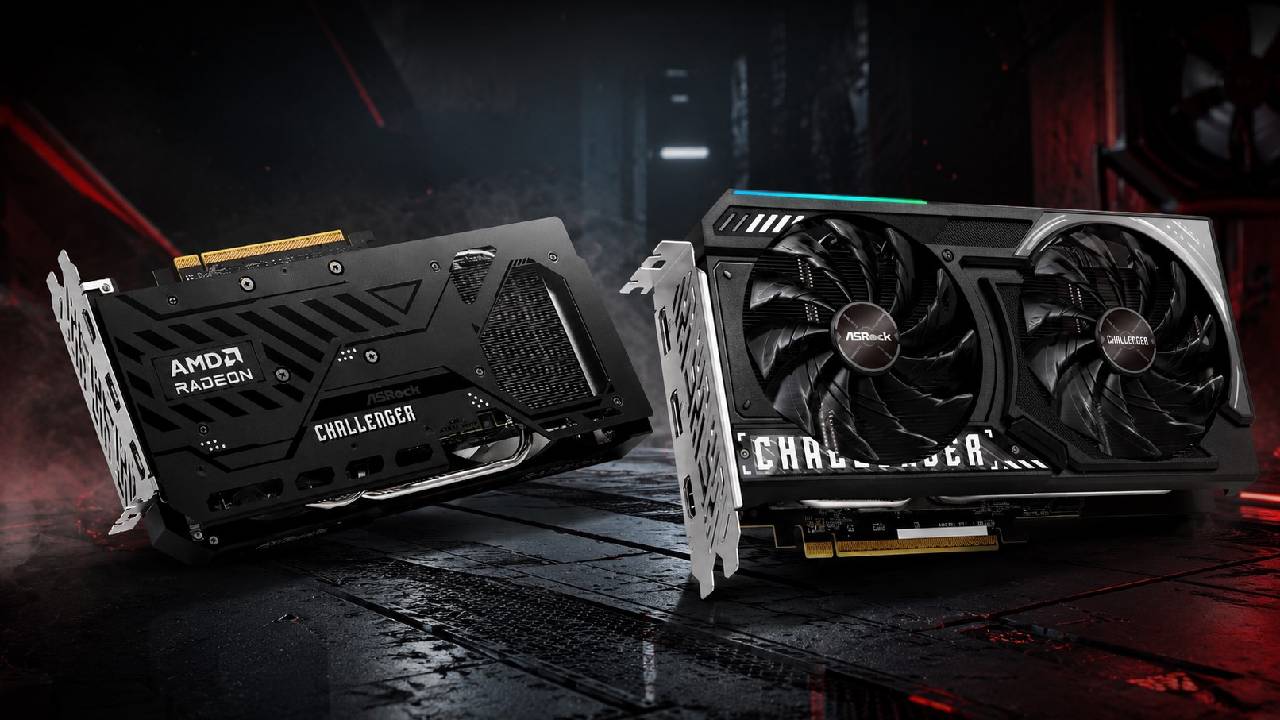
Different Memory Configurations
AMD has an 8GB RX 9050 and a 4GB version used in OEM systems. Both have 1,024 stream processors, boost up to 2.6GHz, and carry a 92W typical board power rating, but the memory systems are completely different. AMD's official specifications show the 8GB model with a 120-bit interface, 288GB/s bandwidth, and 32MB of Infinity Cache.
The 4GB card drops to 64-bit, 144GB/s, and 16MB of Cache. Now, look at the gaming result. Hardware Unboxed tested both across 18 games at 1080p low. The 4GB card averaged 78fps. The 8GB version averaged 107fps. That makes the 8GB model roughly 37% faster. Its 1% lows were also 78fps versus 55fps.
Even at lower settings, the bigger card still kept a large lead. But that doesn't mean doubling VRAM automatically gives you 37% more performance. The 8GB card also has twice the bus width, twice the bandwidth, and twice the Infinity Cache. So, the real lesson is simpler. Don't buy the GPU name alone.
Two cards can say RX 9050 and still perform very differently. Because the 4GB version targets OEM systems, this matters especially when you are shopping for a cheap pre-built. Check the exact VRAM capacity. Check the memory bus. Check independent benchmarks. The model number is not enough.
Future GDDR7 can make 16GB, 24GB, and 32GB configurations easier.
NVIDIA says the platform supports CUDA, RTX features, and local AI agents. MSI is clearly targeting developers and creators as much as normal PC users. So, look at where the market stands. At the entry level, buyers still need to check whether a GPU has only 4 GB of VRAM. At the other end, compact AI PCs are moving toward 128GB of unified memory.
That changes the upgrade question. For 1080p gaming, check VRAM and memory bandwidth before comparing FPS. For 1440p or 4K, memory matters even more once higher-resolution textures and ray tracing come into play. And for local AI, memory capacity can decide whether a model fits at all.
The future is moving toward more GPU memory, but capacity alone is not enough. A balanced 12GB or 16GB card can be a smarter buy than a poorly designed card with a bigger number on the box. RX 9050 is the warning: same GPU name, different memory system, very different performance.
Editor, NoobFeed
Gaming Hardware Updates
No Data.