
Becastled Review
PC
Early Access
Build, defend, and conquer, one cozy castle at a time.
Reviewed by Mezbah Turzo on Oct 16, 2025
City-building and strategy games have come a long way since their early days. They are now one of the most popular and adaptable types of games. It all began with games like SimCity and Age of Empires, but now there are many subgenres, such as grand strategy, survival builders, automation simulations, and cozy management games.
Players today can terraform planets in Surviving Mars, weather moral crises in Frostpunk, or simply build idyllic medieval towns in Foundation. It's a genre defined by balance, between creativity and control, stress and satisfaction. Titles like Stronghold, They Are Billions, and Kingdom Two Crowns mix base-building, resource management, and nightly threats to create tension. Becastled, developed by Mana Potion Studios and published by Pingle Studio, joins this family.
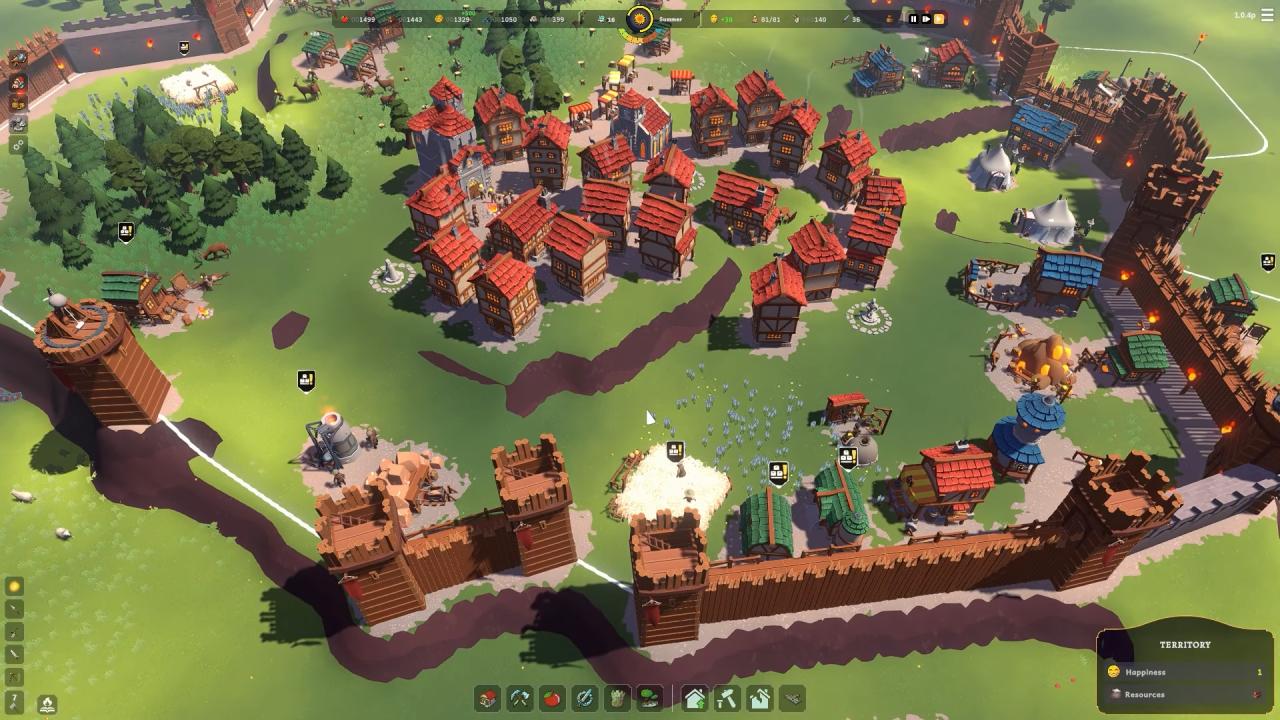
It promises a cozy-but-challenging castle-building experience where you build and expand by day, then defend against waves of "Moon Beasts" by night. After several years in Early Access, it's launching fully on multiple platforms on October 23, 2025.
In Becastled, you're the Lord of the Sun Kingdom, trying to transform a modest settlement into a strong fortress before darkness descends each night. Daylight is for gathering resources —wood, stone, iron, and Sunstone —and for building farms, markets, roads, defensive walls, gates, and towers.
You also have to keep the people happy with taverns, decorations, and amenities, because morale matters: satisfied subjects work harder.
When the sun sets, the tides change: monsters attack, sometimes with siege weapons, dragons, or more subtle threats. Your defenses, army composition, layout, and wall placements are put to the test.
The heart of Becastled lies in its day-to-day rhythm: expanding territories, gathering resources, and preparing for the nightly onslaught. The routine rhythm of Becastled is what makes it so great: developing territory, gathering resources, and getting ready for the midnight attack. You start each game with a little piece of land and a few excited workers. Your first job is to start claiming property around you.
You may find resources on every new tile you acquire, including fertile land for farming, deep forests for cutting down trees, or a profitable quarry for iron and stone. It's not only about how you appear; you have to develop. It's not only about vanity; it's a must. Without a steady supply of food and materials, your growing settlement will grind to a halt before your castle ever rises above its foundations.
Your early priorities are simple: build a sawmill, hire workers, and start cutting wood. Each sawmill has a harvesting radius, so placement matters; build over the trees, and you'll cut them down before they've even had a chance to contribute.
Every building in Becastled comes with production and upkeep costs, demanding a careful balance between expansion and sustainability. Houses increase your population cap, taverns keep your people happy (because even digital villagers deserve a pint), and storage buildings prevent your hard-earned materials from going to waste.
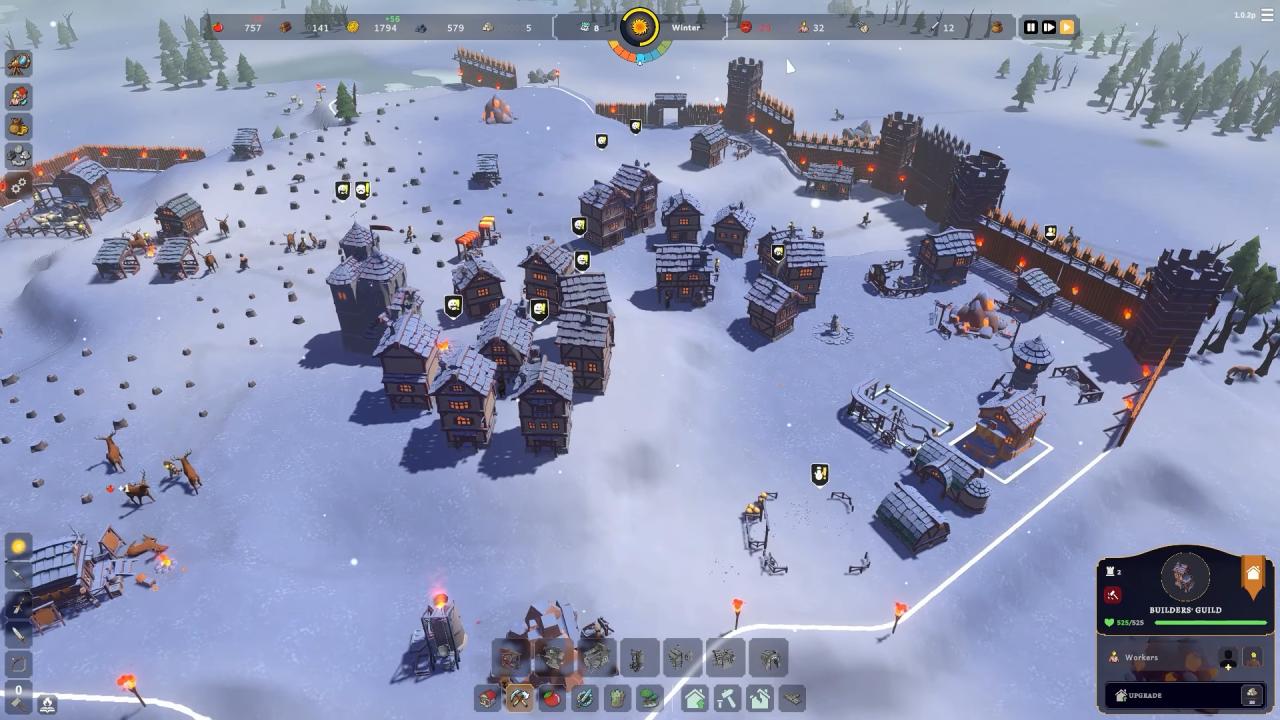
As your settlement grows, stone becomes your next big milestone. Setting up a quarry early is important since you need it to upgrade buildings and unlock advanced constructions. Upgrading is quite easy; just one click, and your settlement changes right in front of your eyes, making progress feel real and gratifying. Your little group of tents quickly starts to seem like a true fortress, and that's when Becastled truly starts to shine.
It's not all sunshine and land for farming, of course. The game's day-night cycle keeps players from becoming too comfortable for long. When night falls, waves of foes attack from certain directions. If you hover over the lunar clock at the top of the screen, you'll see where they are coming from. These nighttime attacks are what make Becastled so tense.
Each day becomes a race against time as you scramble to build defenses, position troops, and plug holes in your wall before the moon rises again. The enemies emerge from crystal-infested zones, so knowing where they'll strike gives you just enough information to prepare… or panic efficiently.
Combat follows familiar RTS conventions. You can select units the traditional way or use the UI icons in the bottom-left corner for quicker control. Better yet, you may just bind unit groups to numbers for even faster response times. Those moon-monsters won't know what hit them.
Sunstone functions as your main currency—essentially gold—and is required to recruit and maintain troops. Keeping your army fed and funded becomes its own balancing act, as every soldier you train consumes precious food and Sunstone over time. Mines can help offset the cost, but if you overextend your military early, your economy will feel the strain.
As you progress, your objectives expand beyond simple defense. You'll need to seek out and destroy enemy lunar towers scattered across the map; fortified structures that spawn increasingly dangerous foes.
Taking them down isn't easy; each tower defends itself with mini-bosses and enemy spawns, forcing you to build and field substantial armies. The destruction of all towers triggers the final "boss wave," an all-or-nothing siege that serves as the game's dramatic crescendo.
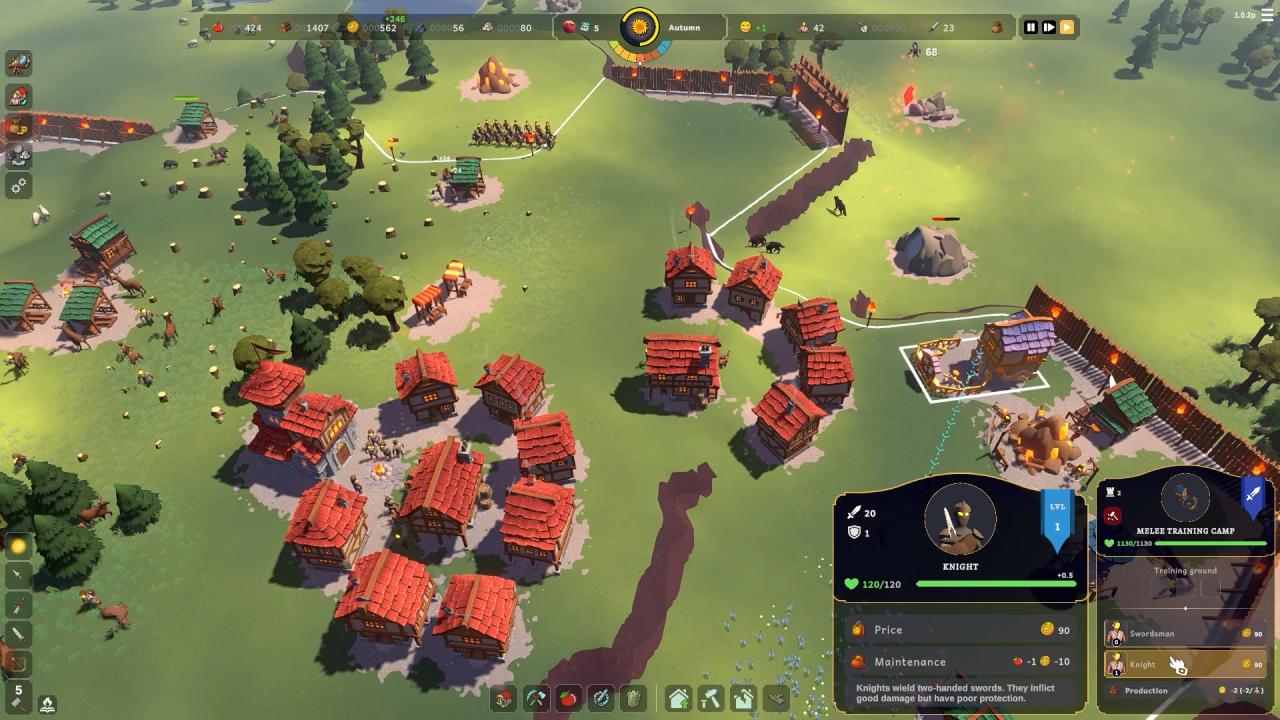
Thankfully, you have more than walls and bravery on your side. Advanced buildings, such as the siege workshop, let you produce heavy weapons like trebuchets and ballistae. However, these require workers to build and ammunition to function, adding another layer to your logistics.
The tech tree adds depth to this progression, allowing you to unlock new structures like churches, markets, and trading posts. Each has its own pros and cons: churches give you more power but make you less happy, while markets let you swap resources for Sunstone and vice versa.
As your town expands, it is harder and harder to keep track of your resources. It's not enough to merely prepare a lot of food; you also need to do it properly. For example, a wheat crop yields both grain and a secondary resource that can be turned into flour and baked into bread, thereby increasing food production.
These supply chains make the mid-to-late game surprisingly engaging, as you pivot from basic survival to economic optimization. During winter, coal becomes essential for heating homes, leading you back to the tech tree to unlock charcoal kilns and keep your citizens from freezing.
Walls, as you might expect, are vital. They are built along territorial boundaries and may be strengthened by adding spikes or by turning them into fortifications on both sides. Putting soldiers on top of walls not only makes your defense stronger, but it also lets you feel like a real medieval king watching the action from above.
Iron, the rarest and most valuable of the main resources, opens up late-game upgrades; stronger troops, superior weapons, and advanced fortifications. The smithy lets you directly enhance units, giving your soldiers the extra edge they need against tougher night raids.
The gameplay loop of Becastled may seem simple on paper, but in reality, it requires careful strategy, timing, and adaptability.
Every day gives you fresh chances to grow and improve, and every night challenges how well you can protect what you've achieved. It's a perpetual rhythm of progress and defense, a pleasant push-and-pull that rewards being efficient, planning ahead, and putting up walls in a panic at 2 A.M.
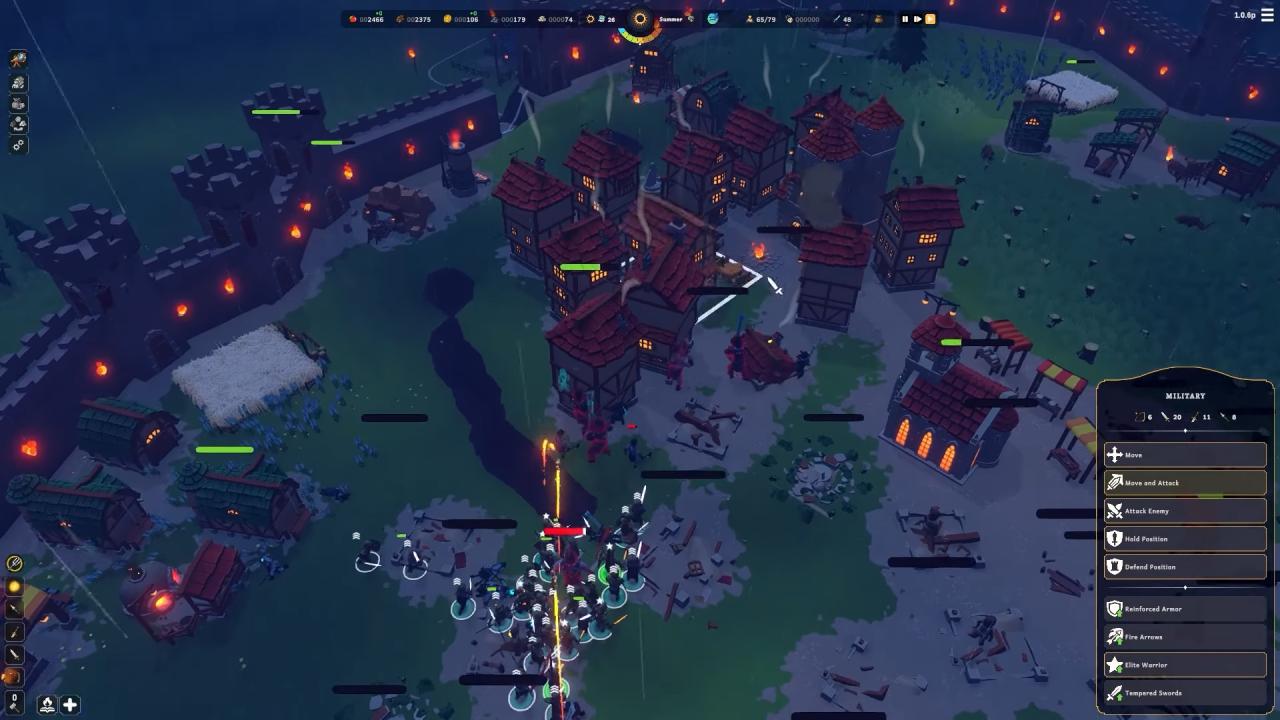
Becastled looks quite nice. It has the same comfortable, storybook feel as games like Diplomacy Is Not an Option, with brilliant colors, soft lighting, and a welcoming, artistic feel.
It's easy to enjoy seeing your small kingdom expand, from the flickering flames on the walls to the little townspeople who are busy moving between farms and workshops. The counselors wear golden masks that hide their faces, which adds a subtle artistic element that makes the place seem a bit more mysterious. It doesn't strive to be authentic; it feels handcrafted and warm.
The user interface makes that ease of use even better. It's neat, simple, and easy to use; however, some of the smaller icons might seem a little crowded at higher resolutions. Still, it's easy to use; you don't have to go through many tabs or menus to find what you need.
Becastled is much less finicky than other city-building games, since most jobs are just a click or two away. It's the type of design that respects your time and keeps your attention where it should be: on the community you're constructing and protecting.
The soundtrack, on the other hand, ties everything together beautifully. The ambient music is soothing and matches the scene. It has a medieval tone that isn't too loud. You may not remember it long after you play it, but it fits nicely with the images and is serene during the day and just tense enough at night to make you glance warily toward the horizon. The sound design does what it should: it contributes to the ambiance without being too loud.
Fans of the genre will appreciate Becastled, a pleasant, cozy castle-building strategy game. The performance is decent even in major towns, and the preview version didn't have many problems, mostly little ones that didn't get in the way of gameplay.
The game also offers a surprising amount of customization, from choosing your starting resources to selecting different map types, and even a full map editor for those who want to craft their own challenges.
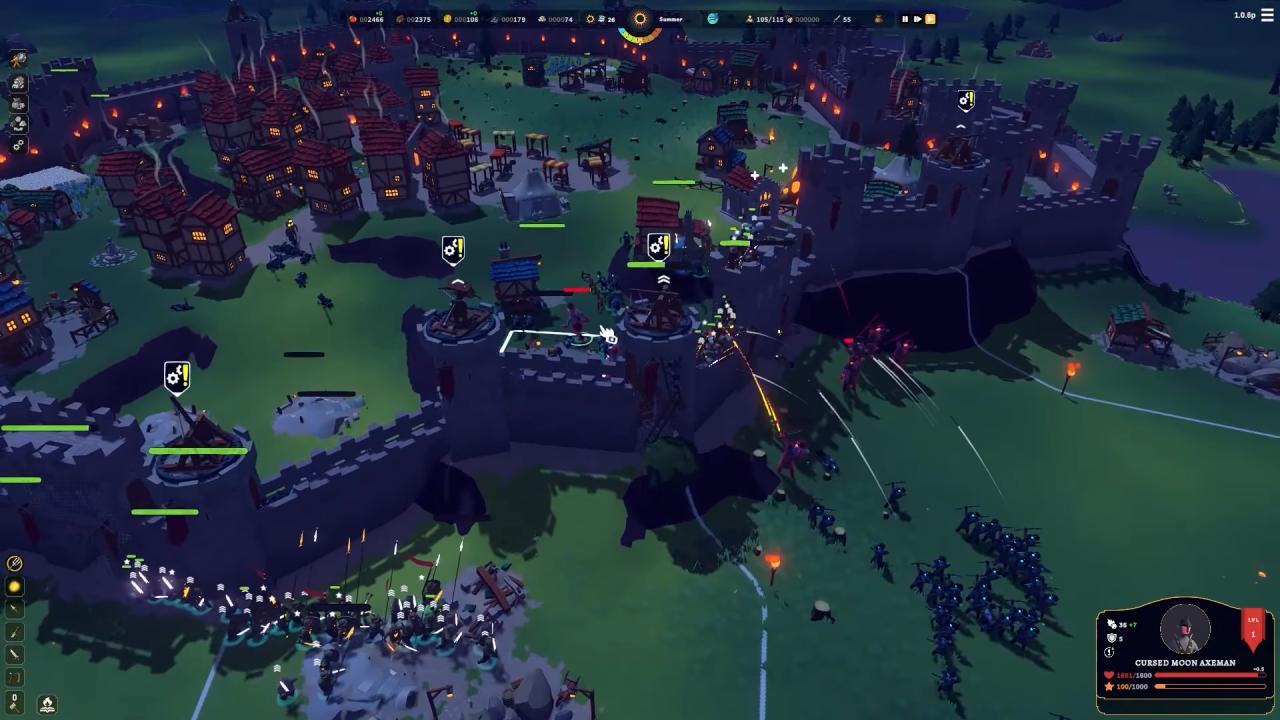
It doesn't have to be the most complicated or profound strategy game out there. Building and defending your stronghold is a lot of fun because of its cute visual design, easy-to-use interface, and engaging gameplay loop.
A slightly higher price tag might give some players pause, but for anyone looking for a relaxing yet strategic city-building experience with just enough nightly tension, Becastled is well worth the investment.
Contributor, NoobFeed
Verdict
Becastled is a fun blend of city-building and tower defense that is both charming and deep, and easy to get into. It's comfortable, well-made, and surprisingly strategic. You should certainly add it to your collection.
88
Related News
No Data.