
Crusader Kings III: All Under Heaven Review
PC
Crusader Kings III: All Under Heaven brings dynastic intrigue and empire-building to East Asia like never before.
Reviewed by Mezbah Turzo on Nov 01, 2025
The vast realm of Crusader Kings III has long been renowned for its epic dynasties, shifting alliances, and boundless intrigue throughout medieval Europe. The Grand Strategy title has been a fan favourite, and it's set to become larger.
The world becomes bigger, the mechanics get more complex, and the tales get more numerous with each expansion. However, the improvements frequently seem little. Enter All Under Heaven, the game's biggest leap yet: a paid DLC that arrives hand-in-hand with the free 1.18 "Crane" patch, which itself brings a massive map expansion.
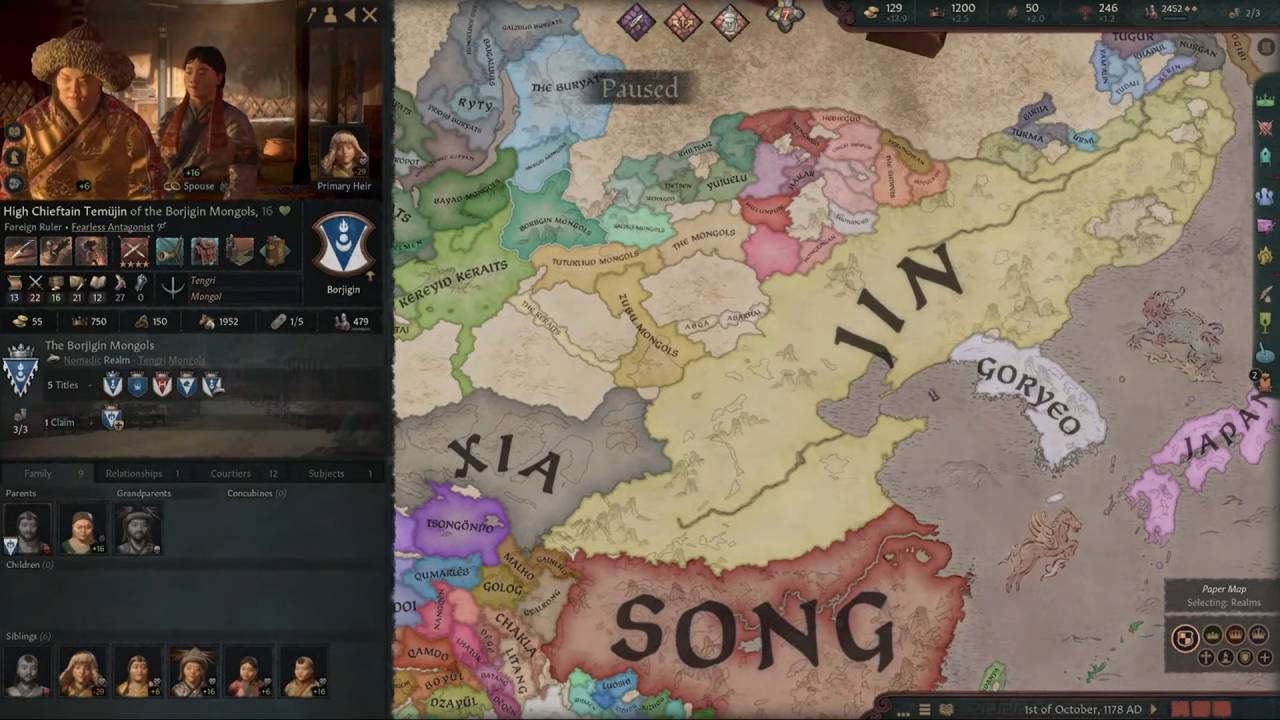
This isn't just another region added to fill gaps on the map; it's a full pivot eastward. China, Japan, and Southeast Asia enter the fold with entirely new systems for governance, culture, and religion: the Celestial Government of China, the Shōgunate of Japan, and the Mandala empires of the tropics. With its biggest expansion to date, All Under Heaven promises to rewrite the map of Crusader Kings, if it delivers.
Crusader Kings III isn't really about running kingdoms; it's about how to remain alive as the messy, deeply flawed people who do. You are not an all-knowing emperor. You are a paranoid duke, an ambitious empress, or a monk with too many secrets. It's a grand strategy game where your greatest enemy is often your own family, and the true victory is simply dying of old age instead of being stabbed at dinner.
With the 1.8 "Crane" patch, Paradox decided your personal dramas needed a bigger stage. The map now stretches deep into East and Southeast Asia, from the Tibetan Plateau to the lush river valleys of China.
Even without the paid DLC, the free update adds a ridiculous amount of new ground to scheme, marry, and die on. You can start as a humble chieftain in Yunnan or a powerful ruler near the Yangtze, and every corner of the expanded map feels alive with its own mix of faiths, cultures, and problems.
It's still very much Crusader Kings: intimate, unpredictable, and just as likely to end in disaster as in triumph, but now the stage feels larger, stranger, and more beautiful than ever.
Among other pieces of content, you also get to experience expanded feature sets from the major areas. The Celestial Government came up with the idea of the Mandate of Heaven and set up an imperial bureaucracy in China. Characters acquire Merit by taking tests, performing community service, and being loyal, which helps them secure higher positions in the large court. As the Empire goes from golden times to anarchy, you may take tests, argue with your enemies, or steal money from the treasury.
Japan gets its own twin systems, Ritsuryō, a centralized court led by regents, and Sōryō, a feudal order of military clans. Families form Blocs instead of vassal chains, with each house pursuing its own Aspirations toward refinement or domination, laying the groundwork for the rise of the shogunate.
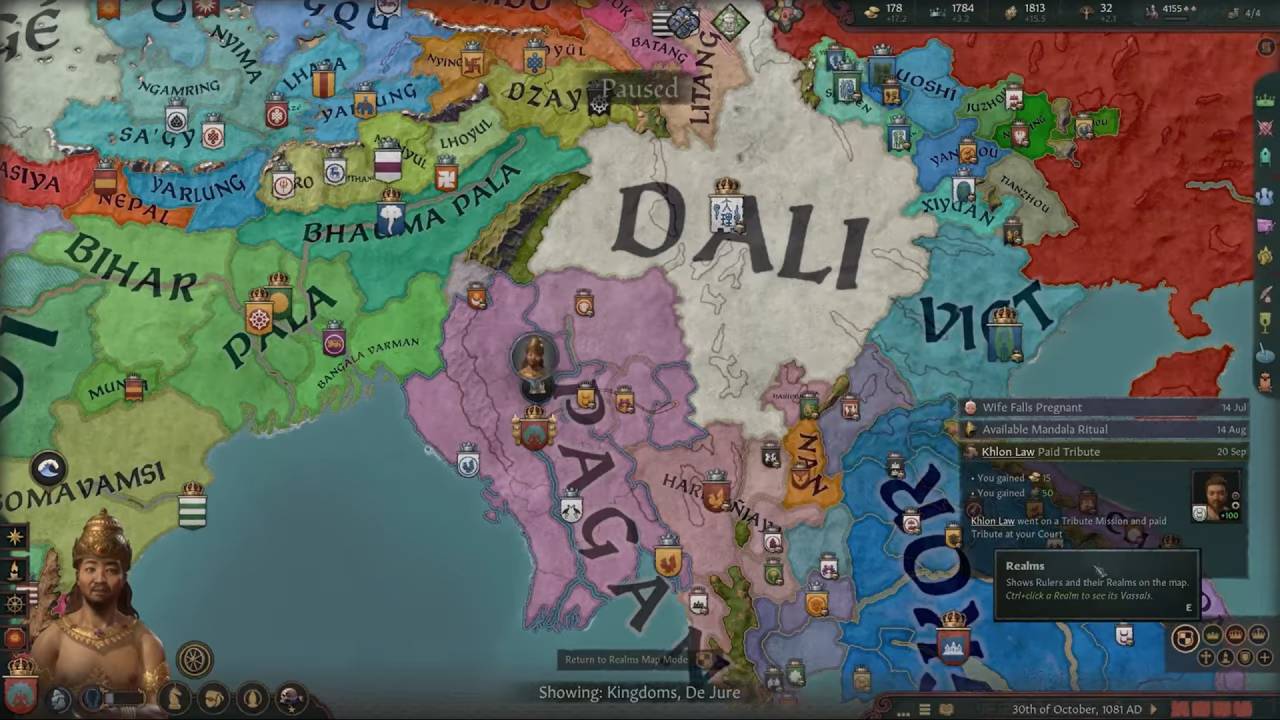
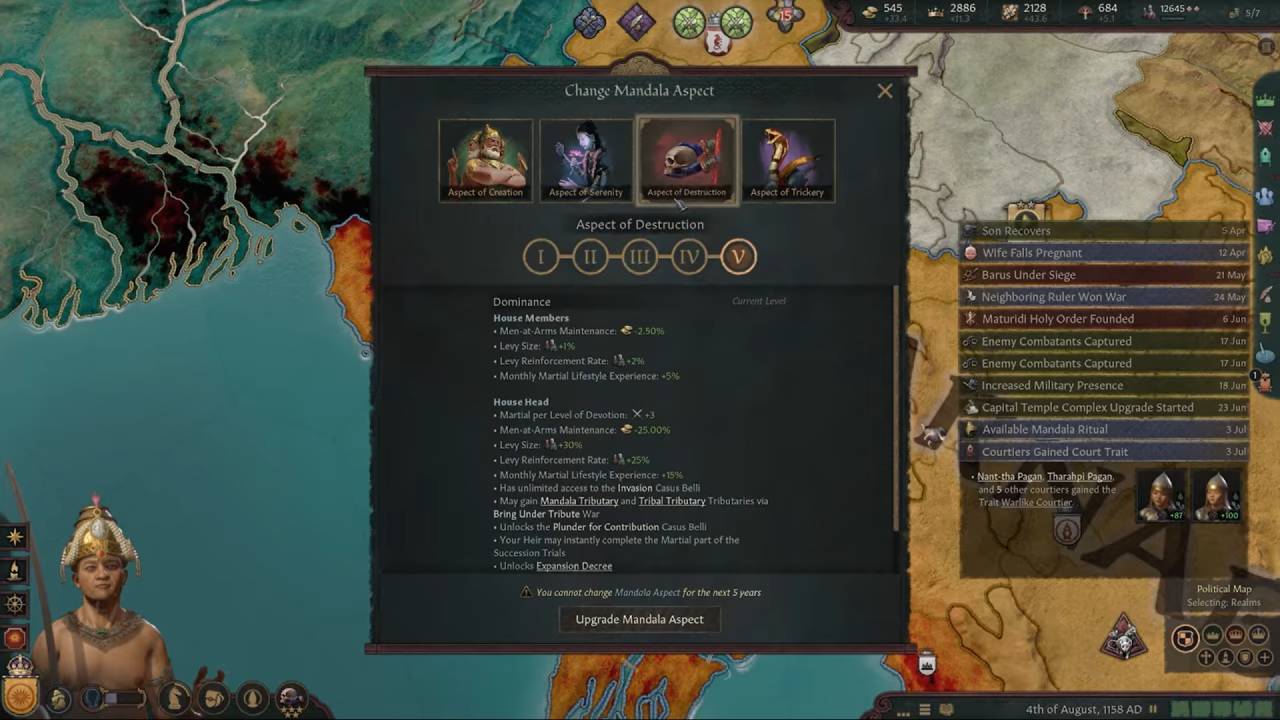
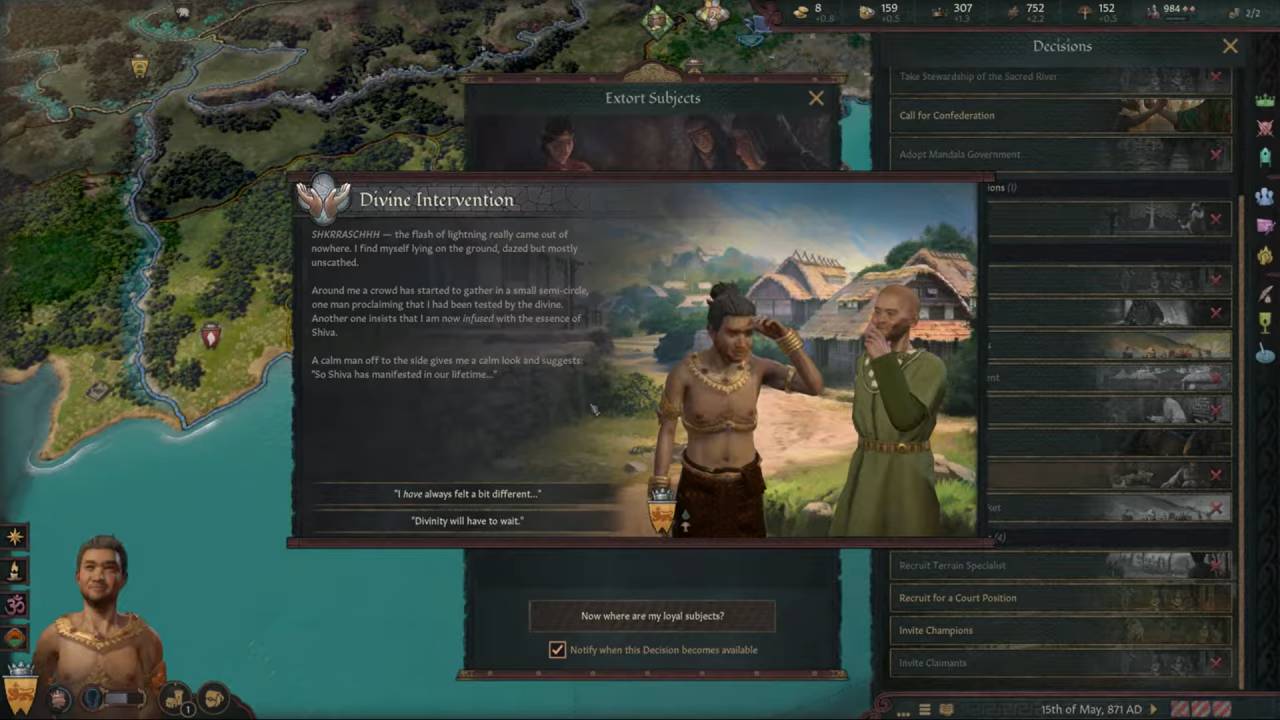
Farther south, Mandala realms in Southeast Asia center on the concept of divine kingship. Rulers are seen as living gods whose power flows from Radiance and devotion. They expand by gathering tributaries through faith or fear, and their authority waxes and wanes in proportion to their people's belief. Island polities like the Wanua thrive through bartering and seaborne trade rather than conquest.
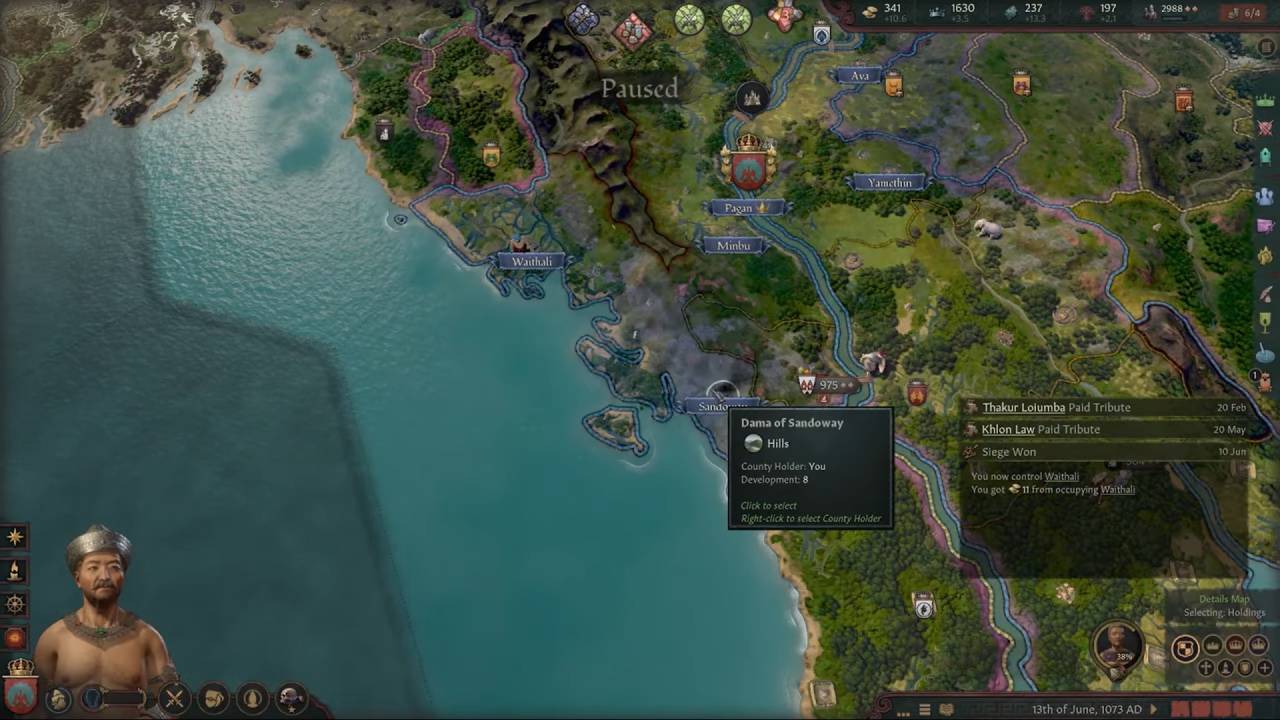
Across East Asia, Meritocratic governments bridge steppe and court, the Silk Road breathes new economic life into the map, and dozens of cultural details, from Confucian scholars to Devaraja temples and samurai armor, bring the region's politics and spirit to life.
So, how is it in practice? Pretty damn good, mostly. I signed up as a middle-class noble in southern China, hoping to go up via the Bureaucracy instead of the Military. The new Merit system makes that trip startlingly personal: You're not just a governor picking between possibilities; you're a scholar paying examiners, currying favor, and sweating through the imperial test like it's finals week at a University.
When the Emperor's mood swings or a rival outmaneuvers you, your entire career can crumble overnight. It's CK3 at its finest, personal, petty, and political.
The expanded map itself feels like the true star of this update. Even if you don't buy the DLC, patch 1.8's free expansion gives Asia room to breathe. The terrain is gorgeous, with rolling green valleys, massive rivers, and mountain chains that finally make you think twice before declaring war. Trade routes matter, cultures feel distinct, and the map just feels alive in a way the old world sometimes didn't.
That said, it's still Crusader Kings III. If you've played a dozen campaigns before, you know the drill: a combination of planning, getting married, attacking people, and pretending you didn't just seduce your cousin to get a claim.
The additional features, such as the Mandate of Heaven and Japanese clan blocs, make the game more interesting without altering the main loop. This is both a good and a bad thing. You're still controlling the person, not the nation, and the DLC respects that by focusing on prestige, personality, and perception over pure conquest.
My "career" run ended when my bureaucrat got a little too ambitious and joined a failed coup, losing everything in a single stroke. My Japanese playthrough went better, clan infighting, betrayals, and all, and it really sold the feel of a country run by families who can't stop trying to outshine one another. The Southeast Asian content, while more niche, has its charm; radiant kingship feels exotic yet oddly fitting in CK3's sandbox.
Of course, it wouldn't be CK3 without a few rough edges. All Under Heaven does about as well as a medieval bureaucrat who has only had two hours of sleep. The game has always been a little performance-hungry, but the bigger area really pushes it.
When your Empire or bureaucracy becomes too big, you'll start to feel the stutters. Scrolling across the full map feels like dragging a rug covered in marbles, and late-game autosaves can slow things down enough to make you rethink succession crises just to keep the frame rate up.
Then there are the bugs, some new, some old enough to be honorary council members by now. Character AI still likes to get lost in strange logic loops, battles occasionally end in the middle of a combat, and event chains sometimes simply cease happening halfway through. Patch 1.8 addressed many issues, but some of them stayed in the code, such as ghosts that won't go away. None of it's game-breaking, but it's the usual Paradox charm: an empire held together by duct tape, ambition, and one overworked intern.
That said, stability overall isn't bad; it's just not ideal. On a decent rig, it runs fine until your dynasty tree looks like a genealogical hydra, at which point your CPU starts praying to the Machine Spirit.
Visually, All Under Heaven is one of CK3's most visually appealing updates yet. The expanded map isn't just bigger, it's richer. The new Chinese regions are rich in detail, from misty river valleys and tea-growing hills to ornate cities that finally bring the eastern half of the map to life, rather than feeling like placeholders.
The terrain rendering has also quietly improved; mountains have more texture and depth, forests actually look like forests instead of green carpets, and even the lighting feels more natural, softer, warmer, with just enough haze to make dawn in Sichuan look painterly.
Character models, always the heart of CK3's charm and occasional meme-fuel, have also seen subtle upgrades. The new attire, crowns, and ethnic outfits are all quite well-made. They are both elegant and a little silly, like the Duke, who still appears like he dressed himself in a dark broom closet. The Chinese imperial regalia is very lovely.
The bright colors and intricate needlework are a nice change from the more subdued colors of the Western courts. The interface tweaks are also worth mentioning. They're small but meaningful: icons are crisper, regional flavor art adds personality, and the event illustrations for East Asian cultures are some of the best the game has ever had. Every screen feels more grounded in the new setting.
It's clear Paradox put a lot of love into how All Under Heaven looks and feels. Whatever else you can say about performance or bugs, visually, it's a triumph, the kind of update that makes you zoom in just to watch your peasants toil and your nobles smirk.
The soundtrack and audio design in All Under Heaven are, fittingly, just as grand as the map they accompany. The artists who composed the music for Paradox definitely knew what they were doing; it's not merely "generic Eastern ambiance" added to the original game's tunes.
The new songs blend traditional Chinese instruments, such as the guzheng and erhu, with CK3's characteristic symphonic approach in a way that feels both unique and well-integrated. When you're expanding your dynasty across river valleys or nervously watching an imperial envoy approach, the music sells that moment with an almost cinematic grace.
There's a wonderful ebb and flow to the score, too. The peaceful stretches of rural life are backed by gentle strings and woodwinds, only to give way to tense percussion when a rebellion brews or a neighboring kingdom eyes your borders. It's subtle, dynamic, and surprisingly emotional for a strategy game.
The ambient sound design also deserves credit. There is a lot of noise in the markets, rain falls softly on the roofs, and in combat, steel clashes with the same wild intensity that CK3's battles are renowned for: noisy, dirty, and personal. It doesn't feel too much, yet it's there when you need it, keeping you grounded in the world without drawing too much attention.
One little complaint is that some of the old sound effects from the basic game are still present. This shows that not everything was changed for this expansion. But when the new score rises over a growing dynasty, it's easier to forgive. Not only does All Under Heaven enhance CK3's geography, but it also contributes to its circumstances.
All Under Heaven is the kind of grand strategy DLC that should be: big, imperfect, and very interesting. Not only does it provide new material, but it also changes how you play CK3. The new map and cultural changes make the globe seem really big for the first time.
It feels like a living, breathing web of dynasties, rather than a cleanly separated board. There's real care in how China and its neighboring realms are presented, not as a gimmick or exotic curiosity, but as an integral part of the medieval world.
That said, it's still Crusader Kings under the hood, which means you'll wrestle with the same quirks and gremlins that have haunted the game since launch. Performance can stumble, menus occasionally misbehave, and the simulation sometimes forgets how people work, but when the pieces align, it's pure, chaotic brilliance.
I've had runs where my court scholar married my rival's daughter, became Emperor, and then died in a horse accident before consummating the marriage, and somehow, it all made perfect sense. That's CK3 at its best, with no other Grand Strategy titles even coming closer: chaotic, personal, silly, and hard to stop reading.
So, yeah, All Under Heaven isn't flawless, but it's one of the best and most interesting expansions Paradox has put out in a long time. This is the incentive you've been looking for to return to CK3. Just... maybe pack a decent CPU and a backup heir.
Contributor, NoobFeed
Verdict
All Under Heaven is a rich, ambitious expansion that finally brings East Asia into Crusader Kings III with depth and care. It's not without performance hiccups, but it's easily one of Paradox's best DLCs in years.
90
Related News
No Data.