
Cthulhu: The Cosmic Abyss Review
PlayStation 5
Cthulhu: The Cosmic Abyss turns Lovecraftian horror into a puzzle-driven descent where discovery matters more than survival, but ambition sometimes outpaces execution.
Reviewed by Mahi Araf on Apr 16, 2026
Cthulhu: The Cosmic Abyss comes from Big Bad Wolf, a studio that already has a background in narrative-heavy, choice-driven experiences, and here you can see them trying to push that identity into something more mechanically hands-on. Instead of sticking to pure storytelling, the game leans into structured puzzle design, almost like it wants to merge investigative systems with immersive sim-style problem-solving. That ambition shows up immediately in how the game is framed, with you stepping into the role of Noah, an ocean investigator sent into a world that feels both alien and ancient at the same time.
From the very beginning, the game sets itself up as a modern take on Lovecraftian horror, not just in theme but in structure. You are not just watching events unfold; you are actively trying to interpret them using tools, systems, and logic-based deduction. That shift in approach is important because it defines everything you do afterward.
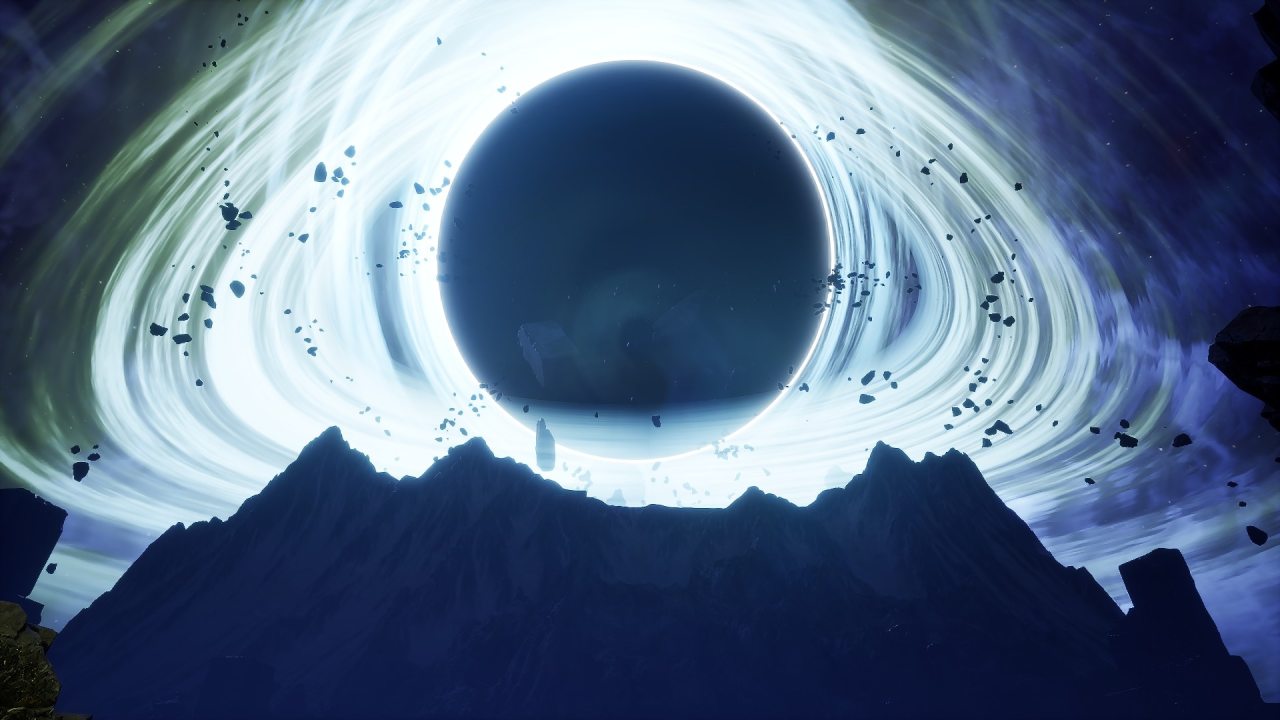
Instead of being a traditional horror survival experience, it positions you as someone trying to reason through the unknowable, using technology and investigation to make sense of something that is fundamentally beyond understanding. This framing is also supported by the presence of AI assistance through Key, which ties into the game’s modern interpretation of cosmic horror and human reliance on systems meant to extend perception.
You find yourself playing as Noah, an ocean investigator working alongside your colleague Elsa at the start of the journey.
The first mission is about the miners who went missing while working in deep water, which already hints at something strange going on below the surface. When you find evidence of something much bigger and more serious than a missing person case, the investigation quickly grows.
The world you are exploring shifts into something unfamiliar, pulling you into a portal-like transition that takes you from a grounded investigation into a realm filled with ancient structures, strange materials, and hints of non-human intelligence.
As you move forward, the narrative constantly pushes the idea that humanity is digging too deep, both literally and metaphorically. The deep-sea mining backdrop becomes more than just a setting; it becomes a reason for why these events are even happening.
You are consistently uncovering evidence that civilizations or forces far beyond human comprehension once existed or still exist beneath layers of time and ocean. The story presents cult activity, corporate motivations, and collapsing global conditions as part of its backdrop, but it never fully moves away from its Lovecraftian core, where knowledge itself becomes dangerous.
The story's structure also depends heavily on your relationship with AI companion Key and the mysterious presence of Elsa, who becomes increasingly important as the story progresses. But the game doesn't always make these relationships strong enough for the emotional payoffs to really stick with you.
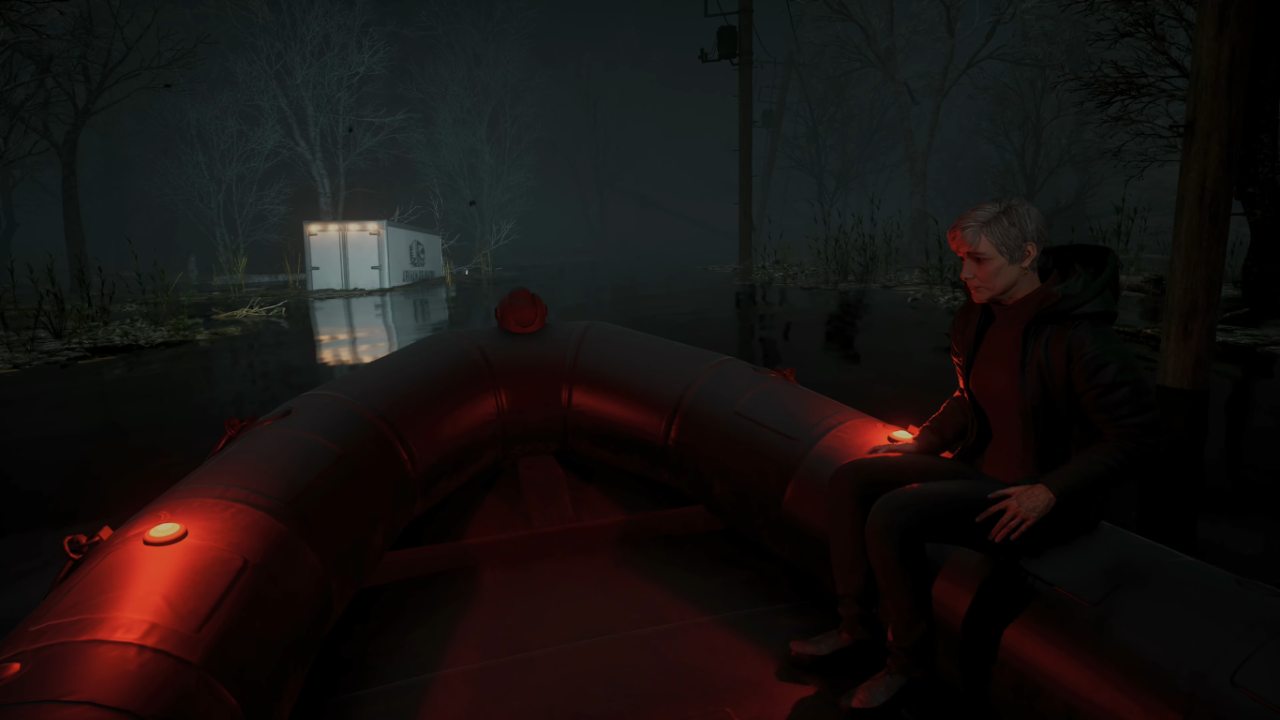
Instead, it often switches between explaining the lore and acting like you already know it, which makes the story flow a little unevenly.
Even though the setting and ideas are strong, the way the story is told can sometimes feel predictable, especially if you've read other Lovecraft-inspired stories where revelations tend to follow familiar patterns of inevitable discovery and psychological unraveling.
Exploration and investigation are at the heart of Cthulhu: The Cosmic Abyss, but not in the usual open-world way. Instead, you move through structured environments that are set up like puzzle rooms that are separate from each other. Each area you enter feels like a controlled experiment in observation, where you have to look closely at things, figure out what they mean, and slowly put together what happened before you got there. You don't get direct guidance very often, so you have to rely on your investigative tools and your ability to read the environment to move forward.
One of the most important systems you use is the sonar-based detection system. With this, you can search for things by how often they happen or what they're made of. Once you find something made of a certain material, you can use what you know about that material to find other things made of it. For example, if you know that bone is an important material, you can use your sonar to find other things in the area that are made of bone.
But it is also hard to know what kind of material you should be keeping track of, which can slow Cthulhu: The Cosmic Abyss's gameplay down.
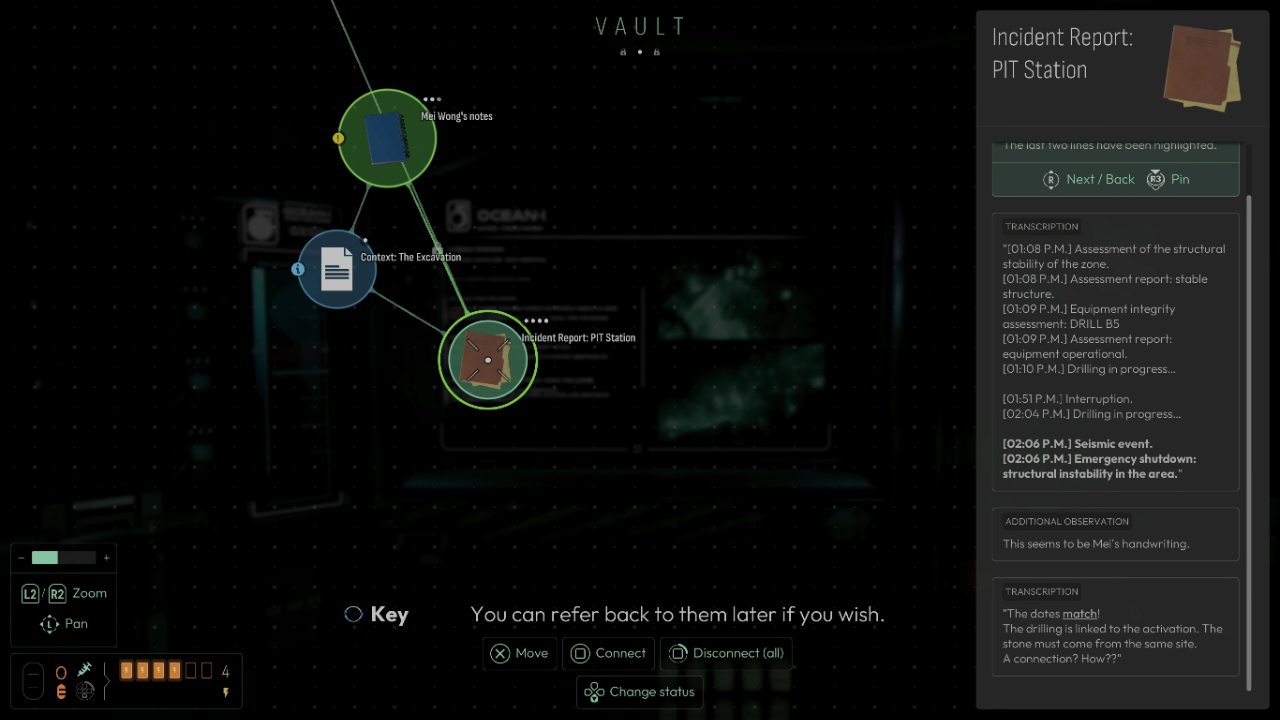
The investigation system, which is often shown in a mind palace-style interface, is another important part of the game. You gather clues and put them on a mental board where you can sort, organize, and connect pieces of information. You often get questions that are like deductions, where you have to put together several clues to come to a logical conclusion.
This system is one of the more engaging aspects of the game because it allows you to visually structure your thinking process rather than simply reading logs or dialogue entries. It also helps manage the large volume of information you collect across chapters.
As you progress, you also gain access to evolutions, which function as upgrades to your investigative abilities. These can improve things like energy recovery during analysis or enhance sonar tracking capabilities. They are helpful, but you don't have to use them to finish puzzles, so you can often choose how you want to solve problems.
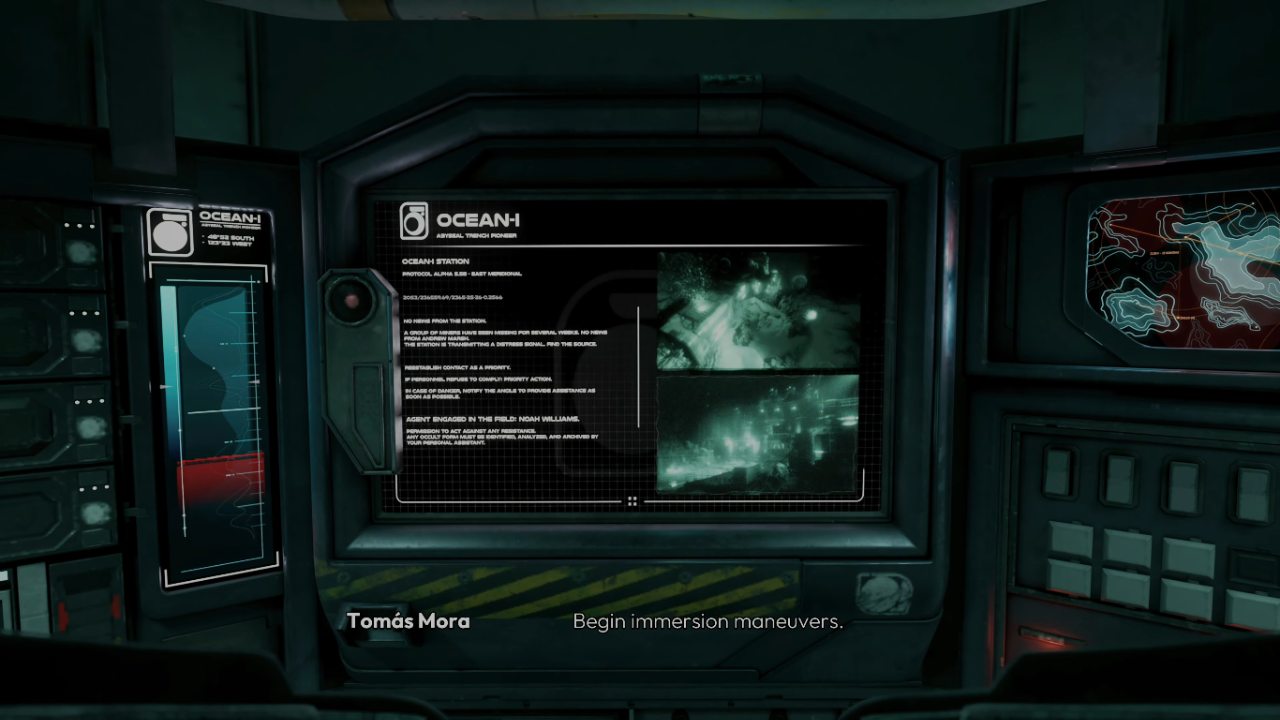
This fits with the overall design philosophy of letting you use logic to solve problems instead of leveling up. Energy still plays a role in keeping analytical tools from being overused, especially at first, when using them wrong can even cause small corruption effects that affect your overall path.
Exploration is also shaped by the absence of combat.
You are not constantly threatened by enemies chasing you or forcing reaction-based gameplay. Tension comes from not knowing what's going to happen and from stories about the environment. This means you can take your time, go back to places, and try out different ways of investigating. Movement can feel a little heavy at times, especially in the later parts where navigation gets harder, but the focus is still on thinking rather than doing.
The puzzles in Cthulhu: The Cosmic Abyss are what make it unique. They are made up of many layers and usually have two different ways to solve them. Most of the time, these solutions are linked to the corruption system. One path is easier and more straightforward, but it raises your corruption level.
The other path takes more work and logical problem-solving, but it keeps corruption lower or neutral. This two-path structure makes the game more fun to play again and makes you think about not only how to solve a problem but also how your solution will affect your progress and ending.
A lot of puzzles require you to change the environment, translate old or unknown instructions, and carefully look at the materials that are spread out in each area. A common example is finding ritual steps to turn on a machine. This might mean finding certain objects in dangerous places and figuring out what they mean. These puzzles are meant to reward careful exploration and attention to detail, but they can also get a little confusing if the game doesn't make it clear what kind of clue you should be looking for next.
The corruption system affects both the story and the mechanics.
Your corruption goes up when you make certain choices, especially ones that involve darker or more violent solutions. This changes not only the ending you get, but also the number of evolutions you can equip and how your progress goes. This system gives your choices more meaning, but it doesn't always feel like it has a big effect on how you play, since you can usually finish puzzles without major restrictions, no matter how corrupt you are.
Instead of grinding for XP, you level up by finding new things and unlocking new abilities through exploration. You can get upgrades by finding hidden tablets or key items that help you investigate more. This makes sure that progress feels more like curiosity than repetition.
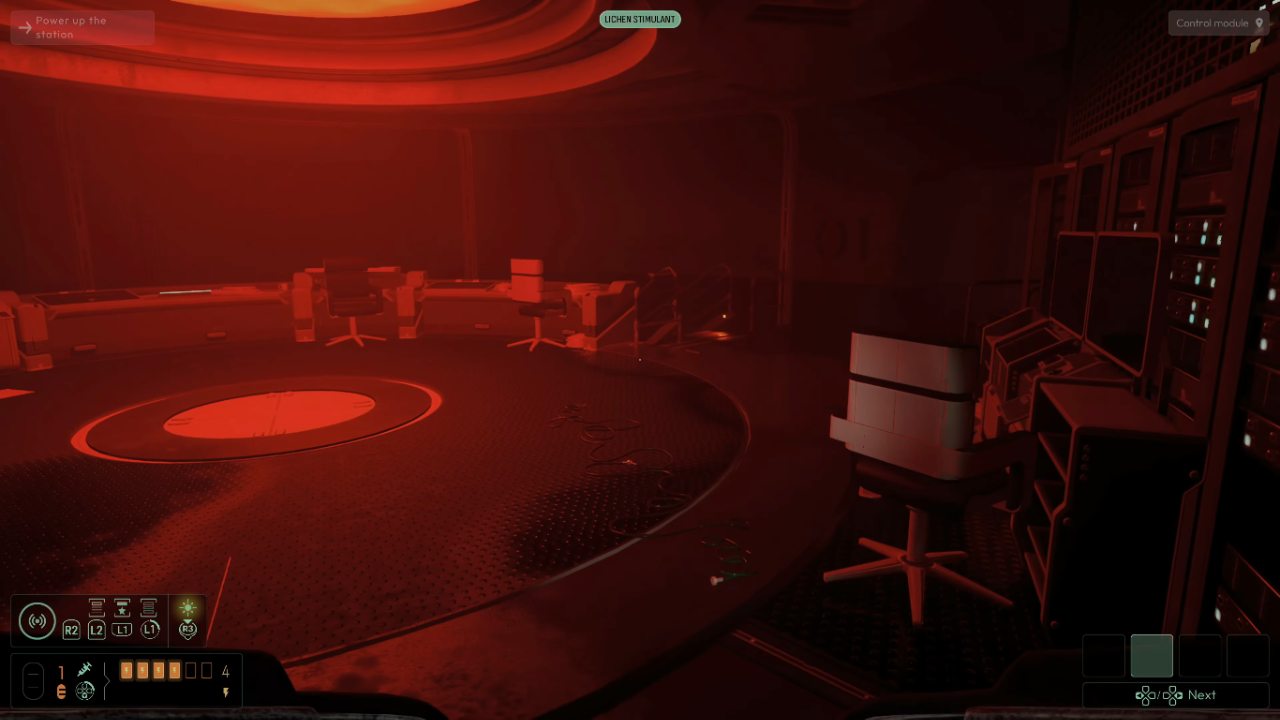
But since most systems are optional or flexible, the overall difficulty can feel different depending on how quickly you get used to the puzzle structure. There isn't much fighting in the game, and when there is, it's usually just for story tension rather than a challenge. This supports the idea that the game is more about thinking than staying alive.
Cthulhu: The Cosmic Abyss relies heavily on atmospheric presentation to look good.
The underwater and alien landscapes are meant to feel big, cold, and a little creepy without having a lot of visual chaos all the time. Lighting is very important for getting your attention, especially when you're in a dark place and need sonar to find your way. The game goes from realistic industrial deep-sea facilities to strange cosmic spaces a lot. This makes the change from human-made places to places that can't be known even more powerful.
But even though the environments are usually well-designed and have things you can interact with, performance issues can be a pain in the ass for what is, in most parts, a well-developed game. There are crashes and slowdowns every now and then, too.
Sometimes, performance issues become more noticeable after longer play sessions, which can slow down the otherwise smooth pace of exploration. These technical issues don't ruin the whole experience, but they do stand out in a game that relies so much on mood.
The sound design adds to the tension by using ambient underwater sounds, distant mechanical hums, and subtle environmental cues to make the player feel alone. The voice acting is good, but sometimes it feels stiff or out of place with the mood of the scene.
Dialogue delivery does not always match character animation or situational context, which can weaken immersion during narrative-heavy moments. Despite this, the overall audiovisual presentation still succeeds in maintaining a consistent Lovecraftian mood, even when technical flaws occasionally interfere.
Cthulhu: The Cosmic Abyss is a game built on strong ideas rather than flawless execution.
Its puzzle systems and investigative mechanics all show that it wants to make Lovecraftian stories more modern by letting us interact with them and explore them using logic. When everything works, it has a satisfying loop of finding things out and making sense of the world that feels like it was made with love by Big Bad Wolf.
It also struggles to reach its full potential due to bugs and unclear stories. The story has too many familiar Lovecraftian elements, and it doesn't always deliver the emotional payoff that would make the setup stronger. Cthulhu: The Cosmic Abyss can also feel uneven due to performance issues and controls that can be hard to use at times.
Senior Editor, NoobFeed
Verdict
Cthulhu: The Cosmic Abyss is a Lovecraftian puzzle game with big ideas, but its technology and storytelling aren't very good, so it's not great. Best when it's on sale for people who like puzzle games with a mystery.
72
Related News
No Data.