
Digimon Story Time Stranger Review
PC
A long-awaited return to the digital world with adventures that are both good and bad.
Reviewed by Nusrat Choity on Oct 02, 2025
For people who grew up during the rise of Digimon in the late 1990s and early 2000s, the franchise has always held a special significance. Many people were first drawn to Pokémon, but Digimon found its own niche with darker stories, higher stakes, and the concept of Digivolution, which often transformed beloved creatures into formidable warriors.
The anime helped move this identity forward, and before long, video games followed suit. Not all of the characters stand out, but some do. Supporting characters like Aiman and Minervamon make the story more interesting, and the fact that humans and Digimon partners are different keeps it interesting.
.jpg)
Still, the pacing of the story is its biggest problem. It usually takes a long time for it to hit fans with the emotional punches they expect from the series. That's why people were so excited when Digimon Story Time Stranger was first announced in 2017.
This wasn't just another offshoot or tactical test. It was advertised as the next big thing in the story-driven RPG part of Digimon.
The game has finally come out on the PlayStation 5 after years of silence, trailers, and delays. The question is: Was the wait worth it?
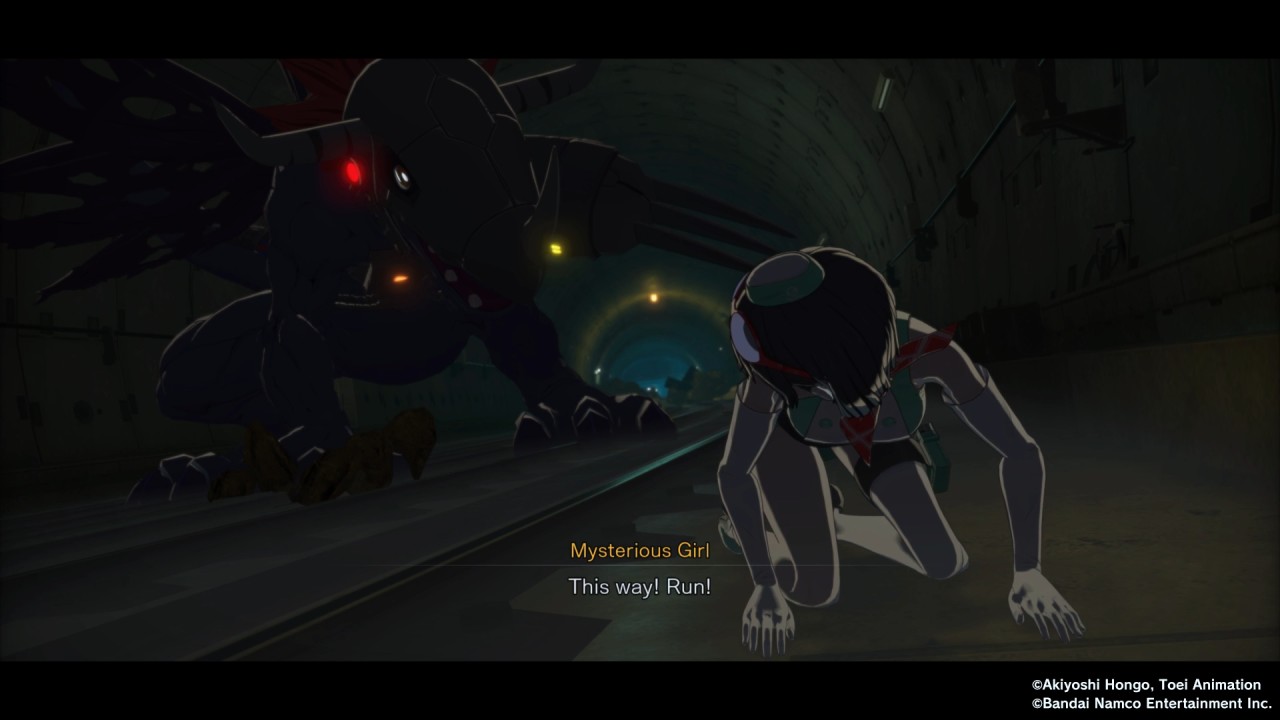
In Time Stranger, you play as Dan (or Kanuki, depending on your choice), an agent for a secret organization that sends you back in time to look into a dangerous anomaly. From the start, the story hints at something huge: a fight on a rooftop, the arrival of the mysterious Inori Mison, and a disaster that sends you back eight years in time.
The idea sounds good, but its implementation can be inconsistent. The first few chapters are slow and full of dialogue scenes in Shinjuku that don't seem to need to be so long and flat. Sometimes characters say the same things over and over again, and even though there are choices for what to say, they don't usually change the story in any significant way.
This lack of urgency can make the early parts of the game feel like wading through molasses, which is a substantial issue for a game that relies heavily on its story. That said, the stakes rise when the story begins to shift between the real world and the digital world of Iliad.
There are moments of cosmic importance, like the fate of humanity and the Digital World itself, that are balanced by silly humor, like running around in ridiculous costumes with your Digimon friends. Time Stranger has its own unique personality, characterised by a distinct blend of seriousness and charm.
Not all of the characters stand out, but some do. Characters like Aiman and Minervamon make the plot more fascinating, and the fact that humans and Digimon partners are distinct keeps it interesting. The story's speed is still the worst thing about it, however. Fans frequently have to wait a long time for the series to deliver the emotional impacts they want.
At its core, Digimon Story Time Stranger is a JRPG that mixes collecting monsters with turn-based combat and light exploration. You will spend time in both the real world, such as Shinjuku and Akihabara, and the vast digital landscapes of Iliad.
Your main tasks are to scan Digimon data, turn it into allies you can recruit, and build a team that can evolve, devolve, and re-evolve along a huge branching chart of options. This system is still the central part of Digimon RPGs, and it's just as addictive here. It's exciting to see a small monster grow into a huge one after a lot of planning and training.
However, the game falls short in terms of exploration. City hubs and digital zones often feel empty because there aren't many NPCs to talk to, and the environment doesn't tell a story. A lot of the paths are too straight, and while there are some puzzles in the dungeons, most of them are just collecting items and fighting the same enemies over and over.
The world doesn't feel as alive as it should, especially for a game that took almost eight years to make, because you can't move around freely, and there aren't many side activities.
Digimon Story Time Stranger's combat is one of the best parts. The game features a turn-based system with visible turn orders, allowing you to plan your moves carefully. You can use more than one Digimon at a time, and a nice feature lets you switch them out in the middle of a battle without losing a turn. This adds more layers of tactical decision-making.
Follow-up attacks make battles more exciting, and bosses make you think more deeply about your strategy by making you deal with powerful charged moves or stun enemies before they can do a lot of damage. It's not the most complicated system in JRPG history, but it's deep enough to keep you interested for dozens of hours.
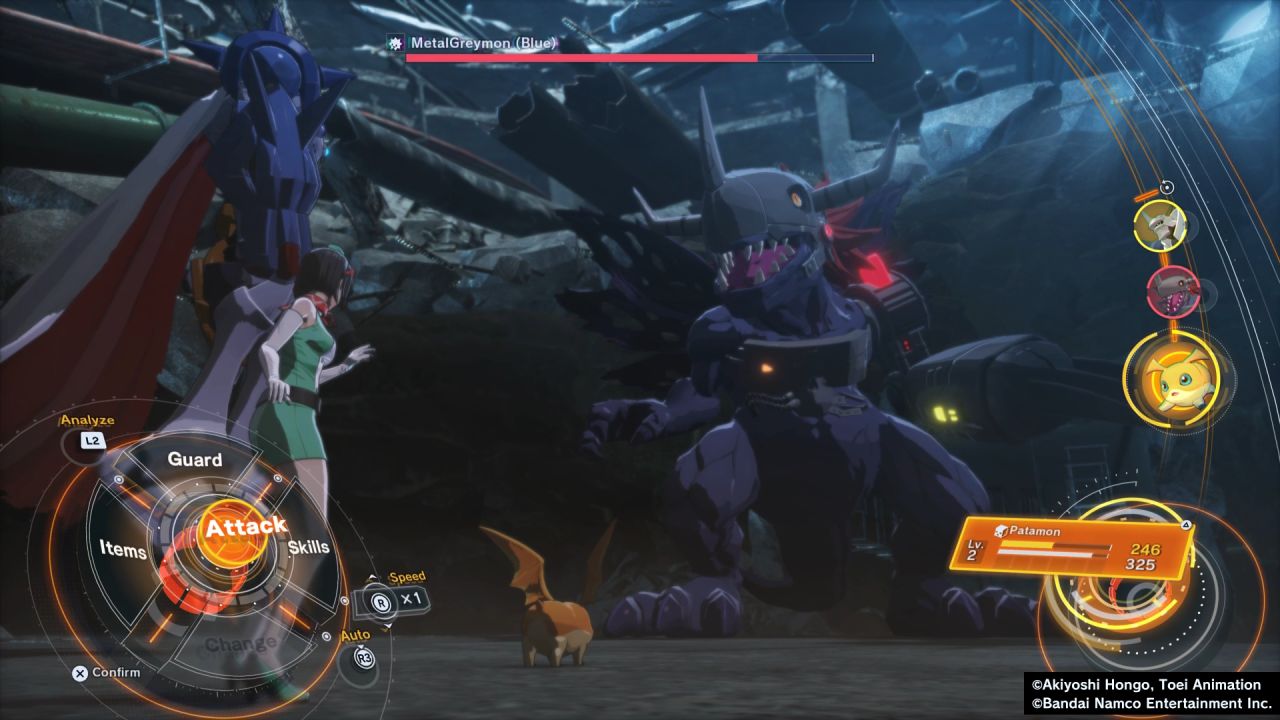
Clever mechanics make grinding easier. If your team is much stronger than the Digimon you come across while exploring, you can instantly defeat them. This makes the game less boring. There is also an auto-battle mode, but the game encourages you to try new things by giving you better results when you plan.
Digivolution and de-digivolution are very important for moving forward. You can unlock new transformations by reaching the correct stats and agent levels. If you don't like a path, you can go back and try another one without losing a lot of progress. This flexibility means that you won't be stuck with a bad choice, which makes progress feel good instead of stressful.
Your Agent Level goes up as you complete main and side missions in Time Stranger. This is how you move forward in the game. You can use Agent Points to unlock new skills and bonuses for yourself and your Digimon partners. This is a way for the game to keep you from rushing straight to the strongest Digimon without earning your stripes.
The Digi Farm system is like a daycare and a training ground combined.
You can leave Digimon here to level up on their own while you give them training tasks that focus on specific stats. The system works, but the menus around it are complicated to use. It can be a pain to switch between farm menus, Digivolution requirements, and training screens, especially when you have to take care of more than one Digimon. It works, but it's boring.
The rewards, though, are worth it. It's more satisfying than ever to see your carefully cared-for creatures grow into higher forms. There are a lot of different Digimon to raise, and the designs range from silly to scary, which makes the grind worth it.
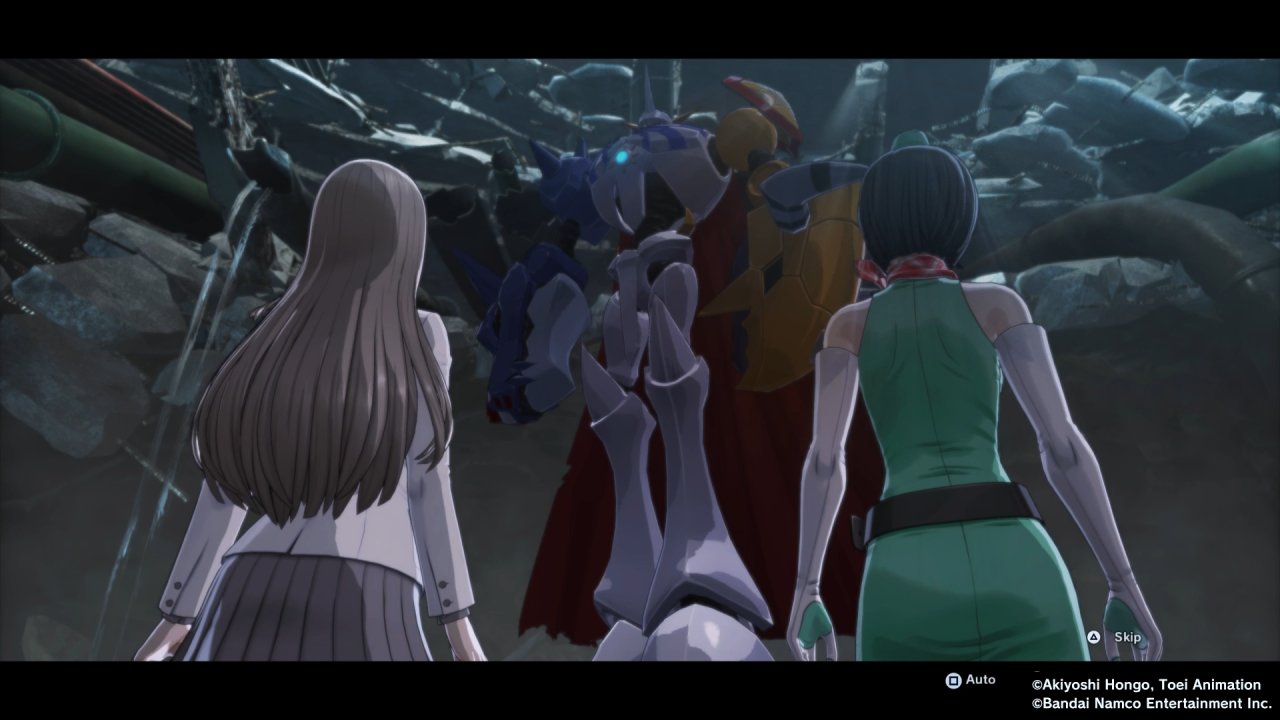
Digimon Story Time Stranger appears to be a mixed bag. It runs in 4K on the PS5, but it maintains a 30fps frame rate, which doesn't seem sufficient for a modern RPG. Cutscenes feature detailed character models and impressive animation work during essential, pivotal story events. Some digital worlds feature strange, trippy designs that showcase the creativity of the Digimon universe.
But the presentation isn't as good outside of cutscenes. There are a lot of pop-ins, shadows that flicker or jitter, and many places feel dead when you explore them. Some parts are really great, but the world detail isn't polished enough to fully immerse you. It's disappointing that there are so many inconsistencies in a game that's been in development for so long.
When the visuals fail, the soundtrack often does much of the work. Digimon Story Time Stranger features a diverse range of themes, from atmospheric digital soundscapes to high-energy battle tracks that amplify the excitement of big fights. The music has a nostalgic feel to it, while still being unique, which will appeal to long-time fans.
Voice acting, on the other hand, is not always good. Some performances add depth to characters, while others make them seem flat or repetitive. For example, Inori often says the same boring lines over and over, which makes her less interesting as the main character. Still, the overall sound design does a good job of making the stakes and tone of the game clear.
Digimon Story Time Stranger is both a success and a letdown. It captures the essence of what makes Digimon games fun—the joy of raising, evolving, and battling with a group of digital monsters—but struggles with aspects like pacing, exploration, and world design.
For fans who have been around for a while, the combat depth and Digivolution systems may be enough to make the game worth playing. However, for new players, the slow story buildup and dull environments may seem like obstacles they must overcome.
Even with these problems, Digimon Story Time Stranger is a rare JRPG that respects both the nostalgia of the franchise and the mechanics that make it stand out. It's not perfect, but if you're willing to put in the time and effort, it's a game worth checking out.
Contributor, NoobFeed
Verdict
A return to the Digital World that has some flaws, but is still worth it. The story stumbles with pacing and world design, but the Digimon mechanics and combat are great. Fans will be pleased; however, new players may find it challenging.
80
Related News
No Data.