
Kusan: City of Wolves Review
PC
A brutal, neon-soaked shooter that makes you earn every single kill.
Reviewed by Adeela Tas on Jul 28, 2026
Kusan: City of Wolves comes from CIRCLEfromDOT, a studio putting out its very first game after roughly eight years of quiet development, and honestly, it shows in the best way possible. There's nothing shaky or unsure about this debut. The moment you boot up Kusan: City of Wolves, you can tell the team spent years chasing a very specific feeling: fast, punishing, stylish combat wrapped in a neon-drenched world of anthropomorphic animals.
You'll immediately clock the influence of a certain 2012 top-down shooter classic, and the comparisons to that game and titles like Ghostrunner or the Hitman series aren't unfair, but it never feels like it's coasting off someone else's homework. It borrows a familiar skeleton and then builds something that stands on its own once you actually sit down and play it for a few hours.
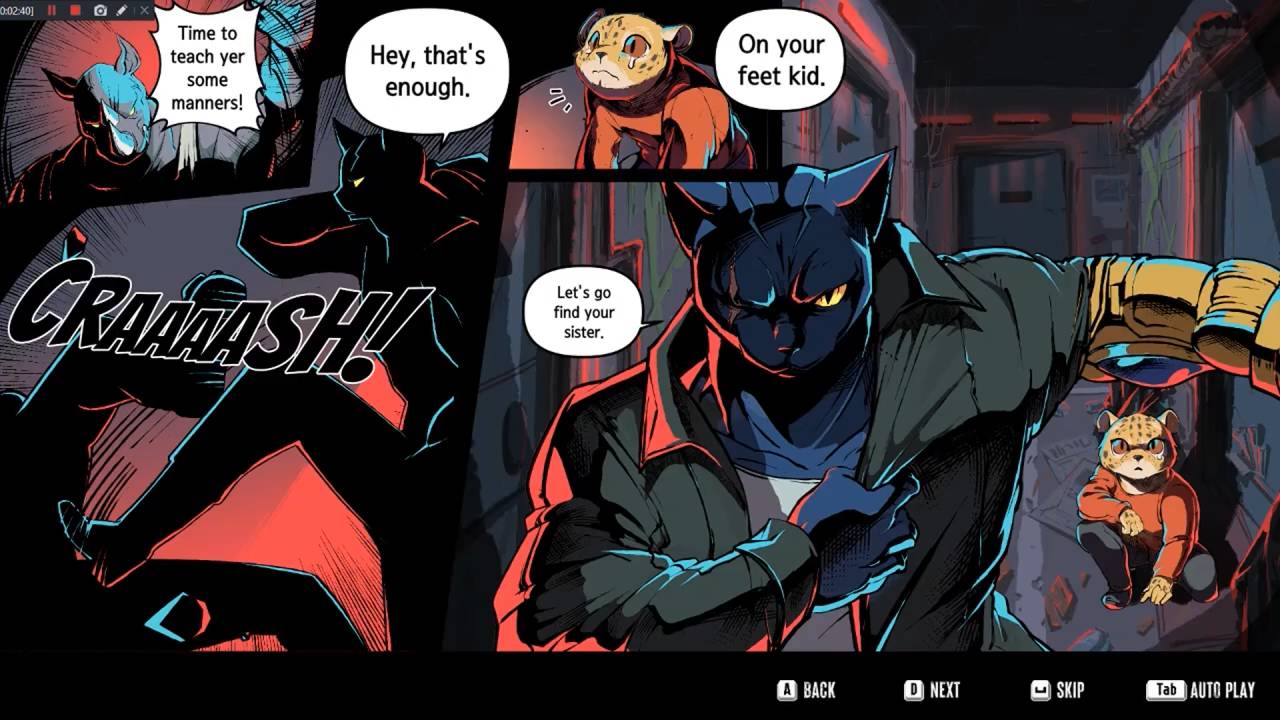
You play as Jin, a black panther and former soldier who's traded in his military life for mercenary work.
He's not some squeaky-clean hero type; he's the kind of guy who takes jobs for money first, but every so often a job pulls at something deeper in him, and that's exactly what happens here. Early on, you're hired to wipe out a gang holding a young leopard boy's older sister captive, and the second you free her, things get messy.
She turns out to have Psi powers; someone with psychic abilities- and the government scoops her up immediately for being one of the people the state fears and locks away. From there, you get pulled into a much bigger, uglier conspiracy involving a mysterious girl named Haru, who's carrying power dangerous enough to level the entire city.
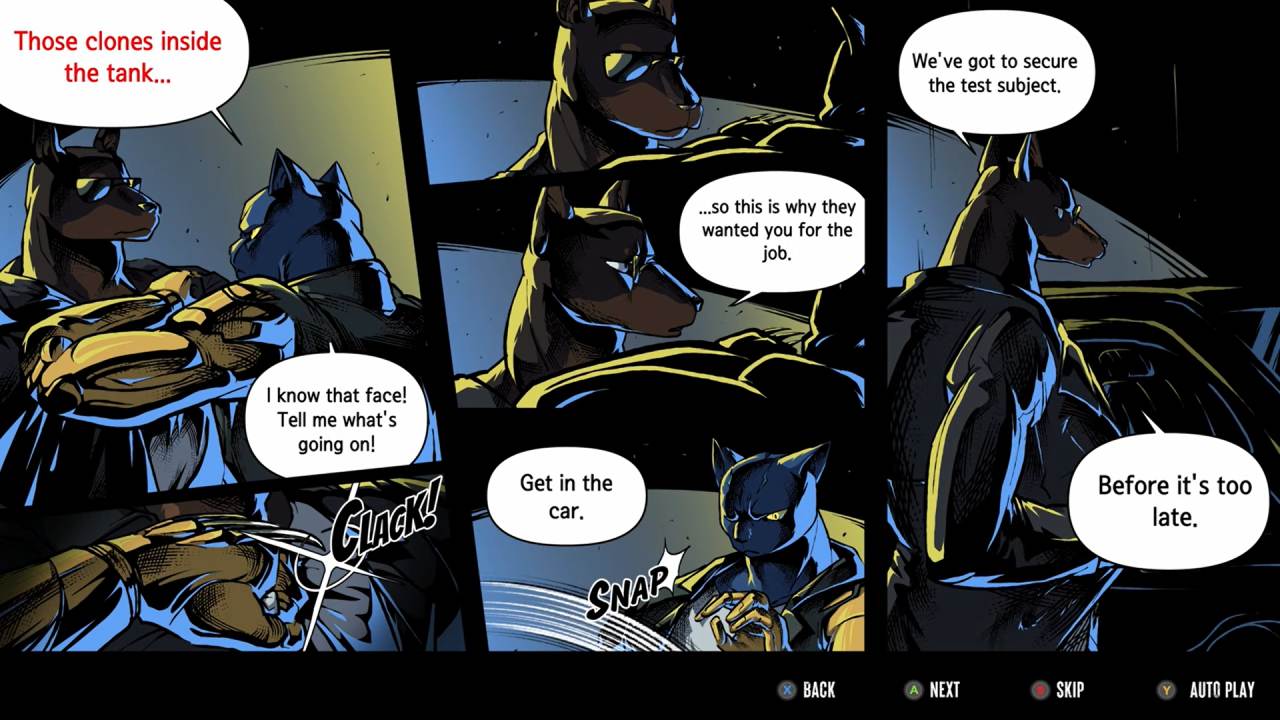
Multiple factions want her, and you're stuck in the middle trying to protect her while your own buried history starts catching up with you. A Doberman named Ayn, your contact and occasional battle partner, drags you into a government operation to retrieve a stolen "asset" from an experimental lab, and that's when old faces from your past start reappearing as enemies.
The story progresses fast and takes place through clear comic book cutscenes between scenes to deliver the story's lore. The anthropomorphic environment of Kusan brings the work to a fable-like atmosphere; however, the underlying story explores a number of dark and heavy themes such as human trafficking, forced experimentation, and institutional corruption.
It also takes clear cues from the actual geopolitical divisions, with a distinct echo of the Korean peninsula situation.
Short screentime side characters make a solid impression and add emotional heft to the stakes of the story. The brief snippets of environment logs add context to the setting, showing that for some targets, their death isn't so meaningless that you feel it's a tragedy, but rather a grim act of mercy. Although the final act is somewhat rushed, it's a great addition to the story compared to most twitch-reflex action games.
Once you're actually playing, Kusan turns into a top-down brawler-shooter where a single mistake ends your run instantly. You control Jin the entire time, occasionally joined by an ally who lays down covering fire, but for the most part you're clearing out every enemy in a room before you're allowed to move forward.
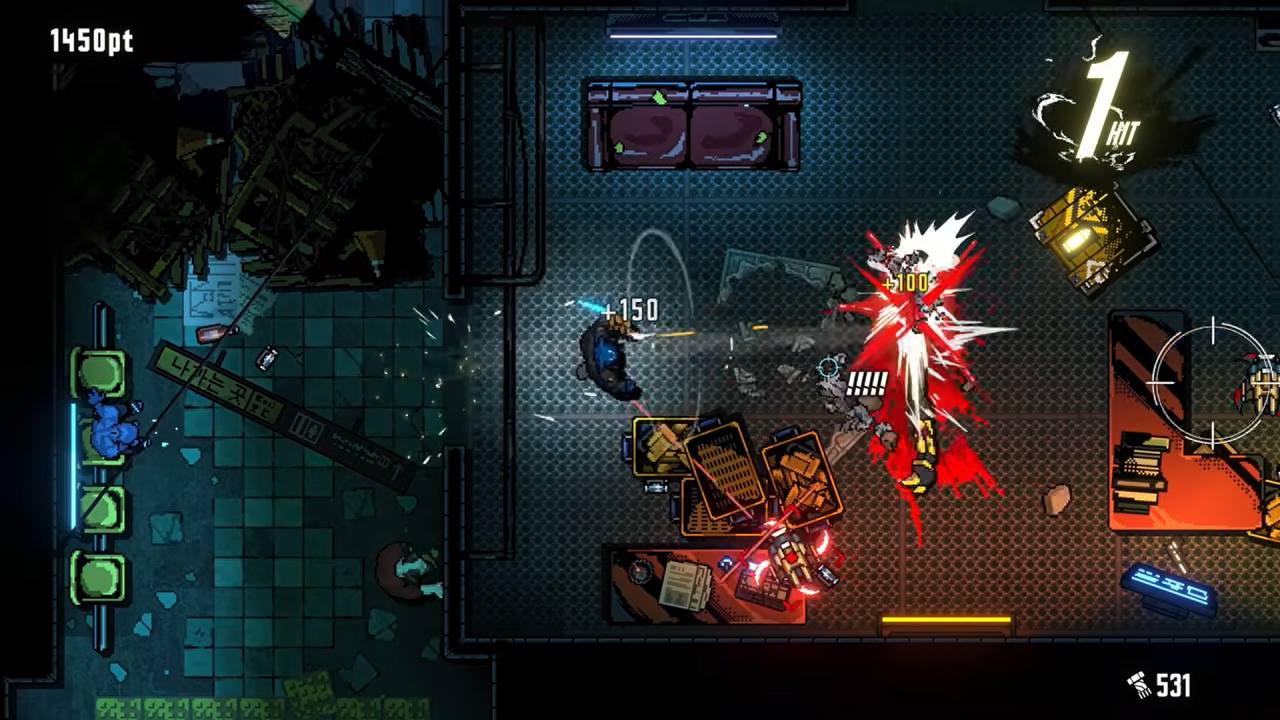
The catch is that almost everyone you fight dies in one hit, and so do you. Get too aggressive, whiff a parry, or miss a gunman standing off to the side, and you're back at the start of the level. That's the whole rhythm of it: you scope out a room from an elevated view, figure out who's armed with what, decide who to hit first, and then commit to a plan knowing there's basically no room for error.
Combat itself runs through a few core tools. There's Jin's mechanical arm, called the War-Hand, which handles your melee punches and can be charged up for a longer-range hit strong enough to break down doors or crush anyone standing behind them.
There's a quantum knife that automatically locks onto nearby enemies, letting you throw it, walk over to retrieve it, and chain another kill almost immediately.
Guns in Kusan are deliberately kept weak on their own; most enemies need two shots instead of one, ammo is limited, and you're often better off saving bullets for enemies your melee options can't safely reach. You can freely swap between a snappier lock-on targeting style and manual free-aim depending on the situation, which is a nice touch since some rooms genuinely favor one over the other.
The puzzle-like structure of each encounter is where Kusan: City of Wolves earns its reputation. Every arena plays out like a small tactical riddle. You peek through doorways, note which enemies rush you on sight and which ones hang back to shoot, and then work out an order of operations.
Melee enemies charge the instant they spot you, gun-wielding enemies close distance until they get a clean shot, and certain enemy types add extra wrinkles, like a charging bull enemy whose attack is telegraphed but still moves fast enough to catch you off guard, or aerial drones that dive-bomb you and can even be punched out of the air if your timing is sharp enough.
Parrying is a genuinely satisfying mechanic once you get comfortable with it. You can reflect thrown weapons and even projectiles like bullets and rockets straight back at whoever fired them, which turns a near-death moment into a kill opportunity if your reflexes cooperate. When everything lines up, chaining a knife throw into a punch into a gunshot feels like a little piece of choreography, and it's genuinely one of the best feelings Kusan has to offer.
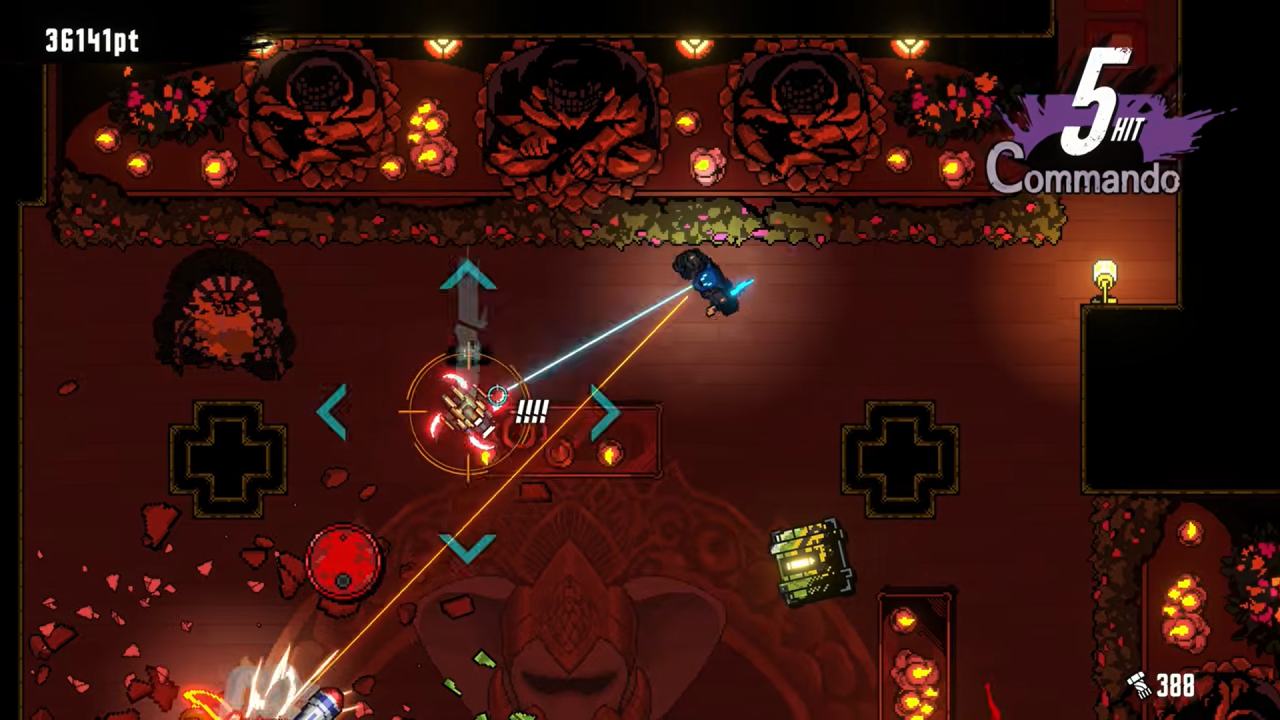
What's good about the combat in Kusan is how consistently it rewards observation and patience over pure reaction speed.
You're not just reacting, you're planning, and that planning pays off in a real way once you clear a room cleanly. What's rough about it is that the same unforgiving nature can occasionally tip into frustration, especially in busier rooms packed with multiple enemies, projectiles, and visual effects all going off simultaneously, which can make it genuinely hard to read what's happening on screen fast enough to react.
There are also a handful of moments, particularly during boss fights, where the difficulty edges toward unfair rather than demanding, with attack patterns that feel inconsistent or hitboxes that don't quite match what you're seeing. The key to upgrading Jin is collecting Bolts, which can be acquired by destroying the stage scenery, using side paths, and keeping combo scores high.
You receive a grade for speed, variety of movements, and controlling the crowd in runs, from C to SS at the end of each run. Progression in Kusan: City of Wolves uses a Tech-trix grid to represent the inventory system; each skill/stats boost is assigned a space, so it is important to consider how you load out.
Kusan: City of Wolves doesn't require you to unlock higher-tier gear behind milestones; instead, the progression of gearing is tied to new areas on the grid. This means that investing in more storage space up front will pay off handsomely in gameplay value, rather than stat perks.
Limbus entities are hidden in the various stages and are locked behind micro-games that can be hacked quickly.
These can be tracked down to gain valuable crafting resources, which will help you save on future upgrades and give you more Tech-trix slots. A neat feature that allows you to play Jin as you want, for either frenzied forays into melee or long-range strategy without ever feeling weak or underpowered.
Boss fights deserve a mention of their own in Kusan: City of Wolves since they're relatively rare across the whole campaign but hit hard when they show up. Early bosses act mostly as knowledge checks, testing whether you've actually absorbed the mechanics Kusan has taught you up to that point, while later fights demand a lot more precision and force you to constantly vary your attacks.
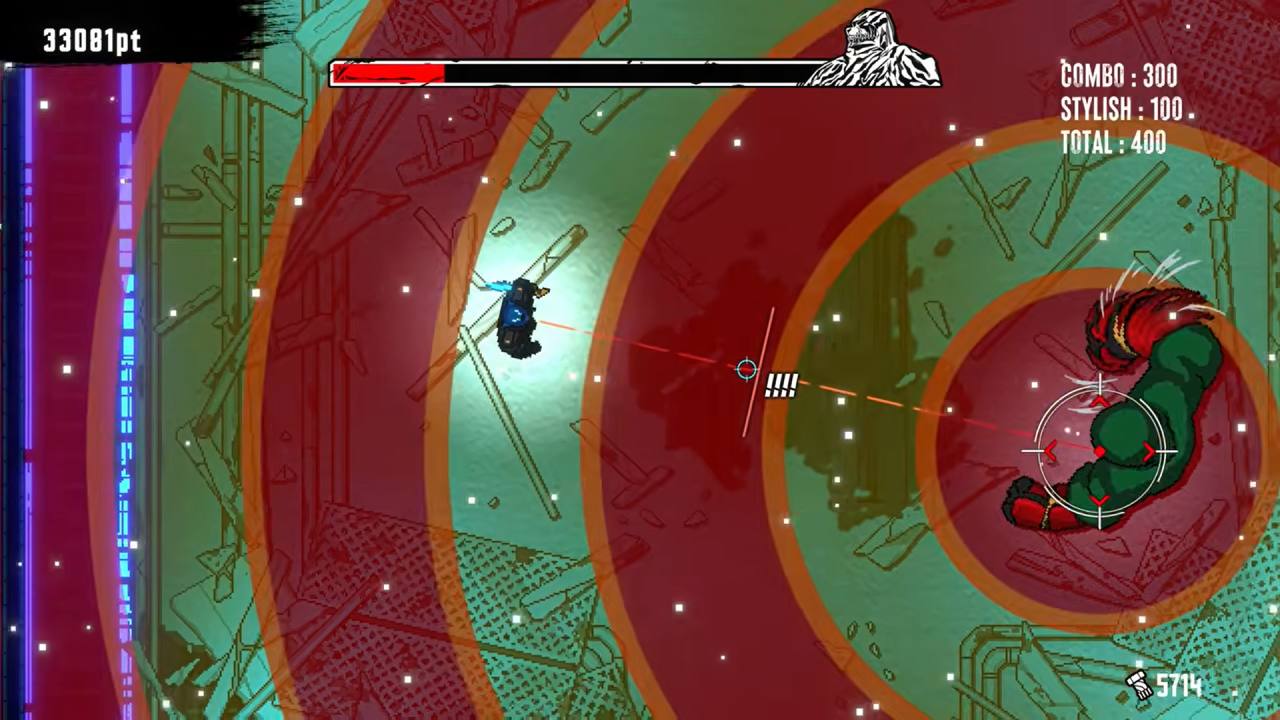
This is because leaning on one strategy repeatedly starts reducing your damage output. The final boss in particular is a real test of everything you've learned, and depending on your skill, expect to sink a serious chunk of time into it before you come out victorious. Visually, Kusan: City of Wolves leans hard into a comic book and pixel art hybrid style that somehow makes both brutal violence and quiet character moments look great.
The city itself is soaked in neon lighting against a grimy, rain-slicked backdrop, and every district you pass through has its own distinct color palette and mood, so nothing starts blurring together the way it can in other action games with repetitive environments.
Character portraits during story panels are genuinely well drawn, giving weight to conversations even without any spoken dialogue.
Enemy designs evolve as you move through the campaign too, so you're not fighting the same handful of silhouettes for the entire runtime. There's a stylish, almost cinematic quality to how it frames its violence, gory as it often is, that keeps it feeling intentional rather than gratuitous.
On the audio side, Kusan: City of Wolves might have one of its strongest cards yet. The soundtrack blends hip-hop, jazz, and electronic influences into something that sounds moody and energetic at the same time, and it's genuinely one of those scores you'll catch yourself sitting through instead of skipping past.
Boom-bap drum loops, samples, and the occasional flute or horn melody show up in unexpected places, including a standout track during the shop and upgrade menus that gives you a rare moment of calm between all the carnage. There's no voice acting anywhere, which might disappoint some of you given how much of the story is delivered through panels, but the music does a lot of heavy lifting to keep every scene feeling alive regardless.
Kusan clocks in at the range of eight to ten hours to complete a first playthrough with the sole purpose of completing the story, but that time increases as you encounter more trouble. There are fifty-four hand-crafted stages all over the campaign, and in case you are planning to take the best positions on the whole board, you can count on that running time to be at least twice or even three times that amount as you learn the ropes of room layouts.
Although Kusan: City of Wolves lacks a classic New Game Plus after the credits, you can replay any previous stage with your fully upgraded gear.
This renders returning to collectibles in the Limbus, grinding out the remaining money, or refining your high scores an easy, satisfying experience instead of a painful and boring task. A few rough edges keep Kusan: City of Wolves from feeling completely polished. Some minor bugs pop up here and there, like doors that visually break apart from a charged punch but remain solid enough to block your path afterward.
And the writing occasionally needs a cleanup pass, since a handful of typos and unclear phrasing show up during some of the heavier exposition. None of it derails the experience, but it's noticeable enough to mention. Kusan: City of Wolves ultimately succeeds because everything it's doing points toward the same goal: making you feel like a precise, dangerous killer once you've actually put in the work to get there.
It's demanding almost to a fault, occasionally frustrating in its busier or more chaotic moments, and definitely not built for anyone looking for a relaxed, low-stakes action game. But if you enjoy games that ask you to observe, plan, and execute with real precision, it rewards that mindset constantly.
Between its stylish visuals, its surprisingly emotional story, an excellent soundtrack, and a combat system that rewards mastery over button mashing, it carves out its own identity while still honoring the games that clearly inspired it. For a debut effort nearly a decade in the making, Kusan: City of Wolves lands as a confident, bloody, and deeply satisfying action game that's absolutely worth stepping into if you're up for the challenge.
Editor, NoobFeed
Verdict
Brutal, stylish, and unforgiving, Kusan: City of Wolves rewards patience and precision with one of the most satisfying combat loops in recent action games.
89
Related News
No Data.