
Laysara: Summit Kingdom Review
PC
Laysara: Summit Kingdom: A mountain city builder that blends culture, survival, and smart logistics into one focused climb to the top.
Reviewed by Maisie Scott on Feb 28, 2026
When you look at the current wave of small-scale city builders, it is easy to feel like you have seen it all. Compact grids, tidy production chains, light story framing, and a sandbox loop that stretches on as long as you want it to. Then along comes Laysara: Summit Kingdom, developed by Quite OK Games and published by Future Friends Games, and it quietly sidesteps most of those expectations.
This is not based on an already-existing franchise, nor is it a sequel. Instead of following trends, Laysara: Summit Kingdom developed its identity over time after emerging during Early Access. From the beginning, the team focused on a single idea: a civilization driven into the mountains by an oppressive mist, striving to survive both physically and spiritually. The Early Access build eventually evolved into a full 1.0 release that delivered on its roadmap without losing sight of the initial goal.
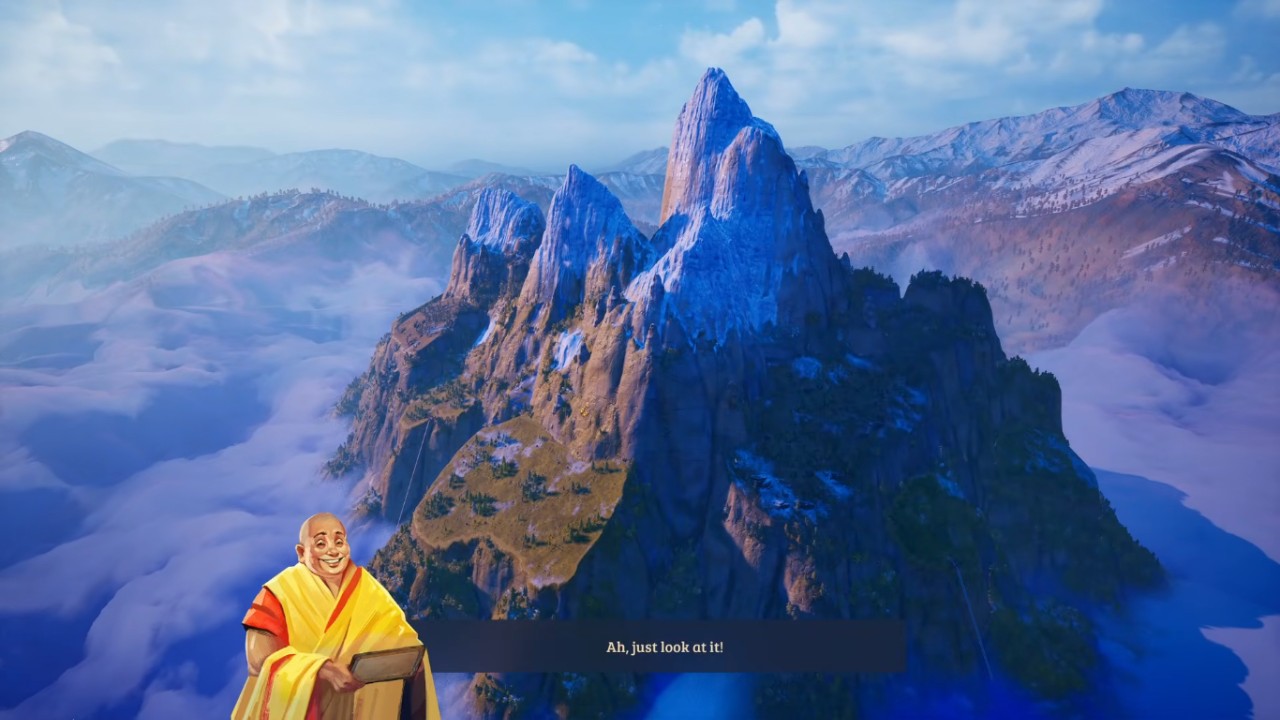
The small team that created this game is what makes its journey noteworthy. A close-knit team produced the majority of the work, with outside assistance for sound and art. That scale is important because you can sense the system's intent. The game does not attempt to be everything at once and is not all over the place. Rather, it focuses on a single mountain, a single climb, and a single long-term objective: secure the future of your people and construct a magnificent temple at the summit.
The world of Laysara: Summit Kingdom is wrapped in a thick, impenetrable mist. It has swallowed the lowlands, forcing survivors to retreat into the mountains. You step into the role of a leader tasked with establishing new settlements along the slopes. Survival is immediate, but the long-term aim is greater: earn the gods’ favor and eventually build a massive temple at the mountain's peak in hopes of dispelling the mist.
The campaign introduces three key figures who anchor the story: a monk, a lowlander, and an artisan.
The story isn't too much to write home about, but it's there. Each part of the climb starts and ends with voice-acted introductions and dialogue. It feels like you're on an ongoing expedition instead of in a separate sandbox as you move from one mountain to the next. Later missions even ask you to go back to mountains you've already climbed and make them bigger, which makes it clear that this is one long climb instead of a series of separate maps.
The structure works because it connects the story to the gameplay. You're not just unlocking buildings for fun. You are working toward a spiritual and cultural goal. The temple at the top is not just for show. It is the end result of everything you have learned and balanced along the way.
At its core, Laysara: Summit Kingdom is a city builder built on a square grid, but that description barely covers it. The mountain itself is divided into three elevation tiers. The lowest tier is fertile and green. The middle tier is drier and transitional. The highest tier is cold and demanding. Each elevation affects what you can produce and how efficiently you can produce it.
You manage three primary population groups, as I mentioned earlier in the review: lowlanders, artisans, and monks. Each class has its own housing, needs, and production roles. Lowlanders handle the basic labor and food production. Artisans refine materials and support more advanced industries. Monks live on the upper slopes, where they often need to be alone and have spiritual structures that show their status. Also, yaks constitute a fourth population type. They produce materials, support transportation, and become important parts of many supply chains.
Space is your constant constraint. Every mountain section is compact, slanted, and limited. You cannot simply sprawl outward. You have to decide what each plateau will specialize in. As your industry expands, you may even need to relocate production to optimize space and take advantage of elevation bonuses.
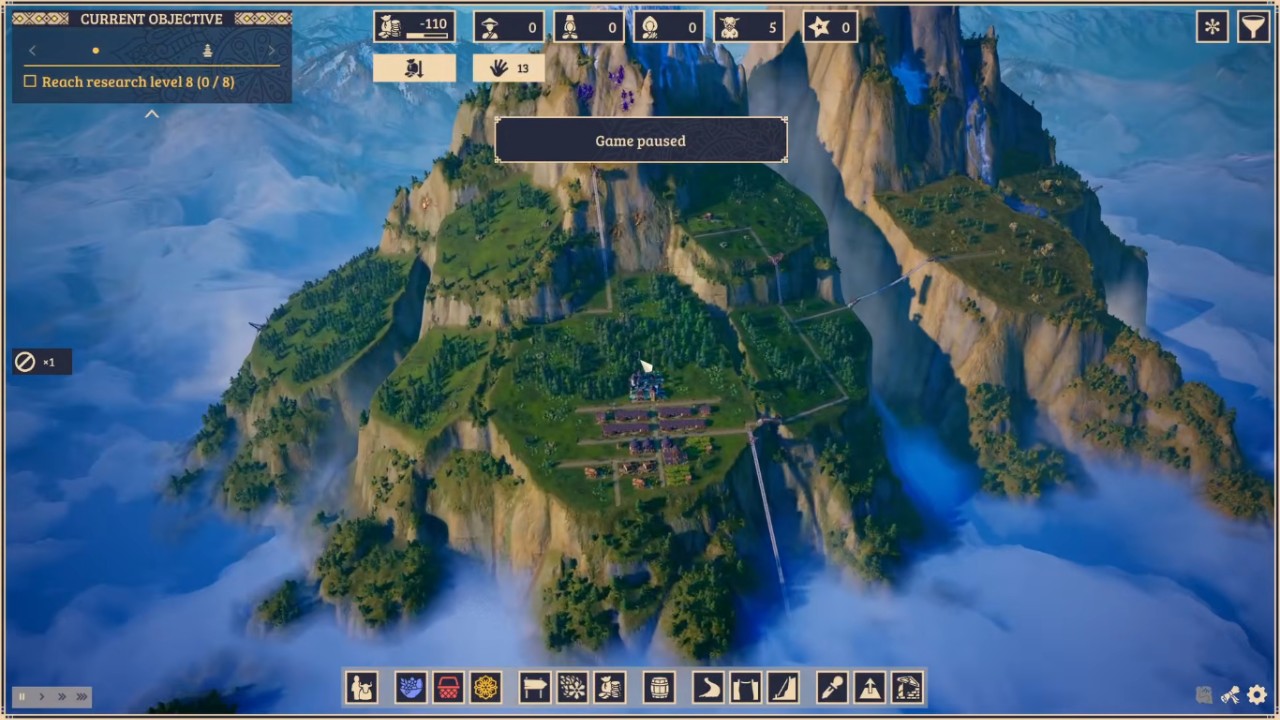
Transport and distribution are where the game reveals its depth.
Most buildings have maximum transport ranges, which forces you to think carefully about placement. Smaller distribution buildings allow you to split resources among multiple destinations within a local plateau. Larger, more advanced transport hubs let you move goods across the mountain, as long as everything is connected by roads. Later additions, such as tunnels carved through the rock, further change how you think about layout and efficiency.
The production chains start out easy. You make basic food, give people places to live, and keep their spirits up. As you learn more about new technologies, your needs become more complex. Food chains can include processed foods like cheese. Housing can be made bigger so that more people can fit in it. Spiritual and educational structures make things even more complicated, especially for the monk class. The game gently encourages you to improve quality instead of just adding more and more.
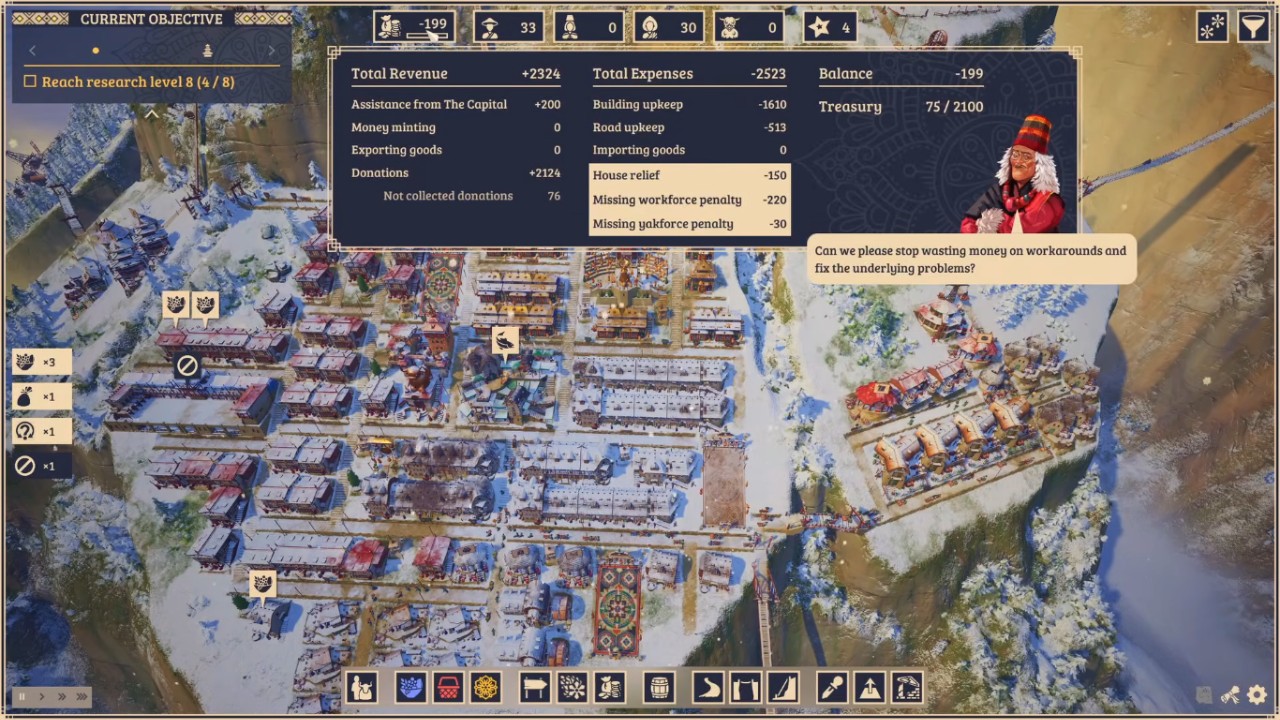
Money is always there in the background. Donations, taxes, trade, and making your own coins all help you keep a positive balance. Trade isn't just one way. You need to think about both what you send out and what you bring in, even when you are managing more than one settlement. Every choice you make has an effect on your economy.
Laysara: Summit Kingdom does not feature traditional combat. There are no armies or enemy factions. Instead, the primary antagonistic force is the mountain itself.
The absence of traditional combat might disappoint players who expect constant intensity, but are you really playing a city builder for intensity? It's about coziness. However, by framing environmental hazards and logistics as the primary challenge, Laysara: Summit Kingdom creates tension without resorting to violence. The mountain is your opponent, and the puzzle is how to coexist with it.
Avalanches are the game's equivalent of combat encounters. They cannot be stopped outright, but they can be mitigated. Early on, you plant forests to slow them down. Forests alone aren't enough as their intensity grows. You have to add them to special avalanche walls that take up a lot of space in buildings and cost a lot of money. In later stages, stronger avalanches need layered defenses, like forests, to lower their level and stronger barriers to absorb the rest.
Weather influences avalanche strength, adding unpredictability. There is even a massive horn you can use to trigger avalanches early. Doing so lets you handle a weaker event on your own terms rather than waiting for a more destructive one to hit at the worst possible time. This mechanic transforms avalanches from passive threats into strategic decisions.
From a puzzle perspective, the game's elevation-based production system is what makes it great.
Let's take the yak shack, for example. It produces more milk when placed at lower elevations. It makes more wool at higher altitudes. If you want to make cheese, you need a lot of milk, which means you should go to the fertile lower slopes. If you need textiles, you might have to give up some milk efficiency for wool at higher levels.
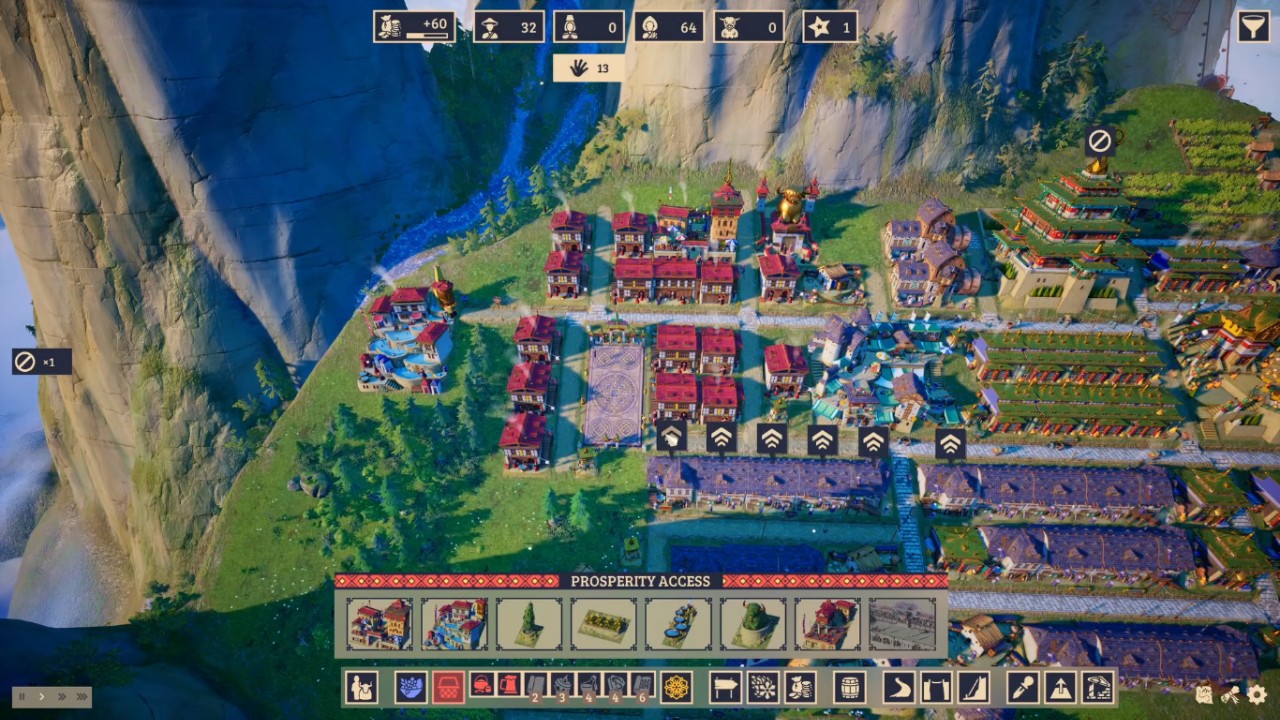
Every building where things are made becomes a small puzzle of where to put things.
Adding distribution ratios makes it even more complicated. You need to balance outputs across local and global distribution centers if a single building produces more raw materials than a processing building consumes. The system is simpler, but it needs your attention. You are always moving things around, rearranging them, and making them work better within tight space limits.
What works well here is clarity. The user interface makes it easy to identify shortages or overproduction. When something goes wrong, the game points you directly to the source of the imbalance. That level of usability reduces frustration and keeps the focus on planning rather than on menu navigation.
Progression in Laysara: Summit Kingdom is tied to things like research, class development, and long-term objectives. Early missions in the 15-mission campaign function as a structured tutorial. They introduce new mechanics step by step while maintaining narrative momentum. Beyond the campaign, you unlock scenarios, challenge modes, sandbox play, and a more relaxed free-build option.
Technological advancement expands production trees and unlocks better housing, improved transport, and advanced avalanche defenses. As your population grows, so do its needs. Upgrading houses increases population density, which is crucial when space for development is scarce. The more advanced your society becomes, the more complex your supply chains and defenses must be.
The ultimate goal remains consistent: build the great temple at the summit. In sandbox mode, you can manage multiple outposts and trade between them, all working toward unlocking the final mountain and constructing the largest temple possible. The climb becomes both literal and mechanical.
Laysara: Summit Kingdom looks different from other games in this genre.
City builders rarely draw on cultural inspiration. The architecture, clothing, and colors are all inspired by a mountain-based society that feels like it comes from South America without going overboard. The tone of each elevation tier is different, from lush greens to bare upper slopes.
The buildings are well-made, and even small things like road signs and decorations show love and care from the devs. The particle effects during avalanches are especially cool. Snow and debris move around the landscape in a way that feels real, not scripted, and they interact with buildings in ways that feel real. Some people might think that not allowing building rotation because of the slope-based design is limiting, but it makes the mountain feel more real. You are not placing tiles on a flat board. You are carving into a landscape.
The sound design makes it easy to get lost in the experience at every stage. Sounds from the environment add to the feeling of being high up and alone. The monk, artisan, and lowlander characters all get more personality from the voice acting in the campaign. The music is the best part. It fits the setting so well that it's hard to tell the difference between the experience of building and the setting itself. Tracks don't get boring, and they keep a tone that works for both quiet planning times and tense avalanche preparations.
The music stays in your head long after you stop playing.
Laysara: Summit Kingdom is successful because it sticks to its rigid philosophy. You are not building just to grow your city. You are going up. Every plateau is a choice. Elevation affects every supply chain. Every avalanche makes you think about the risks and rewards. That is the perfect mix of comfort and chaos that makes a city builder fun to play.
The developers released a full version that builds on the Early Access version without taking away from it. The campaign gives the story structure and weight. The sandbox gives you freedom. The systems are deep but easy to understand, hard but fair. Laysara: Summit Kingdom stands out in a crowded genre by focusing on a few things.
It turns a mountain into a puzzle, a society into a balancing act, and progress into a steady climb toward something important. When you get to the top and see your temple standing out in the fog, it feels like you worked hard for it. But don't forget that the mountain is the main character, not you, in the middle of all the chaos.
Editor, NoobFeed
Verdict
A focused and thoughtful city builder that turns elevation, culture, and logistics into a steady climb toward a meaningful goal. Smart systems, clear progression, and environmental tension make it one of the genre's strongest recent entries.
88
Related News
No Data.