
Princess Maker: Children of Revelation review
PC
A detailed raising sim that builds on the classic formula with a larger world, more endings, modern quality-of-life features, and a slow loop built around shaping one daughter's future.
Reviewed by Adeela Tas on Oct 01, 2026
Princess Maker: Children of Revelation brings back the classic child-raising sim with a simple premise. You guide a young girl through several years, then find out what kind of adult she becomes. GEAR2 developed and published it. You're responsible for a daughter for eight in-game years, starting around her tenth birthday. You guide her through school, work, and rest.
You help her with relationships, festivals, and exploring. Along the way, your choices slowly shape her future. The setting gives that familiar formula a Demon World backdrop, with different regions, magical species, royal characters, teachers, friends, rivals, and possible romantic partners.
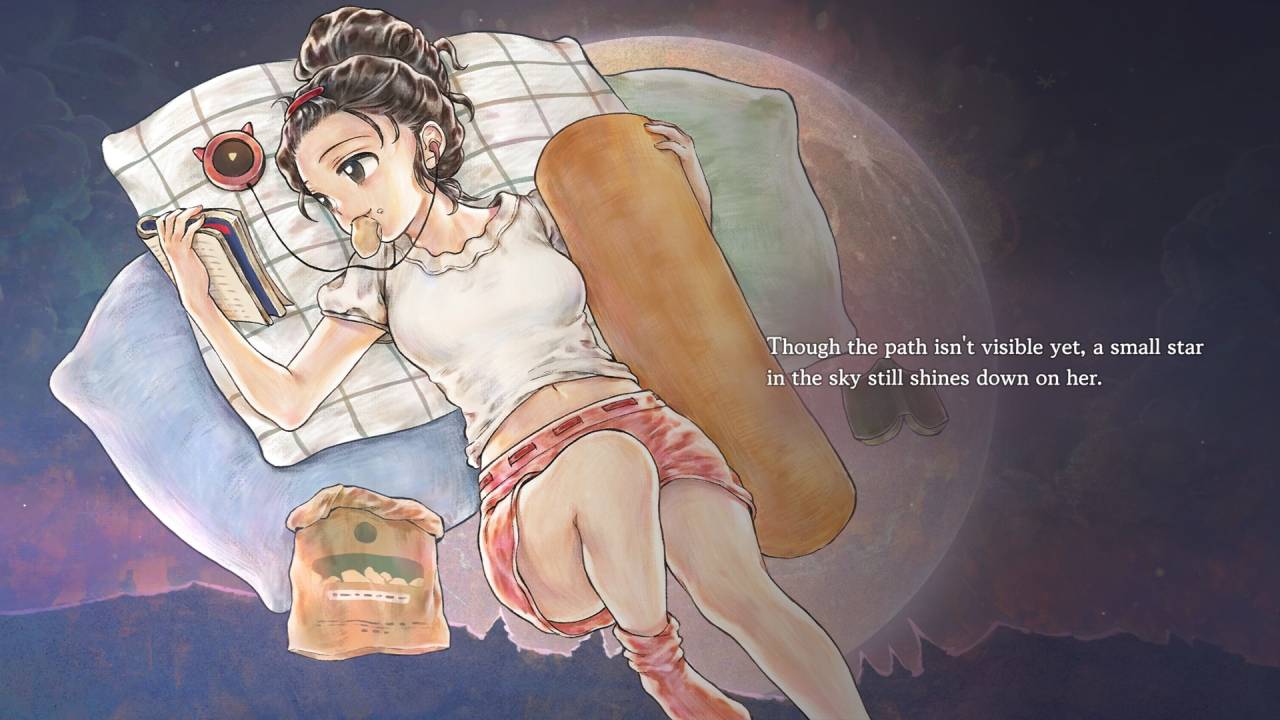
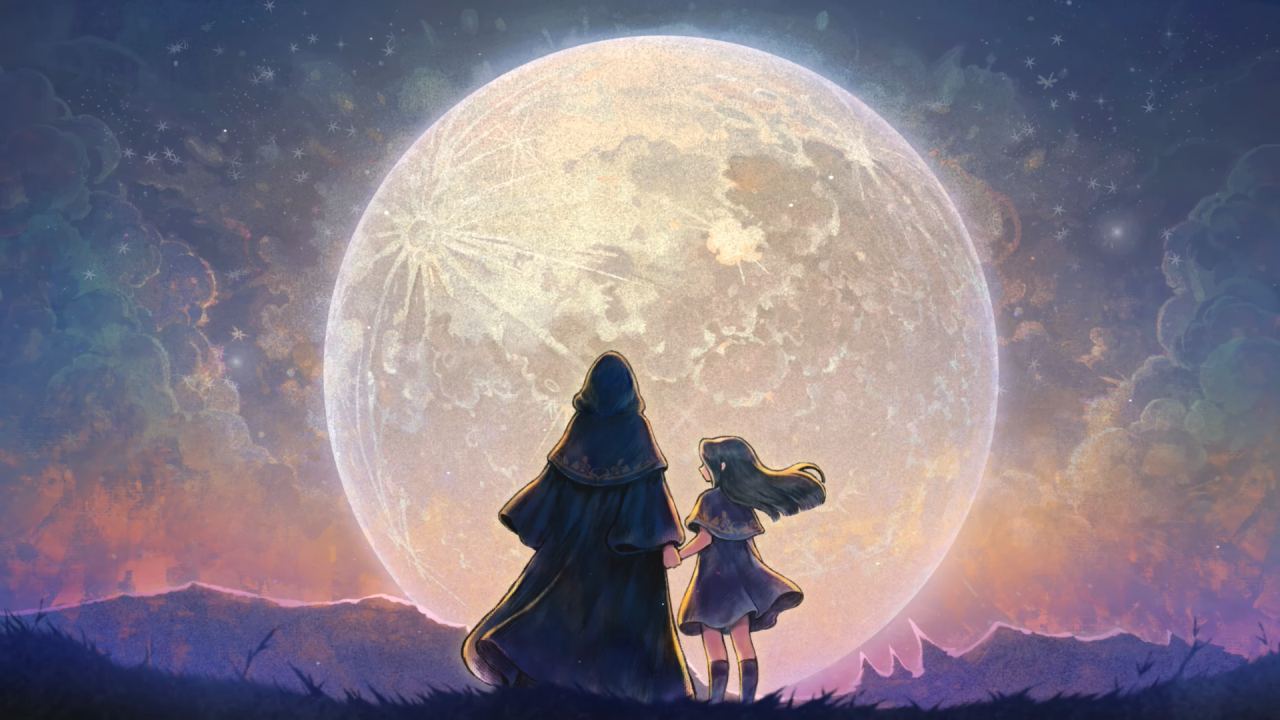
The story begins with you as the last descendant of the Moonvoice's Hearer, a being who can hear the Moon and spread its message among the creatures of the Demon Land. While walking through the mountains, you discover Karen, a prophetic child the Moon entrusted to you. You raise her in Neros Village. When she turns ten, an invitation from the Royal Academy brings you both to the city's Founding Festival.
You make a wish at the Tree for Karen to have a good life.
From there, her future mostly depends on the choices you make for her. That gives the story a clear starting point. But the real story comes from the life you build, not from a steady stream of cutscenes. Your daughter can meet a wide range of characters, build relationships, pursue different careers, and move toward very different endings.
Princess Maker: Children of Revelation begins and ends in March, regardless of the birthday you select, while the yearly schedule provides a predictable framework for the eight-year journey. That framework matters because nearly everything you do feeds into the result.
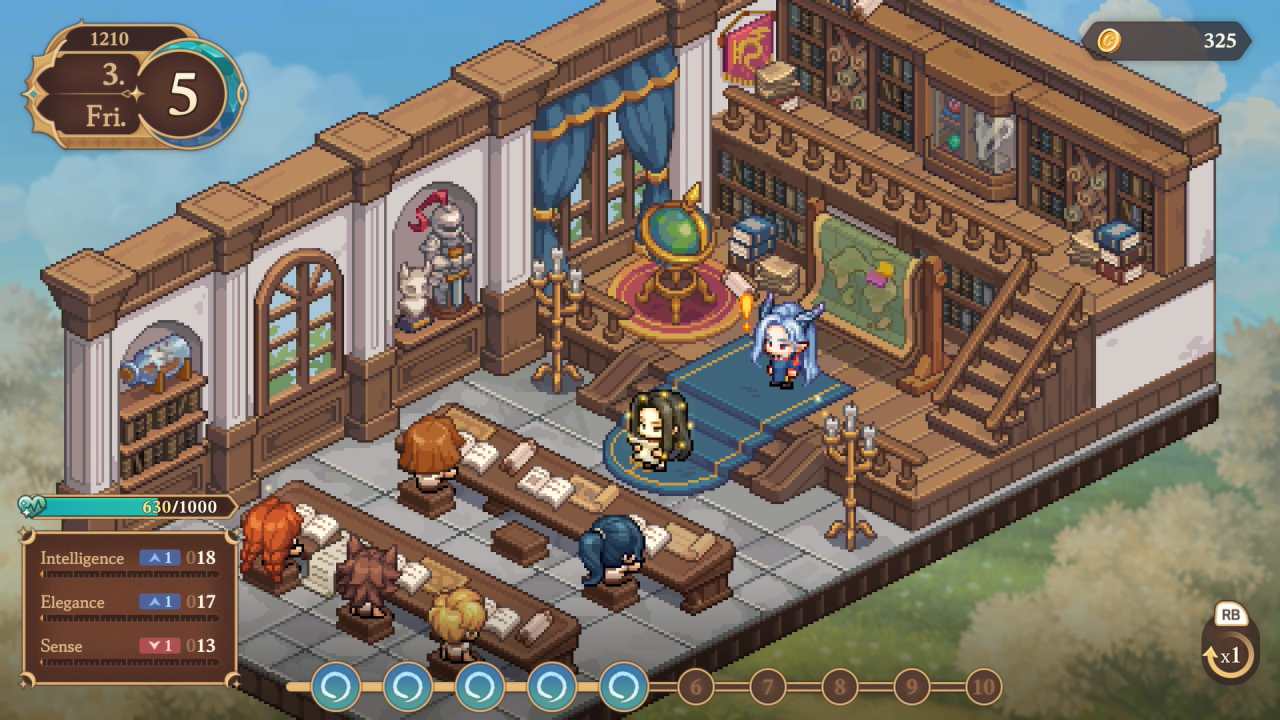
The game is strongest when you treat the calendar as a system rather than a list of activities. Each month, you decide how your daughter spends her time, and those decisions involve trade-offs. Ten classes are available: Literature, History, Etiquette, Swordsmanship, Martial Arts, Magic Studies, Art, Dance, Alchemy, and Music.
Classes raise attributes but require tuition, so improving your daughter is also a financial decision. You can encounter other characters during lessons, giving you another reason to vary the schedule. Work provides another side of the same system. Your daughter can take jobs that increase different attributes while bringing in money.
As she gets older, the available options expand, eventually reaching nine possibilities from the initial six. Housework, ranch work, woodworking, the botanical garden, the infirmary, restaurant work, the clothing store, fruit warehouse, checkpoint, blacksmithing, academy work, maid café work, tutoring, waterfront work, and the tavern all fit into the larger schedule.
The job system becomes more than income; you decide whether the money is worth sacrificing training time.
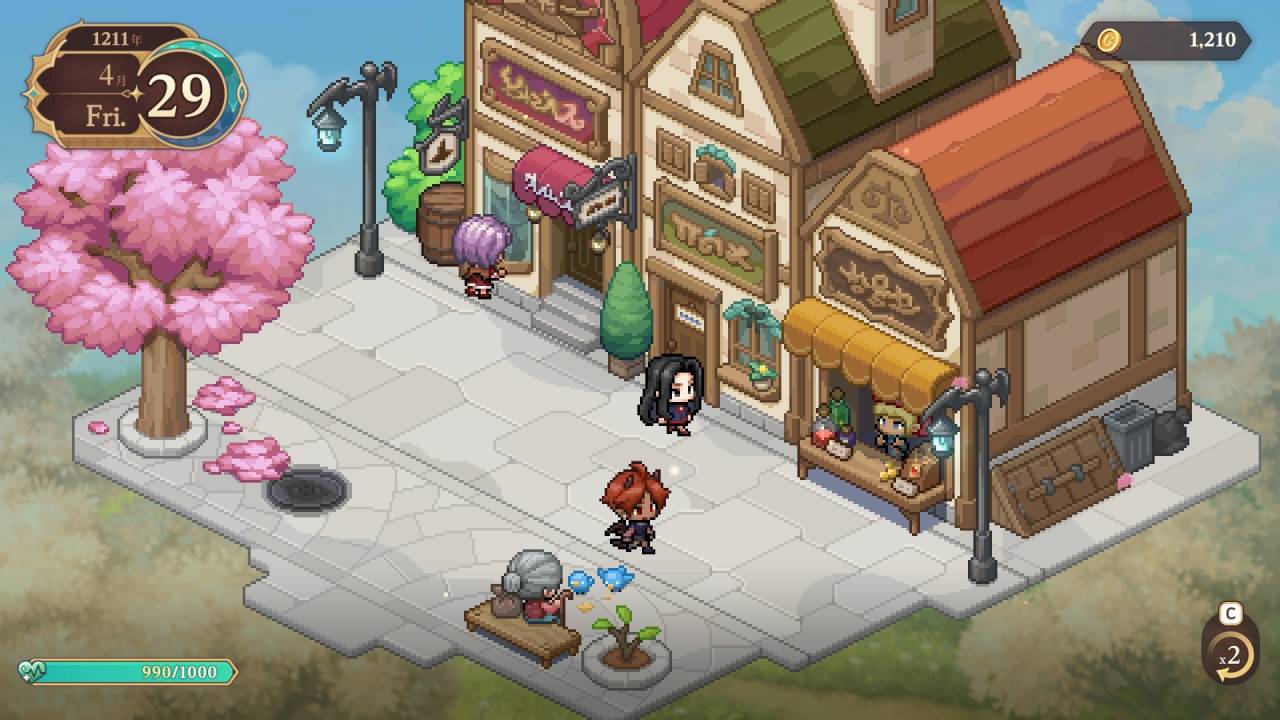
Rest is equally important. Your daughter has three ways to recover Condition, which functions as her energy and health resource. Resting at home costs nothing, free time costs money, and vacation costs money while also increasing statistics.
Vacation restores more Condition than free time, while free time is better than simply staying home. That makes recovery another part of the planning rather than an automatic break from Princess Maker: Children of Revelation's systems. Before finalizing a monthly schedule, you can also take your daughter into town.
The clothing store lets you buy outfits, the restaurant offers another outing, the farm and general store provide different resources, and the weapons shop supplies combat equipment. You can also visit the Demon King’s Castle and speak with residents to increase social reputation. As your Manners increase, the castle gradually opens up more of its hierarchy, allowing you to unlock quests and improve your Rating.
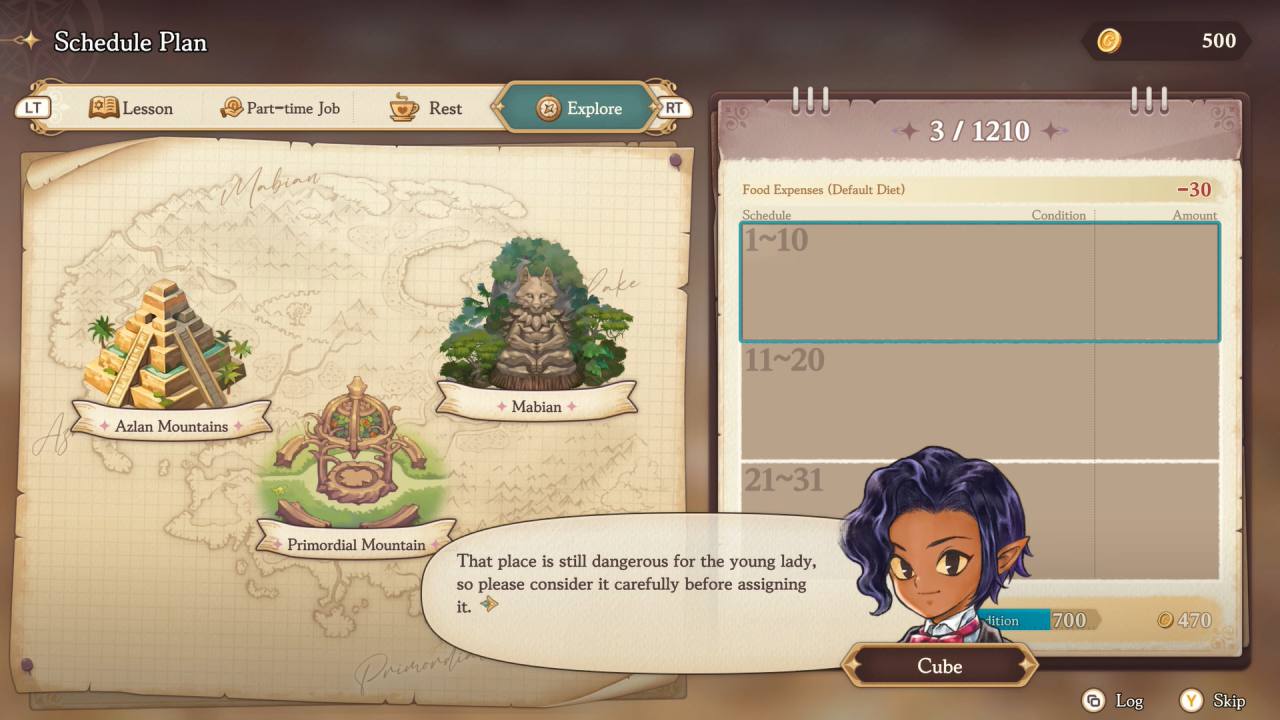
Those visits make reputation useful beyond simply being another number on a statistics screen. Once your daughter turns twelve, exploration becomes available. The game's feature set describes four distinct zones, each with a town area and its own shops, restaurants, plazas, and activities.
Exploration gives you a break from the monthly schedule and lets combat stats and equipment matter more directly.
Battles use MP for attacks; you can flee from encounters, and enemies in different areas place different demands on the daughter you have built. Items and equipment can also affect your statistics and, in turn, influence the broader raising process. Combat is useful because it gives several statistics a purpose outside the normal schedule. A daughter developed with combat in mind will feel different when you take her into the field.
At the same time, combat is not deep enough to replace the raising simulation. Exploration works best as a change of pace from the calendar. It lets you collect items, find equipment, handle events, and visit local shops, but repeated expeditions can become routine fairly quickly. There is not always enough to discover or collect to keep every trip interesting.
The interface can be a pain on expeditions. You can't pull up your quest log or inventory while you're out exploring, so it's hard to keep track of what you're supposed to be doing or what you're carrying. Even after buying things from local shops, checking exactly what you have collected can be frustrating. The shops are useful, but the lack of information during expeditions makes exploration feel less complete.
Princess Maker: Children of Revelation gives you several layers of long-term customization before and during a run. At the beginning, you select an aura that establishes your daughter's base statistics. The available auras are Eldur, Rios, Yord, and Vatna, making the opening choice similar to the Zodiac system in earlier entries. You can also select three Fate Cards.
You unlock these by achieving certain endings, and they provide passive bonuses in later runs, such as improved job success rates or lower tuition costs.
Fate Cards help make repeat playthroughs more manageable, but their effect is limited because you can equip only three at a time. Some cards feel much less useful than others, so it is easy to settle into a small group of dependable choices. You don't carry permanent stat increases over to each new daughter, as some other modern raising games do.
Instead, the progression between runs comes through these cards and the knowledge you gain from previous attempts. That replay structure matters because the game offers more than fifty endings. The endings range from difficult to easier outcomes and from darker results to more positive ones, with requirements and walkthrough information available for each.
Princess Maker: Children of Revelation also features eight romanceable characters and multiple couple endings, giving you another reason to build a run around a particular relationship. The title has some of its strongest writing in the relationships, with characters and NPCs having distinct personalities and dialogue that give the Demon World more character.
The parenting side is less developed than the premise might suggest. Your main interaction with your daughter happens through monthly conversations and vacations, rather than through a large set of choices that let you directly guide her responses. During conversations, you mainly listen rather than deciding what she says next.

Choosing to be a father or mother does not substantially change the experience either, so the option feels more cosmetic than mechanical.
It can weaken the emotional connection across eight years. Still, the characters around your daughter help compensate for that limitation. Friends, teachers, rivals, bosses, NPCs, and romance candidates give the world more personality. Relationships can also change the direction of a run because they give you goals that are not purely about statistics.
You might start by aiming for a career, then find yourself adjusting the schedule around a character or event. That is where the raising system becomes more flexible: you are not simply filling a calendar, but gradually creating a particular version of Karen.
The alignment system adds another layer. As your daughter grows, the choices she makes during events influence whether she moves toward Order or Chaos. That alignment can affect which endings become available. The Harvest Festival also gives September a special purpose each year, letting you enter cooking, singing, dancing, or combat competitions, attend the Banquet, or skip the event.
Different builds make different contests more practical, giving you another reason to consider how the daughter’s statistics fit together. Princess Maker: Children of Revelation also includes quests and achievements. You can unlock quests through interactions at the castle, and they may be required for particular endings. Their weakness is that they can be easy to overlook, and some instructions aren't especially clear.
Certain character events can also feel abrupt.
A romance route may move quickly toward marriage without giving you as many major moments as you expect, and occasional dialogue inconsistencies can make a character behave as though a previous meeting never happened. Those moments can interrupt the progression of a long playthrough.
Princess Maker: Children of Revelation also provides a substantial collection layer on top of the main simulation. More than forty dresses and thirty-two vacation variations span the full eight-year cycle, helping the daughter's appearance change as the years pass. After finishing a run, an ending gallery, event replay, OST menu, and improved conversation backlog make it easier to revisit what you have already seen.
Those features matter because replaying is central to the structure. Visually, the focus is on hand-drawn character art and a charming presentation rather than technical spectacle. The character designs, outfits, CG scenes, and vacation appearances provide most of the visual appeal. The opening cinematic establishes the setting before quickly moving on to naming your daughter.
The sound presentation is more limited. Korean voice acting is available, while a Japanese voice option is planned for a future update. Voice coverage is not extensive, so much of the experience relies on written dialogue, artwork, and music rather than fully voiced scenes. That fits the relatively menu-driven structure, but fuller voice work could make important relationship and ending moments feel more immediate.
The biggest challenge is repetition.
More than fifty endings may sound like a lot of content, but each route still follows the same basic eight-year structure. You schedule classes, jobs, rest, outings, relationships, festivals, and exploration again and again. That repetition can feel satisfying while you are still learning the systems because every run teaches you something.
Once you know exactly what you need, however, reaching a particular minor ending can turn into a grind through familiar months. Princess Maker: Children of Revelation therefore works best when you enjoy planning for a future rather than constantly chasing new scenes. The appeal comes from making a choice now and discovering its effect much later.
You might overtrain one area, spend too much time earning money, overlook a relationship, or build toward an ending without realizing where the run is heading. When the result surprises you, the next playthrough has a purpose. You know more, so you can plan differently.
The 1.0 version has enough systems to make that loop feel complete. The raising schedule, jobs, classes, relationships, exploration, festivals, quests, alignment, auras, Fate Cards, equipment, endings, and collection features all serve a single idea: you build a life through small decisions.
Princess Maker: Children of Revelation stays close to the classic Princess Maker formula.
It adds quality-of-life features and clearer systems, making the structure easier to understand. The launch price of $27.99 through October 14 makes the commitment smaller, but the important point is that the content only becomes valuable if you actually enjoy repeating the cycle of raising.
If you want to complete several endings, experiment with different builds, pursue relationships, and use Fate Cards across later runs, there is a lot to work through. If you only want one story and dislike repeating schedules, much of Princess Maker: Children of Revelation will remain untouched.
For a long-running raising-sim formula, Princess Maker: Children of Revelation offers a modern take without abandoning the core idea that made the earlier games work. You still spend most of your time planning, managing resources, watching statistics change, and accepting the consequences.
The characters, artwork, variety of endings, and quality-of-life features give that familiar structure room to breathe. At the same time, repetitive exploration, limited parenting interaction, uneven Fate Cards, and occasional quest or dialogue issues keep it from feeling fully refined.
The best part is watching it all build up slowly.
You begin with a child and a calendar, then slowly create a person with different skills, relationships, values, and possibilities. You can aim for a career, pursue a romance, enter competitions, explore the Demon World, improve your reputation at the castle, or simply see where the accumulated choices lead.
Princess Maker: Children of Revelation doesn't need a major event every month because its real progression happens beneath the surface. By the end, the experience feels like a respectful continuation of the classic raising-sim formula, with enough modern structure to stay accessible.
The CG artwork is a major draw; the characters carry much of the personality, and the replay systems give completed endings a purpose beyond a final screen. The main thing Princess Maker: Children of Revelation asks you to accept is that it demands patience. Its best moments come from long-term planning, not constant action.
Editor, NoobFeed
Verdict
A substantial raising sim with strong characters, attractive art, varied endings, and useful replay systems. It's slow-paced, which might wear on your patience. But if you enjoy the daily routine of building up your life, it stays satisfying.
74
Related News
No Data.