
Rayman: 30th Anniversary Edition Review
PlayStation 5
A limbless legend returns with history in tow.
Reviewed by Adiba Manha on Feb 19, 2026
The five Guillemot brothers started Ubisoft in 1986. Nine years later, the business had its first big hit with a 2D platformer that came out just as the industry was about to enter the 3D era. Designer Michel Ancel and coder Frédéric Houde made the game Rayman.
Rayman came out in 1995 for the PlayStation, Atari Jaguar, and PC. It introduced you to a little, charming hero who had no arms or legs but was plenty of personality. Ubisoft has teamed up with the retro experts at Digital Eclipse to celebrate that legacy with Rayman 30th Anniversary Edition, a collection that includes five different versions of the original game and an interactive documentary that goes along with them.
.jpg)
In Rayman's debut game, you enter the fanciful Glade of Dreams, a colorful fantasy world that is in danger from the evil Mr. Dark.
Your job is simple: bring back equilibrium by liberating the captured Electoons and getting the Great Protoon back. The story is straightforward and not too weighty. It is largely told through short introductions and environmental storytelling instead of long explanations. The speech in Rayman isn't what makes it fun; it's the colorful animation and the creative environments you explore, like rainforests, melodic mountains, and candy-colored caves.
This Anniversary Edition tells the narrative in five different ways: the original Atari Jaguar version, the 1995 PlayStation version, the MS-DOS version, the Game Boy Color version from 2000, and Rayman Advance for Game Boy Advance from 2001.
Most of the time, the primary idea stays the same, but the portable versions change some things by changing the level layouts and making little changes to the gameplay. The Game Boy Color version is different from the others since it has its own levels, which makes it feel less like a direct port and more like a new version of Rayman's adventure.
At its heart, Rayman: 30th Anniversary Edition is a 2D platformer that demands precision. You run, jump, punch, climb, and eventually get additional skills, like the helicopter hair glide, which lets you leisurely glide over dangerous gaps.
You gather little blue balls called Tings and free Electoons from cages that are spread out across each level. You have to rescue a certain number of Electoons to move on, which makes you want to retry levels and find hidden paths.
Rayman: 30th Anniversary Edition needs platforming that is pixel-perfect and reflexes that are lightning-fast.
The first stages are easy, with simple leaps and basic foes, but the difficulty quickly rises. Bottomless holes, platforms that fall apart, and enemies that never stop coming make obstacle courses that need careful timing and memory. Even by 2026 standards, the difficulty can feel very hard. This collection, on the other hand, adds mods to the PlayStation and MS-DOS versions.
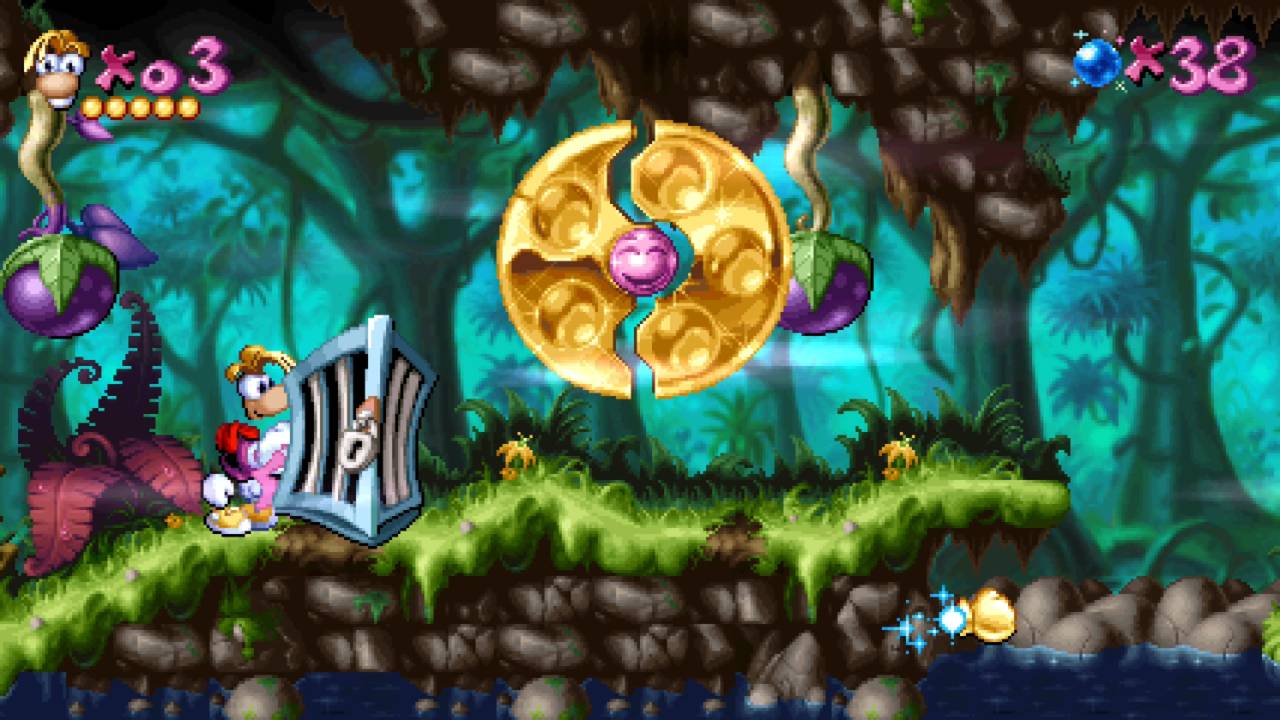
These include infinite lives, limitless continues, maximum health, and the ability to acquire all skills from the start. These changes make Rayman 30th Anniversary Edition easier to get into, especially on PC, where being able to try again on hard parts without losing a lot of progress makes the tempo much better.
The rewind feature, which lets you go back in time by up to fifteen seconds, is the same in all versions. This mechanic makes some of the harder parts of Rayman 30th Anniversary Edition easier to handle. You don't have to start the whole level over again if you miss a jump; you can fix your error right away. This may lower the initial intensity, but it gives you a modern safety net that respects your time.
In Rayman: 30th Anniversary Edition, the puzzle pieces are based on the environment, not on logic. You have to figure out platforming sequences, find secret cages, and avoid moving hazards.
The hard part is not the puzzles, but the implementation. Some stages have rhythm-based aspects or patterns that look like mazes that test your memory. The concept is smart, although it can be hard at times, especially when dangers are just out of sight.
Rayman: 30th Anniversary Edition's telescopic punch is what makes combat interesting. It starts out short-range, but it may be upgraded to reach foes that are farther away, giving a tactical dimension of space.
Enemies can be anything from small animals who patrol platforms to tough opponents who throw boulders that explode. Boss fights focus on recognizing patterns, so you have to avoid strikes and hit when you have a short window of time. In Rayman Advance, bosses are a little simpler, and Rayman has extra health, which makes Rayman 30th Anniversary Edition less frustrating.
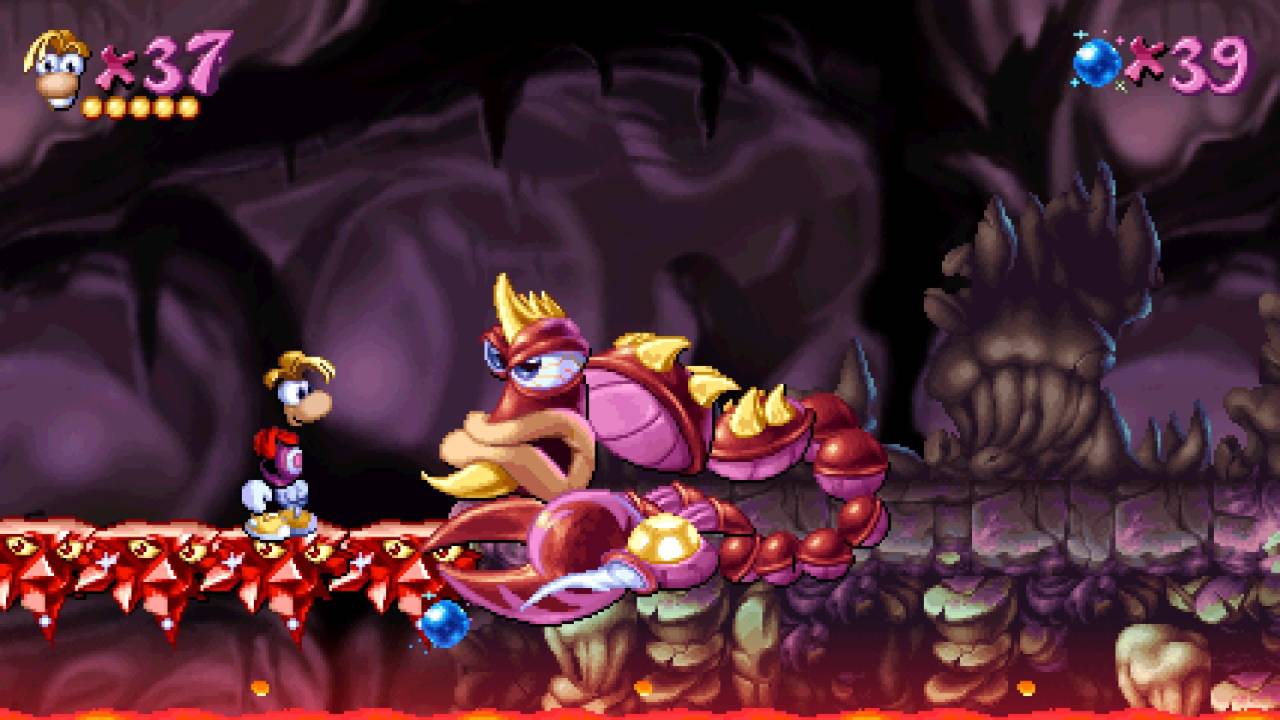
Rayman: 30th Anniversary Edition doesn't have a traditional XP system. Progression is based on skills, not on experience. You get additional powers at certain times in the plot, and you get better at Rayman 30th Anniversary Edition by learning how to use the mechanics instead of getting better numbers.
This design keeps the focus on learning new skills. Without grinding, momentum is guaranteed, but this also means that difficulty spikes might feel sudden because there is no option to overlevel to make up for it. Rayman: 30th Anniversary Edition still looks great.
The surroundings are full of detail, and the hand-drawn sprites are clear and expressive. When you take off CRT or LCD filters on a PC, you may see pixel art with sharp edges and bright colors.
The Anniversary Edition lets you choose from a number of display options, such as original aspect ratios, widescreen modes, and platform-specific filters. Widescreen changes work best on the PlayStation version, but other versions are best seen in their native 4:3 format to avoid distortion.
The handheld presentations are really cute. The Game Boy Color bezel replication makes Rayman 30th Anniversary Edition feel more real, while using LCD filters on Rayman Advance makes the chunky sprite work look better. Switching between CRT and LCD filters on the fly shows how flexible the art style is across different generations of hardware.
The music is the most talked-about alteration. Rémi Gazel wrote the music for the first PlayStation release. His orchestrated pieces are closely linked with Rayman's identity. This Anniversary Edition has new music by Christopher Héral, who is recognized for his work on Rayman Origins and Legends, instead of that score. Héral's music is beautifully arranged and sets the mood, although it doesn't always fit perfectly with what's happening on screen.
Some parts loop in a strange way or stop playing without warning. It seems like a missed chance that the original soundtrack option isn't included in a compilation that is meant to be the best. The interactive museum is more than just the games. Digital Eclipse has put together interviews with important people, including Michel Ancel, Frédéric Houde, and Ubisoft CEO Yves Guillemot.
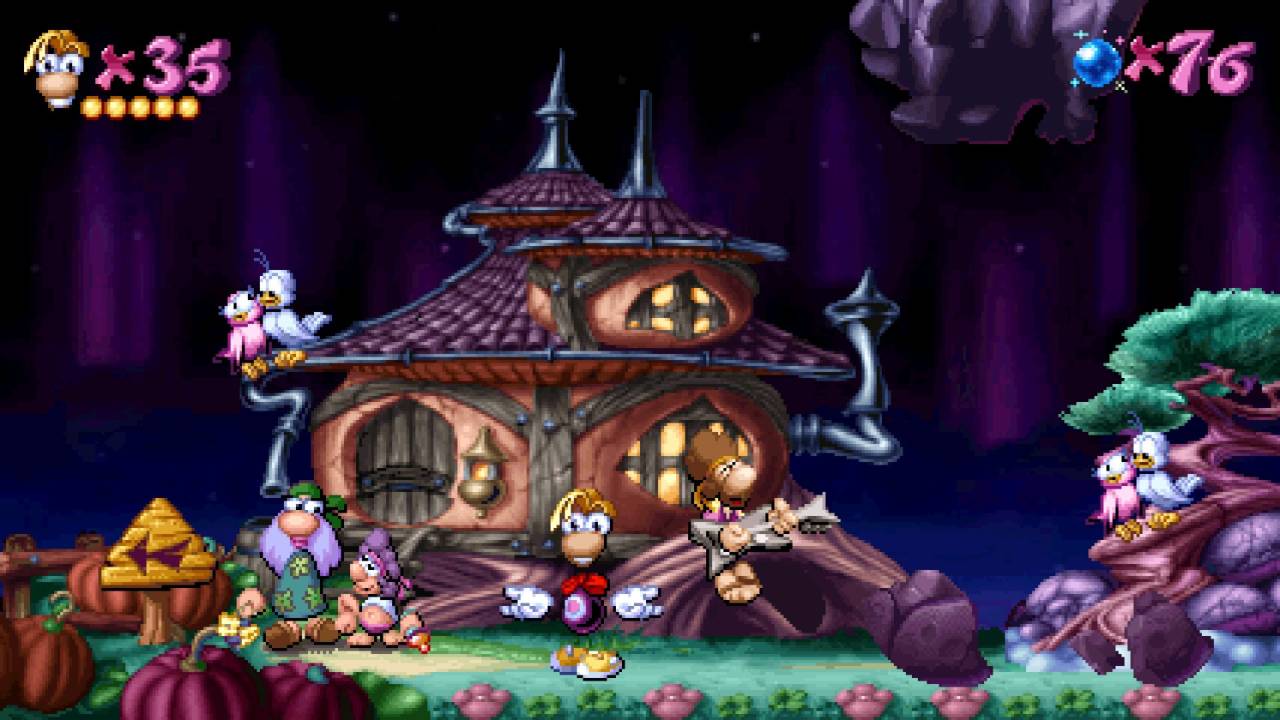
You can look at concept art, read the full 85-page design document, and even play an old SNES prototype with an early version of Rayman.
The documentary lasts around an hour and gives us a lot of information on the creative process during a period when the gaming industry was still mostly driven by passion instead of big business. Rayman 30th Anniversary Edition for PC brings back a lot of memories, even before you start. The menu design, with its playful fonts and brilliant backdrops, is an homage to the mid-1990s, when platformers were bright, bold, and very challenging.
When you see the Atari Jaguar, PlayStation, and MS-DOS versions all lined up next to each other, it feels like stepping into a time capsule that you can play. The CRT and LCD filter settings add to that feeling by mimicking the soft scanlines and curved screen glow that were so common in living room gaming decades ago. It really feels like finding a long-lost cartridge or CD-ROM in a drawer when you switch to the original 4:3 ratio and let the chunky pixels breathe.
Rayman 30th Anniversary Edition's strict design philosophy also brings up memories in a way that is hard to explain. Rayman: 30th Anniversary Edition doesn't hold your hand, and the old-school structure—limited checkpoints, hidden collectibles that block progress, and difficulty that requires you to play Rayman 30th Anniversary Edition over and over again—reminds me of a time when you learned how to play by being patient instead of by watching tutorials.
The animations are a little stiff, and the enemies show up out of nowhere, which adds to the old feel. The collection lets you play a great game again, but it also gives you a taste of a time when 2D art was the best, and platformers shaped whole childhoods. It includes archive interviews and concept drawings from Michel Ancel and the original team.
Rayman 30th Anniversary Edition includes five versions of a classic 2D platformer and surrounds them with a carefully chosen historical archive. The MS-DOS version alone has more than 120 extra levels made by fans and developers using the Rayman Designer tool, which makes it much more fun to play again. But you might wonder how much variety there really is beyond little differences in sound and animation, as most versions are very similar.
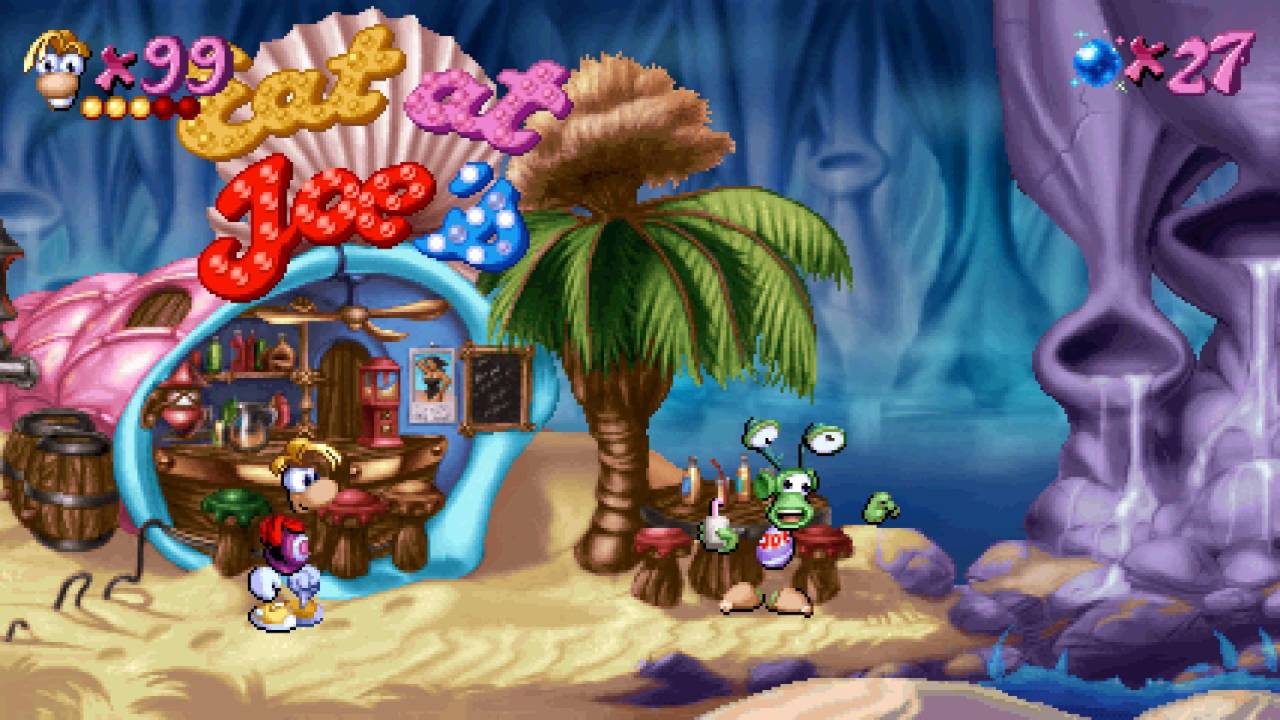
The PlayStation versions include quality-of-life features that make the notoriously hard campaign easier to complete. The rewind option is also a nice touch that everyone can use.
The collection keeps Rayman's classic art style alive by giving you other ways to view it. However, the fact that the original soundtrack is missing from all versions means that the bundle can't fully live up to its "definitive" moniker.
Even so, playing Rayman on PC in its original form, with modern improvements and a long behind-the-scenes documentary, is a fascinating look at a key era in gaming history. The main adventure is still hard, attractive, and mechanically sound.
Editor, NoobFeed
Verdict
Rayman 30th Anniversary Edition may not be perfect, but it is a fitting tribute to a hero who had no arms or legs and whose design and challenge are still relevant 30 years later.
68
Related News
No Data.