
Yield! The Fall of Rome Review
PC
A small 4X game that lets you change history in the crumbling twilight of Rome without taking up your whole weekend.
Reviewed by Nusrat Choity on Aug 13, 2025
The late Roman Empire was one of the most dramatic times in history, with a weak giant staggering under the weight of political chaos, invasions, and cultural change. Not many strategy games are brave enough to set their whole game in this chaotic twilight, but Yield! The fall of Rome does.
After being in early access for a while, it was released in its 1.0 version. It takes the classic 4X formula of exploration, expansion, exploitation, and extermination. It turns it into something more focused, urgent, and accessible for people who love strategy but don't have a lot of time to spare.
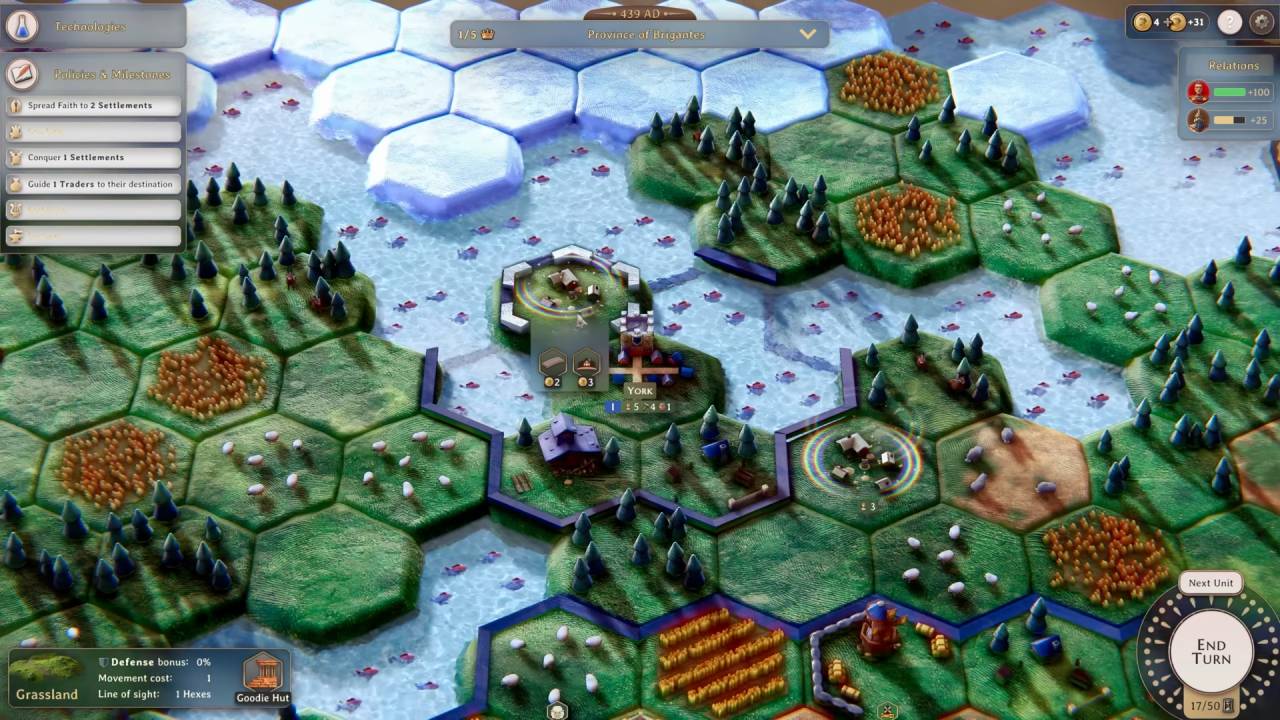
Yield! The fall of Rome doesn't try to compete with the long-running marathons in the genre, like Total War or Civilization. The game finds a more specific niche: short campaigns that you can finish in a few hours, but still have important choices to make. It's not trying to do everything; it's trying to be sharp, lean, and engaging. And for the most part, it works.
You are thrown back in time to 401 AD, when Rome is losing control of its vast territories. The Western Empire is not as strong as it used to be, and barbarian powers are growing on all sides. You don't play as Rome itself; instead, you take on the role of one of eight different factions, each with its own goals and skills.
From the Sassanids in the east, who have a lot of cavalry, to the Berbers on the coast of North Africa, to the Germanic tribes that live in the woods, to the Huns, who are always on the move, each group adds a different tone to your campaign. Instead of a big, branching historical story, the game is made up of mission-based scenarios. You have to fight off invasions, take over cities, or build up your economy. Your progress is measured by crowns, which are the currency of victory.
This design choice takes the focus off of just painting maps and puts it on doing things with a purpose. Every campaign is a race, not a slow burn. It's a fight to get to the crown target before your competitors. You don't have centuries to play with in this Rome-at-sunset world; you have to make your mark quickly.
At its core, Yield! The fall of Rome is still a turn-based strategy game with hexes. You will send settlers to claim land, improve resource tiles, build cities, and make armies. But the pacing and systems don't have a lot of the genre's usual extra stuff.
The most obvious change is that there is no longer a separate science resource. You can buy technology with gold, which is also what you need to build things, get new units, and improve existing ones. In this economy with only one currency, you have to make trade-offs all the time. Do you put money into military improvements now, or do you save up for that city improvement that could help you make more money in the long run?
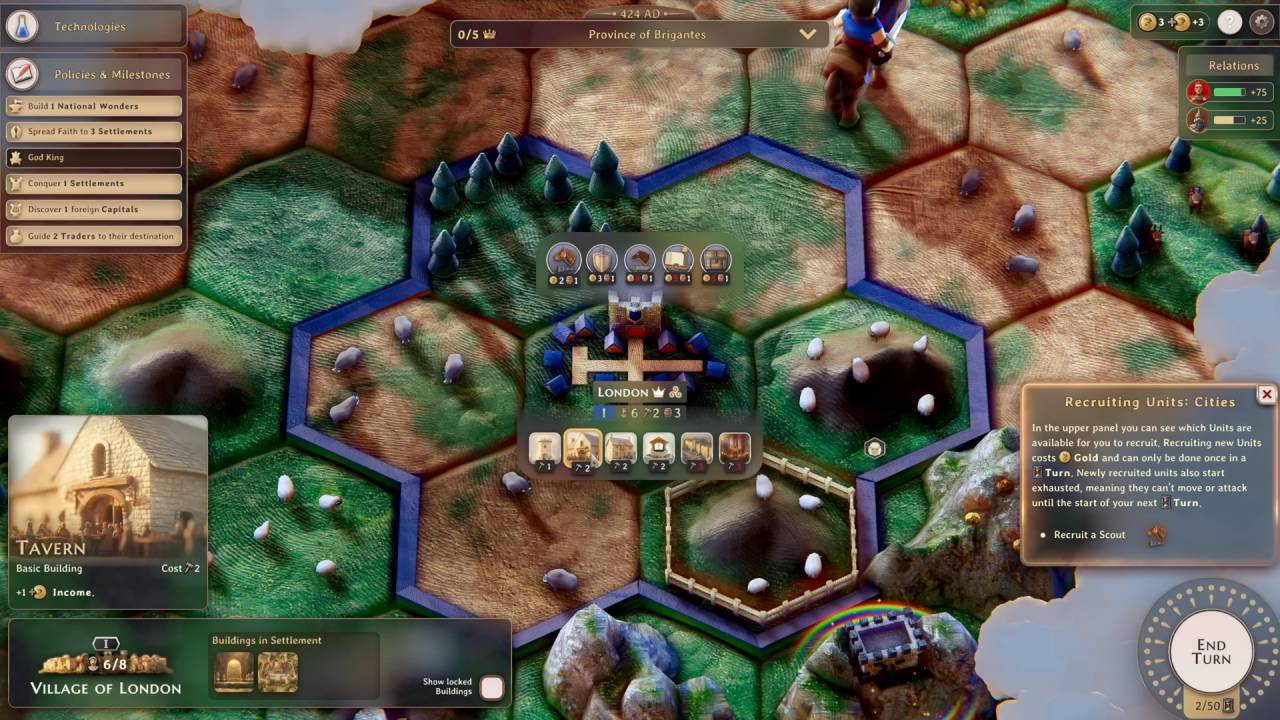
Getting resources is just as easy. You won't have to move workers around for ten turns to build a farm anymore. You can instantly improve any tile you own if you have the right technology and gold. This keeps the game moving quickly and stops it from getting stuck in micromanagement hell in the middle.
Most of the time, campaigns have time limits, which means that every choice feels important. You can't coast or say, "Just one more wonder before I win." The clock is ticking, and every move either gets you closer to winning or wastes time.
Fight in Yield! The fall of Rome requires tactical discipline. The AI is aggressive, takes advantage of mistakes, and is happy to punish them. Putting a lot of units on the field doesn't mean you'll win. The terrain, how the units match up, and where they are on the field are much more important than how many units you have.
Every faction has its types of units and strengths, which makes you want to play to your strengths. Cavalry can be powerful in the open, but they can fall apart in rough terrain. Infantry can defend cities from attacks, but they might not be able to catch enemies who are running away.
Hero units, like your kings and queens, add another level. These leaders show up on the map, gain experience, and bring special skills that can turn the tide of a battle or give you an edge in an economic race. It becomes a puzzle in its own right to keep them alive while using their strengths.
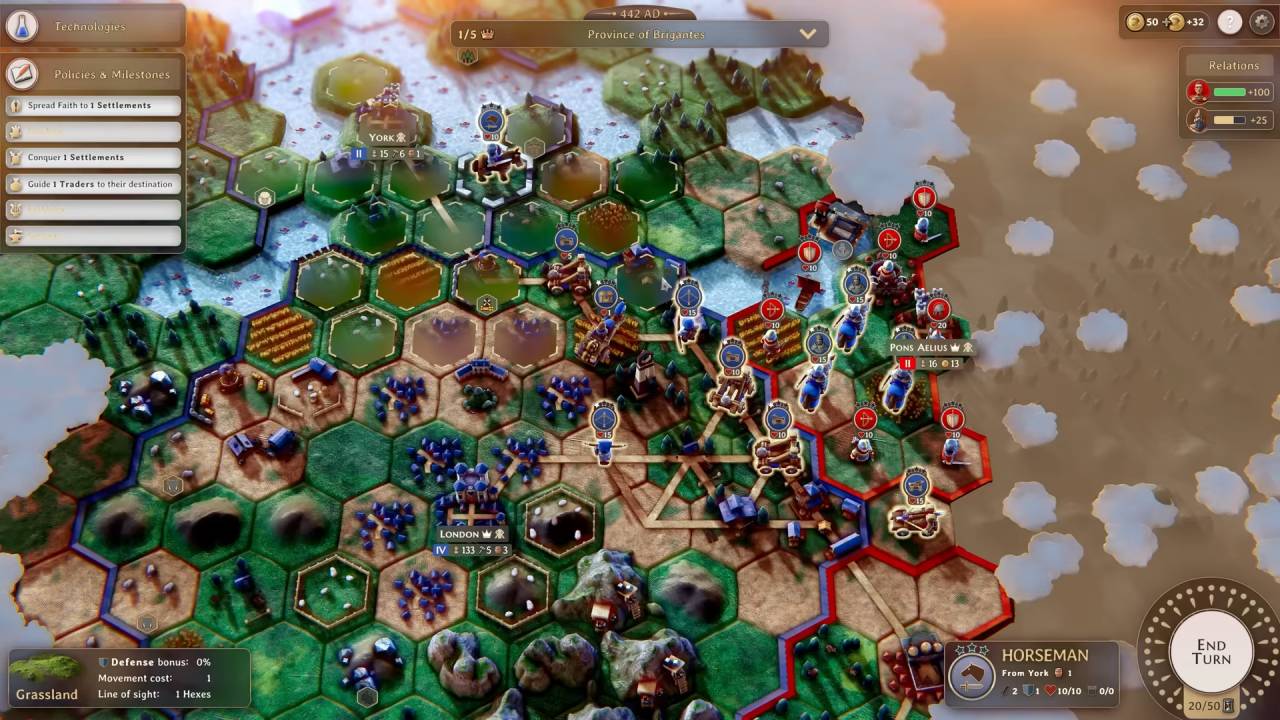
The crown-based win condition gives combat more meaning. You're not taking over the whole map; you're taking key cities, holding essential points, and messing up your enemies' plans. Every battle is a way to get what you want, not just something to do while your economy grows.
The good news is that battles feel heavy, end quickly, and are strategic. There will be times when you need to sacrifice a unit to slow down an enemy army or take a risky offensive that could pay off big time if you get to the crown location.
The bad thing is that there isn't much room for diplomacy or peaceful ways to solve problems. The AI is more likely to be hostile, and there aren't any meaningful alliances in the game. This keeps the focus on fighting, but it also limits the ways you can change the map.
Yield is going up! Your faction's infrastructure and your hero's skills both led to the fall of Rome. In a campaign's scenarios, leaders gain XP, which lets them improve their strengths or fix their weaknesses.
Winning one mission can give you advantages in the next, like more units, better gear, or extra resources. This makes the campaigns feel like they are all connected. And if you want something you can play over and over again, the custom campaign generator can make procedural maps and goals that will keep you guessing.
The way the graphics look is a fine line between being clear like a board game and being stylized like 3D. The map is colorful but not too busy, and you can easily tell which units are which. Icons and UI elements are simple, which makes it easy to keep track of resources, goals, and threats without having to dig through menus all the time.
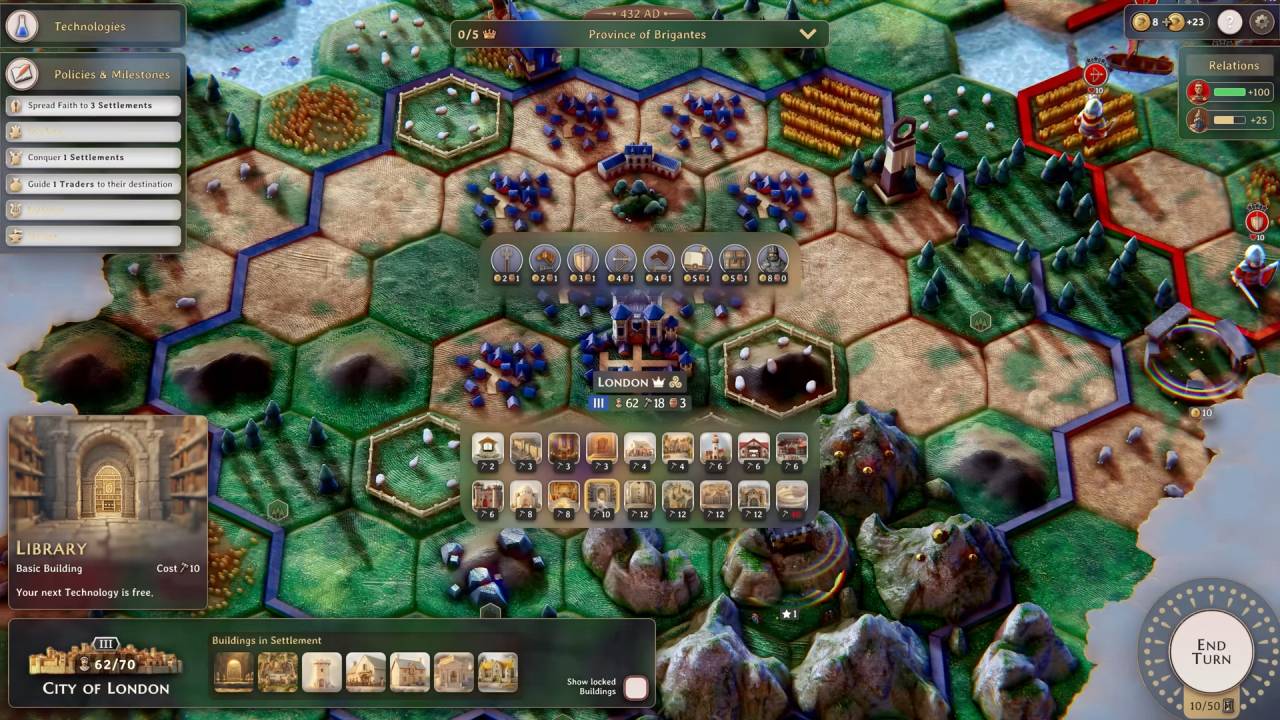
That said, not everyone will like the style. Some parts look like they belong in a mobile game, and some factions could use more cultural details and depth to stand out. Still, the art direction does a good job of keeping up with the fast pace of the game.
The music is subtle but effective; it sets a serious mood without drawing too much attention to itself. Ambient music helps to build the tension of an empire that is falling apart and the urgency of your campaigns. The sounds of units and actions are more useful than flashy ones, which keep the focus on making choices rather than on the show.
There could be more variety, especially in music or cultural audio cues that are specific to each faction, but what's here works well with the mood of the game.
Yield! The fall of Rome knows precisely what it wants to be. It doesn't want to be your epic 200-turn Civilization marathons or the big battles of Total War. Instead, it gives you strategy in small doses: campaigns that you can finish in one sitting, with enough depth to keep you thinking but not so much that you have to do a lot of maintenance and micro-management.
Its strengths are its pacing, clarity, and focus. You are always making choices that matter, like whether to buy a tech instead of a unit, rush to get a crown point, or place an army to stop an enemy. The different factions and their hero units add flavor, and the various types of missions in the campaign, from structured to procedural, keep things interesting.
.jpg)
There are some chances that it missed. There should be a sandbox mode where you could rewrite history as Rome itself. There isn't enough diplomacy, cultural representation could be better, and some historical conflicts, such as religious conflicts, are barely touched on. These gaps don't ruin the experience, but they make you want more in a place that could use more depth.
Still, Yield! The fall of Rome is very well-made for a first full release if you've ever wanted a strategy game that doesn't waste your time but still makes you pay attention. It's easy to learn, fun to master, and set in a time in history that the genre should pay more attention to.
Contributor, NoobFeed
Verdict
A sharp, time-friendly 4X game set in the twilight of Rome that has a lot of different factions to choose from and combines strategy and urgency. Not perfect, but an excellent find for busy strategists.
70
Related News
No Data.