
FSR 4 Leak Brings AMD’s Upscaling Tech to RDNA 3 Handheld Devices
AMD’s focus on integrating efficient upscaling into RDNA 3.5 architectures signals a stronger push toward mobile gaming optimization.
Hardware by Tanvir Kabbo on Oct 21, 2025
Somehow, an INT8 version of FSR 4 was leaked by AMD, making its way into the wild and offering the chance to deliver higher-quality AMD upscaling across a range of devices. It works best with RDNA 3 graphics tech, but it also runs on RDNA 2, opening the door for FSR 4 on mobile devices from the Steam Deck through to the ROG Ally and even the new Xbox Ally X.
It's not official, but it does work. While the computational cost of the upscaler is expected to be high, it may be partially offset by the lower rendering resolution.
.jpg)
Setting Up FSR 4 on the Deck
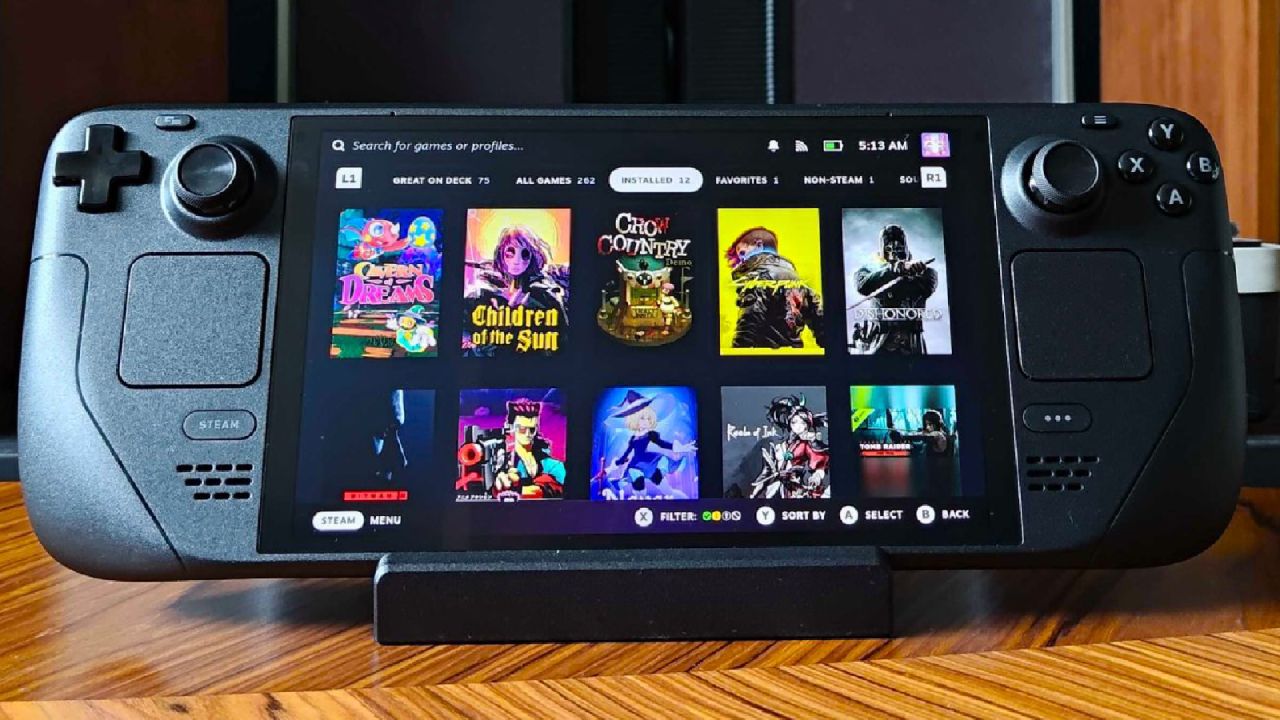
Using FSR 4 on the Deck is surprisingly simple. Just install Decki and its Optuscaler plug-in; there are plenty of guides available to walk you through it. After that, add a launch parameter to the game you want to use FSR 4 in, and you're good to go.
For our tests, we bench exclusively at 720p. We switched our benchmarking game of choice from Horizon Forbidden West to Cyberpunk 2077, as the latter is more manageable for Deck hardware. All tests were run using medium settings unless otherwise noted.
Performance on the Steam Deck
Things didn't look exceptionally great for FSR 4 here. With the game on medium settings and the Deck set to 720p, FSR 4 only delivered a 16% advantage over native resolution rendering. In comparison, XeSS increased that to 33%.
FSR 3 performed best, with a 44.6% lead over native, translating to a 24-point advantage over FSR 4. The real concern is that the additional processing time for using FSR 4 over FSR 3 averages out at 4.8ms—on top of FSR 3's existing computational hit.
You might think FSR 4 compensates with better image quality, but even dropping settings to claw back performance doesn't make much difference. Lowering from quality mode to balanced yields only a 2.5fps advantage (around 7%), while dropping to performance mode increases frame rates by 5.5fps, a 14.5% boost over quality mode.
In total, the best we could achieve was a 25% lead over native-resolution rendering using FSR 4 in performance mode, which upscalers to just 25% of the output resolution.
Real-World Gameplay and Image Quality
Despite the performance hit, FSR 4 allowed us to play Control in balanced mode with settings that are essentially console-equivalent—roughly a low/medium hybrid on PC with medium ray tracing.
Engaging the Deck's 30fps limiter provided a stable experience, though occasional performance drops occurred. The most impactful ray tracing effects in Control were present and looked great.
So, why choose FSR 4 at all? When comparing heavy ray tracing scenes—especially demanding on a Steam Deck—the advantages become clearer. In one scene, Control at native 720p ran at around 21 fps. Dropping to 540p using the game's own upscaler delivered a 53% improvement.
FSR 4 in balanced mode, comparable to around 423p internally, boosted performance over native 720p by 85%, allowing us to absorb the ray tracing hit. While FSR 4 was only 4% faster than FSR 3 in this case, the improvement was enough to make a difference.
FSR 4's Aims for Mobile Graphics
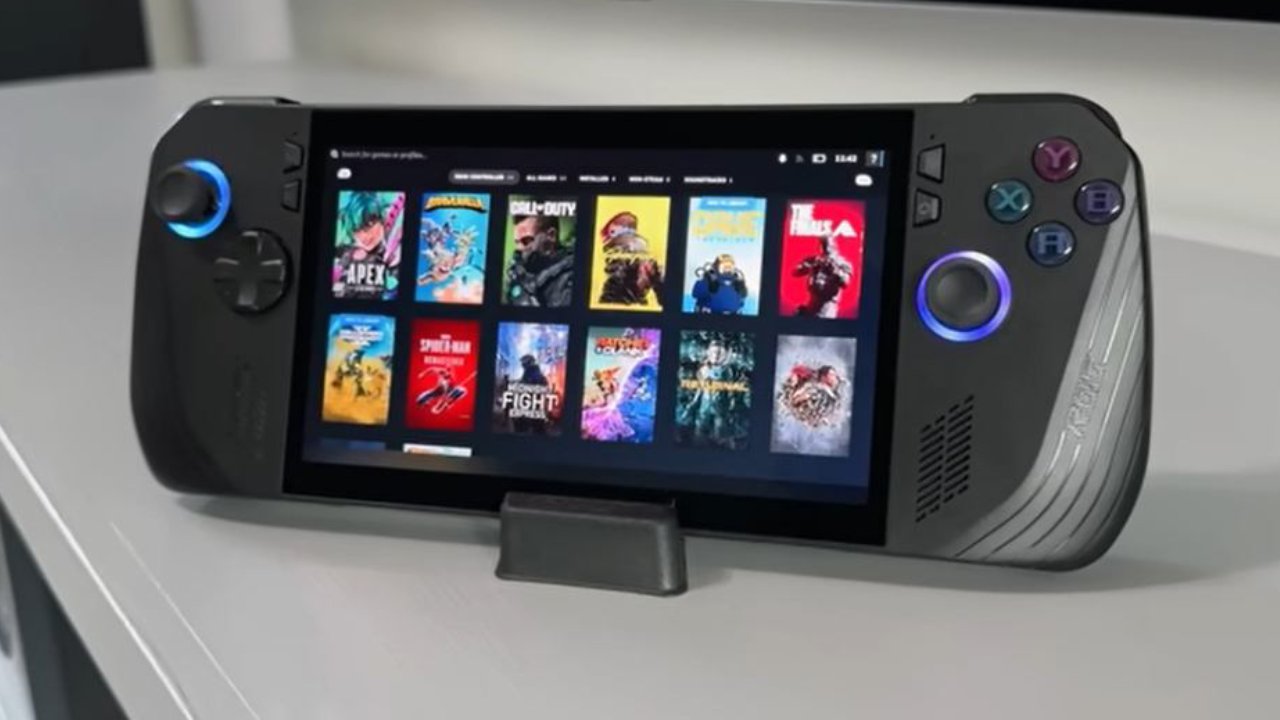
One of AMD's stated goals for FSR 4 was to add good-quality upscaling to its range of mobile graphics, mostly based on RDNA 3.5—apart from some older Z2 lineup chips. The Z1 Extreme in the ASUS ROG Ally, however, is RDNA 3.5, making it a suitable test platform.
Returning to Cyberpunk 2077, we initially found strange results at 720p on medium settings with the Ally set to 30W TDP. Only FSR 3 provided a reasonable bump with a 24% performance boost, dropping to 10.5% with XeSS and just 7.7% with FSR 4.
FSR 3 was 15% faster than FSR 4, and the millisecond gap was a substantial 7.7ms. Even with more aggressive upscaling, improvements were limited. You could achieve a 20-point boost overall, but only by using FSR 4 performance mode.
Higher Resolution Testing and Processing Costs
Testing again at 1080p gave more intriguing results. In balanced mode (or its equivalent in XESS), FSR 4 remained at the bottom, delivering a 28% increase in performance compared to 35.5% with XeSS and 56% with FSR 3.
That translates to a 4.5ms higher processing cost for FSR 4 compared to FSR 3. The older FSR 3 remains significantly faster, and that's the key area where FSR 4 must improve before release. Even in performance mode, FSR 4 couldn't match FSR 3 in balanced mode.
Practical Use Cases and Frame Generation
Despite the slower processing, performance boosts with FSR 4 were decent overall. Certain games still looked excellent, even in performance mode at 1080p. In practical use, we tested Cyberpunk 2077 in FSR 4's performance mode with settings equivalent to PS5's performance mode, targeting 30 fps in GPU-heavy environments. The results were surprisingly stable and visually impressive, especially on the handheld's screen.
The Ally's 120Hz display opens the door to 40fps performance modes, but maintaining that frame rate consistently was too demanding. Ultra performance mode could get closer, but we decided to try FSR 3.1 frame generation alongside FSR 4 upscaling.
The results were mixed—latency and frame-generation artifacts weren't major issues, but frame-time consistency was. Disabling VSYNC revealed up to a 12ms variance across frames, resulting in noticeable inconsistencies.
Future of FSR 4
FSR 4 delivers impressive visual quality and works effectively on RDNA4 in its FPS incarnation, with the INT8 version looking very similar. Image quality differences likely stem from the fact that this is an unofficial release, about which we know very little.
Still, its existence—combined with AMD's previous statements about enhancing upscaling for mobile processors—suggests the INT8 version may officially appear soon.
When asked, AMD commented, "We look forward to more updates to FSR 4 this fall that will continue to improve gamers’ experiences." It's hardly confirmation, but perhaps there's more to come for FSR 4 in the near future.
Also, check our other Handheld articles below :
- ASUS ROG Ally X Handheld Review: Double the Battery, Double the Comfort
- Nintendo Switch 2 Vs. Original Switch 1: A Full Comparison
- How To Connect A Camera And Join Voice Chat With Nintendo Switch 2
- Nintendo Switch 2 Review: Handheld Performance, Features & Value Breakdown
- ROG Xbox Ally X Vs. ROG Ally X: Display, Battery & Controls
- ASUS ROG Ally X vs. Steam Deck OLED: Display, Battery & Gaming Benchmarks
- MSI Claw 8 AI+ Review: Display, Controls & Gaming
- Nintendo Switch 2 vs. Steam Deck OLED: Gaming, Performance, Battery, Display and Value
- PlayStation Portal Review: Remote Play, Cloud Streaming & Travel Gaming
- PlayStation Portal vs. Lenovo Legion Go: Best Portable Gameplay
- Cyberpunk 2077 Patch 2.3 FPS Test on MSI Claw 8 AI+
Senior Editor, NoobFeed
Gaming Hardware Updates
No Data.