
Intel Core Ultra 7 265K vs. Ryzen 7 9700X: Best CPU for Gaming and Future Upgrades
Intel's Core Ultra 7 265K delivers competitive gaming performance but struggles against Ryzen's efficiency and platform longevity advantages.
Hardware by Masaru Hoshino on Aug 26, 2025
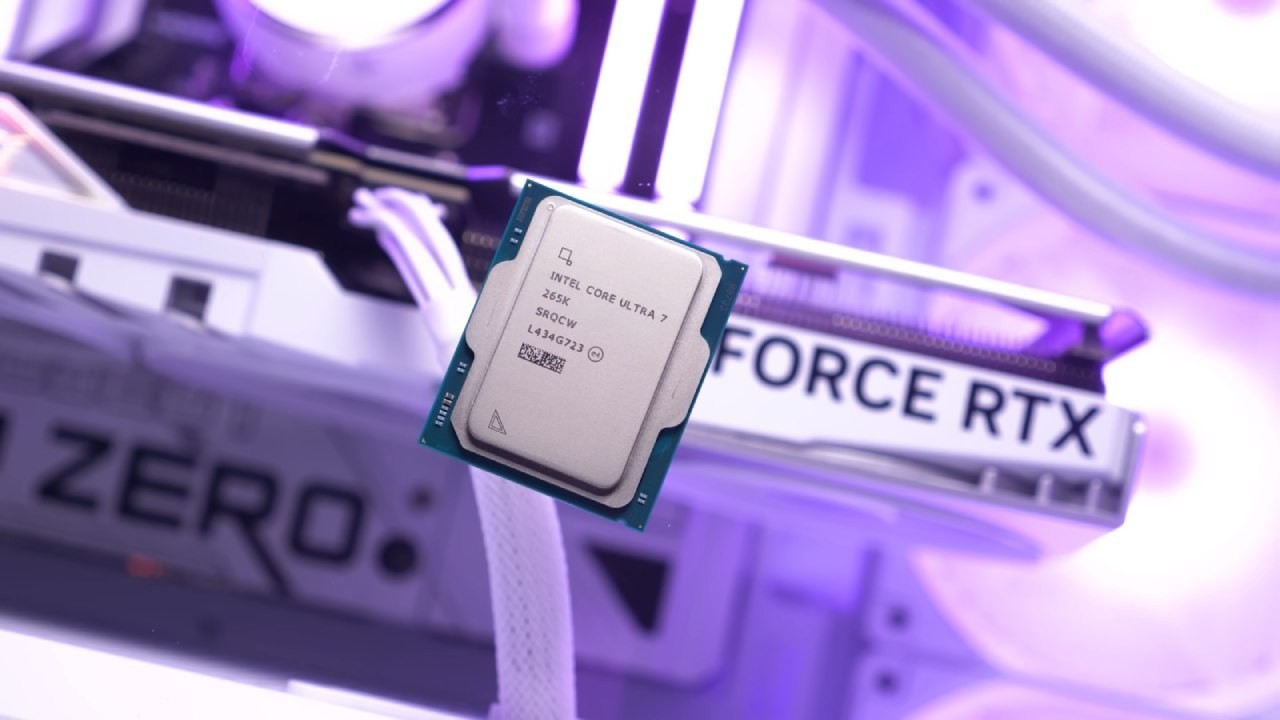
It has been 10 months since the release of Intel's Arrow Lake Core Ultra desktop series, and the reception has been mixed. Core Ultra lineup wasn't necessarily bad, but struggled to compete with AMD's Ryzen processors in both performance and platform value.
With no upgrade path and prices initially higher than the competition, the CPUs failed to attract strong demand. However, with prices dropping significantly, Core Ultra 7 265K has become a more affordable option. The real question is whether it now offers enough value for gamers.
CPU Specs and Pricing
Core Ultra 7 265K launched with an MSRP of $395 and initially sold between $390 and $430. Due to slow adoption, prices began to decline, and today you can easily find one for around $310, with sales dropping as low as $290.
At this reduced price point, it may seem like a compelling choice, but the performance story against competing Ryzen CPUs needs to be examined closely.
Testing Conditions
For testing, four games were benchmarked across two quality presets—medium and ultra—at 1080p, 1440p, and 4K. Each game was tested with four different GPUs: RTX 5090, RTX 5080, RX 9070, and RX 9060XT 16GB.
This setup created a wide variety of CPU/GPU scaling scenarios. All results are based on three-run averages, producing dozens of graphs and a comprehensive performance overview.
Rainbow Six Siege Performance
At 1080p medium, 265K struggled, with Ryzen 7 9700X being 23% faster using RTX 5090, while even the older Ryzen 5 7600X held a 10% advantage. Ryzen 7 9800X3D was nearly 40% faster.
Dropping to RTX 5080 still left the 9700X ahead by 13%. The gap narrowed only when moving to the RX 9060 XT, where GPU bottlenecks equalized performance.
At 1440p medium, the story remained the same, with 9700X leading by almost 20% on RTX 5090. At 4K medium, results were fully GPU-limited, eliminating CPU differences.
Switching to ultra at 1080p, 265K fared better, nearly matching 9700X on 1% lows despite trailing by 14% in average FPS. With RTX 5080 and lower GPUs, results became fully GPU-limited.
Kingdom Come Deliverance II Performance
At 1080p medium, 265K performed much better, matching Ryzen 5 7600X and trailing 9700X by just 5-8%. At 1440p medium, however, 9700X extended its lead to 12%. At 4K, all CPUs were GPU-limited.
On ultra settings, 265K even managed to beat 7600X by 5% with RTX 5090, while 9700X was just 4% faster. However, at 1440p, 265K unexpectedly fell behind in 1% lows with RTX 5090, producing inconsistent results compared to the competition.
Marvel Rivals Performance
At 1080p medium, 265K was positioned between 7600X and 9700X, just 3% ahead of the former and 5% behind the latter. Against 9800X3D, however, it was 26% slower. With RTX 5080, 265 K's results improved, matching 9700X and narrowing the gap with 9800X3D to only 2%.
At 1440p medium, the differences shrank further, with 265K trailing 9700X by 5% on RTX 5090. At 4K, results became fully GPU-limited.
On ultra settings at 1080p, 265K again slotted between 7600X and 9700X, 4% faster than the former but 6% slower than the latter, with 9800X3D holding a 14% advantage. At higher resolutions, results were nearly identical due to GPU bottlenecks.
Warhammer 40,000 Space Marine II Performance
In this title, 265K held up better. At 1080p medium with RTX 5090, it was 14% faster than 7600X but still 6% slower than 9700X. At 1440p medium, the margins stayed consistent: 9700X was 9% faster than 265K, while the Intel chip was 13% faster than 7600X. At 4K, results were largely GPU-bound, though 9700X still managed higher 1% lows than 265K.
On ultra settings, 265K delivered 12-16% better performance than 7600X but was again 6-9% slower than 9700X across GPUs. At 1440p ultra, results were nearly identical. At 4K ultra, GPU limits dominated, with only RTX 5090 showing slight advantages for Ryzen in 1% lows.

Average Gaming Performance
Across the four tested games, 265K averaged just 1% faster than 7600X at 1080p medium, while 9700X was 10% faster. 9800X3D dominated with a 33% lead, but it comes at a much higher price. At 1440p medium, 9700X held an 11% lead, with 9800X3D 26% ahead. At 4K medium, results were GPU-bound, with minimal differences between CPUs.
On ultra settings at 1080p, 265K improved slightly, outperforming 7600X by 5%, but 9700X still maintained an 8% lead.
9800X3D remained 20% faster. At 1440p ultra, 265K narrowed the gap, with 9700X just 5% faster and 9800X3D 10% faster. At 4K ultra, all CPUs performed nearly identically due to GPU limitations.
Final Thoughts
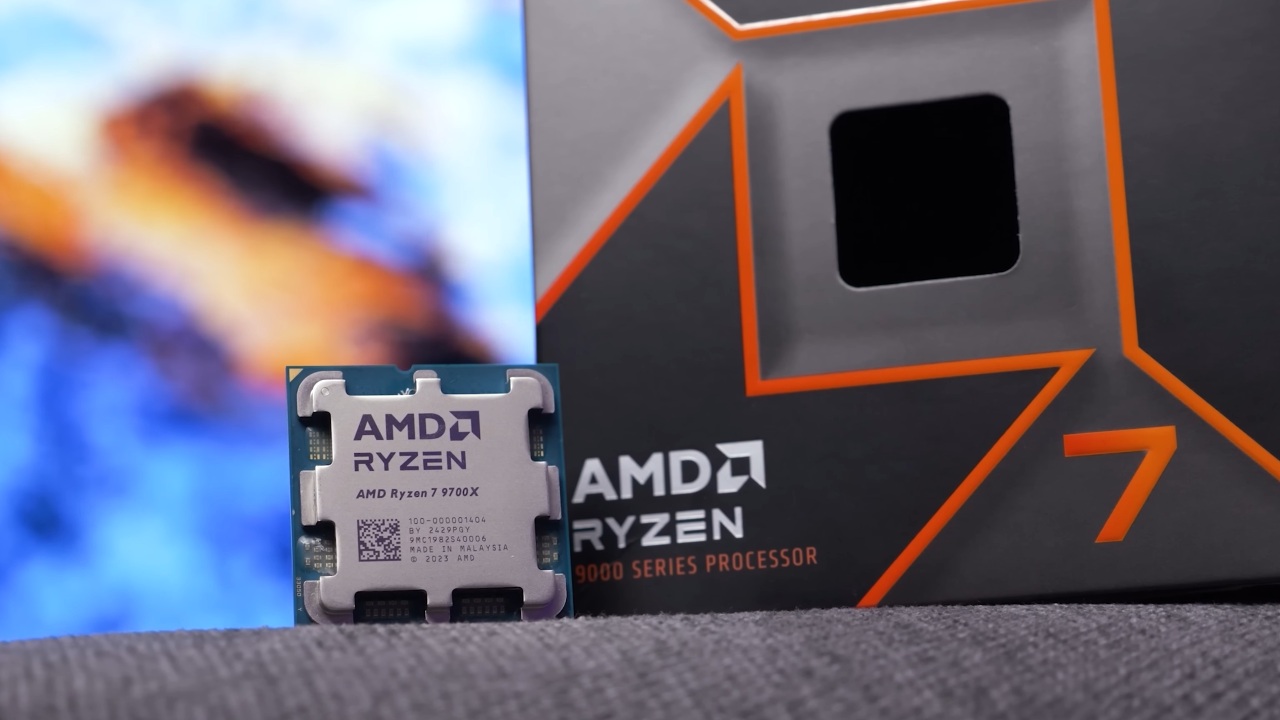
In general, Core Ultra 7 265K is comparable to AMD's Ryzen 5 7600X, but in CPU-limited situations, it lags behind Ryzen 7 9700X by about 5–10%. Performance by itself does not make it superior to Ryzen, even though pricing is now competitive. In contrast to Intel's Arrow Lake, 9700X offers an upgrade route through the AM5 platform and uses around 20W less power.
If you are building a gaming PC, Ryzen 7 9700X is the smarter choice due to performance consistency, lower power draw, and the potential to upgrade to future CPUs without replacing your motherboard.
The only scenario where 265K makes sense is productivity workloads, where it competes with more expensive Ryzen 9 parts. For gaming, however, the lack of platform longevity makes it extremely difficult to recommend.
Check Our Other AMD articles:
- AMD Ryzen 9 9950X3D Review: Setting The Standard For 2025 Gaming CPU
- AMD Ryzen 7 9800X3D Review: 3D V-Cache Goes God Mode with Stunning Gaming Performance
- AMD RX 9070 Performance Review: Thermals, Clocks, and Real-World FPS
- AMD Ryzen 5 7600 Review: Best Budget Gaming CPU of 2025?
- AMD Radeon RX 7800 XT Review: RDNA 3 Power For Midrange Gaming
- Sapphire NITRO+ AMD Radeon RX 9070 XT Review: The Ultimate 4K Gaming GPU
- AMD Ryzen 7 7800X3D: Delivers Gaming Performance Far Beyond Expectations
- AMD Ryzen 9 7900X Review: Powering the AM5 Era with DDR5 & PCIe 5.0
- ASRock Radeon RX 7800 XT Challenger OC Review: Best Price-to-Performance GPU of 2025
- Intel Core i9‑14900K vs. AMD Ryzen 7 7800X3D: Power Profiles & Gaming Benchmarks
Editor, NoobFeed
Gaming Hardware Updates
No Data.