
Intel Core Ultra 7 265K vs. Ryzen 7 7800X3D: 1080p, 1440p, 4K Gaming
Comparing gaming performance across 40 titles at 1080p, 1440p, and 4K while highlighting Intel's power efficiency gains and stability concerns
Hardware by Masaru Hoshino on Jul 07, 2025
Intel's latest desktop processors, the Core Ultra 2000 Series, mark a departure from fourteen generations of Core i branding. With an all‑new design, architecture, and manufacturing process, these CPUs promise enhanced efficiency and performance.
Alongside the processors, Intel has unveiled new 1851‑socket motherboards and chipsets. We will focus on gaming performance, comparing the Core Ultra 7 265K to AMD's Ryzen 7 7800X3D across multiple resolutions and dozens of titles.
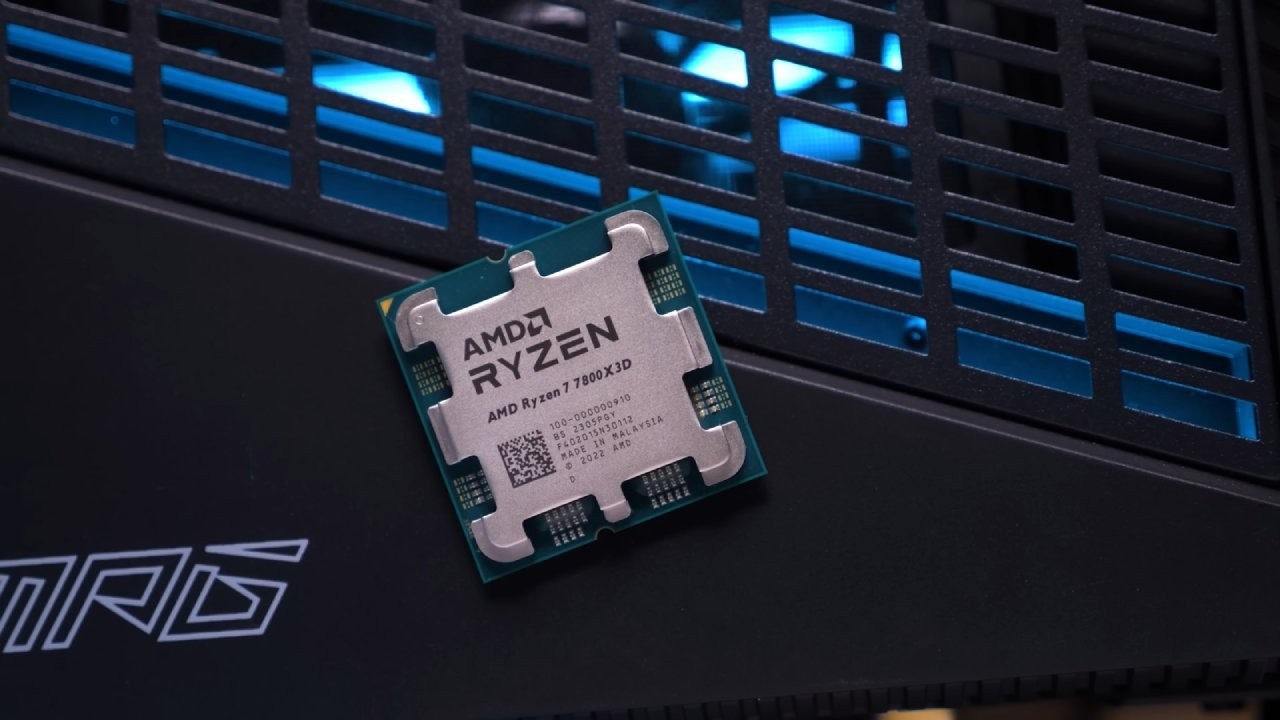
CPU Specifications
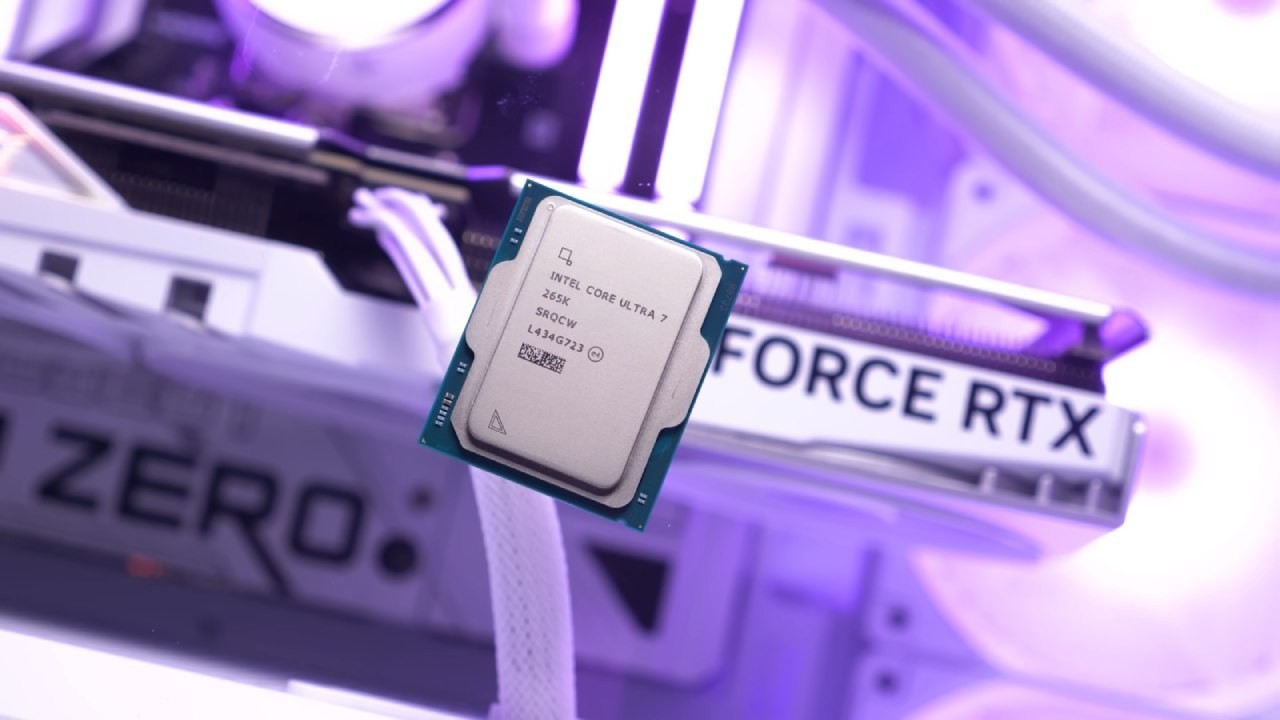
The Core Ultra 7 265K is a 20-core processor featuring eight P-cores and twelve E-cores. Hyperthreading has been removed under the Arrow Lake architecture, resulting in fewer total threads compared to its predecessor.
With a boost to 5.5GHz, the P-cores run at a base frequency of 3.9GHz—a mere 2% reduction versus the Core i7‑14700K—while the E‑cores run at 3.3GHz base and boost to 4.6GHz, a 7% improvement over the previous generation's E‑cores.
Total L3 cache sits at 30 MB, and combined L2 cache reaches 36 MB (3 MB per P‑core and 4 MB per four‑core E‑core cluster). The chip's base TDP is 125W, with a maximum turbo power of 250W, and Intel's suggested pricing is $395 per 1,000 units.
All "K" models support dual‑channel DDR5‑5600 UDIMM or DDR5‑6400 CDIMM memory, the latter featuring on‑module clock driver circuitry for tighter timings at high speeds. PCIe support includes 20 PCI 5.0 lanes, four PCI 4.0 lanes, and a DMI 4.0 x8 link to the chipset. Unlocked multipliers enable overclocking.
Test Systems and Methodology
Testing was conducted on two clean benchmarks: one for the Core Ultra 7 265K and one for the Ryzen 7 7800X3D. Both setups used identical components wherever possible—including the same RTX 4090 GPU—and ran Windows 11 24H2 with the latest drivers.
Memory configurations matched the manufacturers' recommendations: DDR5-5600 for standard UDIMMs and DDR5-6400 for CU-enabled modules. Detailed system specs and testing protocols are available in the supplemental documentation.
Standard CPU Benchmarks
In Cinebench R23, the Ultra 7 265K scored just over 36,000 points, edging out the Core i7‑14700K by a small margin and doubling the Ryzen 7's score in single‑threaded tests (over 2,300 points).
In Blender rendering, the Ultra 7 was slightly ahead of the previous‑gen Core i7 while completing the task in under 193W of power draw, significantly lower than the 250W or more required by the earlier Intel chip.
By comparison, the Ryzen 7 consumed 87W but remained roughly 50% slower in longer renders. These results highlight Intel's efficiency gains under heavier workloads.
Gaming Performance Overview
40 games were tested at 1080p, 1440p, and 4K resolutions. Early results in F1 2023 showed the Ultra 7 leading by 9% at 1080p, 6% at 1440p, and 5% at 4K versus the Ryzen 7. In Borderlands 3 (Unreal Engine 4), the Ultra 7 posted a 25% advantage at 1080p, 14% at 1440p, and matched the Ryzen 7 within 1% at 4K, where GPU limitations dominate.
Tiny Tina's Wonderlands delivered nearly identical performance between both CPUs, and Spider‑Man hit CPU‑bound limits around 230 fps on both 1080p and 1440p, versus roughly 245 fps on the Ryzen 7. Black Myth: Wukong, being heavily GPU‑bound even at 1080p, showed minimal CPU influence.
However, several titles revealed significant weaknesses on Intel's side. The Division 2 and Phantom Liberty exhibited failures under Easy Anti-Cheat with core isolation disabled, triggering error messages or blue screens. Flight Simulator fluctuated between CPU and GPU bottlenecks but consistently favoured the Ryzen 7 by double‑digit margins.
F1 2022 favored AMD by approximately 10% at 1080p, contrasting sharply with Intel's marketing slides for F1 2023. Far Cry 6 was capped at around 150 fps CPU‑limited across all resolutions, giving AMD a decisive lead in 1080p and 1440p. Shadow of the Tomb Raider similarly underscored the Ultra 7's shortcomings.

1080p Summary
At 1080p, most games ran at 200 fps or higher on both CPUs, and GPU‑heavy titles—Starfield, Alan Wake 2, Cyberpunk 2077—exceeded 120 fps. Flight Simulator was the lone exception, dipping into CPU‑limited territory.
Yet when you compare averages, AMD leads in 20 of 40 titles by 10% or more, with 15 games showing over 19% gaps and six titles exceeding 39% differences in AMD's favour. Counter‑Strike 2 breaches a 50% gap—an enormous delta in an esports staple—despite recognised variability in test consistency.
1440p and 4K Summaries
Moving to 1440p, GPU limitations emerge in some titles, but AMD retains a double‑digit average lead. Thirteen games still show ≥10% advantages for the Ryzen 7, with Intel winning decisively in only three.
At native 4K, the gap narrows to an average AMD lead of nearly 4%, yet six games still demonstrate ≥10% disparities. It's important to remember that many gamers use upscaling techniques—rendering at 1080p or 1440p on 4K displays—so the real‑world differences will resemble lower‑resolution results.
Stability and Variance
Since launch, Arrow Lake's benchmarks have been all over the place—identical tests sometimes jump by 10–15% for no apparent reason.
We've seen other reviewers, with different motherboards, RAM kits, and even Core Ultra 9 chips, hit the same erratic results. Despite Intel's big performance promises, this kind of instability shakes your confidence in the platform's reliability.

Power Efficiency
The Ultra 7's 193W draw under Blender is far easier to cool than its predecessors, and gaming power usage aligns more closely with high-end Ryzen alternatives.
In Last of Us Part I, for instance, the Ultra 7 consumed 5% less power than a comparable Intel XPS platform while delivering 12% more performance than a prior‑gen CPU. That said, AMD's 7800X3D and upcoming Zen5-based X3D chips still offer superior efficiency in most productivity and gaming scenarios.
Value Proposition
Priced at roughly $395, the Core Ultra 7 265K undercuts the Ultra 9 by 40% while trading only 5% performance on average across games.
In cost‑per‑frame analyses, the 265K matches or slightly betters the Intel i9‑9900X, yet trails behind the Ryzen 7 7800X3D and Ryzen 7 7700X by 4% and 35% respectively in value terms.
When compared to the Core i7‑14700K and i5‑14600K, the 265K remains a weaker overall proposition—those CPUs deliver higher performance and offer 20–35% better value.
Key-Takeaways
Intel's Arrow Lake launch seems rough around the edges—erratic gaming performance, compatibility issues, and surprising benchmark swings all contribute to a bad first impression.
While the Core Ultra 7 265K improves power economy and productivity, it falls behind in terms of gaming performance.
If you live and breathe esports or rely on CPU‑heavy workloads, you'll likely find more reliable—and faster—results with AMD's Ryzen 7 7800X3D.
Intel still has a shot at smoothing things out through firmware and Windows updates, but right now, it feels like Arrow Lake hit the market before it was truly ready.
Unless AI tasks or specific productivity boosts are your top priorities, you might be better off holding off until those stability issues are ironed out.
Check Our Other Intel Chips Articles:
- Intel Core Ultra 9 285K Review And Performance Breakdown (2025)
- Intel Core Ultra 9 285K vs AMD Ryzen 7 9800X3D: In-Depth Gaming Performance and Benchmark Comparison
- Intel Core i5-13400F Gaming Performance: Still Worth It in 2025?
- Intel Core i9‑14900K vs. AMD Ryzen 7 7800X3D: Power Profiles & Gaming Benchmarks
- Intel Core i9 14900K: Specs, Benchmarks, and Competitor Comparison
- Intel Core Ultra 5 245K Review: Gaming, Productivity & Power Efficiency Tested
- Intel Core Ultra 9 285 K's iGPU Gaming: In-Depth Benchmarks & Analysis
Editor, NoobFeed
Gaming Hardware Updates
No Data.