
Intel Core Ultra 7 270K Plus vs Ryzen 7 7800X3D: Productivity and Gaming Performance
Intel’s 24-core Arrow Lake Refresh architecture overwhelms productivity workloads while AMD’s V-Cache still dominates gaming performance.
Hardware by Tanvir Kabbo on May 26, 2026
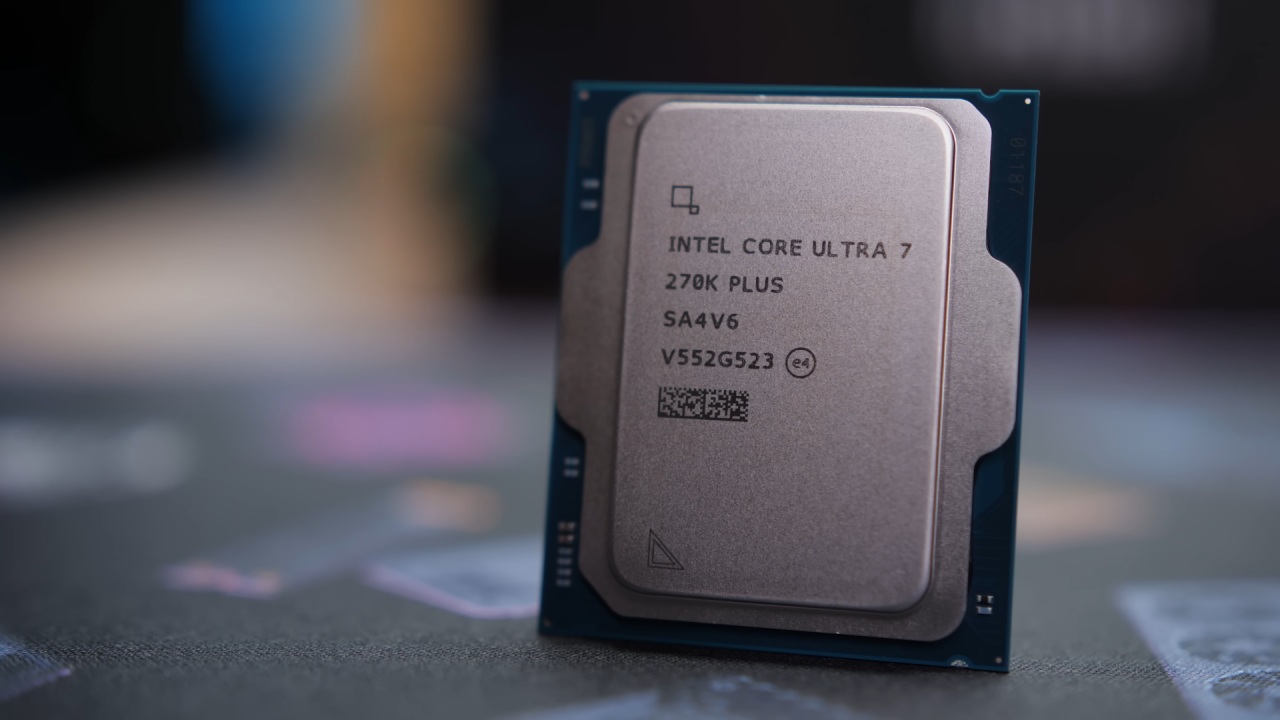
The mid-to-high-end CPU segment has rarely been this divided. On one side sits Intel’s latest Arrow Lake Refresh contender, the Intel Core Ultra 7 270K Plus, a brute-force, multi-threaded processor that pushes core density and productivity throughput into enthusiast territory. On the other hand, AMD’s gaming icon, the AMD Ryzen 7 7800X3D, continues to dominate purely on the strength of its 3D V-Cache architecture.
What makes this matchup particularly fascinating is not just performance—it’s philosophy. Intel is betting on raw compute and hybrid scaling, while AMD is doubling down on cache efficiency and gaming-first responsiveness. With pricing converging around the ~$300–$375 range depending on region, builders are now forced to choose between two completely different visions of what a “balanced” CPU should be.
A Split Identity in the ~$350 CPU Tier
The Core Ultra 7 270K Plus, priced roughly between $300–$330, represents Intel’s aggressive Arrow Lake Refresh strategy: more cores, higher-efficiency tuning, and a hybrid architecture designed to dominate heavy multithreaded workloads.
With a configuration of 24 cores (8P + 16E), it immediately positions itself as a workstation-class chip wearing a mainstream gaming badge.
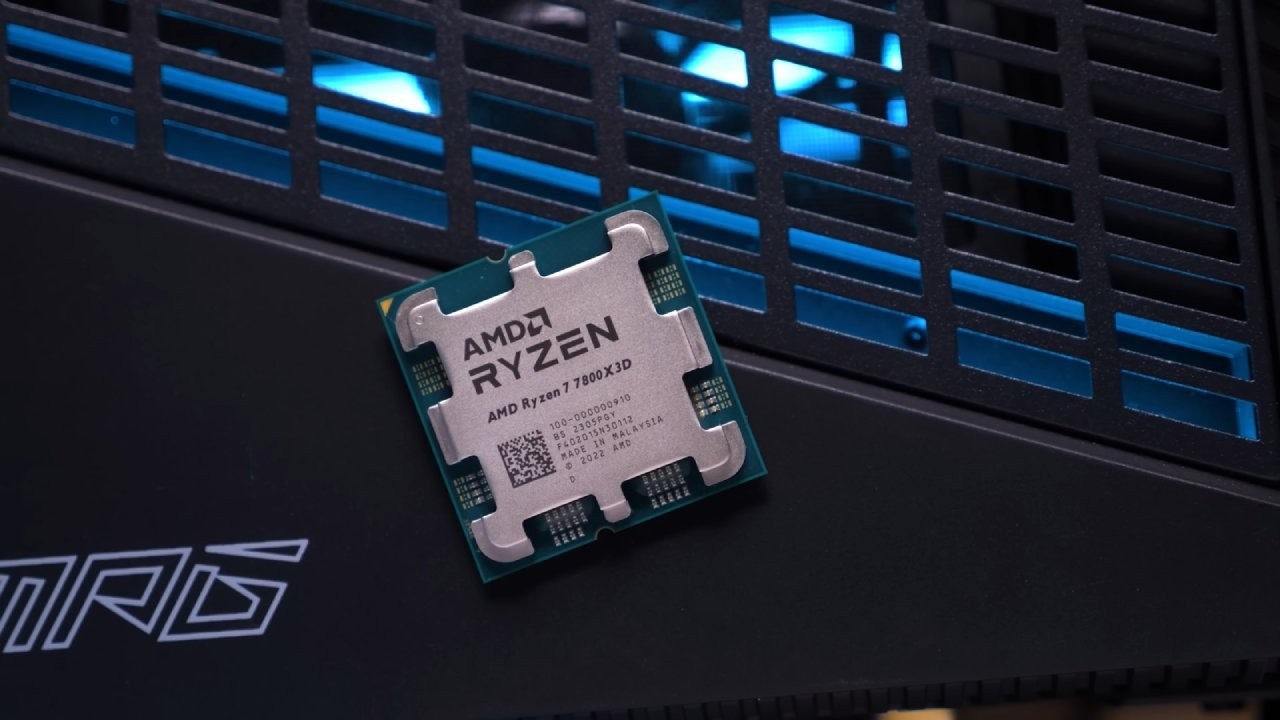
Meanwhile, the Ryzen 7 7800X3D, hovering closer to $375 (down from a $449 MSRP), appears modest on paper with just 8 cores. But its secret weapon—the massive 96MB 3D V-Cache—completely reshapes its behavior in real-world gaming scenarios.
This is not a fair fight in the traditional sense. It is density versus cache. Throughput versus latency. Productivity versus frame pacing consistency.
Intel’s Productivity Slaughter: Core Density Meets Brutal Scaling
If there is one area where Intel does not just win but overwhelms, it is sustained multi-threaded productivity workloads.
In CPU-heavy rendering and compute benchmarks, the Core Ultra 7 270K Plus demonstrates staggering gains. In LuxMark CPU C++ workloads, it delivers a 139% lead over the 7800X3D. Blender Monster rendering also sees a remarkable 116% uplift, showing how well Intel’s hybrid-core architecture grows under parallel demand.
When it comes to pure rendering, Intel still maintains a constant lead. In single-threaded tasks, the 270K Plus pulls ahead by approximately 29%, reinforcing its responsiveness in general productivity, game engines, and lightly threaded workloads.
This is where the architecture tells its story. The combination of 8 performance cores and 16 efficiency cores allows Intel to distribute workloads far more aggressively than AMD’s eight-core Zen 5 design. For creators, streamers who multitask heavily, and users running compilation-heavy workflows, the Intel chip behaves less like a gaming CPU and more like a compact workstation processor.
AMD’s V-Cache & Efficiency: Why Gaming Still Belongs to Ryzen
Despite Intel’s brute force dominance in productivity, gaming remains a different battlefield entirely—and this is where the Ryzen 7 7800X3D continues to resist displacement.
The key lies in its 96MB 3D V-Cache, which dramatically reduces memory latency in gaming workloads. While Intel can push higher raw compute, modern game engines are often far more sensitive to cache efficiency and frame consistency than raw core count.
As a result, the 7800X3D continues to match or outperform Intel in many real-world gaming scenarios, especially in CPU-bound titles where frame pacing and 1% lows matter more than peak throughput.
Equally important is efficiency. AMD’s chip is in an entirely different league when it comes to power consumption. Across most workloads, it draws less than half the power of Intel’s 125W base / 250W MTP envelope. That translates directly into lower thermals, quieter cooling solutions, and significantly less stress on midrange motherboard VRMs.
For gamers who prioritize silent operation, small-form-factor builds, or long-term efficiency, AMD’s approach remains extremely difficult to ignore.
Platform Tax Reality: DDR5 Pricing Changes Everything
In 2026, CPU pricing no longer tells the full story. The real bottleneck for builders is platform cost—and DDR5 has quietly become the biggest wildcard.
Due to ongoing memory supply constraints and global DRAM demand pressures, a decent 32GB DDR5 6000 MT/s kit is now priced between $350–$400, effectively doubling memory costs compared to previous cycles. This dramatically reshapes the value equation for both Intel and AMD platforms.
Motherboard pricing further complicates the decision. Intel’s Z890 ecosystem typically commands a premium for feature-rich boards, while AMD’s B650 and X670 platforms offer greater pricing flexibility but still suffer from inflated DDR5 dependency.
When the total platform is considered—CPU + motherboard + RAM—the gap between these two “$350 CPUs” can easily stretch to $200–$300, depending on configuration. That makes the decision less about silicon alone and more about total system economics.
Senior Editor, NoobFeed
Gaming Hardware Updates
No Data.