
XBOX Project Helix is Reportedly Aiming for 120 FPS With AMD’s New Magnus Chip
AMD’s reported Zen 6-based design could give the next XBOX dedicated AI processing path tracing and a major boost in graphical performance.
XBOX by Tahmid Mahi on Sep 09, 2026
XBOX Project Helix could be a much bigger hardware upgrade than just an increase in graphical power. AMD and XBOX are reportedly working on a new APU that will form the foundation of the next-generation system, bringing together AMD’s upcoming Zen 6 architecture with a range of technologies designed specifically for modern gaming.
The reported chip, known as Magnus, is expected to sit within AMD’s Medusa family and could eventually power more than one type of XBOX device. That means the technology could potentially extend across a traditional console, PC-style hardware, and handheld systems rather than limit itself to a single machine.
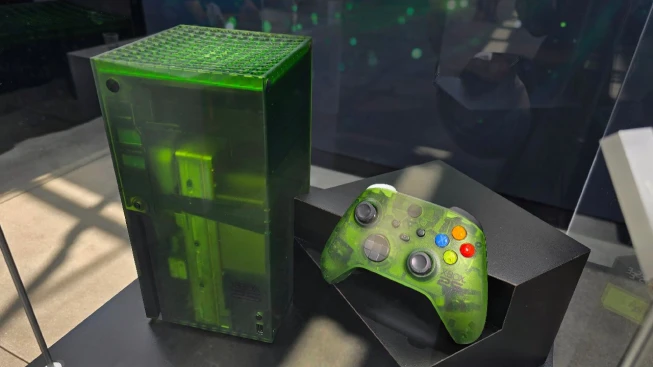
The reported partnership is significant because Project Helix appears to be built around a combination of CPU, GPU, and AI technologies rather than focusing on one component.
AMD’s Zen 6 architecture is expected to provide the foundation for the CPU, while the Magnus design could introduce a hybrid core configuration. This would then allow the system to use the powerful cores for heavy game workloads and the efficiency cores for background tasks and lighter workloads.
The reported Magnus configuration includes three Zen 6 cores and eight Zen 6C cores, giving the processor 11 cores in total. With simultaneous multithreading, the CPU could reportedly handle up to 22 threads, while 12 MB of L3 cache would help support the processor during demanding workloads.
The use of Zen 6 and Zen 6C together is particularly notable because it would provide XBOX a way to divide different tasks between performance-focused and efficiency-focused hardware. That could become useful when a game is running a large open world while the operating system and other background processes continue working at the same time.
The hybrid design could also help XBOX control power consumption without sacrificing performance when it matters. A demanding game might be better able to make use of the high-performance cores, while less important background operations could be relegated to the efficiency cores.
This could let the console perform better without needing every part of the processor at max power all the time. It is a similar philosophy to what has become increasingly common in modern processors, but applying it to a console could provide developers another way to manage limited hardware resources.
Another important part of the Magnus design is its reported neural processing unit.
Instead of depending on the CPU and GPU to do all the work for every AI task, Project Helix could have dedicated hardware built specifically for neural processing. That could allow AI-assisted features to handle some of the effort required to improve image quality and frame rates.

Path tracing could be one of the biggest visual improvements that Project Helix could bring. The technology is very demanding because it requires the system to figure out how light behaves throughout a scene, including reflections, shadows, and indirect illumination.
Today’s consoles are already capable of impressive lighting, but developers tend to mix techniques to get the desired result without hogging too much of the available frame-time budget. A more capable processor and graphics pipeline could allow Helix to take more advantage of path tracing, as well as provide developers with slightly more breathing room to keep performance up.
The reported hardware is also expected to support more advanced global illumination and lighting. That could mean more realistic shadows, reflective surfaces, ambient lighting, and other details that add realism to a game environment.
Developers might be able to use more physically accurate techniques in real time instead of relying so much on simulated lighting. You would likely notice the difference most in large environments where lighting changes across buildings, streets, interiors, and outdoor spaces.
However, Project Helix would not need to render every image at native 4K to produce a high-resolution picture.
The transcript claims that the Magnus chip will support FSR Diamond, described as a new generation of AMD’s Fidelity Super Resolution technology. Developers could reportedly render games internally at 1080p or 1440p and then use the reconstruction technology to produce an output that looks much closer to 4K.
That saved performance could then be redirected toward other areas of the game. Instead of just cranking up the GPU to push out more pixels, devs could spend that power on higher quality lighting, more complex environments, better effects, or higher frame rates.

The target for Project Helix, as reported, is 60-120 FPS across major games, which is a big target for a console. Maintaining that performance in demanding games would still depend on how developers use the hardware, but the combination of upscaling and dedicated processing could make the target more realistic.
AMD’s reported Medusa architecture could also introduce FP16 capabilities that are intended to support AI-related workloads. The important part of this approach is that AI would not necessarily replace the traditional rendering pipeline.
Instead, developers could continue creating the game’s core visuals while AI processing helps reconstruct or enhance the final result. That could allow games to maintain the artistic direction chosen by their developers while still benefiting from additional resolution and frame-rate improvements.
Taken together, the reported technology points toward three major areas of improvement for Project Helix.
The first is a dedicated AI processor that can assist with resolution and frame-rate enhancement. The second is a more powerful CPU configuration that could make demanding techniques such as real-time path tracing more practical on a console.
That final point could be especially important for open-world games. Modern games are increasingly asking hardware to keep track of large environments, large numbers of characters, physics systems, artificial intelligence, background simulations, and constantly changing visual effects.
A stronger CPU could help developers build these systems without allowing them to overwhelm the machine. The hybrid architecture could also provide assistance, for example, ensuring that the most demanding workloads get the right processing resources while simpler tasks remain efficient.

The greatest obstacle may not be performance but price. The transcript claims that XBOX is expecting Project Helix to cost around $1,200 and is trying to bring the price down to roughly $1,000. That would put the system well above the price range of mainstream consoles, presenting a difficult decision for Microsoft on how to balance hardware capability with affordability.
One possible compromise could involve removing the disc drive. A disc-less system would allow XBOX to eliminate some hardware and manufacturing costs while pushing the platform further toward digital distribution.
That would obviously change the experience for players who still rely on physical games, but it could also help the company reduce the cost of a machine containing expensive CPU, GPU, and AI hardware. The final design has not been confirmed, so this option remains one of several possible compromises that could be made before launch.
There are also still major gaps in what is known about the hardware.
The reported information does not provide confirmed CPU or GPU frequencies, exact performance targets, memory specifications, or a complete breakdown of the final chip. Those details will matter when determining how powerful Project Helix actually is compared with current consoles and gaming PCs.
Until AMD or XBOX officially confirms the specifications, the reported capabilities should therefore be treated as information surrounding the project rather than a finalized list of hardware features.
If the reported plans remain on schedule, Project Helix could arrive around spring 2027. That gives XBOX and AMD considerable time to refine the hardware, adjust the cost, and determine exactly which features will make it into the final product.

The reported Magnus chip already suggests that the company is looking beyond simply increasing raw GPU performance and is instead combining CPU improvements, AI processing, advanced rendering, and reconstruction technology.
For XBOX, that could make Project Helix one of its most ambitious hardware projects yet. A console capable of combining Zen 6 processing, hybrid CPU cores, dedicated AI hardware, path tracing, advanced global illumination, and FSR Diamond could give developers a much broader set of tools for building demanding games.
The challenge will be delivering those improvements without allowing the price to move too far beyond what console players are willing to pay. If XBOX can manage that balance, Project Helix could mark a significant shift toward PC-like performance while keeping the convenience of a dedicated gaming platform.
Editor, NoobFeed
Latest Articles
No Data.