
NVIDIA Confirms DLSS 5 Coming to RTX 40 Series After Major Optimizations
NVIDIA prepares DLSS 5 for RTX 40 Series through major neural rendering optimizations and improved Tensor Core efficiency.
Hardware by Tanvir Kabbo on Sep 09, 2026
NVIDIA's DLSS 5 has come with one important caveat for PC gamers: its initial rollout is limited to GeForce RTX 50 series graphics cards. The Blackwell generation gets first access to NVIDIA's new 3D-Guided Neural Rendering technology, with NBA 2K27 serving as one of the first demonstrations of what the company's latest AI rendering model can deliver.
For RTX 40 series owners, however, the bigger story is what comes next. NVIDIA has now officially confirmed that DLSS 5 will eventually be available for GeForce RTX 40 series GPUs, putting to rest concerns that Ada Lovelace users would face an artificial generational lockout.
.jpg)
NVIDIA PR explained that once RTX 50 series performance is better tuned, the company plans to expand official support to the RTX 40 series. That wording matters because NVIDIA is not questioning whether Ada Lovelace can run DLSS 5. The current priority is making sure it can run the technology without turning a performance-enhancing feature into a performance liability.
DLSS 5's 5x Performance Leap Changes Everything
The delay becomes clearer when you consider how demanding 3D-Guided Neural Rendering is. DLSS 5 isn't simply another incremental upgrade to NVIDIA's existing upscaling pipeline. Its neural rendering approach pushes significantly more computational work onto the GPU, making the underlying AI model considerably more expensive to execute.
When NVIDIA first unveiled the technology in March 2026, the computational requirements were so extreme they required two RTX 5090 GPUs. That alone demonstrated how far DLSS 5 had moved beyond conventional reconstruction techniques.
Since then, NVIDIA has been aggressively optimizing the technology through hardware and software co-design. Over the summer, those efforts reportedly delivered a 5x performance gain, reducing the requirement from a dual-RTX 5090 setup to a single GPU.
That improvement is arguably more significant than the headline feature itself. NVIDIA is effectively demonstrating that the initial DLSS 5 implementation was nowhere near the efficiency ceiling. The company also expects another substantial efficiency improvement through updates planned for later this fall.
For RTX 40 owners, that optimization work could be the difference between DLSS 5 being technically supported and actually being useful.
Why the NVIDIA Ada Lovelace Architecture Makes the Cut?
The RTX 40 series isn't receiving DLSS 5 simply because NVIDIA decided to be generous to an older generation. There is a specific architectural reason Ada Lovelace remains relevant.
RTX 40 GPUs feature 4th-generation Tensor Cores, which natively support the FP8 format. That low-precision data format matters for DLSS 5 because neural rendering workloads can use reduced-precision calculations to dramatically increase computational efficiency while maintaining the accuracy AI models require.
Ampere-based RTX 30 series cards do not offer the same native FP8 capability. That creates a much more fundamental hardware limitation than simply having fewer Tensor Cores or lower overall GPU performance.
This distinction explains NVIDIA's current messaging. Ada Lovelace sits in an interesting position: it is technically a previous-generation architecture, but its Tensor Core capabilities still align with one of the key requirements of NVIDIA's newest neural rendering technology.
For RTX 40 owners who invested heavily in cards such as the RTX 4090, RTX 4080, or RTX 4070 Ti, that distinction matters. The generation may have been superseded by Blackwell, but its AI hardware hasn't become obsolete overnight.
Modders Have Already Shown the Catch
The community has already previewed what DLSS 5 can do on RTX 40 hardware by unofficially injecting the technology into Ada Lovelace GPUs. However, those experiments also expose exactly why NVIDIA is taking its time.
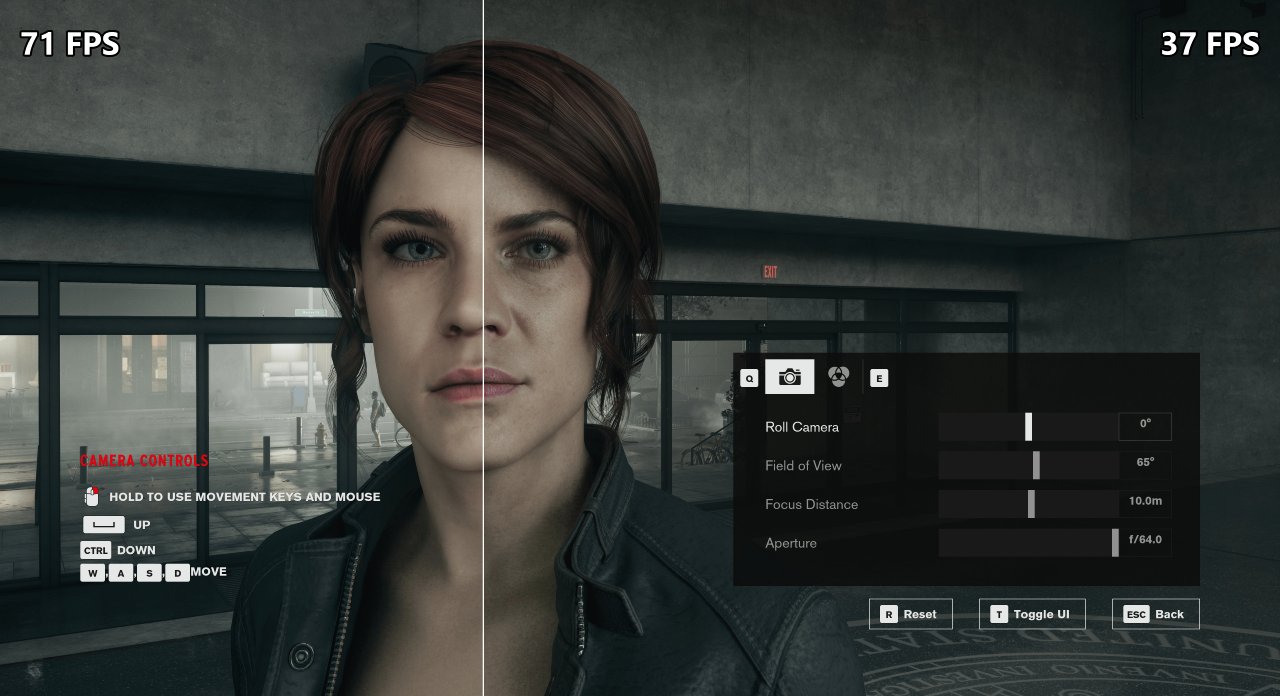
Unofficially running DLSS 5 can come with severe performance penalties. The technology may function, but functionality alone isn't the standard NVIDIA needs for an official release. DLSS exists primarily to improve the gaming experience, so a neural rendering feature that consumes enormous amounts of GPU resources and causes a substantial frame-rate collapse would defeat much of its purpose.
NVIDIA therefore has considerably more work to do than simply enabling a software switch. The company needs to tune the neural model, execution pipeline, memory behavior, and Tensor Core workload around RTX 40's specific hardware characteristics.
Senior Editor, NoobFeed
Gaming Hardware Updates
No Data.