

AMD Extends AM5 to 2029 and Revives 5800X3D
AMD Extends AM5 Platform Support Through 2029 While Preserving Long-Term CPU Upgrade Compatibility.
Hardware by Okazaki on Jun 13, 2026
AMD confirmed it will continue to support its AM5 platform until 2029, extending the socket's roadmap. The announcement provides current AM5 users with a longer upgrade path while maintaining platform compatibility over several CPU generations, as AMD has done with all its products. The platform update will also bring in new processors for each generation of users, including the resurrection of one of AMD's most popular gaming parts: the AM5 update will include the Bulldog, and the AM4 update will feature the Athlon.
However, at Computex, AMD revealed that the AM5 socket is moving forward, with 2029 as the new target date, rather than 2027. At least seven years of support, which should include up to Zen 6 or Zen 7. This will allow anyone who acquired an AM5 motherboard in 2022 to continue to replace their CPU without upgrading their motherboard.

AMD Announces the Extension of AM5 Platform
Hopefully, not all boards take the same course as a few AM4 boards did. Not all AM4 boards were happy to see the release of AM4 chips at the end of their life cycle. If everything goes smoothly, however, you might be one of those people who can make it to the end with a board. AM4 was treated in the same way. The platform launched in 2016, and AMD is still offering chips for it 10 years later.
In support of the announcement, AMD is releasing two new CPUs. Ryzen 7 7700X3D for AM5 launches on July 16 for $329. It comes with 8 cores, 16 threads, Zen 4 architecture, and 96MB of 3D V-Cache. The processor is a Ryzen 7 7800X3D derivative clocked down to 4.5GHz boost and priced $120 lower.
AMD is well aware that gamers are feeling the pinch. There's pressure on manufacturers in the PC space, too. The company is definitely trying to generate additional value in the marketplace. Ryzen 7 5800X3D 10th Anniversary Edition is back. Ryzen 7 5800X3D 10th Anniversary Edition is also available on AM4, hitting the market June 25 at $349. It comes with the same 8-core Zen 3 processor, 100 MB of cache, and a 4.5 GHz boost clock.
It used to be the highest-performing gaming CPU of its day. It still works well as a gaming processor today and supports DDR4 memory, which can help reduce the cost of buying a new system. The pricing generated some controversy. On the surface, it appears AMD is exploiting the opportunity, as AM4 motherboards and DDR4 memory are still fairly affordable. It was thought that AMD could simply boost CPU margins.
Re-engineering the Processor for Modern Production
The 3D V-Cache stacking process used for the aforementioned chips was no longer available. These processors were culled from the market for a whole host of reasons, one of which was the cessation of production of that process. AMD was required to revamp the chip considerably with the latest stacking technique to get it back, reports The Register. This was not an easy process of simply pulling one out of storage and releasing it again, as described in the interviews.
The $349 price applies in a different context. The ultimate cost may have been influenced by the redevelopment process, though some would have preferred it to be lower. It is possible to view the platform as a whole and still find some value in AM4. Motherboard makers are reportedly ramping up AM4 board production.
The AM4 motherboard costs about $100 and is sometimes even cheaper on the used market. Even old AM4 boards perform surprisingly poorly in tests compared to the latest AM4 motherboards. In many cases, you can use existing hardware and make only a few compromises by installing a compatible CPU.
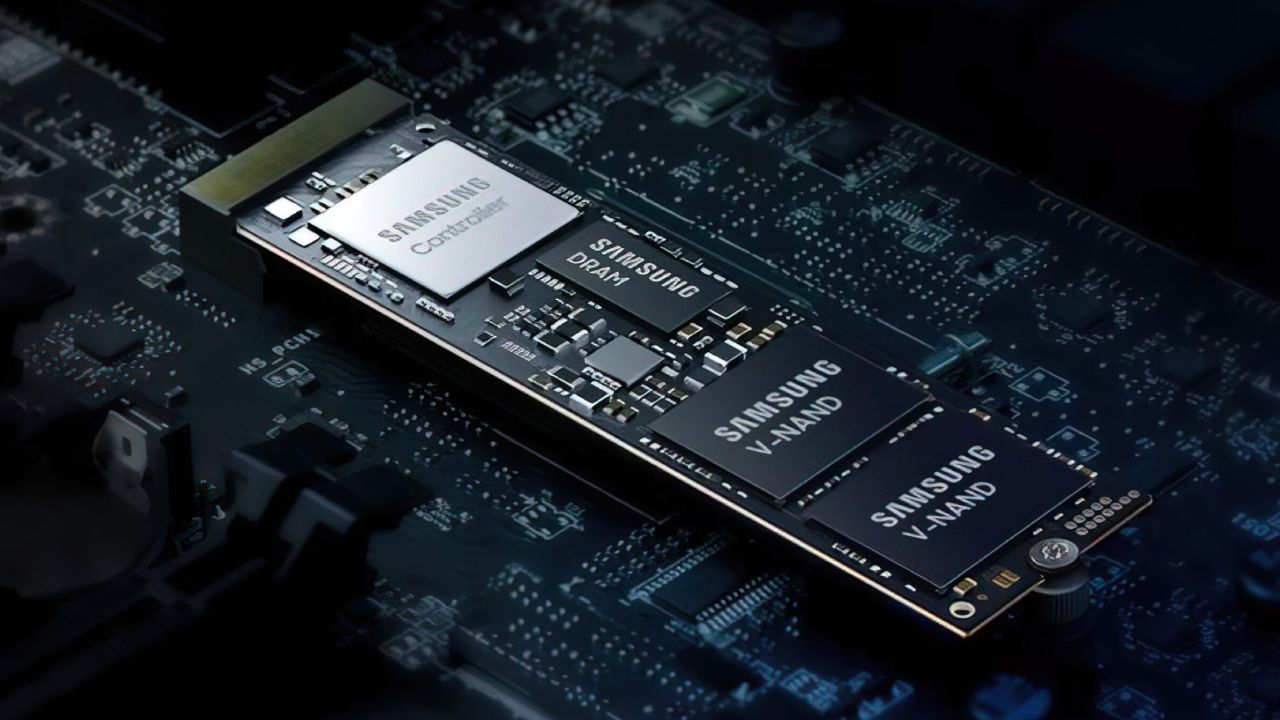
DDR4 memory is still available and, at this point, costs about half as much as DDR5. A higher price for the 5800X3D would've been nice, but it seems the chip will still have some customers. One had put forth the notion that it would have been automatically recommended at about $229. Others commented that such a cut would be substantial compared to the actual launch price.
The return will be more attractive when the prices are based on market prices. Some context is provided by comparison with the second-hand market. Some used Ryzen 7 5800X3D processors are reportedly fetching more than $500. Used prices have been as low as $470 elsewhere. A new processor at $349 seems like a better deal given those figures.
The reintroduction is well received by many, as the current market situation has made it necessary. With greater availability of AM4 processors and motherboards, and DDR4 memory at a good price, consumers might be experiencing less pressure when it comes to PC construction or upgrades. PC Component Sales is suffering from market difficulties.
General Issues in the PC Industry
One manufacturer that produces a component used in computer construction reported a 30% decline. A 30% decrease in a scaling business is easy to take, but a 30% decrease once a business is at scale is difficult to stomach. Larger companies have staff, equipment, marketing campaigns, and production plans that are based on current income. With 30% of that revenue now gone, forecasting and planning become much more complicated.
Manufacturers reported that it takes at least six months to determine their inventory needs on a good day. Now, in the current environment, such predictions are becoming very hard! It's not just accessory manufacturers that feel the pressure. Expensive-component brands that use high-end components in their products are also seeing sales declines.
As a result of their costs, their sales prices are higher, but they are not necessarily doing better as businesses. Things like cases, fans, and other PC parts rely on users constructing new PCs. Demand for those categories, naturally, is lower when consumers are not putting together new systems. This will have an impact at scale. This will have an impact at scale.
Following Simple Example Illustrates the Situation
If a company has 3 employees, 30% growth could be as simple as adding 1 employee. A company with 10 employees may add 3 more as it expands. But when a company has 100 staff, a 30% reduction would result in a 30% reduction in staffing. This affects the business and the job market. For one person who enters the workforce, another job may become available shortly.
When 30 individuals enter the same industry and market at the same time, it can cause problems that the local industry is unable to cope with at first glance. Industry talk indicates there is less interest in building PCs than many had hoped. The market is challenging, according to manufacturers, creators, and industry players. There seems to be a general consensus that current demand is too high, with many sharing this view.
In another comparison, if one gains 10% one day and loses 10% the next, one ends up with less money. Gains and losses are computed from different numbers; therefore, the numbers are not neatly balanced. Today, that's one of the reasons for the problems in the PC industry's parts sector. As costs continue to climb, manufacturers are feeling the pinch.
.jpg)
It's not just Affecting Accessory Manufacturers
Brands that use premium components in their products have also noted a dip in sales. It's become so expensive that simply raising their prices isn't a guarantee of improved business success. Casings, fans, and other PC parts rely on users to buy them for new computers. When consumers do not build new systems, these can be considered lower demand.
The next step in growth and decline is to realize it at scale. The next stage in growth and decline is to enact it at scale. For a company with 3 employees, 30% growth could be adding one more employee. A business with 10 employees may hire three during a similar growth phase. However, if a company employs 100 staff members, a 30% cut will be 30 staff members. Its repercussions go beyond the business itself and also affect the overall job market.
If someone enters the job market, they may easily find another job. A large number of individuals entering the market at the same time in the same industry can create problems that the local industry cannot cope with on the spot.
Industry chatter indicates interest in PC construction remains below expectations.
The market has been described as challenging by all manufacturers, creators, and industry players. The general mood seems to be one of concern about current demand levels, as many expressed similar concerns.
Another comparison said that if you gain 10% one day and lose 10% the next, you will end up with more money on the day you make the gains, but less on the day you lose it. The starting number is different for gains and losses, so the numbers are not evenly balanced. That's one of the reasons why parts of the PC hardware business are struggling these days.
Editor, NoobFeed
Latest Articles
No Data.