
AMD Zen 6 Medusa Point Benchmark Leak Reveals Major Performance Gains Over Current Ryzen CPUs
A leaked Geekbench listing tied to AMD's Zen 6 Medusa Point platform shows a significant performance jump over current chips.
Hardware by Naheyan Tahmin on Jul 22, 2026
The recent test leaks have a big effect on what we think will happen with a new generation of CPUs. The most recent Geekbench listing for AMD's new mobile series is getting a lot of attention. The result shows that the Zen 6 chip generation is not as advanced as the Zen 5 lineup that is being phased out.
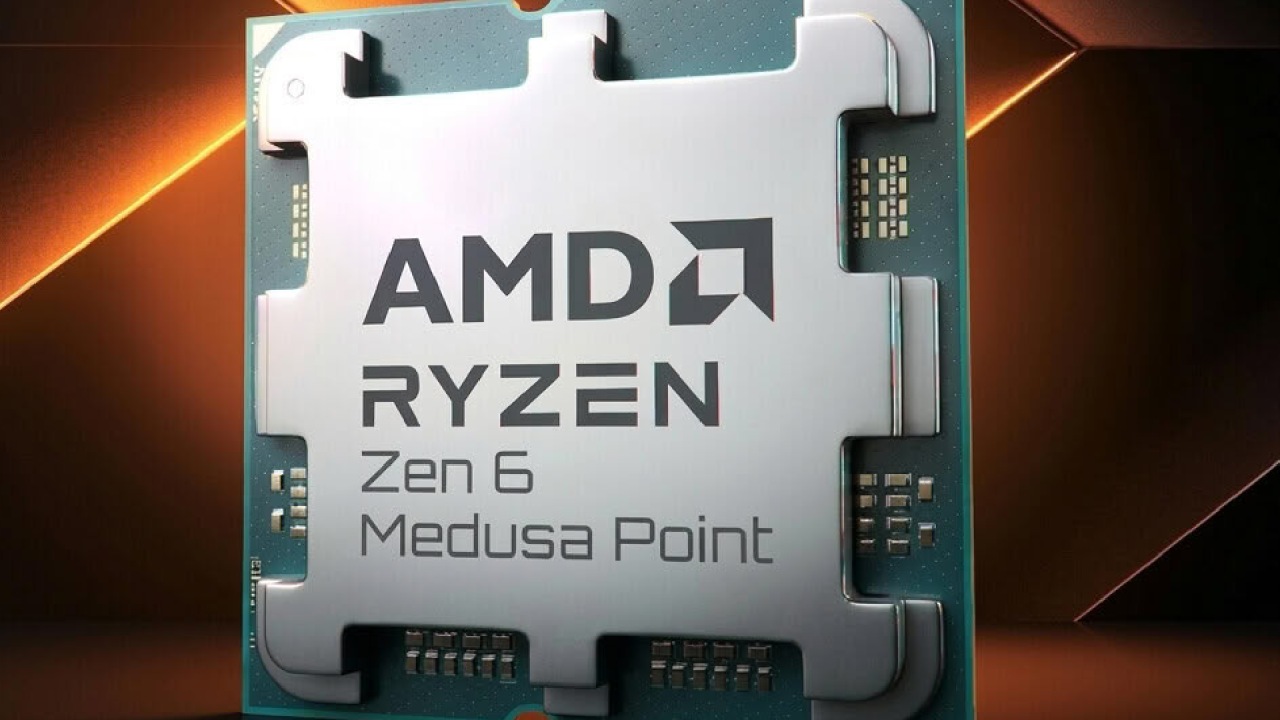
A new Geekbench entry has emerged for an engineering sample with a platform name that is directly related to AMD's Zen6 mobile platform codenamed Medusa Point. The chip is 10-core, 20-threaded, divided into two clusters: one with 4 cores and one with 6. It has a peak frequency of 2152 MHz in the listing, but detailed telemetry of the device suggests the frequency during testing was around 5.37 GHz.
How is Medusa Point Constructed?
The sample achieved a single-core score of 3329 and a multi-core score of 16555. Earlier, leaked information from Medusa Point suggested that its base MDS1 chiplet contains 10 cores: four Zen 6, four Zen 6c, and two low-power Zen 6. The top-end FP10 model is rumored to include an option for a 12-core Zen 6 CCD, bringing the total to 22 cores.
The base 10-core chiplet is said to feature TSMC's N3P process, whereas the optional 12-core CCD would resort to N2P. If the leak is true, the benchmark is based on the smaller 3nm mobile part, not the 2nm-class design that the higher-end mobile and desktop silicon would have, which raises the question of how much more powerful the larger silicon could be when it reaches the testing stage.
The Medusa Point sample is 28% faster in single-core and 24% faster in multi-core compared to the 12-core Ryzen AI9 HX370. The performance gap widens further against the 10-core Ryzen AI9 365, as it is 35% faster in single-core performance and 33% faster in multi-core performance.
This is already performing 4.9% faster on single-core and 9.7% faster on multi-core, without any upgrades.
This leaves room to hope that more of the same will come when the 3nm mobile design is available for testing as a retail part, especially compared to the 2nm node, which is likely to be the case for desktop parts. Reports indicate that this new generation of desktops will feature more cores than the current generation, with one report suggesting that some may reach nearly 7 GHz.
It's impressive that the smaller 3nm mobile chiplet already delivers these numbers, and the 2nm desktop silicon should offer even more performance once it arrives, making next-generation Ryzen desktop processors and mobile CPUs a significant upgrade over the current generation.
Editor, NoobFeed
Gaming Hardware Updates
No Data.