
DLSS Preset M Brings Transformer Models Closer to Supersampled Quality
NVIDIA’s latest DLSS model improves vegetation stability, particle visibility, and thin geometry rendering in performance modes.
News by Tanvir Kabbo on Jan 30, 2026
The talk of naming DLSS models has reached a fascinating point, and the technology is now at preset M. What happens when NVIDIA reaches the end of the alphabet?
The answer is that DLSS can still improve in many ways, even if the name changes. Recent progress shows that evolution is far from over.
For the past year, detailed comparisons between the DLSS 4.0 preset K and the newer DLSS 4.5 preset M have shown that the earlier transformer model has several problems.
After the first release, it became evident that several regressions only appeared after playing for a long time across multiple games. Keeping those problems in mind when you got to setting M made it easy to recognize where improvements really happened.
There was a lot of talk about concerns with volumetric fog in games like Assassin's Creed: Shadows. Preset K could produce crisp borders, but it often caused horizontal or vertical banding in fog volumes. Things that moved through the fog also left ghostly shadows, most evident when leaves passed through the fog layers.
Both the banding and the fog ghosting are gone when preset M is set to 4K DLSS performance mode. Testing across multiple games shows that this behavior is consistently corrected, not just in one game.
Another problem that arose over time with setting K was how it handled motion. The transformer model in Horizon Forbidden West revealed more detail in motion than the earlier CNN-based DLSS, but it came with a cost.
Moving things or surfaces behind them could show a faint pixelated pattern, which is a type of disocclusion fizzle. It wasn't as bad as what happened in FSR, but it was still distracting.
The CNN model didn't have this problem, but it was much blurrier as a result. We want the best of all worlds: lots of detail in motion without the fizzle. Preset M is extremely close to that equilibrium.
There are no longer any pixel-edge artifacts on Aloy's bag, pouches, or quiver while she moves. The image remains anti-aliased, looking smoother overall while still showing details.
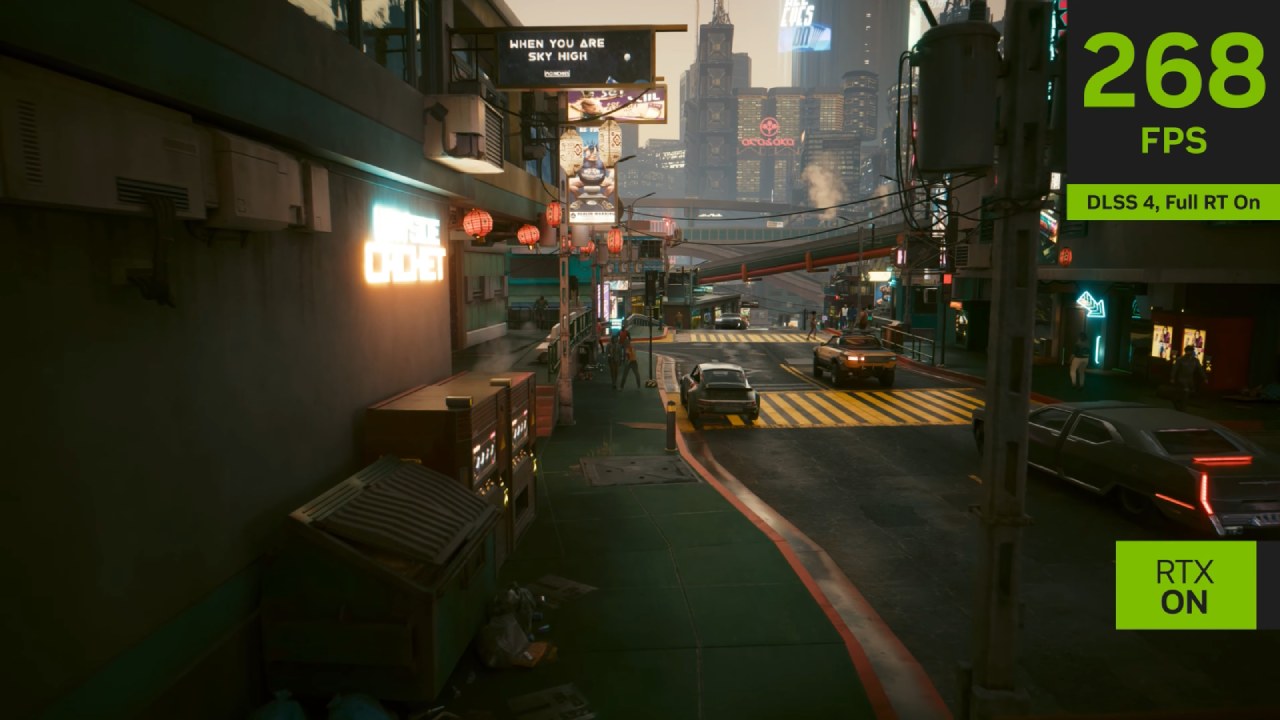
Cyberpunk showed that the setting K had another problem. When you drive fast, especially in third-person perspective, textures close by, such as the road surface, will smear in the direction you're going. It might look like lines were being drawn from the corners of the car and cutting through the environment.
This behavior is fixed by Preset M. There is no directional smearing, and the texture detail along the side of the road remains consistent and regular. There is no longer a regression relative to the CNN model.
Not all of the problems with transformer models were better than those with CNN-based DLSS. Forza Horizon 5 was a tough example because it initially used MSAA-based graphics. MSAA had its own problems with aliasing on surfaces, but it worked quite well in other areas. Here, DLSS versions have not been constant.
With preset K, thin shapes like power lines often showed ghost lines that seemed to move. These abnormalities appeared at random, popping in and out between frames. The comparison of CNN and transformer models showed that each would fail on distinct frames.
Preset M mostly fixes this. The ghosting behind power lines is gone, so they look more like real power lines and less like staccato aliasing artifacts. Aliasing is still present, and the lines aren't entirely anti-aliased, but removing the ghosting makes everything look much clearer.
Death Stranding and other games with extensive rain effects showed another problem with DLSS. Transformer models made the rain in the air less noticeable than a super-sampled image. DLSS probably thought that raindrops hitting surfaces like Sam's bag were aliasing and filtered them away.
This gets a little better with Preset M. There is more rain in the air than in Preset K, but it still doesn't perfectly match a super-sampled reference. There are still no small raindrop details on surfaces, which means that DLSS still can't recreate such fine, temporary details. Still, the difference between preset K and this one is clear.
The overall steadiness of images has also been better. In some games, including Kingdom Come: Deliverance 2, vegetation was closely examined by comparing DLSS output to super-sampled representations. With preset K at 4K DLSS performance mode, both close and distant vegetation showed pixel fizzling, with details appearing and disappearing, which produced noise.
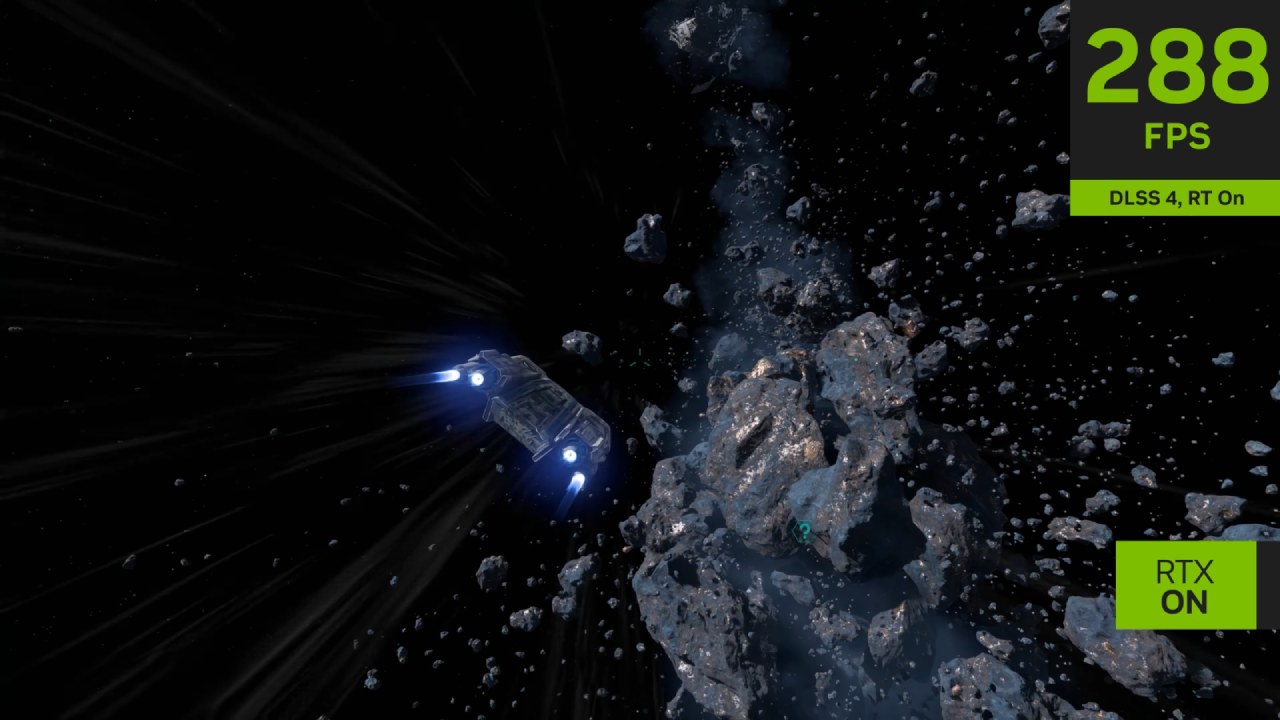
Preset M makes things a little sharper overall and reduces much of this inconsistency.
Spider-Man Miles Morales has the same pattern. The margins of distant buildings used to have sawtooth patterns that shifted from frame to frame, and trees would always fizzle as the camera moved. With the default M setting, those lines are finished more neatly, and the plants stay still even when the camera moves.
We can now confidently say that Miles Morales can finally play on PC with DLSS without any visual disturbances.
Some games really pushed preset K. In The Outer Worlds 2, plants near the camera disappeared and exhibited ghosting. This problem occurred a long time ago with DLSS. Here, Preset M makes things a lot more stable. The lines and edges are crisper, there is no more ghosting, and the picture doesn't look like early-generation upscaling anymore.
The effects on particles also get better. Now, it's easier to tell where distant particles are, instead of them getting buried in aliasing. The ghostly trails created by particles also get shorter at the same time. The default M setting keeps particles visible and consistent in all games, which makes the picture look more realistic and lifelike.
When it comes to rasterized items, preset M usually works better. A lot of the problems with setting K have been fixed, the image is more stable, and the motion handling is better at balancing detail and smoothness. There are still some problems, especially with very small moving features like raindrops. Still, the overall trend is certainly moving forward.
Getting to preset M does not mean the end. There may come a time when alphabetical naming runs out, but the models underneath can continue develop. It's not the letter that matters, but how closely DLSS matches super-sampled images while also improving performance, so modern games can be played at high resolutions.
Senior Editor, NoobFeed
Related News
No Data.