
Gaming Hardware Update Covers GPU Fire Hazard, Intel Nvidia APU, AMD RDNA5 Delay
GPU safety issues, APU competition, next-generation graphics timelines, and cache-heavy CPUs redefine future gaming performance expectations.
News by Shinji Okazaki on Dec 29, 2025
A recent wave of changes in the PC hardware business has brought to light growing concerns about GPU safety, shifting relationships among major chipmakers, long-term graphics roadmaps, and early performance indicators for next-generation processors. These updates show that there will be big changes in how gaming technology evolves over the next several years, from hardware failures to architectures that look to the future.
It has been said that GPUs are now a direct fire risk. A Reddit user recently posted pictures of a graphics card with a power connection that was entirely scorched. The damage went up several inches, and even the AIO tubing was visibly burned. The card in question was an RTX5090 that had been in use for around nine months. The GPU apparently caught fire rather than just melting, which could have led to a house fire after the user smelled something strange.
An ATX3.1 PSU with a 12v2x6 connector that came with the power unit powered the system. People don't think highly of the PSU brand Perec as a maker of high-quality products. That makes me worried, but we shouldn't see failures like this, no matter the brand. There have already been melting issues with higher-end power supplies, suggesting the connector itself may be the main issue. At this point, the problem is more widespread than just one instance.
Things are becoming worse because manufacturers are confused.
Tech Overwrite, a YouTube channel, asked nine GPU and PSU brands whether consumers should use the native 12v2x6 PSU connector or the GPU adaptor that came with the card. Asus, MSI, and Gigabyte said to use the included adapter. In contrast, Silverstone and Zotac said to use the original PSU cable. Sapphire, Thermaltake, and Gainward didn't say which they preferred.
Despite disagreeing with one another, each corporation spoke with conviction about its viewpoint. Gigabyte strongly recommends using the original cable that came with the graphics card, as it works with other devices. Zotac said that, if possible, it always recommends using a native PSU cable. Both methods should work in theory, but the fact that more and more GPUs are getting damaged implies that something is fundamentally wrong. The risk remains until there is a clearer direction.
Nvidia and Intel are working more closely together, which could make discrete GPUs less important. Following prior disclosures about AI infrastructure and personal computing products, new information has emerged about what the partnership might produce.
Red Gaming Tech says that leaks say the collaborative product is dubbed Serpent Lake. It is likely to go head-to-head with AMD's Strix Halo and Ryzen Max-class CPUs. The idea is to put a powerful Intel CPU with a big Nvidia GPU in the same box. Some people say the GPU is based on Nvidia's Rubin RTX architecture and was manufactured using TSMC's N3P process.
If these designs are correct, they would be very powerful APUs that could replace entry-level and mid-range discrete graphics cards. Also, a recent report said that antitrust officials had approved Nvidia and Intel's cooperation, which removes a major roadblock. If these products come out as planned, the discrete GPU market may come under more pressure.
AMD's next-generation RX 10000 GPUs, which will be based on RDNA5 or UDNA, depending on the final branding, will be released sometime soon. AMD's graphics leadership and the PS5's principal architect discussed these GPUs before, focusing on some new technologies coming out.
Radiance cores are specialized hardware designed to boost ray tracing performance by handling ray traversal. Neural arrays are a new way for computing units to communicate without using cache. Universal compression looks at GPU data and compresses it to use less RAM. These features are intended to address long-standing performance and efficiency issues.
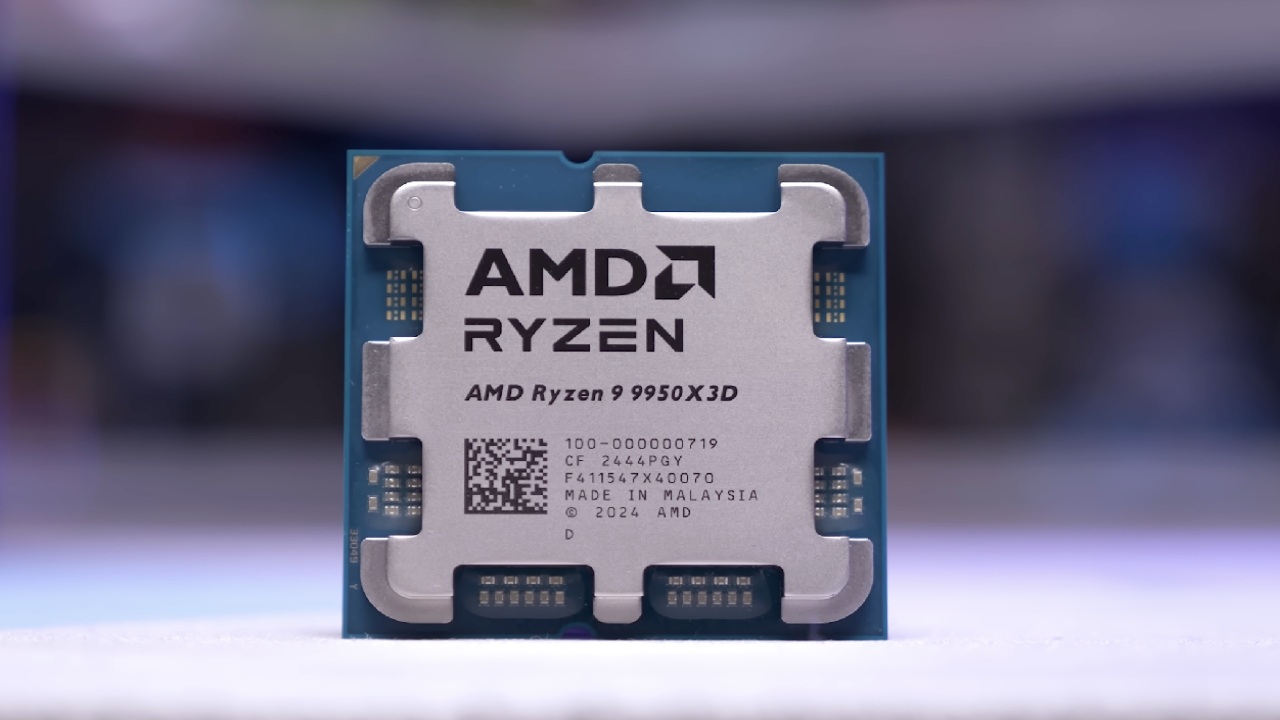
Kepler posted on social media that the next generation of AMD GPUs should come out around the middle of 2027. That deadline may seem far away, but it might help.
AMD is avoiding the memory supply problems it is currently facing.
If they had launched earlier, they might have had less VRAM or higher pricing. Delaying might make it possible to have more balanced arrangements, but plans can always be altered.
We now have the first benchmarks for AMD's Ryzen X3D2 CPUs, which will be out soon. The X3D2 name comes from the fact that both chiplets feature 3D V-Cache, giving the CPU a total of 192MB of L3 cache.
A Geekbench listing for a Ryzen 9950X3D2 shows its highest clock speed is about 5.6GHz, which matches earlier leaks. It does better than other CPUs on record in single-core performance. The multi-core performance is barely behind the ordinary 9950X3D, which is still competitive for an early result.
The PassMark findings confirm the 192MB L3 cache configuration. Single-threaded performance is a little worse in that benchmark, but multi-core performance is better than in Geekbench. The chip was said to need 170W of power, which is less than prior claims that said it used more than 200W. This difference could be due to changed specifications or incorrect data at first.
Synthetic benchmarks can sometimes be deceptive, but having multiple independent outcomes makes them more trustworthy. Overall, the first signals point to AMD's X3D2 CPUs being able to deliver significant improvements, especially for gaming workloads that require large cache sizes.
Editor, NoobFeed
Related News
No Data.