
Goodnight Universe Review
PC
A critical, design‑driven review of an ambitious face‑tracked narrative.
Reviewed by Asura Kagawa on Nov 15, 2025
Nice Dream arrives with a clear lineage, carrying forward ideas that once turned a blinking cursor into a conduit for heartbreak. The studio's creative leads helped shape a prior phenomenon, then set out to prove that intimacy and input can scale. Goodnight Universe takes that thesis further by reading facial cues and folding them into story structure. It is not just attention tech, it is narrative grammar using your face as punctuation.
The premise is confident because the team has already earned trust with a webcam and then decided to raise the stakes rather than repeat themselves. Goodnight Universe uses eye closure, blinks, and expression prompts to pull the player into a more elastic kind of authorship. The result feels like theatre in the round, with your chair on stage and your micro‑reactions in the script. When it lands, the sensation is startling in the best way.
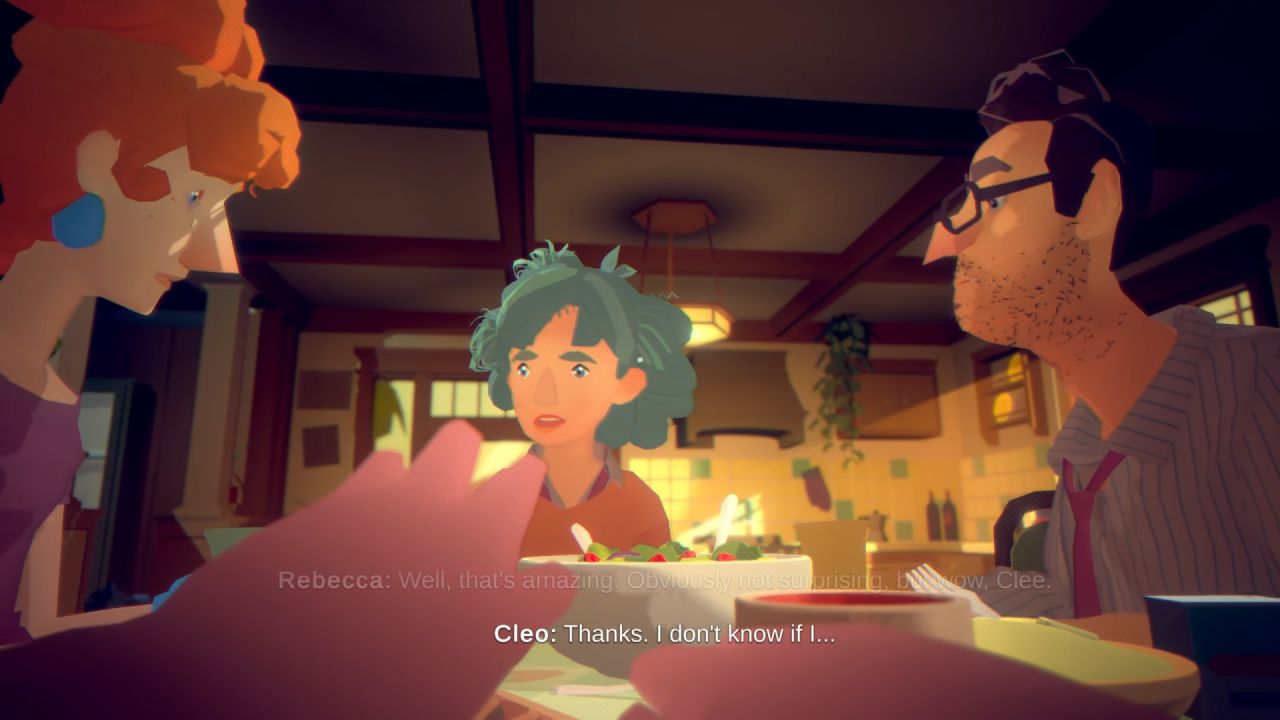
There is also a pragmatic layer, since controller support exists for those on living‑room hardware or without a camera handy. Yet the experience insists on the camera as the truest route to immersion and meaning. Goodnight Universe is most itself when your eyes determine what is heard, seen, and reshaped on screen. The interface becomes interiority, not a novelty grafted on top.
The studio's ambition extends beyond buttons and optics into tone.
The game is brief, roughly five hours, but uses that concision to compress a surprising amount of emotion. The ideas here are not new alone, but combined, they feel singular and carefully tuned. Goodnight Universe moves with the confidence of a sophomore album that refuses the safe sequel.
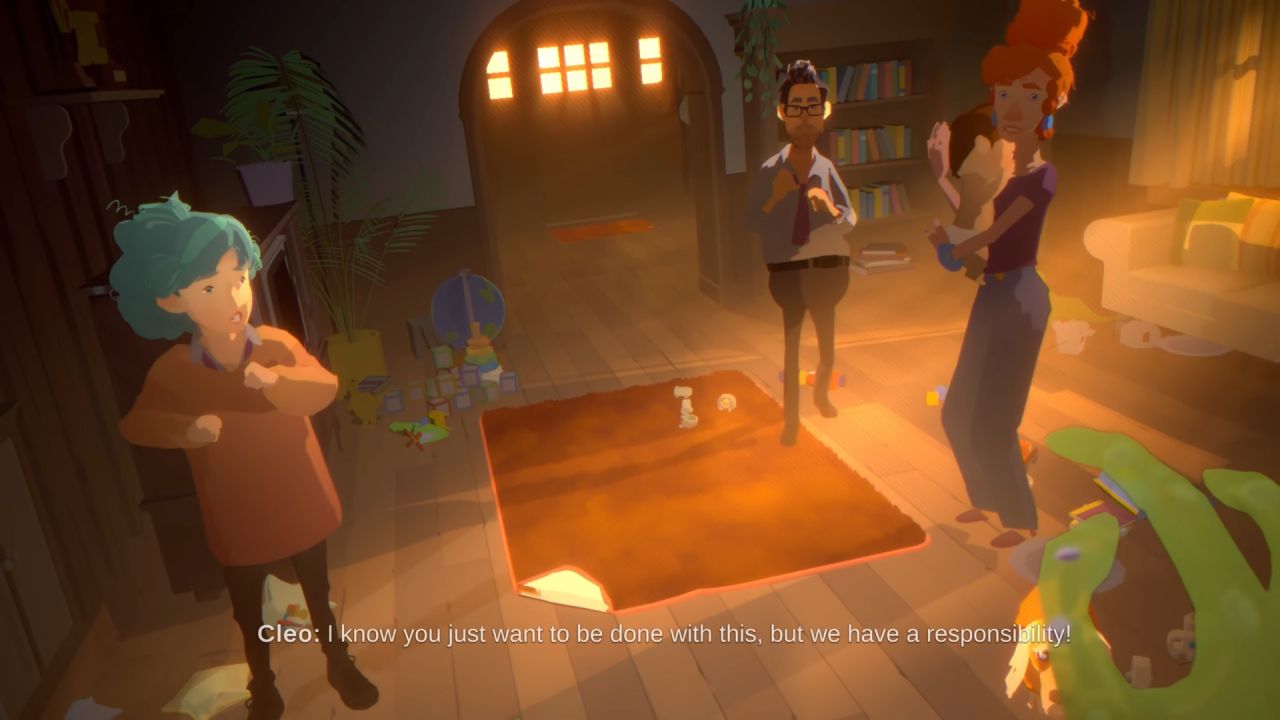
Isaac is the main character of the story. He is six months old and talks to himself like an adult. He also has a lot of mental abilities. Sadness, money worries, and miscommunication make a family that seems normal unstable. Tensions in the home are turned into business drama when a tech company looks in from the outside. There is a difference between being weak and being strong that moves the story along.
The perspective is everything: a crib's-eye view that hears what adults say and later hears what they think. Closing your eyes silences the room and tunes into the private monologues of people you love. It reframes eavesdropping as empathy, and empathy as a form of agency. The technique translates the theme into mechanics with startling clarity.
The plot of Goodnight Universe stays on track, but small decisions add a lot of depth. If you stay still, conversations can be shaded, responses can be shown, and scenes can either drag on or move quickly forward. The game sounds more like a private drama than a branching epic. Focused constraint is more important than a wide-ranging effect.
Moments of levity keep the script human, even as the stakes climb and powers expand. A boyfriend spooked by haunting objects, a late‑night kitchen chore reframed as quiet care, a whispered confession captured only because you had the patience to listen. These beats soften the sci‑fi edge and foreground family. The result is tender without turning saccharine.
When the corporate thread tightens, the story uses captivity and escape to remix its perspective tricks. Hearing fear in someone's head, then seeing fear reflected on their face, stitches the interior life to the external consequence. The finale respects the game's thesis that communication is survival. The final notes feel earned rather than engineered.
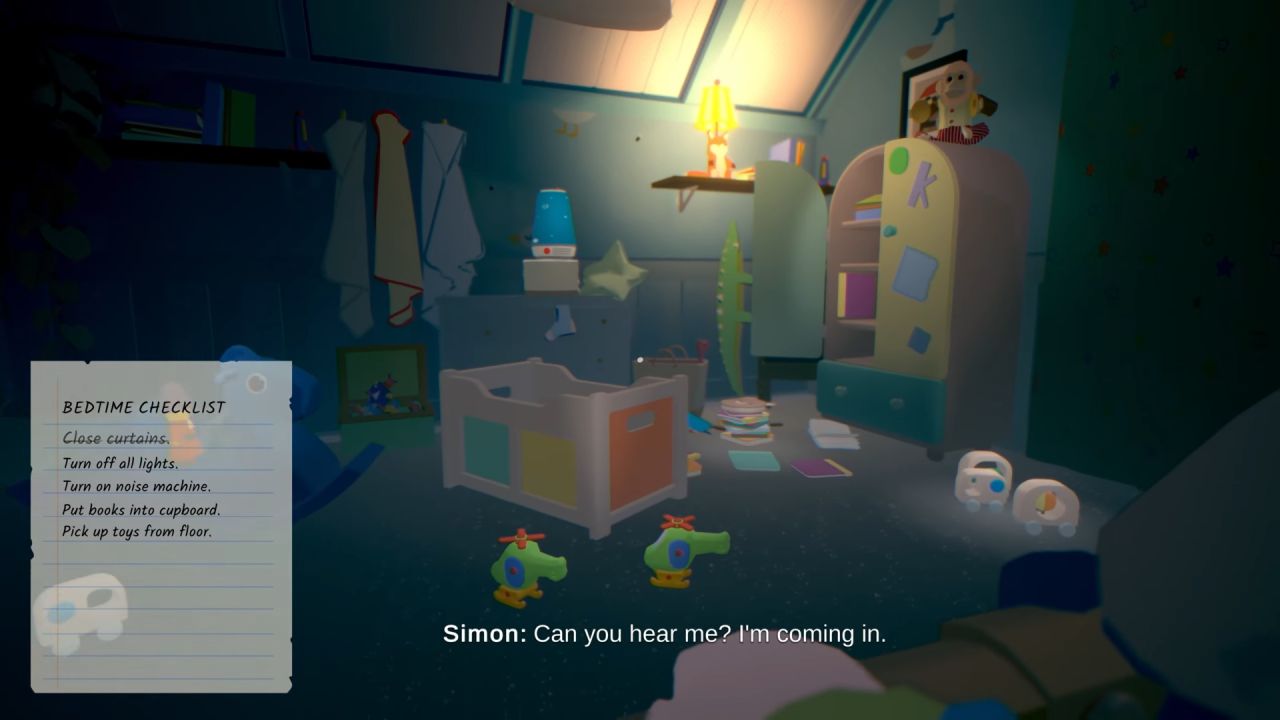
Mechanically, you observe, select, and subtly sculpt scenes with baby‑scaled telekinesis and telepathy. A blink flips a light or pops a balloon, while longer eye‑closures can reorganize a space like intangible building blocks. Goodnight Universe thrives when it lets micro‑gestures achieve macro effects. The camera becomes a precise instrument rather than a gimmick.
The most interesting contact is telepathy, which you can start by closing your eyes and slowly turning your head. When the signal goes out, you hear your own thoughts in your headphones, and the scene is tinged with hidden meaning.
The first time this happens, it reframes the entire control method as a listening device. You're not just moving things; you're digging up facts.
Goodnight Universe also offers traditional inputs for context, whether nudging objects or selecting thoughts that hover like choices you cannot say aloud. Small chores sit beside surreal rearrangements, and both feed character. The mix is deliberate, asking the player to privilege attention over action. In the best moments, everything you do feels like a conversation.
Expression prompts ask for a smile or a frown at key beats, which is an extra layer. When recognition works, it feels personal, like you can finally talk to each other without words. The spell moves around when it reads wrong. The key difference between magic and missed cues is the difference between slight and exaggerated emotions. That difference is just the way things are now.
The structure remains mostly linear, but engagement never becomes passive. Goodnight Universe makes you co‑author rhythm through blinks, holds, and head‑turns. A crib becomes cockpit, a nursery becomes interface, and interactivity becomes empathy. It is clever without feeling clever for its own sake when the inputs and the emotions align.
This is not a combat game in the conventional sense, yet tension arrives through staged sequences. Objects must be moved at just the right moment, alarms must be silenced, and routes must be improvised from a vantage that rarely exceeds couch height. The vocabulary is puzzle‑like, the tone is thriller‑adjacent. Stakes live in timing and awareness.
Occasional set pieces lean on on‑rails pacing, asking quick telekinetic nudges to clear obstacles or protect loved ones. Goodnight Universe compresses pressure into a few beats, then returns to reflective cadence. A scene where the house performs a ghost act to scare an interloper shows the system at its most playful. It is a smart use of scale.
Stealthy slices appear later, pairing camera control with environmental tinkering. Disabling surveillance, reshaping small layouts with closed‑eye gestures, and reading intent before acting become the toolkit. The puzzles rarely stump, but they do ask for presence. Success depends more on sensing mood than min‑maxing mechanics.
When velocity spikes, the cursor and camera can feel a touch twitchy. Precision inputs in fast sequences expose the limits of face tracking and analogue toggles alike. Goodnight Universe earns forgiveness by not dwelling in speed for long. The game knows it is strongest when it makes time elastic rather than frantic.
The good is unmistakable: tuning into minds by literally closing your eyes is unforgettable.
It fuses mechanics and meaning, turning listening into play and privacy into a shared stage. The best puzzles are emotional puzzles, solved by patience. Goodnight Universe understands that design truth and uses it well.
Environmental manipulation also carries charm, especially when low‑stakes actions reframe character. Tidying becomes love, light switches become signals, and rearranged blocks become agency. The perspective, always lower than the countertops, keeps the power fantasy grounded. It is a strong antidote to spectacle fatigue in modern games.
On the downside, expression detection sometimes demands theatricality to register. When a smile must be overdone to be believed, subtle performance gets lost. A few quick‑fire sequences reveal input friction, and those milliseconds can break tension. These are solvable problems, but they are present enough to note.
None of this breaks the core loop, yet it creates uneven edges where flow should be glassy. Goodnight Universe remains compelling because the writing and staging keep pulling the player back into the moment. The input's ambition deserves respect, even as a patch or two of polish would lift the ceiling higher.
There is no traditional XP treadmill here, and that restraint benefits the design. Progression arrives through story beats, unlocking powers in ways that reflect growth instead of grind. The absence of stats keeps attention on choices, not checklists. The pacing breathes because it refuses busywork.
Choices influence tone more than outcome, massaging how scenes read rather than branching them wildly. Goodnight Universe builds depth through nuance, letting players color motivations without rewriting fate. Power accrues as understanding, not as numbers. That decision aligns perfectly with the game's empathy‑first philosophy.
From a floor‑level vantage, everyday rooms feel towering, and ordinary objects feel mythic. The art direction embraces scale and simplicity to keep sightlines legible and motifs readable. Later, the presentation experiments with mixed media flourishes, stitching hand‑drawn sensibility to 3D space. It is visually playful without chasing realism.
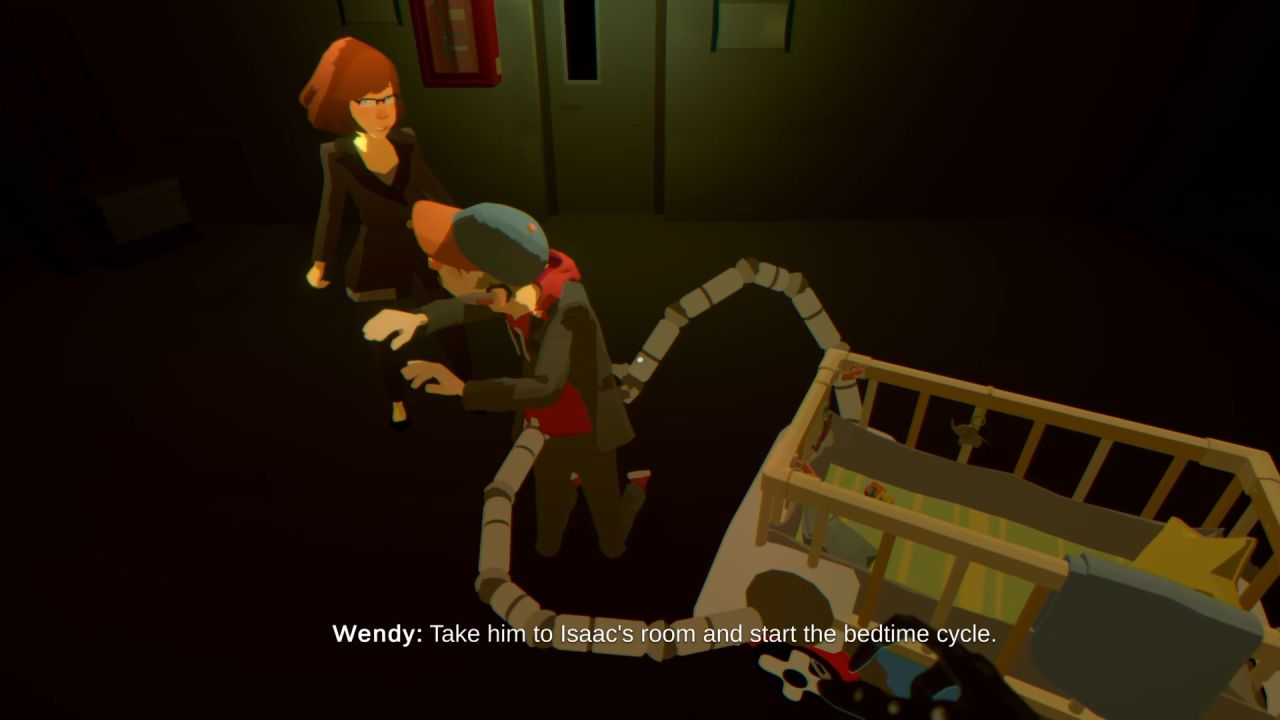
The camera choice keeps the frame close because it stays on the body of a child. The hallways get longer, the tables get bigger, and the faces tilt into view like planets passing in front of the sun. The visual metaphor hits home when places change when eyes are closed. The world is like a puzzle that you need to solve.
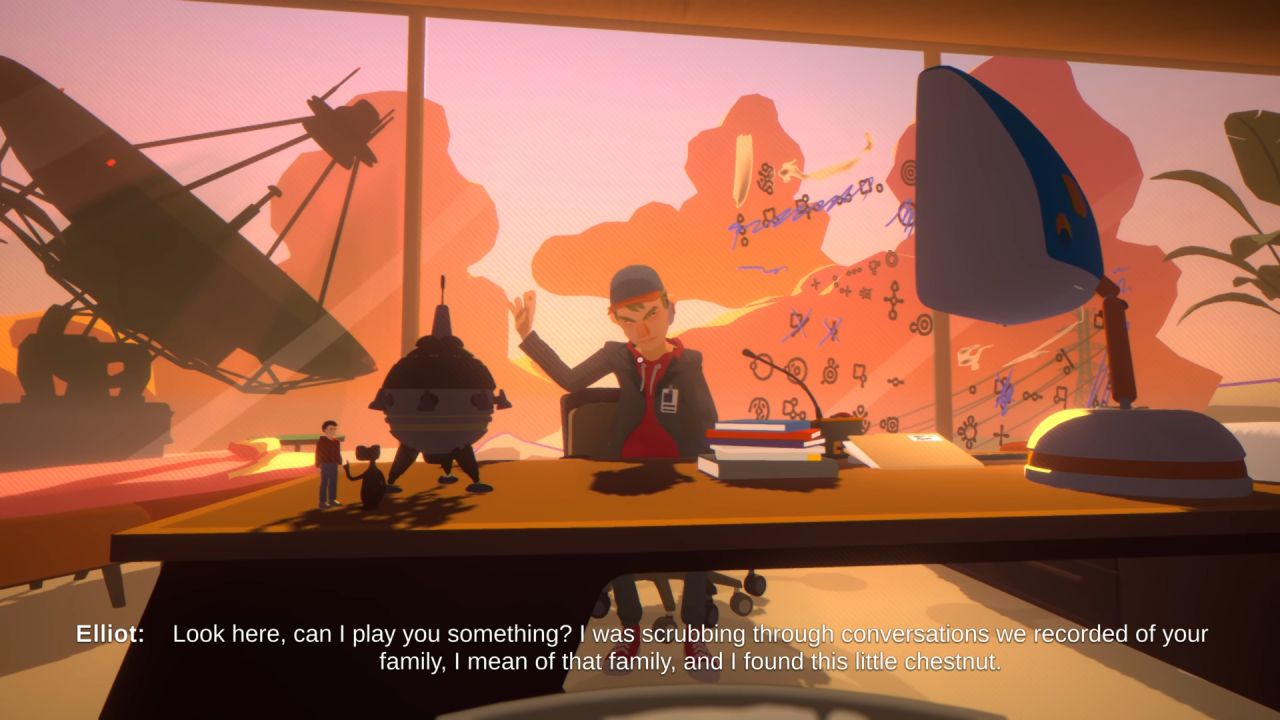
There are moments that evoke sterile test‑chambers and corporate gloss, neatly contrasting family warmth with institutional chill. The aesthetic never shouts. It collaborates with sound to carry the weight.
When it shifts style late, it earns the pivot through theme, not just novelty. The restraint feels intentional and elegant.
Voice work carries this experience, giving each family member texture beyond archetype. Performances hold humor and hurt in the same breath, and the writing gives them room to do both. Sound design turns telepathy into a palpable act, with inner voices and outer noise crossfading like light through a curtain. Headphones are strongly recommended.
The acoustic language of tuning is especially striking, as signals bloom when the head aligns with thought. Foley and synth bed the world, keeping rooms alive even when you refuse to look. The audio team understands negative space and uses silence like a scalpel. It makes listening feel like play.
Music enters like a storyteller, punctuating revelations and softening sorrow. Needle‑drop moments do not chase virality; they seal scenes. The score refuses sentimentality yet welcomes tenderness. When the ending arrives, the last notes feel like a hand on a crib rail, steadying what trembles. It is a beautiful fit for the material.
This is a compact work that favors presence over spectacle and conversation over conquest. Its best trick is not the webcam, it is the way mechanics embody meaning. Even its rough edges testify to ambition rather than excess. The heart is big, the runtime small, the afterglow larger still.
As a piece of design, it argues that accessibility and audacity can coexist. The controller keeps doors open, the camera opens another into intimacy. When expression tracking stumbles, the writing catches it, and when pacing quickens, the game soon lets you breathe again. The balance is imperfect but persuasive.
Goodnight Universe ultimately proves that a face can be a controller and a confession at once. It is a family drama wrapped in light sci‑fi and threaded with small, human miracles. Recommended with headphones, patience, and the willingness to be read as you read it. That reciprocity is its quiet genius.
Staff Writer, NoobFeed
Verdict
An intimate, five‑hour marvel that turns your gaze into gameplay and empathy. Goodnight Universe stumbles on expression tracking, but its telepathy mechanic and performances elevate a tender, tightly paced story into something genuinely memorable.
71
Related News
No Data.