
Keeper Review
Nintendo Switch
The strange journey of light, loneliness, and rebirth in Double Fine's game is one of the most hauntingly beautiful of the year.
Reviewed by Nusrat Choity on Oct 19, 2025
Double Fine Productions is one of the few game companies that really embraces weirdness and sincerity. Their work has always been a mix of funny and sad things, from the mind-bending fantasy of "Psychonauts" to the sad charm of "Broken Age." But with Keeper, the company takes a big step into something deeper: an atmospheric, wordless story about friendship, death, and the slow return of light to a world that has been forgotten.
Lee Petty directed Keeper, which is the culmination of Double Fine's decades-long interest in visual stories. Petty is known for his visually inventive work on Headlander and Rad. The game launched on October 17, 2025, from Xbox Game Studios, and was available on Game Pass from the start. It stood out right away because of its strange premise: a lighthouse that wakes up after a storm and goes on a trip across a dying island with a lone seabird.
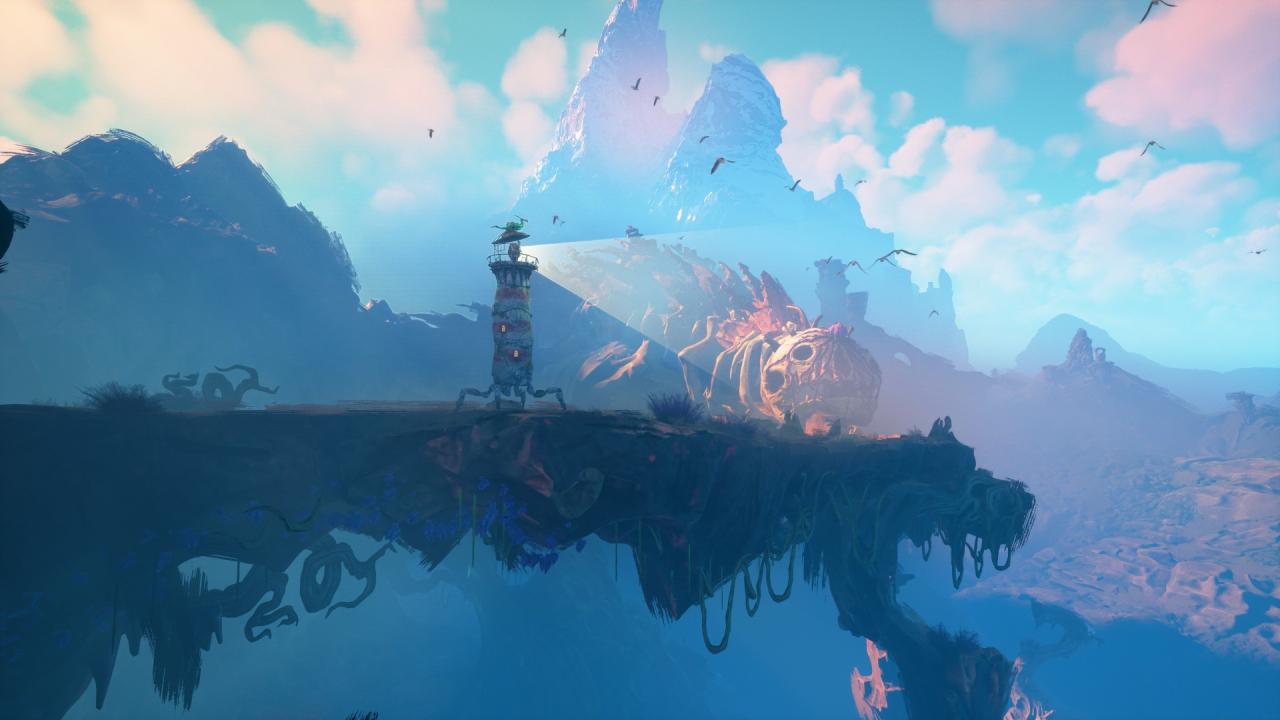
The whole point is that it sounds like something from a dream.
Keeper doesn't use speech or explanations to tell its story. No quest signs or voices are telling you what to do next. It asks you to feel instead of understand. At the same time, the pulse of light, the moving of metal limbs, and the lonely cries of the sea create an experience that is both personal and mythical, strange and deeply human.
It's quiet at the start of the game. A rough storm hits the coast, and waves crash against the rocks of an empty island. A small seabird, which is scared and weak, crashes into an old, rusted lighthouse and falls to the ground. There is movement inside the building. The metal moans and the gears grind, and then there is light. The storm is broken by a bright beam that pushes the shadows back. The tower is now awake.
However, this act of illumination breaks its base. With a shaky sound, the building pulls itself away from the rocks below, bending its tower and changing its shape into mechanical arms. The lighthouse starts to move slowly and strangely. The bird climbs up on the roof, scared but trusted. They start to walk around together.
From there, "Keeper" becomes a "silent pilgrimage" through strange biomes, each adventure a slow decline. You'll go through coral wastelands, fishing towns that have been abandoned and are now full of barnacles, and bioluminescent forests, where light acts like a living thing. Each setting on the island tells part of the story of the people who lived there before the lighthouse and how they lost their way of life by failing to take care of themselves.
What's amazing is how Keeper shows feeling without words. The relationship between the bird and the tower grows just from the animation. The bird sometimes flies ahead, chirping as if to encourage its companion to move forward. Other times, during storms, it huddles close, seeking cover under the lighthouse's beam. You can figure out what the lighthouse is trying to say by the way it tilts its headlight toward the bird or stops next to broken buildings as if it remembers something it once lit up.
There's a quiet sadness that hangs over everything, like doing something bad. The lighthouse looks like a guardian who has died and is trying to make up for its loss. The two people's road gets more dangerous as the trip goes on, and the light itself starts to fade. This dimming could be a natural process or a metaphor for something else, but Keeper doesn't say.
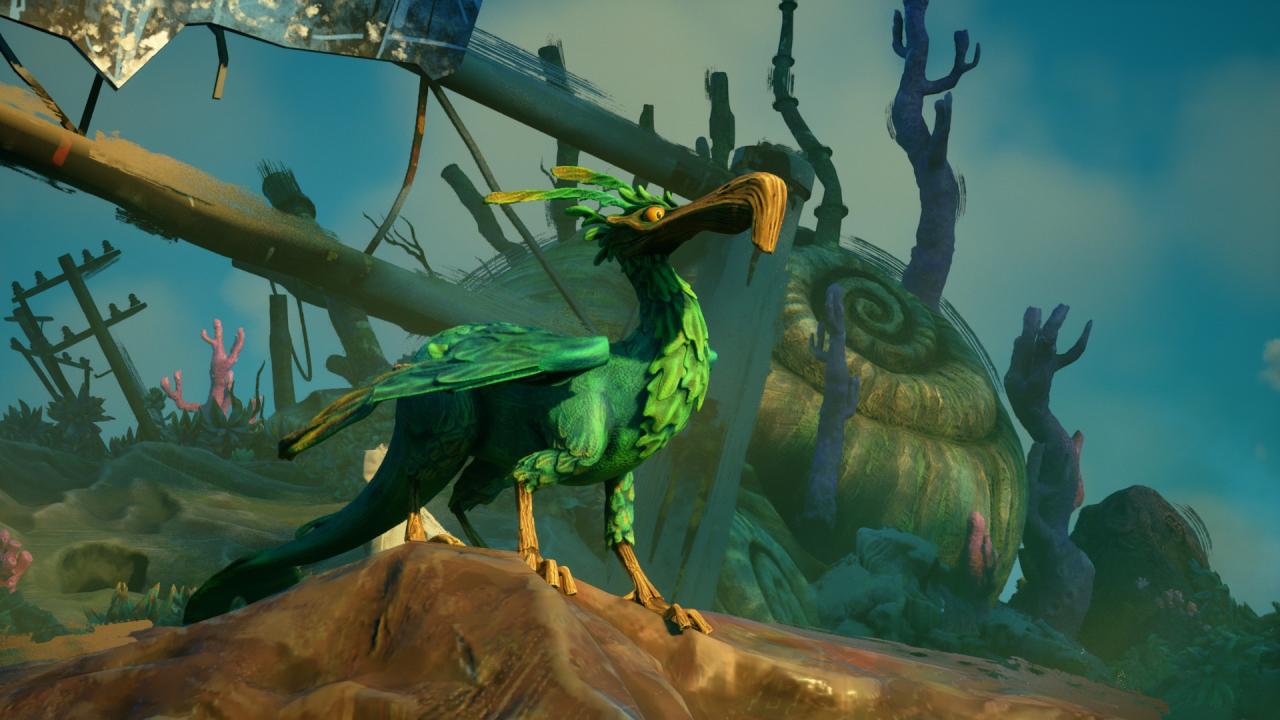
Keeper is an adventure game with an exploration-based theme. It was influenced by games like Journey, Abzû, and Inside. That said, while those games encourage smooth movement, Keeper encourages clumsiness. The lighthouse moves in a deliberately awkward way. Its long, crab-like legs lurch forward awkwardly, often causing it to trip and fall.
You might be annoyed by this awkwardness at first, but it quickly becomes a part of how you feel. You're not in charge of a hero; you're in charge of a thing that has been still for hundreds of years and is now learning how to walk.
Every fall feels like a win, and every careful step is like a small willpower success.
Your main tool is the light beam. You can use it to light up paths, scare away shadowy beings, or wake up tools that are hidden in the world. In some tasks, you have to point your light at mirrors or prisms that bend it over long distances. Others have to do with encouraging growth, like plants that will only bloom when you shine a light on them or mechanical roots that will wake up when they get warm.
Your bird friend also has a part to play. You can send it to deal with switches far away, find lost items, or distract hostile entities with the press of a button. In later parts, it gains new skills, such as the ability to fly through cracks too small for you to fit through or to call forth spectral echoes that reveal secret structures.
The way "Keeper" is played is unique because of its "emotional pacing." There's no need to hurry. The game wants you to stay in its world for a while, try new things, and just be there. Nobody made a puzzle to be a problem. They made them as a way to meditate and make you see and listen to your surroundings.
Combat in the usual sense doesn't happen here. There are no life bars, weapons, or enemies to kill. The conflict in Keeper is more psychological than physical. It's about keeping the balance between light and dark.
The dark is living. It moves slowly across surfaces like oil and whispers in the background noise. Your beam can push it away, but using it too much drains your core energy. The game teaches you to be careful in a subtle way: if you shine too bright, your light will flicker. If you ignore the clouds, they'll get bigger. Giving and taking are always at work in this dance, a metaphor for balance and awareness.
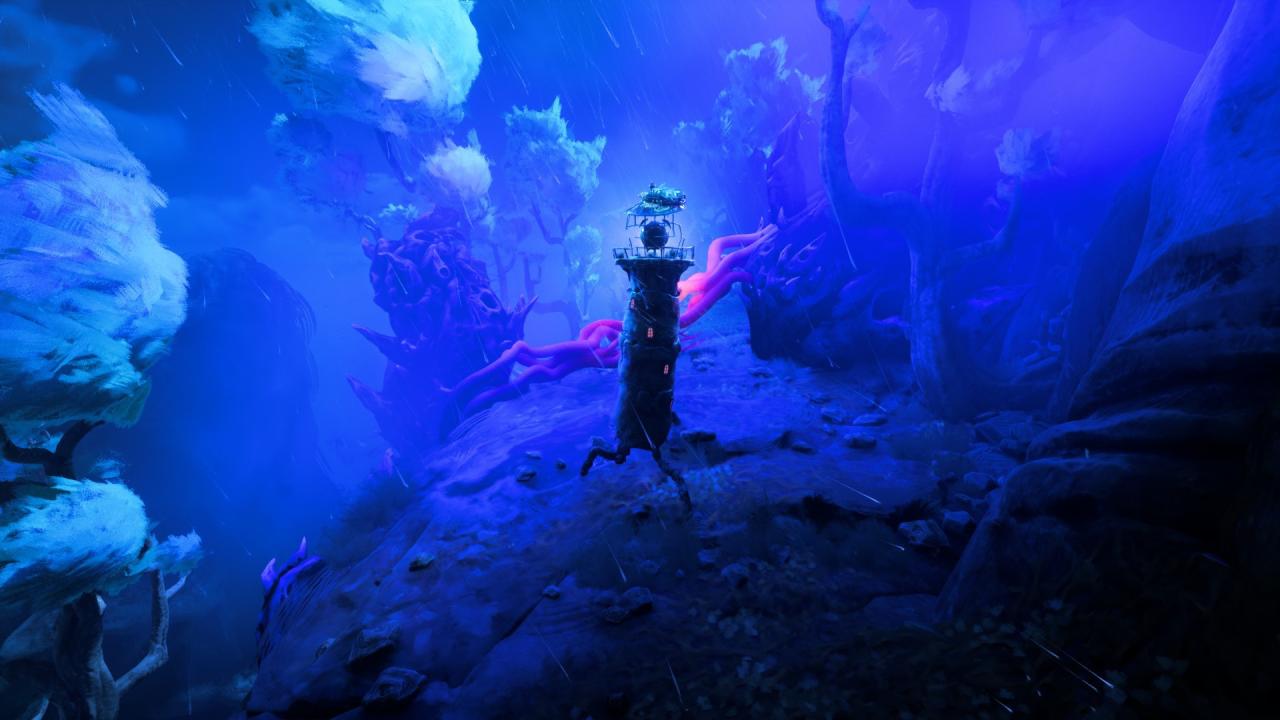
The puzzles get more difficult as the game goes on. They teach you early on how to use light to make paths. Later, they add duality, which are times when you and your bird have to work together. In one stunning scene, you have to time your light with the bird's song to bring a buried structure to life, with each note resonating through the stone and water.
Another type of puzzle that keeps coming up concerns old "light conduits," huge machines that send your energy over miles of land. Putting them in line feels huge, almost holy. As you solve them, beams shoot into the sky, bringing back some of the island's lost brightness. It's not just fixing problems; it's making things right.
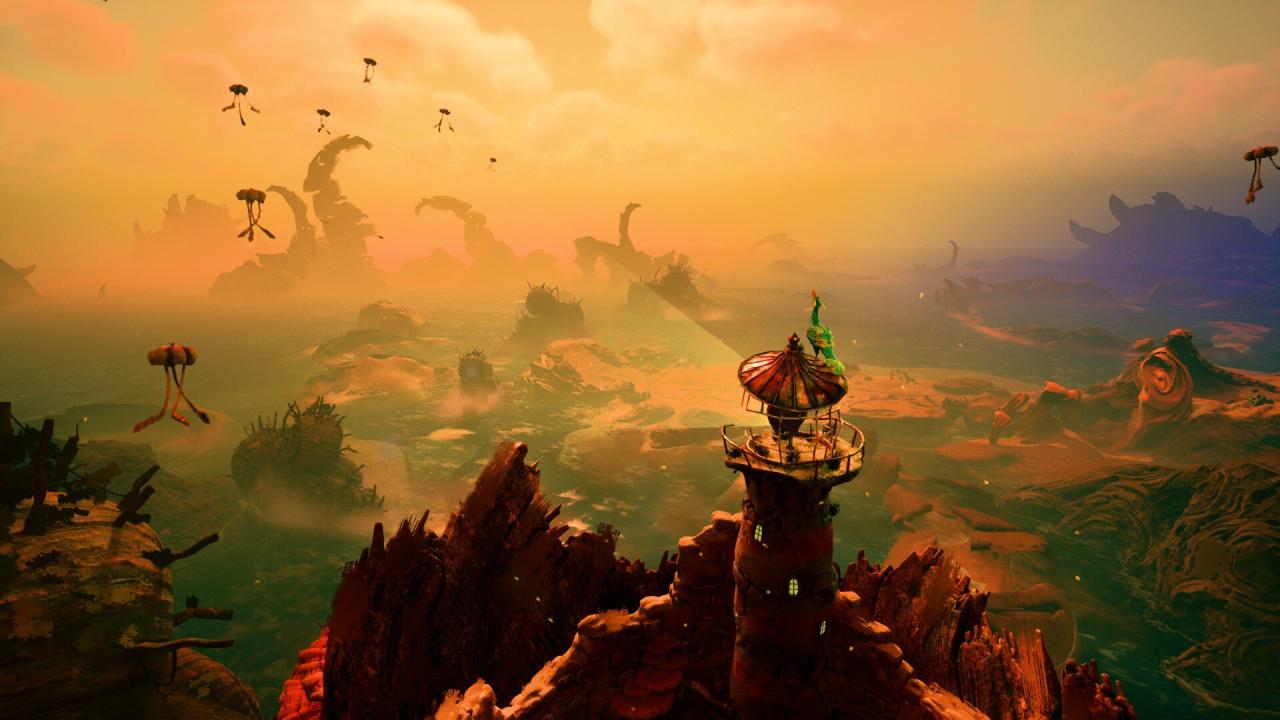
"Keeper" is fascinating to look at. It's one of those rare games where each picture looks like it was painted by hand. The art direction blends the softness of painting with the strangeness of mechanical detail, creating a world that feels both real and dreamlike.
Every region has its own unique look. The lavender sky makes the colors in the "Coral Plains" sparkle like pearls, and the "Forgotten Shipyards," with their rusty cranes stuck in seaweed, makes you think of death. The Glass Caves are one of the most memorable places in the game. Your light bends into thousands of different colors, making travel a moving light show.
The lighthouse is an amazing piece of architecture—it's both a machine and a living thing.
Its joints groan from the weight, and its beam moves like a curious eye. It feels strangely human to watch it learn to balance. The animation adds life to something that shouldn't have any, showing how far animation has come as a storytelling medium.
The photography is well-thought-out and striking. The world looks like a painting with fixed camera views that emphasize size and isolation. As the camera moves back to show the lighthouse trudging across the sky, it's hard to believe how alone the lighthouse must be.
The emotional center of Keeper is its sound design. Even though there is no speech, every sound has meaning. There's a beat that feels alive that comes from the soft hum of your light, the creak of your legs, and the faraway roar of the ocean.
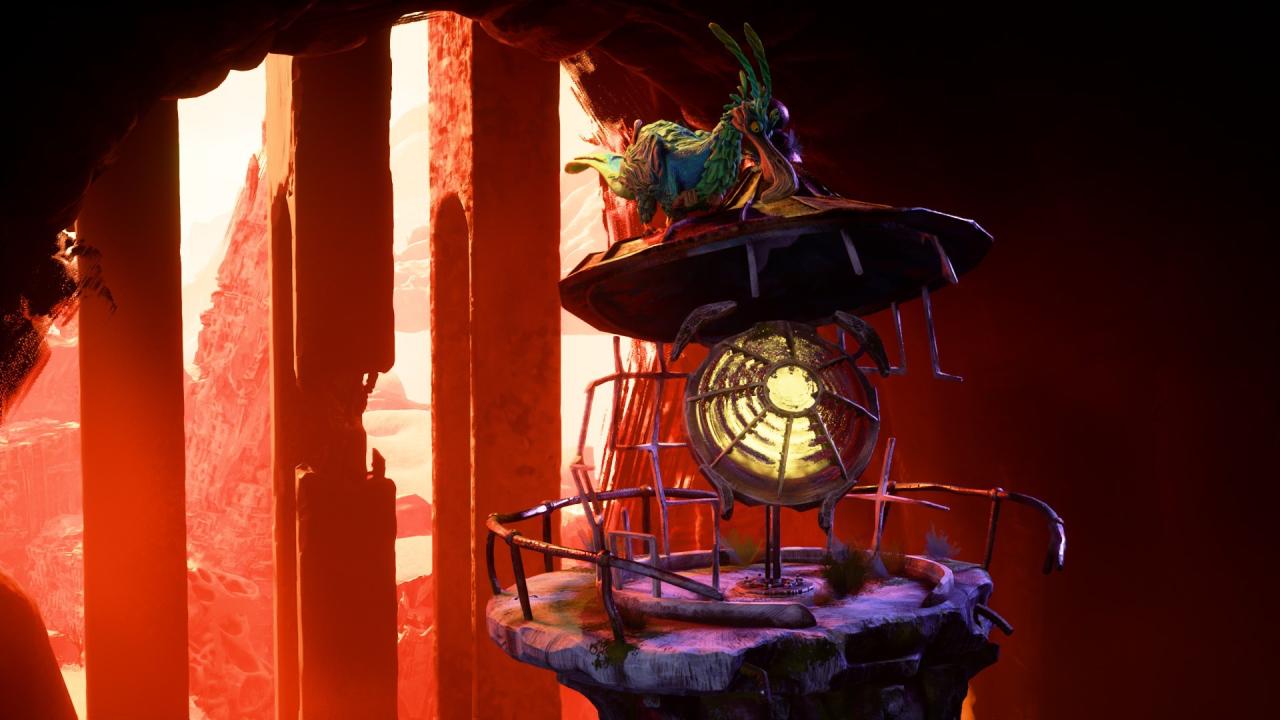
The music, written by Clara Dalen, a student of Austin Wintory's, blends orchestral melancholy and ambient minimalism. Strings gently swell when the wind blows, and soft choir voices rise and fall like memories from long ago. "Lumen Vitae," the main theme, plays during important times of rebirth. It's the kind of tune that stays with you long after the movie ends.
Also, silence is used very well. In some places, there is no music at all. The only sounds you can hear are the rocks crashing and the quiet chirping of your bird. Those quiet times give a few times when music comes back with more weight, making them into emotional peaks.
Technically, Keeper does a great job. The game stays at 60 FPS at 4K on an Xbox Series X and a mid-range gaming PC, with almost no image pop-in. The changes between biomes are smooth, and the landscape fades to hide the fact that the game is loading.
There are a few bugs. The physics sometimes don't work right when the lighthouse hits rough ground, and the fixed camera views can throw you off for a short time.
These are small problems, though, and the experience as a whole is very good. The performance stays smooth, and the colorful art style means that the visuals look good even on lower settings.
Options for accessibility are carefully thought through. You can adjust the amount of motion blur, the contrast to make things easier to see in dark places, and even the strength of the light beam for people who are sensitive to flashes. These little things show that Double Fine cares about being welcoming.
Keeper isn't just another independent experiment; it's a "meditation on existence." It's about what's left over when everything else is gone. The lighthouse and the bird's journey show how we long for meaning and fight to move forward even when things are unstable.
Games these days try to be exciting, but Keeper is brave enough to whisper. It tells you to listen to the waves, the wind, and the quiet beat of life coming back. This game might not be fun for some because it goes too slowly or has too many vague ideas. Keeper is a memorable story told through motion and light rather than words, if you can let go of its beat.
Its flaws - how awkward it is on purpose and how quiet it is - are what make it feel so alive. It feels like every step is won. Each flash of light makes me feel hopeful. Double Fine has made a game that is also a "living poem" -a gentle warning that beauty can last even when things are falling apart.
Senior Editor, NoobFeed
Verdict
A meditative odyssey of light and loneliness, Keeper stands as Double Fine's most artistic and heartfelt masterpiece—a love letter to rebirth and the fragile beauty of existence.
70
Related News
No Data.