
Kill The Shadow Review
PC
Kill The Shadow creates a detective RPG where solving the case matters more than simply reaching the next objective.
Reviewed by Elme Dhee on Aug 05, 2026
Kill The Shadow follows Lucas and the supernatural Shadow as they investigate murders across Dark Tide City, a place split between factory ruins, the Wharf, the neon-lit Pig Cage slums, and the temple-filled streets of Old Town. The retro look, with a nod to the 1980s, blends 3D environments with 2D character sprites to craft a unique 2.5D pixel-art identity that marries perfectly with the darker mystery and drama of the game.
Rather than use exploration as an excuse to make a bigger map, Kill The Shadow keeps its world focused on the cases you're investigating. Each district has its own visual identity – from the steel of the industrial factories to the muddy streets of the Wharf and the crowded lanterns of the Old Town. These places are meant to facilitate deduction, give you places to investigate and people to question, not just space for you to wander through.
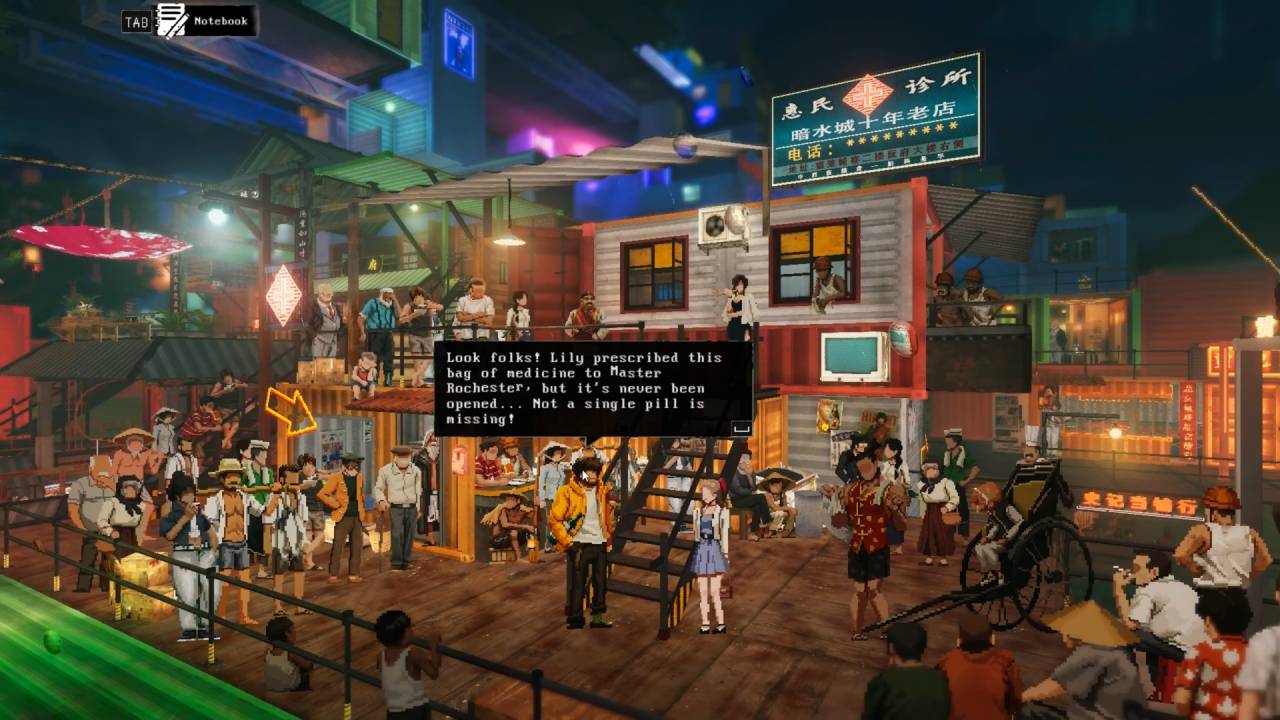
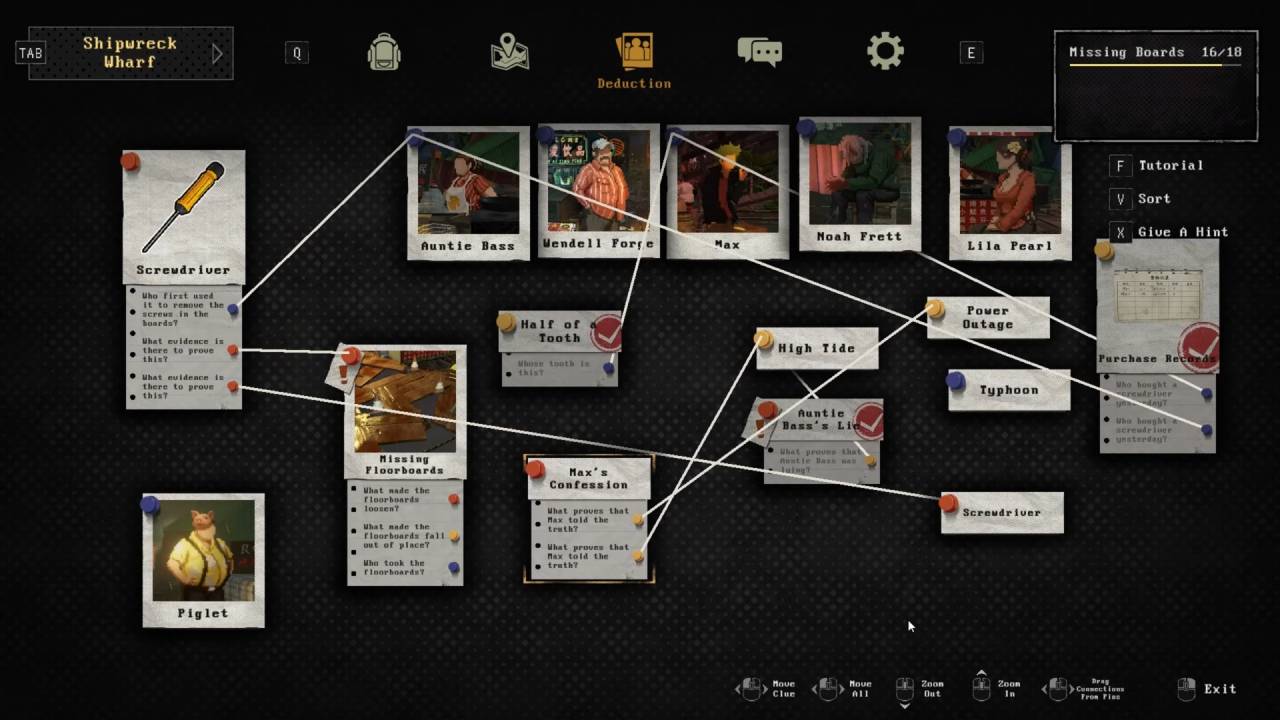
Every investigation puts your own reason at the heart of the detective work.
The real heart of Kill The Shadow is its corkboard deduction system, where you have to connect testimony and evidence manually. There's no flashing goal telling you exactly what conclusion to reach, so making progress depends on actually paying attention to what characters say and understanding how different pieces of information relate. This approach lends the investigation a tactile quality fitting for its detective focus.
Interrogations, too, are based around choices, not straight conversations. Lucas can tackle characters through Strength, Spirit, or Charm routes, adding a more deliberate role to dialogue in solving cases. Captain Theo, Axel Flint, Kiki, Mrs. Reed, the Priestess, Auntie Bass, Chiffon, and many district residents become potential sources of information.
Instead of traditional combat-based progression, the focus is on conversation and interpretation. The Shadow's power to control time adds a supernatural element without replacing the logic of the detective story. One of the Shadow's more unusual mechanics is the ability to use Rewind to review the last moments surrounding a person's death.
This manipulation of time immediately provides possibilities that a classic detective story could never offer, giving Lucas and The Shadow the ability to find information hidden in those last moments. It also adds a supernatural quality to the investigation, while leaving the player in charge of understanding what the visions actually mean.
This distinction is important because Rewind doesn't fix everything automatically. The Shadow can show us things we would never see otherwise, but we still have to figure out what we've seen. This keeps the mechanic tied to the corkboard, rather than making it a plain answer button. Kill The Shadow takes a very interesting approach to mystery storytelling, with a mix of supernatural evidence and ordinary deduction.
Branching conversations make decisions feel relevant to the larger investigation.
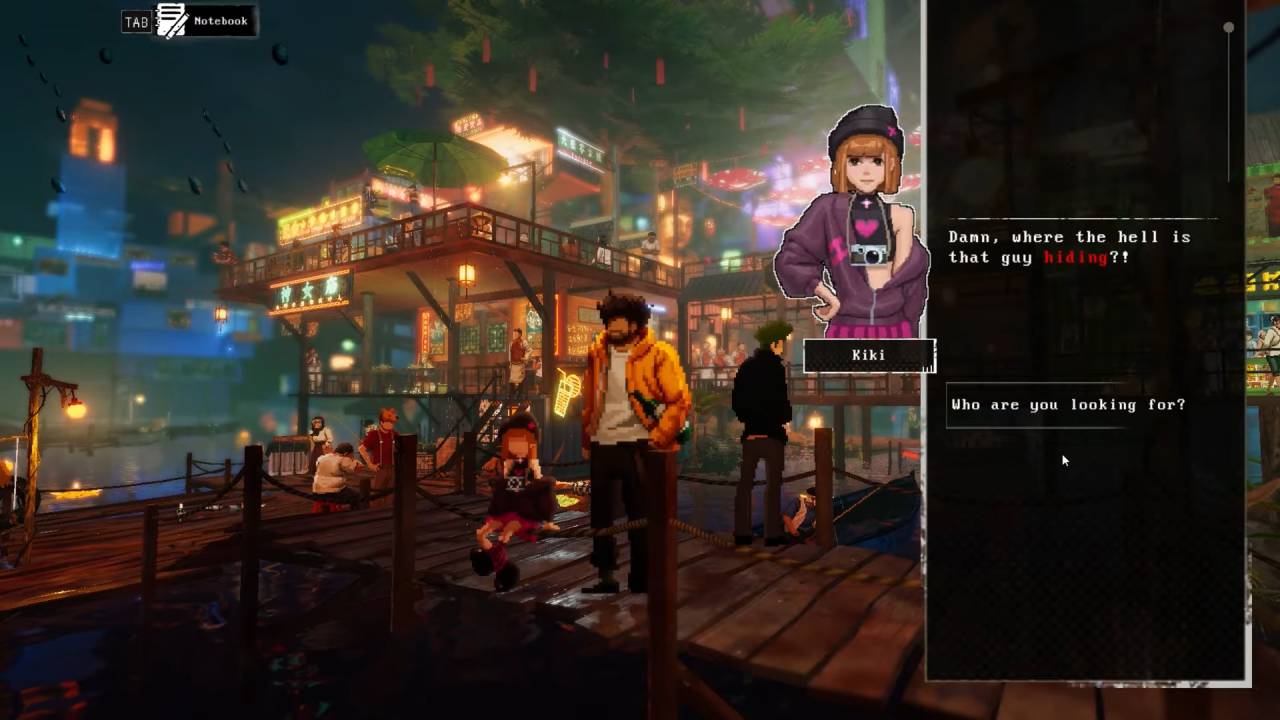
The story is built on choices that can influence how cases unfold and ultimately lead towards multiple endings. So conversations are more than opportunities to gather exposition; the way you approach people can affect what information and possibilities are available to you. It provides a larger feeling of agency, particularly for a story-heavy detective RPG where getting to know the characters is just as important as uncovering physical evidence.
The emotional element of that structure also features heavily in the investigation. Kill The Shadow is a mix of mystery and drama, where the supernatural premise is set against human relationships and personal stakes.
The source material does not reveal every consequence or branch ahead of the full release, but it establishes that choices across interrogations and deduction boards feed into different outcomes. That makes replaying cases more meaningful than simply repeating identical investigations.
The districts reward careful exploration because almost every location exists to support the investigation.
Exploration in Kill The Shadow is deliberately case-driven rather than built around open-world freedom. Dark Tide City is divided into four major districts, each with its own atmosphere and visual identity. Each district also offers spaces to investigate, characters to question, and evidence to uncover.
The factory ruins are oppressive, the Wharf is gritty, Pig Cage is a mix of neon and gang culture, and Old Town has a different energy with its crowded temple fairs. This narrow design works well for a mystery game because exploration doesn't often feel like a digression from the story. Instead of wandering over large areas hoping to find something useful, you are invited to examine locations because they may contain information relevant to the current investigation.
The 2.5D presentation also helps keep things legible, with key interactions still visible even if things get crowded. The visual presentation of the game lends a unique personality to its retro detective story. Kill The Shadow has a very retro, 1980s aesthetic with its neon lighting, industrial settings, busy streets, and pixel art presentation.
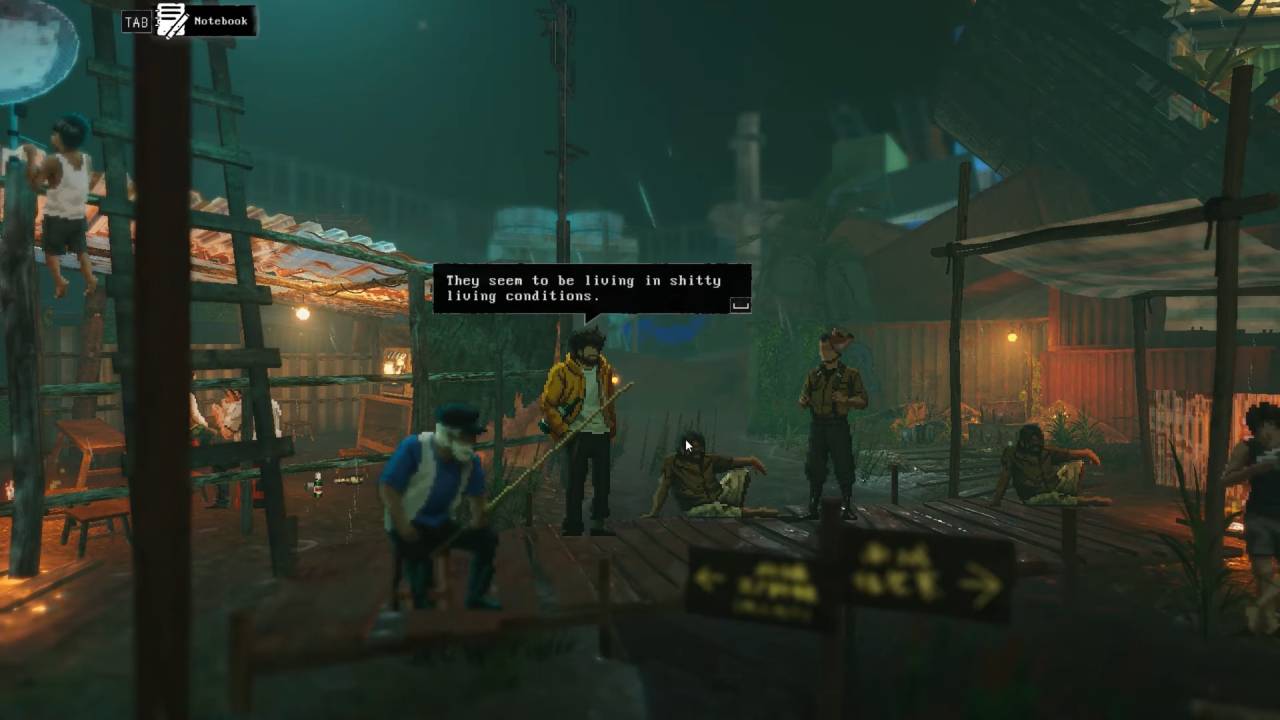
The combination of 3D environments and 2D character sprites immediately makes Kill The Shadow stand out from more traditional detective RPGs. The reflections across the Wharf's muddy surroundings and the contrasting lights of Pig Cage provide an appropriately atmospheric setting without making the environments so visually complicated that important details are difficult to identify.
The art direction is also practical in a way beyond just creating the mood. Rewind sequences are still legible, the corkboard interface is still clear, and even crowded areas like Old Town's temple fairs have enough visual distinction to keep interactable elements identifiable.
That balance is important in an investigation game because visual style can easily become counterproductive if every environment is packed with details that obscure the evidence players are actually supposed to notice.
The supernatural mechanics complement the detective structure instead of turning it into an action game.
Although Kill The Shadow features supernatural abilities, its central experience remains rooted in conversation, investigation, and deduction rather than reflex-heavy combat. The Shadow's Rewind ability gives you access to information that normal investigation would never be able to uncover. However, you still have to interpret those moments and connect them with testimony and evidence.
That keeps the time manipulation mechanic firmly connected to the game's mystery rather than making it an independent gimmick. This also gives the game a more psychological dimension. Reconstructing someone's last moments can be helpful, but you still need the living characters involved in the case to provide context and explain what happened.
This contrast between knowledge and human doubt and uncertainty is interesting, especially given that choices in the game affect later results. But you are not simply gathering clues; you are also judging which information to believe and what to do about it.
Its dialogue system allows characters to play a significant role in the development of each case. The conversations in Kill The Shadow are based on three approaches: Strength, Spirit and Charm.
These routes provide alternative ways to interact with characters and give dialogue choices a more mechanical reason to exist beyond just choosing between different lines of exposition. Social interaction is also important in the investigation, as characters such as Captain Theo, Axel Flint, Kiki, Mrs Reed, the Priestess, Auntie Bass and Chiffon all have information to offer.
That focus makes the game especially well-suited to players who enjoy story-heavy detective games where dialogue can be as important as clues. The multiple-ending structure further supports this approach as choices made during interrogations and deduction could lead to different results.
Rather than presenting one static resolution and trying to steer everyone towards it, Kill The Shadow seems to be built on the notion that the investigator's choices will impact how the mystery eventually plays out.
Kill The Shadow's best systems combine to make every choice feel relevant to the mystery.
The best thing about Kill The Shadow is how well its investigative systems all fit together. You can learn things from dialogue, Rewind can uncover events leading up to a death, and the deduction corkboard lets you manually link those discoveries. None of these mechanics fully replaces the others, keeping the player actively involved in solving each case.
However, the game is more about being an investigator than it is about controlling one. That structure gives the multiple-ending system more possibilities. Your choices in conversations and deductions can lead to different outcomes, so this is not a playthrough where you will necessarily find one predetermined answer.
That idea is further reinforced by the game's focus on choices matter, getting players to consider how they approach characters and read evidence for anyone who likes story-rich mysteries, which gives a good reason to revisit cases after reaching an ending.
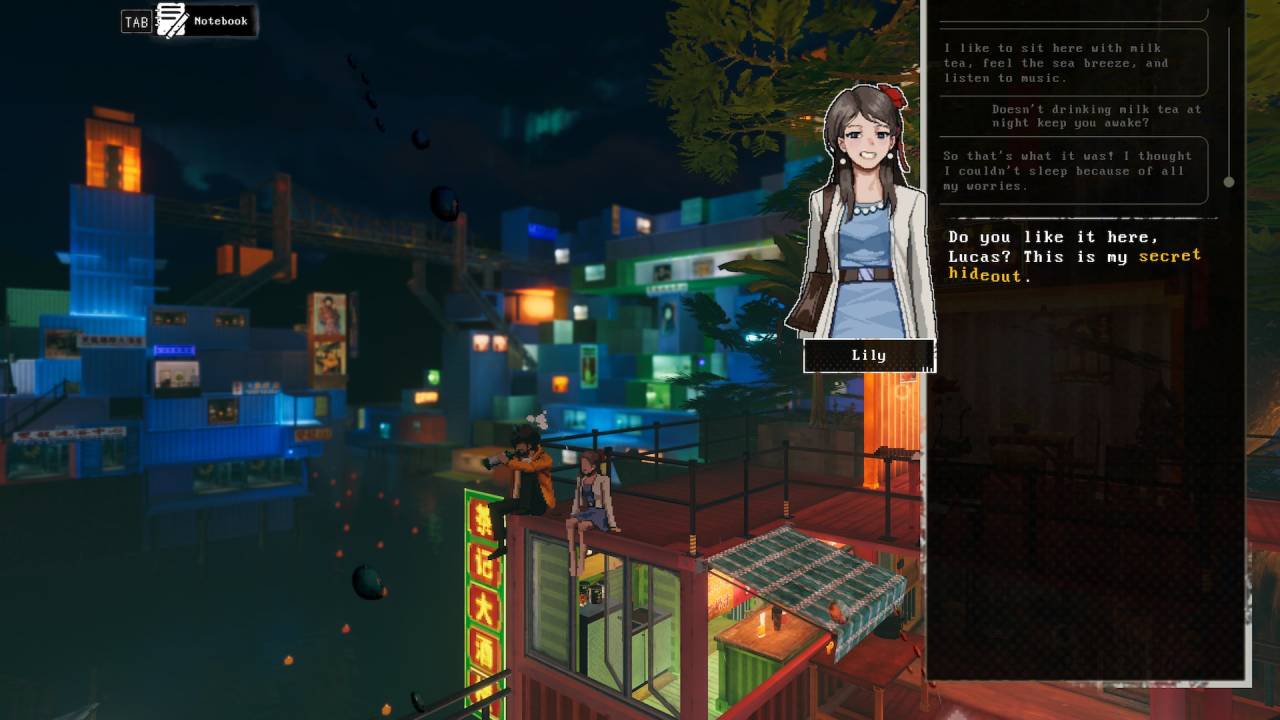
It builds a sense of atmosphere without losing the clarity the investigation requires.
Dark Tide City's cinematic presentation, retro influences, and 2.5D pixel art give it a memorable identity. Visually, the districts are different enough to feel like different parts of the same troubled city. Still, details like neon reflections, industrial structures, gang markings, and temple-fair crowds help establish its 1980s-influenced tone. It's stylish, but not to the detriment of the practical needs of investigation.
The presentation is also particularly good at supporting the supernatural side of the story. The rewind sequences need to be understandable, and the corkboard needs to be informative enough that players can make connections.
The visual design handles this balance even in busier areas, says the source material. That's important because a detective game can't afford to waste readable clues to have a more visually elaborate environment. The result is a tight detective RPG that understands what makes its mystery systems work.
Kill The Shadow isn't going to satisfy players looking for constant combat or open world freedom to explore, because its priorities lie elsewhere. It is a case-driven experience where districts serve investigations, conversations provide crucial information, and supernatural time manipulation expands what can be found.
The deliberate pace is far more likely to appeal to players who enjoy detective boards, branching dialogue, noir atmosphere, and psychological mysteries. The early indications around the full release hint at an exciting package, especially as the developers are said to have redesigned the Rewind system after player feedback during Steam Next Fest.
It's encouraging to see that willingness to take criticism, but the final experience will ultimately have to be judged on the full release, not the demo. There is reason to be optimistic about what we have, but we cannot pretend that all the questions have been answered.
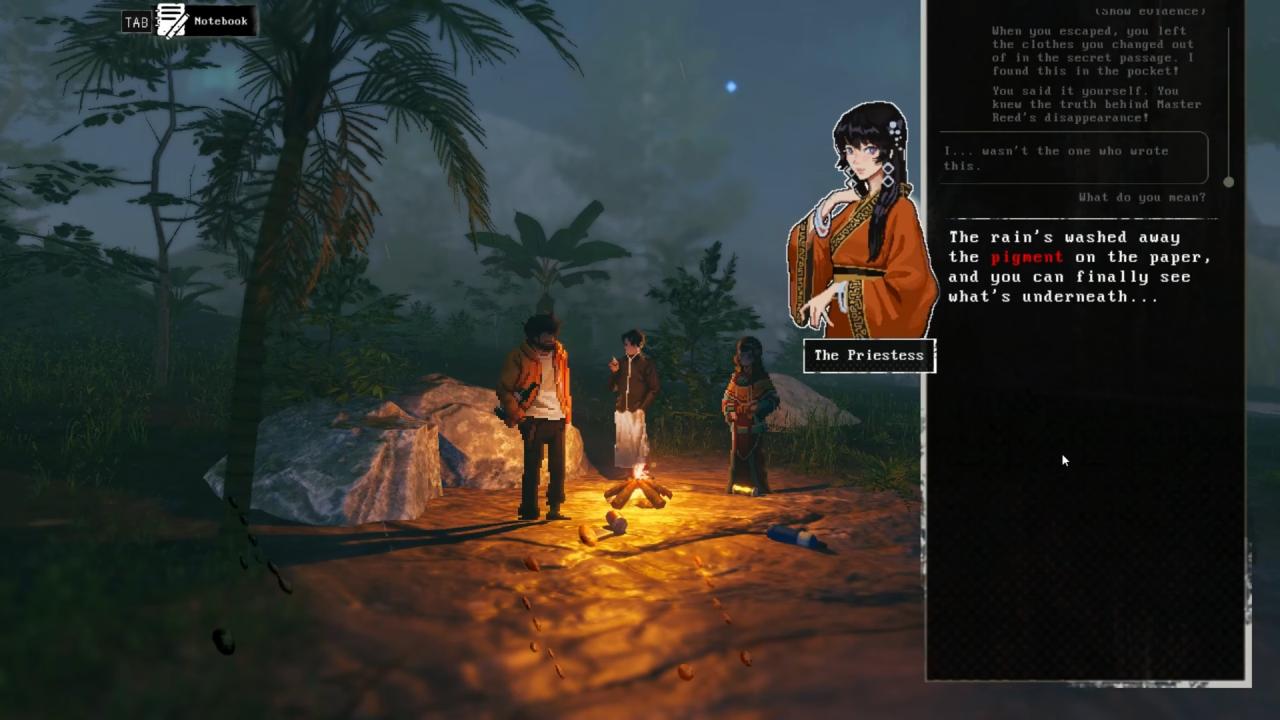
Built on a premise of deduction over spectacle, Kill The Shadow has the foundations of a memorable mystery.
What makes the game unique is the way the individual ideas feed off each other. The cyber-noir setting sets the tone, the locations are found through exploration, the human perspective comes from conversations, supernatural evidence comes from Rewind, and the responsibility to connect everything comes from the corkboard.
And its many endings then give those choices lasting consequences. Few of these systems would be remarkable on their own, but together they add up to a cohesive experience centered around detective work.
Ultimately, Kill The Shadow appeals most to players who want to solve mysteries at their own pace and feel responsible for reaching conclusions. With its story-rich structure, time manipulation and retro presentation, and choices matter approach, it has a distinct identity in the indie detective RPG space. It lacks the freedom of an open-world sandbox or the immediacy of an action game, but that focused design may be just what makes the investigation satisfying.
Editor, NoobFeed
Verdict
Kill The Shadow blends detective work, supernatural Rewind, and branching choices into a stylish mystery. Its atmospheric world and manual deduction make it a strong choice for genre fans.
74
Related News
No Data.